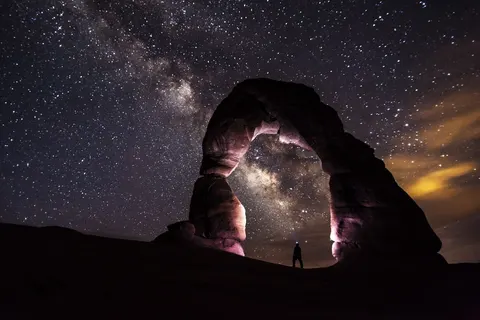
These days we spend long hours staring at screens and rarely look up at the stars. Literally and metaphorically. Instead of launching us out there, technology has, to a far greater degree, “grounded” us. Still, this is far from a finished digital story.
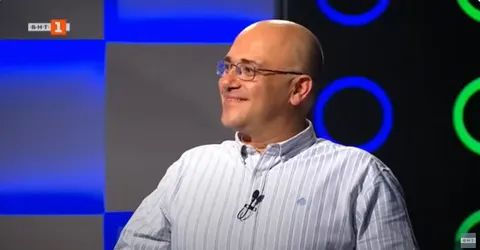
Assoc. Prof. Vasil Umlenski has worked as a professional astronomer for exactly half a century. He belongs to the generation of scientists who had both the luck and the challenge of being part of this science in the years when it enjoyed enormous public attention, in the decades after its greatest triumphs.
We meet to talk about the stars, about a love for the sky, and about humanity's future in space, as seen through his 50 years of experience.

– Assoc. Prof. Umlenski, you have been following humanity's relationship with space for 50 years now. Do you think it has regressed, instead of developing the way we expected?
– I don't think it has regressed. Rather, interest has waned, because even the direct exploration of planets, asteroids and comets with spacecraft has become routine.
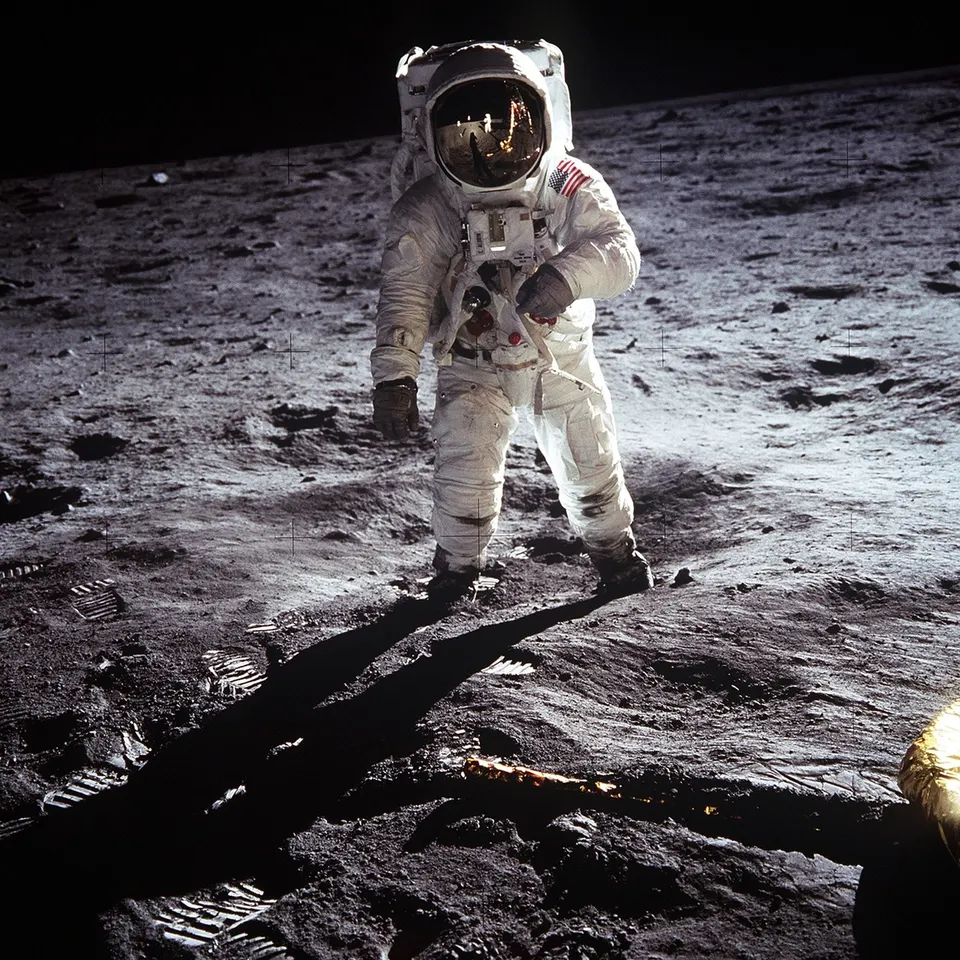
– Yes, but we made it to the Moon once… and then it stopped being interesting to us!?
– Trips to the Moon are far too expensive. The Americans won the race against the USSR,
it stopped being interesting to them, and no more money was forthcoming.
Besides, studying the hundreds of kilograms of lunar material brought back by the Apollo missions will take decades more.
– And how do you feel about the idea that we never actually set foot there?
– Definitely negative. Given the fierce rivalry with the United States, the Soviet Union would never have acknowledged the achievement if it had had even the slightest doubt. The whole world was tracking the flight. If memory serves, Apollo 11 was “escorted” by an uncrewed Soviet spacecraft.
The Soviets had a lunar craft ready, with which they hoped to beat the Americans, but they postponed the crewed flight because the launch vehicle wasn't reliable enough. The first man on the Moon was supposed to be Alexei Leonov. After the American success, however, the USSR shut down its lunar program.
The newspaper Pravda published detailed coverage every day of the Apollo 11 flight and of the first human visit to another celestial body—unlike Rabotnichesko Delo, the Bulgarian Communist Party's daily, which gave the event only a few lines.
– When and how did you turn to astronomy?
– My interest was born in early childhood. Part of the “blame” probably lies with my father—a high school teacher of Bulgarian in Kyustendil, a town in western Bulgaria, as well as a linguist, ethnographer and folklorist. He would often put me on his bicycle and take me to the nearby village of Bagrentsi, where we had relatives.
When we rode back after dark, he would stop and show me the constellations,
and I found it fascinating.
At that time—the 1950s—astronomy was taught in high school as a separate subject. Some graduating students gave me their textbook, which I read with great interest. In the evenings, my friends from the street would gather around me so I could tell them about the stars and the planets. I knew in advance that an artificial Earth satellite was going to be launched. I waited for it impatiently and was thrilled when it happened on October 4, 1957. Of course, I wasn't the only one who was thrilled. The newspapers and the radio announced when and where Sputnik 1 would pass overhead. People went out in the evenings and watched in amazement as the new celestial body glided slowly and solemnly among the stars.
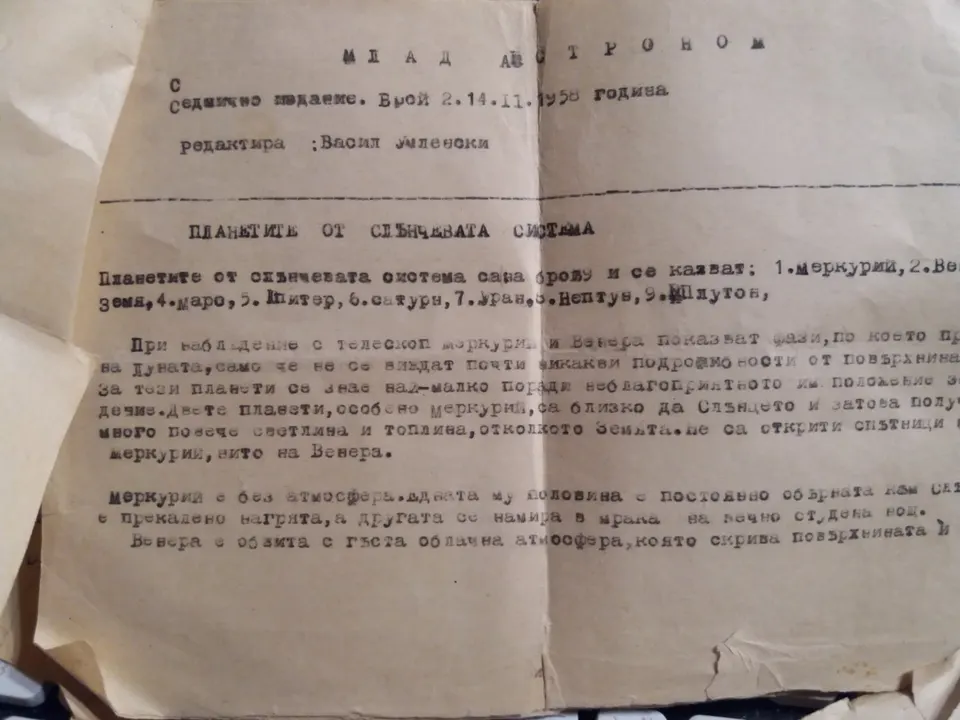
By the age of 10, I was already “publishing” a sheet called Young Astronomer on my father's typewriter.
– If someone had asked you back then how you imagined the 2020s, what would you have said?
– It's easier for me to say what I couldn't have imagined back then. I couldn't have imagined that socialism would go away without a world war. I wouldn't have imagined mass computerization. At the time, the height of computing technology was the slide rule; electronic calculators came later. Actually, there were also mechanical calculating machines with a crank and keys, but very few of them. In the 1970s, one of them was still sitting in the former Astronomy Section of the Bulgarian Academy of Sciences (BAS).
I've read that the calculations for Gagarin's flight were done by a group of mathematicians who
didn't trust the computers, even though they had them.
And of course, I would never have imagined a Chinese rover scurrying across the Red Planet.
– Who are the true heroes of space?
– The heroes are the first ones, who opened a new era in human history. Some of them paid for it with their lives.
– What is the most interesting celestial object?
– In my view, it remains Mars, because there was life on it. As far back as 25 years ago, fossils of microorganisms resembling Earth bacteria were found in ALH84001, a meteorite of Martian origin. They are inside the meteorite, which rules out contamination after it fell to our planet. So it is possible that life on Earth came from Mars. Recently, lakes of liquid water were discovered beneath the planet's surface. This shows that some forms of life may well exist there even today.
– Do you believe colonizing it is realistic?
– Conditions on Mars—the atmosphere, gravity, magnetic field, radiation levels and so on—are very different from those on Earth. Dozens of problems have to be solved before a settlement on Mars can be built. So I think it's realistic, but in a more distant future. Although time moves much faster now than it did, say, half a century ago.
– Is colonization a good idea?
– Probably not, but it may turn out to be necessary. If, however, there really are any forms of life there at all,
there must be no terraforming of the Red Planet whatsoever.
– What is the most important thing we have learned about the structure of the universe over the past 50 to 60 years?
– In my view, it is the cosmic microwave background—an echo from the time when the present-day universe came into being. It was first predicted in 1948 by the cosmologist Georgiy (George) Gamow, a Soviet scientist who emigrated to the United States. It was confirmed by observation in 1965 by Arno Penzias and Robert Wilson, who received the Nobel Prize in Physics for the discovery in 1978.
– Do you like Musk and what he does?
– I don't particularly like him. And I'm not alone; many people share that feeling. Musk himself is aware of it and recently joked: “The truth is, I'm a 3,000-year-old vampire.” As an astronomer, I believe the satellites he intends to launch will interfere with astronomical observations. They are also a future source of space junk.
– What is the natural path of humanity's development, as it looks to you from today's vantage point?
– Humanity's development is cyclical—with many rises and falls. Various civilizations have emerged, reached certain peaks and perished. We don't know about many of them and may never find out. People have lived on Earth for millions of years, so
I find it hard to believe that we are the first technologically advanced society.
Ecological and other catastrophes have at times drastically reduced humanity's numbers, but it has always managed to survive.
– What is the most interesting celestial phenomenon you have observed?
– The most impressive was the total solar eclipse of August 11, 1999. From Shabla, on Bulgaria's northern Black Sea coast, I was able to enjoy the solar corona. But even more interesting was the collision of Comet Shoemaker-Levy with the giant of the solar system, Jupiter, in 1994. The body of this large comet had been torn into 21 fragments by Jupiter's tidal forces. These fragments, each on the order of a kilometer across, plunged one after another at enormous speed into the planet's massive atmosphere, setting off a series of tremendous explosions. The impact site itself was not visible from Bulgaria at the moment of collision. A few hours later, however, Jupiter had rotated far enough, and I managed to photograph the aftermath with the Schmidt telescope at the Rozhen National Astronomical Observatory. The dark spot in the atmosphere was bigger than the Earth!
– What are the next major goals that, in your view, we should set ourselves as a civilization?
– The main goal should be the survival of our civilization, because the situation is, to put it mildly, not good. Overpopulation, emigration, immigration, conflicts, nuclear, biological and geophysical weapons, environmental pollution, climate change, epidemics, genetic modification… Yes, thanks to vaccines, the Earth's population is over 7 billion people, but at least half of them are pampered, half-healthy and dependent on various medications.
– You mentioned climate change. What do you think about global warming?
– Global warming caused by human activity is a global hoax.
From the 8th to the 12th century, for example, the climate was warmer than it is today. Greenland was covered in lush vegetation, which is why the Vikings called it “Grünland”—“green land.” Around the year 1200, however, a rapid cooling set in—a “Little Ice Age” that lasted more than 500 years.
The main cause of climate change is solar activity. Besides its well-known 11-year cycles, there are centuries-long cycles and even ones lasting over 2,000 years. A slight rise in average temperatures may continue for another four or five years, but it will be followed by cooling. It is not out of the question that a new “Little Ice Age” will set in within a few decades.
– Have we expanded our knowledge of the structure of the universe over the past decades as much as we have developed the technologies we use to talk to each other from opposite ends of the table?
– Of course, our knowledge of the universe has grown many times over thanks to modern ground-based and space telescopes. And thanks to spacecraft that can bring back material from practically the other end of the solar system. But there is, and always will be, more to learn.
– You are an astronomer, but one of your most interesting discoveries has nothing to do with the stars—it concerns the year Jesus Christ was born. Why does this subject interest you?
– I became interested in chronology through the calculations I did for the Astronomical Calendar of the BAS. It was only natural to look into the problem of the beginning of our era as well. The years of the Nativity and the Resurrection are not my discovery. They were given by the “father” of church chronography, Eusebius of Caesarea, some 1,700 years ago, but in terms of solar and lunar cycles. I simply converted his data to the modern calendar era, officially in use since the 15th century. The year of the Nativity came out as 9 AD, and the Resurrection as 42 AD. The astronomical and calendar calculations showed that these are the only years consistent with the data in the Gospels.
Assoc. Prof. Dr. Vasil Umlenski was born in 1947 in Kyustendil, into a family of teachers. In 1971 he graduated from Sofia University as a physicist specializing in astronomy. Until his retirement in 2010, he worked at the Institute of Astronomy of the BAS and its observatories—the Belogradchik Observatory and the National Astronomical Observatory.
For many years he was editor of the BAS Astronomical Calendar. He is the author of numerous popular science articles and the author or co-author of the books Haleevata kometa na pat kam Slanchevata sistema (Halley's Comet on Its Way to the Solar System), Vremeto i kalendarniyat problem (Time and the Calendar Problem) and Drakonat i Slantseto (The Dragon and the Sun).