History is now a different story. But what do historians think about it?
Alexander Moshev is not afraid to provoke on matters of the past, while sticking to the rules of science.
The past divides us the way only politics and sports can.
Why? Can that change?
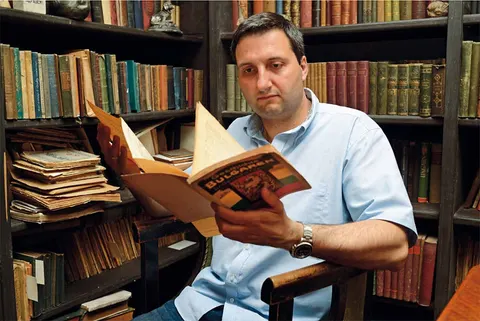
Today's guest studies both the history of the Bulgarians and the way we try to explain and interpret it today.
What does science know today about our origins as a people? Why, so many centuries later, do they become a pretext for “bloody” clashes online? Is the end of history approaching, and how will it be changed by the fact that each of us now leaves behind an enormous amount of data?
We will also talk about the parallel “history” being born on the internet. About the forgotten heroes of the past. About how world fame fades and when it is worth seeking a different point of view.
– What has technology changed most in our attitude toward history?
– In my view, the most significant change is the opportunity for
every internet user to feel like a participant in the process of making history.
People who are interested, the mass user, have far greater access to sources, to information about archaeological finds, to historical records and scholarly works.
Many people have joined the process of “making historiography” extremely actively. Not simply being a consumer of the “historical product,” but a co-creator of it. Many began contributing to the process of historiographical inquiry and research… Or at least that is how it looks from the outside to the uninitiated viewer.
The time it takes for high-tech innovations to be adopted keeps shrinking, but every new technology coexists with the older ones for a while. Print and other electronic media still have their share in shaping our ideas about the past, but their importance seems to be steadily declining.
– What are the pros and cons of this?
– The pros are for specialists, for people with lasting interests, and also for the mass audience, which has access to the most varied sources just a click away! We are talking about databases of archaeological finds, of historical works, of manuscripts. For example, the digitized archives of the Vatican Library. “A unique treasure” sounds to me like weak and banal words for what you can see there.
The cons are that, somehow, in this process, values got leveled out.
The opinion of someone who has read two, three, five historical studies seems just as valuable as that of someone who has devoted an entire career, an entire life, to researching and interpreting a given problem.
For some of the online “players” in the field of history, the process of making “discoveries” starts to overlap with phenomena like pseudo-influencing and fake news.
Some memes and false pieces of information circulate for years. And despite the endless refutations that the “official” history experts offer, they continue to be taken in, liked, reposted, and they seem to
become part of some alternative stream of historical information,
over which science has no control, and the most it can do is offer some explanations and refutations. But how many users do those reach? Mostly the people who are interested in the facts.
– Can you think of specific examples?
– There are many. Including drastic ones: nonexistent quotes from Vasil Levski, the revered hero of Bulgaria's 19th-century liberation struggle; invented statements by world-famous scientists about Bulgarian culture and civilization, about the Bulgarian language. Most are of the tabloid “Shock and bombshell” type, but they have a subversive effect, because they keep being reproduced across the internet. Some get brought back to life years after they were first released.
– How do we pick out the authorities in this “jungle”?
– There is a simple scheme—the decision whether to trust someone's expertise rests on elementary criteria. For example: does the expert have specialized education, publications on the topic in reputable journals, peer-reviewed works, and then further, more specialized criteria. That applies, however, when we are talking about scholarly discourse. As for the mass user, the most important criterion is to judge the source, where the information was published. Usually on large, established sites and other media with a long history that have become institutions, you very rarely see unverified historical information published as a sensation.
– Can a self-taught historian sometimes make a breakthrough?
– History remembers examples like Gustave Schlumberger—a physician who made an enormous contribution to numismatics. Heinrich Schliemann, who spent his whole life in trade, made the colossal archaeological discovery at Troy.
– And have you come across such examples on Facebook?
– In recent years, not really. Not that all self-taught and enthusiastic history lovers should be dismissed out of hand. There could be interesting interpretations, side angles and points of view. But that is very rare. Schliemann, Schlumberger, people like the jurist and philologist Theodor Mommsen from the 19th and early 20th centuries, don't come along every day. Unfortunately,
far from everyone who writes on the internet and offers some bombastic sensation is a second Schliemann.
The specialization of every science keeps growing. History and archaeology are already extremely specialized. Medieval studies, classical studies, prehistory, epigraphy—each works with its own theoretical foundations and methodology. It is very hard for an outside observer to join this scholarly process with some discovery. Not impossible, but to me it seems unlikely.
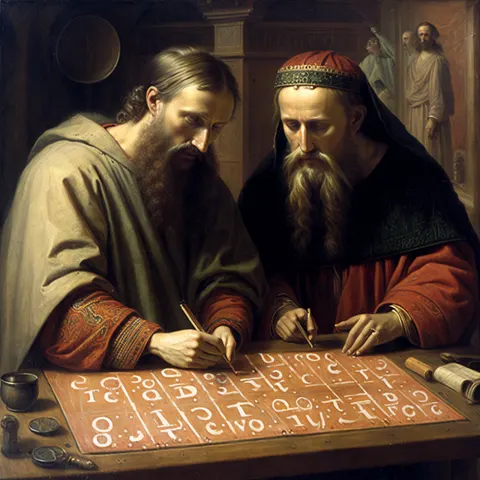
If we are talking about breakthroughs, one would be, for example, deciphering some artifact, some kind of script. Take the Phaistos Disc: it has been the subject of an enormous number of interpretations by professional linguists, archaeologists and historians, and by nonprofessionals too. So far, however, neither group has reached a solution that is generally accepted. To me, that is a sign the artifact has not been deciphered. I see nothing negative in more people outside the professional community engaging with history and archaeology. But the significant discoveries are still made by professionals.
Within the professional community, however, the sensational element of presentation ought to be kept to a minimum.
– Yes, but that makes it hard to reach a mass audience…
– If the community—and this goes for every science—is extremely closed and fails to communicate with wider circles of people, then we will witness, and it is already happening, the media space being taken over by other kinds of narratives.
The internet right now, including the blogosphere, social networks, YouTube and whatever else you can think of online, is dominated by
an extremely sensationalist jingoism, even a somewhat aggressive presentation of historical and archaeological issues.
– Why has history turned out to be such an important topic online, and such a beloved arena for ugly, fierce quarrels?
– A very important question! Why? Why history in particular? Here is my interpretation—mainly because
history is tied to identity, to our sense of self, to how we think of ourselves—who we are, where we come from and where our place in the world is
and to how we explain the events of today. When it comes to more recent history, it has a direct link to what is happening now.
– Yes, but we carry these quarrels back millennia, too.
– All the topical politicizing is easily carried back 1,000, 2,000 and more years. Quite naturally, the purely political and football-fan arsenal of “argumentation” gets transferred onto topics and problems from centuries ago.
Clearly there is something very emotional in how we perceive historical events, something beyond any rational argument. And once a topic carries an emotional charge, warring “parties” or “fan clubs” inevitably form, using a literally fan-style arsenal of expressions in the “debate.”
To me, that is a sign the topic touches some key ingredient of our sense of self, some identity problem. And when there is an identity crisis, people usually process it through their feelings. That is exactly what we are witnessing. For example, when it comes to the origins of the Bulgarians.
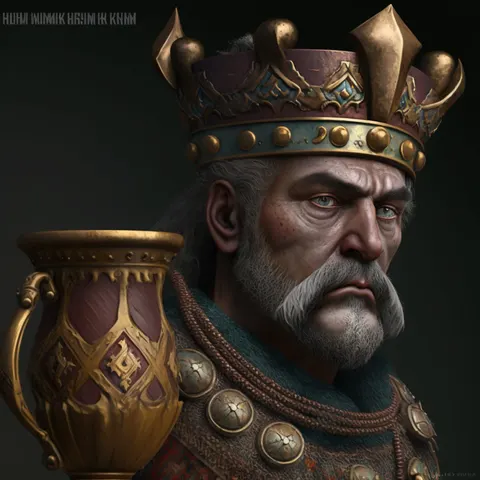
– Why does this particular topic matter so much to us? Isn't who we are today more important than who our ancestors were so very, very long ago?
– Yes, it's an absolute paradox: the more time passes, the fiercer the “discussions” seem to get. People move from some kind of historical, historiographical or archaeological “arguments” to personal attacks and even threats. We see it on social networks every day. To me, that is a sign there is an identity crisis. There is
a vacuum being filled with jingoistic, pseudo-patriotic, sensationalist, pseudoscientific discussions, theses, videos, even books.
There was a time when the question itself interested me more, but today I am more curious about the phenomenon of this discussion running through our society—not so much in scholarly circles as on the internet.
– If we can't be impartial about something that happened 1,500 years ago, how can we be about something from 10 years ago?
– Absolute impartiality is possible only from a vantage point in outer space. The moment you approach a historiographical problem, you already have an attitude; you are an active observer. Two historians working from the same documentary evidence will produce two different history books—each from their own point of view. And both points of view will be “valid,” as long as the basic parameters of scholarly research are respected.
Complete impartiality, I believe, is not possible, because historiography is ultimately written by living people, not yet by artificial intelligence. Of course, it turns out that AI has its “biases” too.
The point is for the element of “bias” not to dominate, not to be the foundation.
If you do historiographical research on the origins of the Bulgarians and conclude that they lie at the root of all human civilization, to me that claim will have negligible factual value, if any at all.
If a foreign researcher says it, let's say the element of “patriotism” is eliminated. Then it's interesting, curious, we can make a 15-minute documentary for BNT 4, a channel of Bulgarian National Television, but nothing more.
It's a question of the proportion and the quality of the bias. Bias must not come at the expense of ignoring or distorting documented facts.
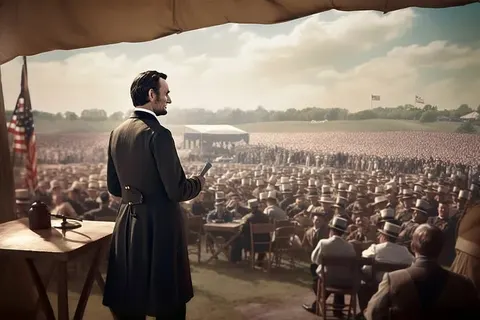
– When it comes to the origins of the Bulgarians, if we look at science, is there any consensus?
– The situation is complex and multilayered. Naturally, if you walk into a bookstore, you'll see dozens of titles published on this topic in recent years, all based on the same historical sources, since there are no new ones for now. They repeat the basics, but each author strives to dazzle with originality and some new theory about the origins of the (Proto-)Bulgarians. But how many theories can there be? Twenty, thirty, a hundred. It borders on the absurd.
In professional historiographical circles, of course, everything is more conservative, and so is the language; it takes time for the paradigm to change.
The main hypotheses laid down in our historiography over at least a century—from Jireček and Zlatarski to the present day—are to some extent still valid. Except that, of course, the approach today is somewhat different. When we talk about the origins of the Bulgarians, we need to specify which Bulgarians we mean, in time and in geography. Today's citizens of the Republic of Bulgaria are one thing, the medieval Bulgarians another, and those called by the technical term “Proto-Bulgarians” yet another. When we pose the question of origins, the answer cannot be universal.
As for the origins of the medieval Bulgarians, the threefold paradigm still holds—Slavs, Proto-Bulgarians and Thracians—and it is embedded, with serious corrections of course, in our education system as well.
It keeps evolving, and for me personally that is important. But looking at these elements, as Yuval Harari puts it, under a microscope, we will see that none of them is homogeneous in its ethnic character, and probably not culturally, religiously or linguistically either. The mythical Proto-Bulgarians were far from a uniform ethnic formation. Ethnic and national “uniformity” turns out to be a dangerous illusion, whether it concerns the present day or the distant past. These structures, viewed as solid blocks, are literally being deconstructed before our eyes. The picture is extremely complex and colorful.
– And any simplification renders it meaningless.
– Any simplification works on one level but not on another. It works, say, at the educational level, but not at the academic one.
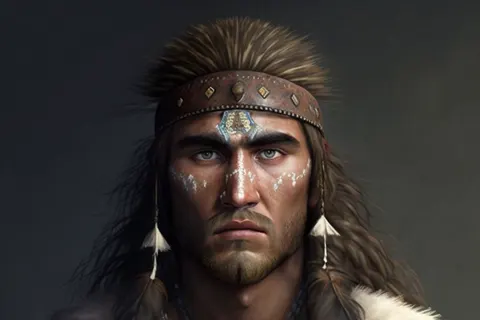
– As a parent, what do you think is worth improving in history textbooks?
– What worries me is the way textbooks are written, and not only in history. The problem is that they are prepared by specialists, in a fairly elevated style, with an enormous amount of specialized terminology. In the fourth-grade textbook we talk about the “suspension of the constitution.” Why is that necessary?
It seems to me these textbooks would do well to set out a general framework, some milestones, chronological and event markers, without incredible detail, without jargon. Rather, to give a general idea of how a given era developed. With reenactment, with an element of play, which is extremely important for children. The illustrations should be very well chosen, very vivid, and the terminology… Who needs it in fourth grade?
In my view, the emphasis in middle and high school should be on the civilizational element, showing Bulgarian history in a broader context. It cannot be studied in isolation from Balkan, European and world history. It is important to show the connections with the world, because history is a process. Personal history, the memoir element, should be featured too.
– What are you most proud of as a Bulgarian?
– Half-jokingly, pride is one of the deadly sins. But let's say we're talking about examples that feed our self-esteem. People need to draw the positive from the experience accumulated in the past, something that presents them as members of a community, both at home and internationally.
Here we have a slightly problematic point: as a smaller nation, often overlooked by larger cultures, we feel the need to convince even ourselves that we have made certain contributions. If we speak in that sense, for me such an example has always been the rescue of the Bulgarian Jews during World War II. But we must not hide or ignore the fact that we did not save the Jewish population in the so-called “new territories,” the lands in Macedonia and Thrace that Bulgaria administered during the war.
Bulgarians—and outside observers have noted this over the years—lived within multiethnic and multireligious structures, and that gave us the chance to see the other up close.
This process helped make us more open to dialogue and less chauvinistic, less xenophobic.
Or at least that was how it used to be; now it seems to me there are quite a few negative developments in that direction. Let's acknowledge the positive without guiltily keeping quiet about or neglecting the negative. We can learn from both kinds of experience.

– What will history look like in the future, if each of us today leaves enormous electronic footprints along the way?
– In the 1970s, the theory of the total archive emerged in Canada. According to its authors, if we want to reconstruct life in a given historical era, we need not only written monuments and documentary records; we must preserve, study, collect and store the fullest possible database of every kind of document, even receipts, shopping lists, tickets, electricity bills and who knows what else.
According to the theorists, this would build up the most reliable database possible, giving us a detailed picture of how processes fully unfolded, not just their broad strokes. In other words, it would create a factual basis for in-depth micro- and macro-historical research.
And so what seemed incredible back then, a poetic idea unlikely ever to be realized, is largely a fact today.
But someone still has to analyze these colossal volumes of data. Supercomputers will probably come to our aid here. But fine, let's say they calculate some trends, let's say they give us some numerical values. A human element will still be needed for the interpretation.
With the origins of the Proto-Bulgarians, when you have a scant database, that's a problem and leaves room for many interpretations, some of them utterly fantastical.
But it turns out that when you have a colossal database, that's a problem too.
You have to formulate what you want from this data—what is it for? You collect it, but what happens next is the more interesting part.
– I'm reminded of the story of Gordon Bell, the lifelogger. He said he would record everything that happened in his life. Later it became clear there was no point to it at all, and yet today we all do it. But what for?
– In the end—what for?
If we have no idea what we'll use this data for, accumulating it becomes an end in itself.
– Before we part, who are your favorite little-known figures from Bulgarian history?
– I don't know why, but the ones that come to mind aren't tsars, khans, Thracian rulers or generals. Rather,
figures from the 20th century who left some cultural trace yet remain completely unknown to the vast majority of people.
Stiliyan Chilingirov—writer, politician, public figure, bibliomaniac. The man who launched the initiative to save the Jews among writers' circles. A multifaceted figure. And yet, if we asked today, no one would remember who he was.
Dimitar Boyadzhiev. A poet who died young. Someone who, in his short life, offered very interesting creative perspectives, and today is little more than a footnote in the history of our literature.
Nayden Sheytanov, a controversial figure, yes, true. A cultural theorist, essayist, historian. Not all of his ideas can be accepted today, but he believed, for example, that Roma culture needed to be studied and the Roma population included, that there should be dialogue.
I find such little-known figures interesting, and each of them has some value and adds an important brick to the cultural edifice.
A figure who has fascinated me for many years is the writer Petar Bobev. No, he's not an author who would win the Booker, but when we were teenagers, his books carried us into an alternate reality in a post-Jules Verne way. His own figure is even more interesting, poetic and elegiac. A bank clerk who came home in the evenings and wrote adventure novels. That alone is the plot for a novel…
We keep saying that time will sift out what is valuable, that the figures who truly contributed will come to the fore, the turning points, the real landmark figures, events, discoveries and works… It seems we still haven't clarified that process.
– It's even harder now, but I too consider it very important. Today's way of communicating keeps spotlighting the familiar historical figures while undeservedly pushing others to the periphery. From my own experience—the photographer Yordan Yordanov (Yuri), Dobri Zhotev, Ivan Peychev, the science fiction writer Georgi Iliev… History still has many stories to tell us; we mustn't write it off. Thank you for the stories!