The Wolf Has Been Catching Eggs for 45 Years. Who Dreamed Him Up?
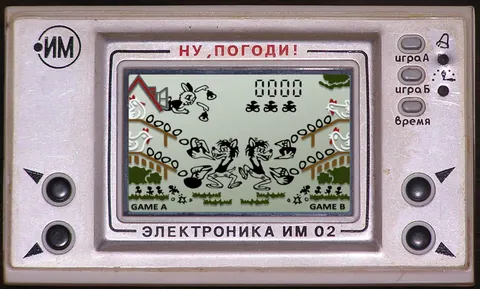
Why on earth is the wolf from Nu, Pogodi! collecting eggs instead of chasing the hare? How did that same wolf help Nintendo turn from a playing-card company into an electronics one? And why is this story the exact opposite of the other cult game of the same generation, Tetris, which came out of the USSR? And finally, the game itself, written by Claude in minutes.
 02
Literatron: ChatGPT in… 1964?!
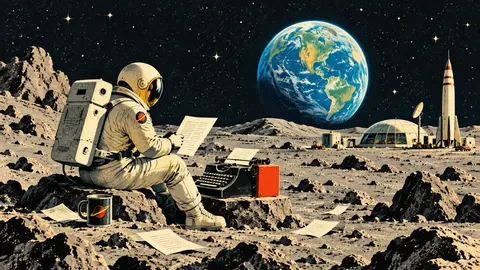
Have you heard of the literatron? It is… a machine that produces text on a user's instructions. It analyzes texts, writes bestsellers, composes campaign speeches, assembles comics and threatens to shrink the language of the media to 500 permitted words. Nothing new, right? We all have AI now, and these plots are everyday life; only that word “literatron” sounds a little retro. Why it does becomes clear when you look at the date on the cover of a slim little book that it is no exaggeration to call prophetic. The novel Le Littératron by the Frenchman Robert Escarpit came out in 1964 in the series Le Meilleur des mondes. But does the invention really resemble large language models? To put it mildly.
 03
ChatGPT, 1981
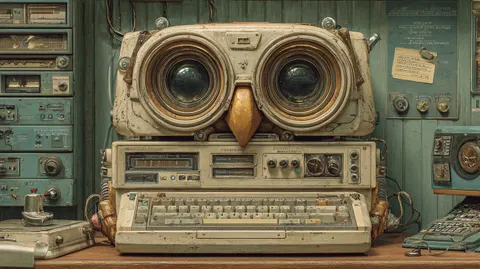
Is AI the great chance of our day? Will we seize it, or let it slip? Propusnatiyat shans (The Missed Chance) is one of Lyuben Dilov's lesser-known books. Here one of Bulgaria's most popular science fiction writers, also known as the author of the Fourth Law of Robotics, isn't even a writer—at least according to the plot. Instead of writing, he orders a series of stories in various genres from his new computer, which creates them in his name and in his style… Sound familiar?
 04
:-) Smile! The Story of the First Emoticon
With the arrival of the internet, text spilled over into images and back again. And although everything in the online world changes at breakneck speed, one “pioneer” symbol has survived to this day. The smile we all use every day, “drawn” with just two or three characters, is perhaps the most recognizable sign of the online era. Fashions, technological generations and social networks come and go, while the “smiley” stays, eternal and recognizable. Do you know who its “father” is? Strange as it may seem, this combination of characters has a specific “inventor,” plus a “godfather” who helped it leap onto the internet. For his venture, a stylized laughing face, graphic designer Harvey Ball earned a “whopping” 45 dollars. He never claimed copyright. Instead, decades later, he set up a foundation that raises money for children in need, whose symbol is, of course, the smile. Smile at life! It’s time for a radiant digital story.
 05
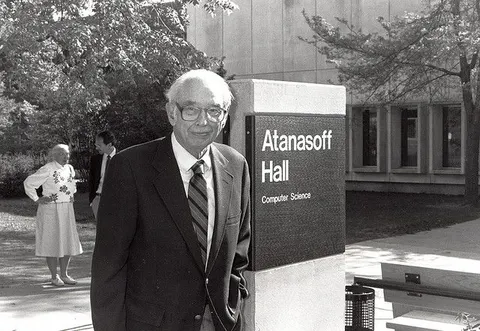
Eight Surprising Facts About John Atanasoff
“The father of the computer was Bulgarian.” We repeat it like an axiom, rarely asking what lies behind it—so what exactly did John Atanasoff create, and was his contribution truly decisive? Here are eight curious details from Pulitzer Prize winner Jane Smiley’s biography that answer the most important questions.
 06
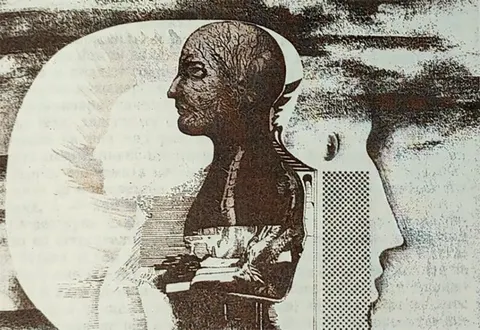
“A Machine Cannot Be a Poet”
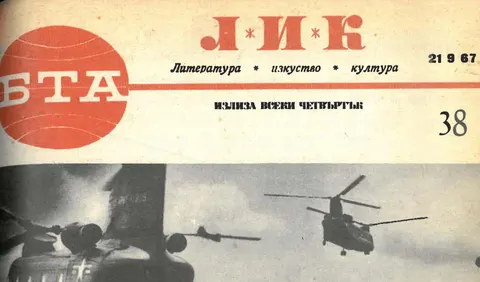
Can a machine learn to write like Pushkin? Or is it leading us into Orwell’s world? This text was published in the September issue of LIK magazine in… 1967! Yet, as you will see, many of its ideas sound as if they came from the future. “The writer-machine? It keeps in its memory a vast store of words and has perfect command of every subtlety of grammar and style; it knows all the organs of sensation and all the ways of writing that writers have developed over the last 3,000 years. This ‘writer’ observes, memorizes phenomena, reasons, processes the data reality gives it. In the end it writes books, and we, reading them, are thrilled, but… we remain cold.” Is Dmitry Zhukov, the author of these lines, right? There is no way to ask him. But, as you will see, his point of view has a lot to say about our own day too. In search of answers to the big questions that move us—about technology and humanity, about poetry and creativity, about “automatons” and true creators…
 07
Who Invented the Toaster? Nobody—It Never Happened
Alan MacMasters, the celebrated inventor of the toaster, made it onto the BBC, into the Daily Mirror and onto a British cooking show. The small detail is that he never existed: two students invented him to show how easily we trust what we read online. Wikipedia itself keeps a list of its longest-surviving hoaxes, and it reads like a lesson in how easily we can be misled.
 08
Did Einstein Bow to Danov? 12 Clichés of Bulgarian History
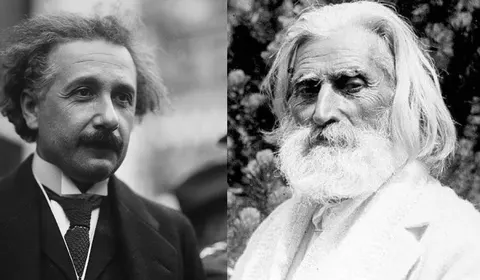
Europe's first Christian monastery, the world's oldest city, Einstein bowing to Petar Danov and Khan Tervel saving Europe: which of these popular claims about Bulgarian history hold up? The historian Alexander Moshev goes through 12 of the most widespread clichés, one by one, guided by the sources and by logic.
 09
“And There Might Have Been No Mr. Rusev… That Is What History Is!”
Why is it worth knowing the past better? Boris Rusev, who won an incredible 34 games on the quiz show Posledniyat pecheli (The Last One Wins) before walking away and returning to his true calling as a high school history teacher, may be the best person to answer. We talk about why history divides us more than it unites us, how to wake young people's interest in the past, what future historians will say about today's strange times, and whether Khan Krum really ordered thieves' hands to be cut off.
 10
Dartmouth: Pouring the Foundations of AI
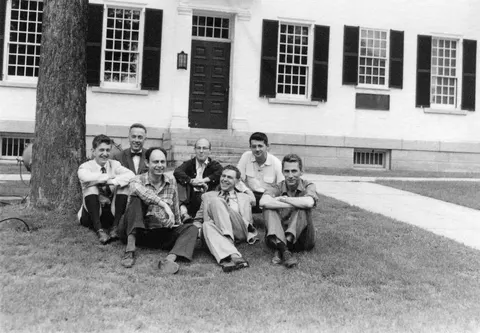
“By 1978 at the latest, we will have a machine with general artificial intelligence comparable to average human intelligence,” says Marvin Minsky, one of the scientists who organized the Dartmouth meeting. It gave birth to fundamental ideas and raised questions that seem more important today than ever… ChatGPT was unveiled in November 2022. But when was artificial intelligence… “born”? The idea that computers can resemble humans and solve a wide range of problems. How many candles will it have to blow out on its next birthday—5, 10, 20? A full 68! Although by 1956 the forerunners of the field, Alan Turing and John von Neumann, had long since made their fundamental discoveries, it is ’56 that is now considered the starting year in the history of the field. For 8 weeks, the greatest scientists in this future field came and went at an American college. The people who would later lay the foundations of the field gathered to talk about the main challenges they faced…
 11
Boxing for a Peaceful World
Wrestling is mercilessly brutal. Boxing is no gentler, and worldwide it is a far more sought-after, contested and glorified sport. Two people stand in opposite corners of the ring with the open intention of landing as many hard punches as they can… while taking as few as possible themselves. Chivalry or barbarism? Poetry in gloves, or life without mask or makeup, laying bare the most unchanging human qualities?
 12
PC Mania, Gamers Workshop… The Legends Return!
You love computers, and to be able to use them… you buy magazines!? Isn't that strange? Isn't everything online? It is today, but this digital story was born in a computer past that feels both recent and very far away. A kid dreams of a magazine with James Bond on the cover, gives up his pocket money to buy it, and loses it to the “big guys” a few hours later. Decades on, Project Lazarus lets anyone browse the complete collection of the legendary Bulgarian computer magazines of the 1990s and early 2000s. Which one did you love?
 13
What's in Apple's Name? The Stories Behind the Web's Biggest Brands
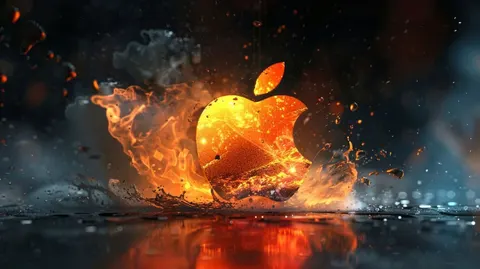
Are Java and JavaScript cousins, and if they have nothing in common… why do they have such similar names? Why did Apple pick something as overused as the apple for its name and symbol? What on earth is… Adobe? Or Google? Does Lenovo have anything to do with Lenin? “That which we call a rose by any other name would smell as sweet,” says Juliet, as quoted by Shakespeare. And would what we call Apple or Amazon smell as sweet under another name? We can only guess. But behind the names of the online world's biggest players there are sometimes funny stories. In the lines that follow, we'll run quickly through some of the most instructive and unexpected ones.
 14
Yevgeny Zamyatin: The Forgotten Prophet
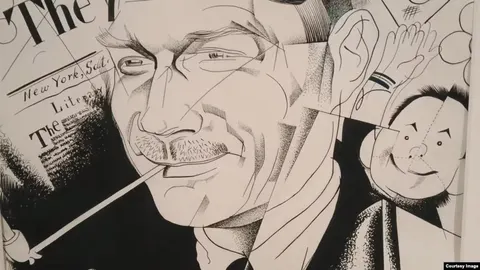
Yevgeny Zamyatin’s We is a brilliant novel because it offers a glimpse of a future in which technology has defeated humanity, locked people in its mathematical grip and turned them into numbers, into tools. We often mention Orwell and Aldous Huxley, and rightly so, but this writer inspired them both. His only novel is a dystopia no less thought-provoking than theirs, because it looks not so much at a possible totalitarianism as in a direction that is even more relevant today.
 15
The Radium Girls: When Technology Turns to Horror
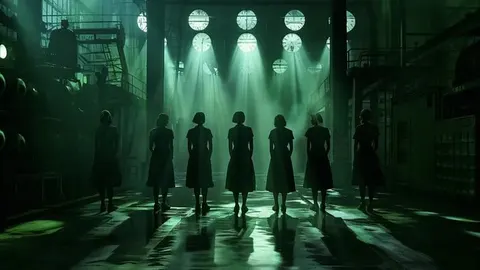
An incredibly powerful phenomenon has been discovered, one that creates a new substance! Not only does it cure even incurable cases of cancer, it will open the eyes of science in so many directions. For instance… lighting up the dark night! Marie Curie discovers radioactivity, wins not one but two Nobel Prizes and paves the way to the future. She opens the doors to a new technology that turns out to be unexpectedly successful… Until it becomes clear that we have badly underestimated its dangers. It will cost the lives of thousands of people who were simply trying to earn a living. Do we know the technologies we trust well enough? Could the much-hyped artificial intelligence, or some other fashionable field of today, prove more dangerous than it looks at first glance? The most important thing is to stop and think, to reflect, to discuss. To tell each other stories. Stories like that of the radium girls are worth reading more often. That is what stories are for—to make us question things, to keep us on our guard. Alas, not all that glitters is gold…
 16
Radio-TV-Gramophone: 5 Unexpected Bulgarian Technologies
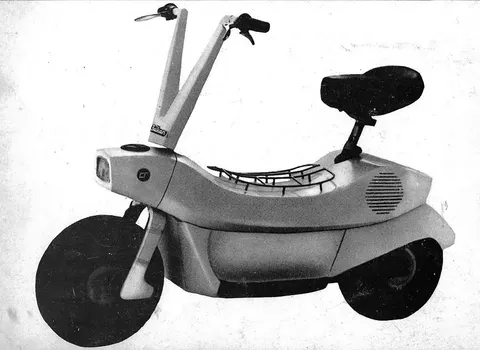
Did you know that the mains voltage in Bulgaria wasn’t always 220 volts? Or that a fascinating Bulgarian computer game from the early ’80s turned into… a prophecy with its very title? What did the first Bulgarian electric scooters look like? And could the “hipsters of the ’60s” who rode them also get themselves a radio-TV-gramophone… provided they could carry 120 kilograms on their shoulder? Once again we set off through the colorful history of Bulgarian technology with the most precise and captivating guide. For 15 years now, Anton Orush has been gathering a sea of information (and exhibits) about its past and present. His incredible life, worthy of a novel, was one of the first digital stories. So here we go, boarding the time machine for 5 stops back in history: 5 fascinating stories from the past of technology in our lands.
 17
Tetris: The Human Who Never Stops Outdoing Himself
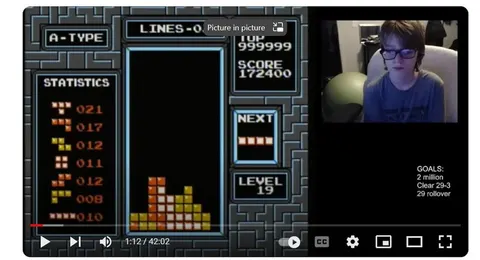
“I’m going to pass out, I can’t feel my hands…” Blue Scuti mutters, before he realizes he has fulfilled a dream that seemed impossible. Almost four decades on, he has beaten, one way or another, the game we have all played. Sitting in front of a retro cathode-ray-tube TV, found after countless difficulties, clicking the buttons of a retro controller for 42 minutes straight at more than 20 taps per second… the teenager reminded us that there is no limit to what a human can do. But how can you beat a game that has no end? And why are this success and the road to it such important news for humans as a species? News about our ability, through cooperation and talent, to keep moving forward… To create, to make things, to find meaning. To give birth to stories. Tetris is a legend that passes through the generations to give birth to new legends. A week ago we took a stroll through the history of the game that came out of a Soviet laboratory during the Cold War. Today we will look at a brand-new record that has so much to tell us about ourselves.
 18
Tetris: The Soviet Game That Has Been Making Legends for 40 Years
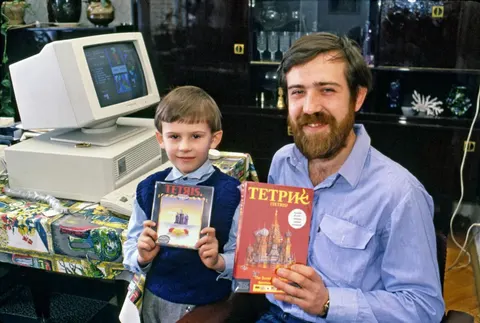
Almost 40 years on, the original Tetris has finally been beaten! The triumph of a likable 13-year-old kid turned all eyes back to the good old classic contest from the days when computer games were a perfect feast for the senses, and to the story of how the game everyone knows was born and became a legend, with its fascinating sides and its dark secrets.
 19
“The Computer Will Be Like Bread!” How Bulgarian Sci-Fi Writers Saw the 21st Century
What will the future look like? What would life in the 21st century be, seen through the telescope of Bulgarian journalists and science fiction writers of the 1980s? Ahead lie five brilliant insights, five dashed hopes and five… particularly interesting and important reasons to stop and think.
 20
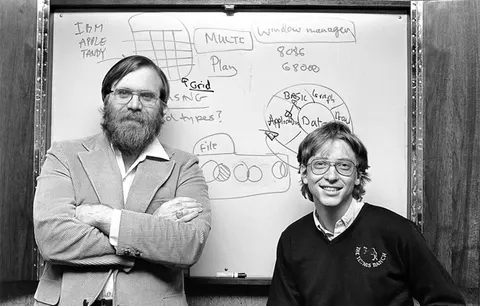
Paul Allen: The Other Face of Microsoft
Two kids become friends over their shared fascination with computers. Then they start their first company together. Less than a decade later, that same company is the first giant of the modern computer age. And while we know a great deal about one of those kids, who for a long time was the richest man on the planet, the story of the other is far less familiar. None other than the computer specialist Paul Allen, the “godfather” of Microsoft, turned out to be the owner of the most expensive private art collection ever sold. And this happened in November 2022, four years after he left this world. A connoisseur of art, a man smitten with sports, a huge donor to scientific research. He is also the rich man who awakened the modern interest in spaceflight. At just 29 he learned that he had a deadly illness, and he decided to live the rest of his life the way he had always dreamed. There is a lot we can learn from the story and the worldview of this unconventional figure. And, even more, we can ask ourselves what today’s tech world would look like if its other leaders shared his outlook.