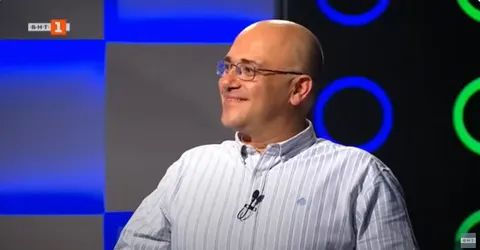
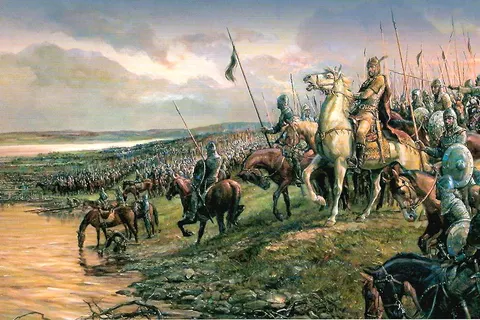
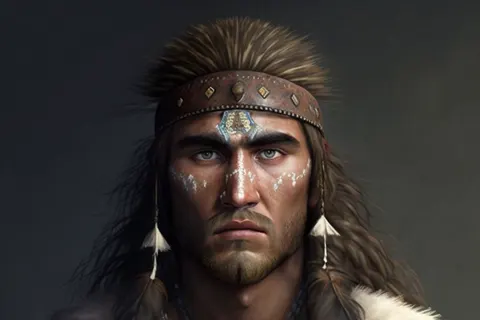
Ivaylo Kunev tells inspiring stories from the Bulgarian past in a magical way… So how did we end up with the words in the headline?
Leaders, the people who know how to change the world, to lead, to build, to persuade. They are the big theme of today's guest, who has spent more than a decade designing and running leadership programs.
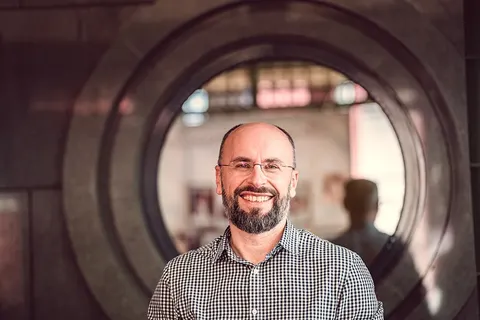
Ivaylo has impressive managerial and entrepreneurial experience that spans decades. At the same time, he knows how to tell a story—his tales of strong personalities draw a huge number of fans. He is the author of the book Liderite: zabravenite istorii na Balgaria (The Leaders: Bulgaria's Forgotten Stories).
Leadership. The subject is so heavy in our part of the world, and in the times we live in generally. So it is time to look for the hard answers.
Is it worth collecting the stories of politicians, entrepreneurs and… khans? Why do we find it so hard to form a political elite and to have authentic leaders as a nation? What would Tolkien have written if he had been Bulgarian? How can Bulgarian history become a personal adventure and offer inspiring examples that help us make our dreams come true?
– How did you turn to Bulgarian history? As far as I know, it happened almost by accident…
– For most of my life I had absolutely no interest in history. In the late '90s I started looking inward—I was more or less forced to, because I had to become a leader of people. Since there was no structured program anywhere, I decided to teach myself. I started reading, wandering around, and one of the concepts I liked a lot was the famous American idea: “copy the successful and you'll become successful too.” I had a huge urge to start collecting stories. Napoleon Hill advised me to build a mastermind group inside my own head and talk to the people I wanted to learn from. That's how I started collecting role models.
– It's easier now! You've got ChatGPT and you can talk as much as you like….
– Back then it was just schizophrenic behavior. But to be able to talk to them, you first have to study them. The first mastermind group I formed consisted of a few personalities who still look great, and others who don't anymore.
The first was Lance Armstrong. At the time he was a real hero, and in my eyes he's still incredible at what he does. I went on with other controversial figures: Margaret Thatcher, Winston Churchill, Andrew Carnegie..
I'd set myself the goal of having these people advise me and give me ideas, but first I had to learn everything about them. Being an extremely extroverted person, once I'd read the stories I couldn't stop myself from retelling them. And people would answer: “You tell it well, but aren't there any Bulgarian stories like that?”
Right then I met an Englishman. I had to sit for 12 hours at Frankfurt airport, in the only comfortable café where I could afford the coffee. That's where a stranger struck up a conversation with me.
When he found out I was Bulgarian, he jumped to his feet and said it was an honor and a privilege to meet me.
I was stunned! Those were different times, and in the West we had a rather dark reputation. We weren't part of the European Union, which is why I had to stay at the airport—I couldn't leave the transit zone. This man turned out to be a serving general in the British Army, and he told me the story of General Vazov, the Bulgarian commander whose troops held off the British at Doiran in the First World War.
That's how it started… it's probably something similar with your own digital stories. Driven by my passion for collecting role models and telling their stories, I started looking for Bulgarian ones too. One story leads you to the next… “Have you heard of the battle at the Red Wall?” You haven't, but you know there's a street named after it somewhere, and you start digging… And gradually my gallery of people came together.
– And then it turned out that many people need to hear these people's stories told by you.
– Yes, I think we need to hear that we have role models. My wife studied at one of the most elite schools in Plovdiv, and most of the time someone there tells you nothing will ever come of you. Whereas if you go to the States, even if you end up in the worst place in the world, you hear: “You'll make it. Such-and-such people started out from here…”
This nihilism really bothers me. I looked it up in the dictionary: it's “unjustified pessimism.” And I think there's also “national nihilism,” when a nation doesn't believe in prosperity and has an unjustified pessimism about its own possibilities. Which is nonsense, because we're the “Bulgar, Bulgar” type—the chant of chest-thumping national pride—who doesn't believe anything good happens here. At the same time we think we're a great nation that dominates everyone else, and yet if you ask about the state, people say: “Nothing good will ever happen.”
– A large part of your stories come from wars. You show extreme moments, when it seems easier to stand out.
– That's why I claim that we—as the socio-cultural programs running our society—are motivated only by a problem; that's the only thing that gets us moving. We become extremely active, and otherwise we just sit quietly. That's why we have a whole string of sayings along those lines. “If it works, don't touch it.” “If the team is winning, don't change it.”
We only become proactive when things get really bad.
Second, there's this external locus of control: if I have a problem, someone else has to solve it for me. That's already double trouble. You're moved by a problem, and when you realize it, you expect someone else to solve it for you. And only when the knife reaches the bone and there are no more messiahs do we get down to working actively.
The third thing, in my view, is this Slavic-Balkan pessimism that the world is a very bad place. Whereas the Anglo-Saxon nations are the opposite—irrationally optimistic.
– Who's your favorite literary hero?
– I grew up with The Lord of the Rings, and the Tolkienesque, fantasy narrative in general has always fascinated me. The problem is that I'm very omnivorous in literature. My knee-jerk answer is something Tolkienesque, but not the obvious hobbits—I'm a huge fan of the supporting characters and subplots that appear and disappear.
On the other hand, I really like the typical protagonist who grows during the journey. Who learns, is weak at the beginning, but keeps adding qualities and in the end becomes a hero, doubts and all. I like protagonists who develop but don't step out of their role as human beings.
– Isn't that one of the most banal plots there is? I've read you saying that every story can be reduced to 7 patterns, which I don't particularly agree with.
– It may be banal, but I, at least, am very moved by that transition, say, from rags to riches—I can consume huge numbers of such heroes. Even though what happens repeats itself like a template, maybe that's where I recognize myself most strongly. You know, maybe our favorite heroes have to tell us, very seriously: “I'm like this.” I'm hardly like that, but the developing protagonist appeals to me a lot.
– If Tolkien had been Bulgarian, what would his world have looked like? Perhaps it would have been very different, because it's largely based on folklore and tradition.
– Yes, but if we look at the big plot, I think it repeats what Bulgaria was going through at the same time. Tolkien writes about the little man who ends up in the clash between great powers—what was brewing before the Second World War, communism in the Soviet Union, National Socialism and Hitler. And in the middle, the little man asking himself, “Does this concern me?”
Maybe I'm simplifying one of the greatest writers, who created a whole universe, but realistically his story is very simple. In Bulgaria we love themes like that too—the little man, though often a sly Andreshko, the wily peasant of Elin Pelin's story, and a wheeler-dealer. But the little man who for some reason has to step into great affairs is, I think, a Bulgarian story as well—maybe a human one, too.
– Is there a plot from Bulgarian history you'd be interested to see told by Tolkien?
– For instance, the famous Valchan Voivoda, a legendary rebel chieftain of the Ottoman era. He never dies; he's reborn over almost 120 to 150 years. He's mythologized in the Rhodope foothills—around Asenovgrad and Pazardzhik. He's always there, a champion of good who punishes the bad, regardless of whether they're Muslims or Christians. And he works for something greater. Valchan Voivoda realizes there's no one to liberate the country, that you have to buy your freedom. So he starts robbing, amassing a huge fortune to buy the land.
It may sound flat, but my first instinct is that I'd love Tolkien to have been able to tell the story of Valchan Voivoda. One of those figures where it's unclear whether they ever existed, how many people have merged into one. How would a great storyteller create him, how would he capture the grand history of Bulgaria? How would he play, for example, with the idea that, strange as it may sound,
the whole world has always owned slaves, and historically we never have
– starting with the Thracians and all the way to the present day.
Why, in a place where in principle there shouldn't have been much humanity, was there no such extreme cruelty?

– The plot with the developing hero really is very common, but somehow not in Bulgarian literature. There must be examples, but none comes to mind right now. Our classic themes are about suffering, not about growth.
– I think you're right, there's no such classic coming-of-age story. Everything goes along until it comes crashing down extremely hard.
I keep proclaiming that people are fighting national nihilism, but it seems to be inherently written into our genes.
– Do you see such stories in real life? You've been teaching leadership skills for quite a few years.
– Yes, absolutely. We have people who manage to create microcultures in their companies, to generate value, to be interesting. I can give a few illustrative examples—the Kyurkchiev brothers from Shumen, the founders of Fikosota and Tesy, who manage to compete with Procter & Gamble. Going beyond the best-known Telerik and SiteGround, even outside the IT business.
The most interesting thing is in places where you could afford to be a less pleasant employer, because no one competes with you on better working conditions or growth policies. But these companies make sure the town grows too. They donate a lot—just as in the past, Bulgarians haven't lost their inclination for patronage. Both historically and today, I'm deeply impressed that many people donate and keep it quiet.
– Can we say there's a Bulgarian style of leadership, something that sets us apart?
– I don't think we really manage to stand out in any way, even locally. If we look historically, we have good military commanders and far fewer good statesmen. But if we look at Serbia or Croatia, for example, the examples are similar.
The whole Balkans don't have many good examples of strategic leadership.
Someone who can pull the people along on his own.
– In the last century, I can only think of Tito.
– Yes, you're right. He's the only one who managed to build a multicultural state and unite its peoples. He also had a strategic vision of what he wanted to achieve.
But what I miss most in our part of the world is the ability to pass things on across a generation.
That's a sign that we're a strongly messianic society. We see the messiah, follow him, and then there's no handover—we look for the next one.
I can't wait to see what happens with the second generation of the success stories we talked about. Yes, we have successful leaders, but almost always they have no continuation. It's the same historically—after a strong tsar or khan comes a series of weak ones.
– Maybe that's also why we can't form anything resembling a political elite.
– Is the reason the cyclical collapses? Or our self-image? Or precisely that we can't pass things on? If there's one thing the Anglo-Saxon dynasties are extremely good at, it's exactly passing things on.
– Maybe it's somehow encoded in our culture. But if so, how do we create sustainable models rather than messianic ones?
– We need to realize that it's a school, that it requires a class, a stratum of society that aspires to it. Just as an IT stratum is forming now that aspires to create startups,
why shouldn't we have a class or stratum in society that wants to govern?
If you look, even in the Labour Party, which is supposedly left-wing, there are generations working to become political leaders. And we don't do that. Even in a business context we treat leadership as something on the side—someone is a good professional, starts a company, and manages people on the side.
I never stop repeating at the trainings I lead that
managing people is a full-time job; you can't do it on the side.
And second: it takes a school. In your view, as someone who loves words, how many of the people who now present themselves as politicians can hold a structured debate with arguments and counterarguments?
– I think we don't demand it of them, so they have no reason to develop it as a skill. And what's the incentive to become a politician today anyway? You know you'll inevitably attract a negative image. What's left are the perks, as in the days of Bai Ganyo—the archetypal Bulgarian boor from Aleko Konstantinov's 1895 satire—and his cronies Gocho-oglu and Docho-oglu.
– Society really doesn't want debate. It doesn't want rhetoric, it doesn't want structured speech.
In fact, when someone starts speaking in a structured way and doesn't use stereotypes, you hear: “This guy thinks he's so smart.” So what we want is a bit of vulgarity, maybe?
– Exactly. And then comes the “Facebook debate,” which vulgarizes things further and tears down authority. Because everything comes down to very extreme positions, where nuance disappears and so does rhetoric. What's left are slogans, the most primitive form of communication.
– There you go, we just had another month of political debates, and we've had far too many of them. The billboards are identical, the slogans are identical: “we can,” “we'll fix something,” and the talk in the political studios is all “anti,” because it's much easier to say “look how useless these guys are” than what you're proposing, how you want to shape something, how you'll achieve it strategically and tactically.
– The trend is heading that way too. I remember the '90s, when there were pre-election debates. They could change election results with rhetoric, with drama. Now the people who actually have power don't even sit down to talk in front of us.
– This year I allowed myself to watch a debate—one of the big TV channels said it would put up the economic experts. I wanted to see an economic debate between GERB and PP, the two main rival parties. Horror! I at least understand presentation skills and economics. They clearly understand neither.
If this is the elite—the people engaged in leadership and politics—then we're in deep, deep trouble.
Everyone mocks Macron for being married to his grandmother. But if you see how well prepared Macron is to hold a debate, to structure a thesis, to have a strategic concept, none of them can come close.
He's been trained to be that. He studied at the famous school for politics, he can quote all the great rhetoricians, every rhetorical model that we use, consciously or not.

– I read a heated debate over whether your stories about the past are fiction or history. You don't claim to write historical works, so where do you place them?
– Not one of the history editors I worked with wanted to put their name on it. Yes, my texts aren't historical. Looking for which “gender” to assign myself, I decided it's what Truman Capote wrote—creative nonfiction. Right in the middle between the novel and the documentary, because I maintain that the main facts in my book are true. But yes, they're embellished, a bit like a chessboard. Every white square is absolute truth. But since the truth is boring by nature, I've added fiction. The chronology is correct, but enriched with references that may not even overlap geographically.
Here's an example: the First World War. I tell of the quarrels between General Stefan Toshev, who commanded the army, and the commander-in-chief, Field Marshal Mackensen. The whole story is structured as though they're practically talking to each other, but they never did. They had one single meeting lasting a few minutes. The rest of the time their adjutants wrote to each other—one was in Germany, the other in Bulgaria.
– And are your criteria still the same: you write about people you'd like to emulate in some way?
– 100 percent! But I've now added another one—that they shouldn't be all that famous.
– I understand you very well. Sometimes you just have to close your eyes and imagine the story. I have a novel where I had to do that too—I write about an incredible character, and when people tell me their version of why, for example, he flew off a bridge—whether by accident, or to impress his future wife… you have to close your eyes and imagine. But history needs stories.
– Exactly. But my history editors were simply furious. Gurko doesn't like the opalchentsi, the Bulgarian volunteers in the Russo-Turkish War of 1877–78. “How do we know? Show us proof—where did he claim he didn't like them? Here are five official letters saying he actually liked them.” Fine, but if he liked them, he'd hardly assign them as a disarmed foot convoy to the baggage train. On the contrary, they'd be on the front line. “We can't claim that, there are no historical arguments.”
All right, what I write is creative nonfiction. That is, I recount historical events in a gripping, narrative, literary way, without sticking 100 percent to objective historical truth.
– But I think that's the only way history can be told excitingly, so that it wins the attention of young people, rather than like in a textbook.
– Now that matters much more to me. To motivate someone to sit down, to read, even to come and refute me. For someone to have gone deep into a subject they might otherwise never have heard of.
And if we add emotion too, who knows, maybe they'll remember it?
– As someone who tells stories professionally, what do you think—won't technology take exactly this away from us, and start telling us stories that move us?
– I really do believe we have 7 basic plots. If I'm right, if all great stories are built that way, then there's no good reason why artificial intelligence shouldn't start writing better.
The question is, what is genius? I define myself as “copy/paste.” I haven't invented anything in my life; I'm machine self-learning. I pile up stories—I consume 100 to 120 audiobooks a year, over 70 paper books—I pile them up and then steer them into a story.
So up to my level or a bit above it, people who are simply aggregators, the ones who feed everything into a mathematical model will be blown away. People like me just don't stand a chance. But F. Scott Fitzgerald, Hemingway—how would you ever come up with Benjamin Button, how would you think of it?
There isn't enough genius out there for an algorithm to accumulate and grasp its pattern.
– Maybe there's another kind of genius, though? And it'll give us ideas that surprise us. However many geniuses there are, they too are limited to what's in their “box”…
– Is that so? We're capable of abstract thinking, of imagination. Yes, AI will do Einstein's experiments on space-time, but can it come up with a new experiment, imagine something that hasn't already been thought up?
– Why not?
– In my view, algorithms currently work only with the power of aggregators, of existing knowledge. For now I see no danger to humanity at the level of creativity, simply because my understanding of the world tells me that no artificial intelligence could be creative.
– But then we're becoming less and less creative ourselves, withdrawing into ourselves.
– Fact! And the easier things get for us, the fewer reasons there are to be creative.
Let's imagine a not-so-unforeseeable future: a universal basic income in the EU. It seems so logical—an economy replacing humans. Self-checkouts in supermarkets, machines restocking shelves, robots doing the producing. At some point it will generate enough added value for governments to hand out an unconditional income and basic medical care.
Great! An anti-utopia immediately springs to mind. We'll have hyper-obese people who won't bother to strain themselves. My 300-kilogram body will be the norm; we'll have 80 percent totally degraded human beings.
On the other hand… some of the greatest discoveries were made by a bored class. Oscar Wilde is bored—he was born rich. We have the whole of Russian classical literature, bored. Dostoevsky, and again Hemingway, Fitzgerald. A bored class! Which, out of boredom… starts producing remarkable things. That's how I picture it. 80 percent degradation and a handful of people who will create… and oh, how they'll create!