Is there any point in learning foreign languages?
Machine translation has developed astonishingly fast, and today it manages to capture a large share of the words that need to appear in another language… Have we reached the limit, and what comes next?
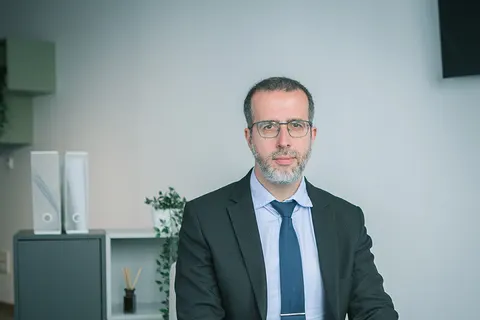
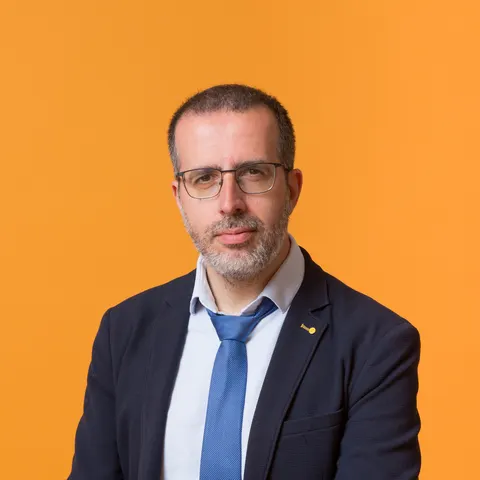
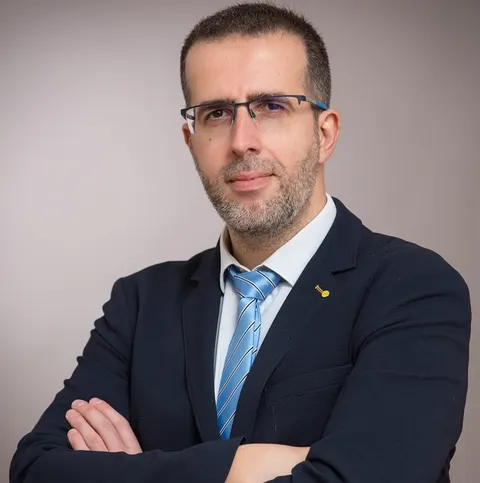
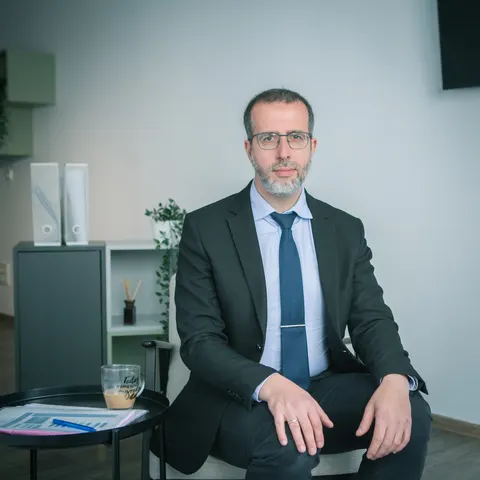
Kaloyan Kirilov is a translator and interpreter with almost two decades of experience. Thanks to him, the words of politicians, speakers and other public figures reach the ears of international and Bulgarian audiences. He heads Slovored, a company for translation and language services.
The art of translation is called an art for a reason… but will it keep that status? In the age of advanced artificial intelligence, is speaking a foreign language a pastime for the chosen few or a prerequisite for success?
And… will we teach the algorithm to curse convincingly enough to sound like a true native speaker?
– How do translators use machine translation systems in their everyday work today?
– In different ways. Some reject them. Others use them like parrots. Still others try to use them a little at a time. As with everything else, the extremes will gradually fall away. Machine translation systems have a little-known function: they help with spelling out words and even whole phrases.
I don’t need to use everything the machine suggests, but
if I can type “непротивоконституционствувателствувайте” (neprotivokonstitutsionstvuvatelstvuvayte, the famously longest word in Bulgarian, roughly “do not act unconstitutionally”) by pressing two keys instead of 34, I would definitely prefer that.
As a professional, this gives me a huge advantage over people who refuse to do it.
It’s also good to check whether the word really is spelled that way. Sometimes artificial intelligence hallucinates or makes other mistakes. Because I’m an experienced translator,
the check is often instantaneous; all I need for it is my own obliging memory.
If necessary, I can do a more thorough check. My translation tools have another kind of indexed memory that I can search. I can see how I’ve translated this word before, or how the client prefers it to be translated. I can look it up online. I can ask a colleague in a professional group. The result is that the work gets done quickly and correctly. Instead of only quickly or only correctly.
– And yet… all these nuances strike me as capabilities that, before long, a language model lightly fine-tuned for personal needs will have. Of course, we live in unexpected times, and everyone adapts in their own way.
I try to have my children start learning a foreign language as late as possible, for the sake of the foundation. I think the most important thing is for them to know their native language thoroughly, as fully and with as much nuance as possible. Most parents do exactly the opposite—they want their children to learn a foreign one as young as possible. Who do you think is right?
– On this, you and I are very different. At home we speak two languages almost equally. I see the logic in what you do, and I respect it. My logic is different. Our native language is important; there is no doubt about that whatsoever.
A foreign language, however, has penetrated so deeply everywhere, into every sphere of global and even local life, that an early start with it gives you an advantage.
An advantage I can’t describe any other way than as “unfair.”
I’m a pragmatist, not an ideologue. I don’t say that as if one were better than the other. The world needs both kinds of people. Pragmatism is simply the way I choose to live.
The foreign language is here; it is everywhere.
If that means the child will need extra work on Bulgarian to know and master their native language well, then that extra work has to be done. It shouldn’t be neglected, which is what many people do.
Children don’t end up illiterate in their native language because they learn foreign languages, but because not enough extra effort goes in. All of us are responsible for that extra effort, but naturally, above all the education system and the parents. There definitely needs to be work in that direction.
– But it still remains foreign. We call our language “native,” our “mother tongue”; throughout our entire evolution as a species we’ve been used to having a language of “our own.” Of course, I respect your approach.
Then again, like never before, Douglas Adams’s Babel fish seems possible today. You pop it in your ear and stop thinking about the fact that there are different languages. It seems so easy to switch on AI in some form and read the subtitles. Even to speak some exotic dialect…
– New technology solves existing problems, but its limitations in turn define new ones. It’s wonderful at recognizing human speech. But only if there is no other noise; if people speak clearly; if several people aren’t talking at once; if nobody lisps, speaks in dialect or mumbles under their breath. After so many years of experience as an interpreter, I can say one thing with absolute certainty—you can only translate well what you can hear well.
A Babel fish? Maybe. But it will only fit Babel ears.
– Only those problems seem easier to solve to me. I remember the horror, back in the day, of recording an interview on a dictaphone; today the phone picks up everything. I remember how unreal it seemed for AI to turn a conversation in Bulgarian into text, and now it does it more flawlessly than if I had transcribed it myself. Won’t translators become redundant?
– History shows that new
technologies don’t so much destroy professions as push them in new and interesting directions.
For the situations in which people used to say, “I don’t know what it says there, something in Chinese,” translators are already redundant.
When I started out as a translator, my first job was in an office where clients regularly walked in. Someone wanted to know what their aunt in France had written. Someone else dictated letters, and I translated them into English. With the development of machine translation, those clients are gone.
Recently, foreigners on the street have started asking me questions through Google Translate. On that front, the war is already lost—but only if we see it as a war. Why not see it as an opportunity instead? The people who used to translate conversations, greeting cards and personal correspondence now have the chance to do something more interesting, to adapt, to develop their skills.
– Or will they only be needed when the translation has to be precise—literary, technical, scientific…?
– Translators will always be needed because of something very important—the way the foundations of society are built.
Everyone can be held accountable for their work. Human errors are punished, and that’s why society trusts that professionals do their jobs conscientiously. How can we punish artificial intelligence for a wrong translation? By switching it off? Will we punish its creators? Wherever there are serious consequences and responsibility to be borne, someone will be needed to bear it… unless and until something fundamentally changes in society, but that is beyond the scope of my competence and my ability to predict.

I also want to pick up on one phrase from the question.
“Precise translation.” That’s a subjective measure. Speech isn’t like mathematics; words aren’t numbers.
One isn’t equal to itself and isn’t equal to one. Every word, every phrase, every sentence can be interpreted differently by different readers.
In chess, it used to be believed that the best grandmasters played (almost) perfect games. Then came the supercomputers that beat Kasparov. Then came the next generation of self-learning machines that beat the supercomputers. Now self-learning machines combined with grandmasters beat the self-learning machines. Who knows what comes next. Maybe self-learning machines will change the very definition of “precise translation”? Maybe we humans aren’t capable of truly precise translation.
What we are capable of is human translation. With all its advantages, flaws, even emotions.
At this stage, machines are capable of almost-human translation, but they lack that one tiny thing. Just like in the chess analogy. The translator and the machine in tandem beat the machine. At least as far as the translation being human is concerned. If there is such a thing as “the perfect game” in translation, that’s it.
– What’s the biggest or funniest blunder in your experience as a translator?
– As a translator of written texts,
my funniest blunder was writing “лека коза” (leka koza, ‘light goat’) instead of “лека кола” (leka kola, ‘passenger car’).
Of course, the word “goat” exists and is perfectly valid in Bulgarian, which makes it harder to catch as a mistake. The editor had missed it too—we’re human, it happens!—and so it stayed in the final document.
As an interpreter, my mistakes most often come with names. Once I had to interpret during a visit by Albania’s women’s youth volleyball team to a Bulgarian ministry. It had been agreed that the conversation would be in English. I handled the conversation itself well, but I don’t think I managed to pronounce a single one of the players’ names correctly. I hope they forgave me.

– I once ran an experiment with translation algorithms, which a year ago were doing quite well. How have they developed since then?
– I haven’t seen any huge difference in the quality of neural machine translation, or even of large language models like ChatGPT, compared with a year ago. On the other hand, I do see a huge difference in the quality of the answers the models generate to queries. They definitely do better with hallucinations and incoherent statements.
In translation, the problems are all the same ones, and all still unsolved.
The system uses an algorithm to determine which next word is most likely. Let’s say we’re translating a document with ChatGPT, and in it we use a particular term that is repeated 28 times and is expected to have a translation that is repeated just as many times. Eighteen times ChatGPT will use exactly the right word, but, alas, five times it will use another one, also correct in certain contexts, but not in this one. A few times it will translate it in a completely different way. Once it will leave it out altogether.
The result is a hodgepodge. It’s hard to bring order to this chaos.
At my translation and language services company, we experiment a lot with these tools. We’ve had some success in writing better prompts, for example, “translate this word exactly this way.” We use software built on GPT-4 and adapted specifically for translation. Even with it, the results are inconsistent. A user can’t simply upload a document and get it back translated so that it serves a particular purpose. I’m not convinced that the current way large language models are structured allows for anything that would guarantee the golden rule: one term corresponds to exactly one translation. On top of that, the Bulgarian of large language models limps quite badly.
– What do they find hardest?
– Context, definitely. They still can’t distinguish which text serves what purpose. Even if you tell them explicitly that this is a particular type of text and tell them exactly which words to use, the results are usually unsatisfactory. Single sentences, short paragraphs, long paragraphs, working with whole files—the results are the same.
– What are the biggest problems that can come from using machine translation mechanically?
– The end result of a poorly applied process is meaningless, incomprehensible texts—exactly
as when we have a tired translator who isn’t thinking at the end of the day and translates on autopilot.
Inconsistent use of terms, missing words, lost meaning. The consequences and problems for businesses and for people are many—material or reputational damage, costly mistakes and misunderstandings at work, health problems.
Any mistake can have an effect, but not all mistakes are equal.
The more responsible the task, the less we should blindly trust machine translation.
If I get the grammar wrong or miss a word on a menu I’m reading in a restaurant, that’s merely unpleasant. If I get a patient’s diagnosis wrong in their medical records, it’s life-threatening. Who is responsible in that case, and whom can we trust? I think the future of our profession depends on how people answer these questions.
– Is it getting easier to translate from English into Bulgarian because of all the foreign words we borrow uncritically?
– In my view,
uncritical borrowing makes the translation process much harder, as well as the use of the final translated product.
Professional jargon is often the most uncritically borrowed, and so it drifts further and further from Bulgarian. The result is deeply confusing—if you don’t know the established professional jargon well, your first instinct as a translator is to try to translate some of the phrases.
I’ve often been surprised to run into something that translates quite easily and sounds logical, but has nevertheless been adopted as the foreign word. I use the translation, and the clients say: “That doesn’t match the jargon the experts in the field use.”
People look for the foreign word because that’s what they’re used to. It’s a real problem.
In our work we’ve found a solution, since we use experts from the field we’re translating in, but in doing so we pull apart things that it would be better to bring together.
– Is there a Bulgarian idiom that, if you saw it translated correctly, would surprise you or make you fear for your profession?
– A close friend of mine, also a translator, and I have a favorite game—using literally translated English idioms in Bulgarian. “Sorry that I have to smash it for you” for “sorry to break it to you,” “it doesn’t make me sense” for “it doesn’t make sense to me,” and so on. I’m sure that
I’d be startled if one day I saw one of these deliberately mangled idioms translated back
into English incorrectly, to preserve the joke. It would mean that the machine understands our humor. Once it starts understanding and has consciousness, things become completely different.
– Which rule of Bulgarian spelling will algorithms never learn?
– Capital letters. They seem determined to put them everywhere, imitating the English rules. Prefixes and suffixes. Word formation—for example, from “проклет” (proklet, ‘spiteful’) they make the noun “проклетство” (prokletstvo), even though the correct word is “проклетия” (prokletia, ‘spite’).
– Does the way we try to give AI our tasks resemble the way we talk to a foreigner?
– I definitely see similarities. We try to make artificial intelligence understand us—with quite variable success. And sooner or later we also try to teach it to swear in our language.
– With foreigners, we can pull that off. What about algorithms?
– “I’m sorry, but I can’t use obscene or offensive language. I am a program designed for constructive and informative conversations.”
After a few attempts, I managed to get ChatGPT to say “rascal” and “pig.” I think that when it comes to swearing and crude language, we humans can manage perfectly well on our own…