Online communication turned out to be an unexpected challenge for motherhood, and for parenting as a whole. On the web we found ourselves surrounded by advice and authorities, by jokes, but also by insights that helped us through hard moments.
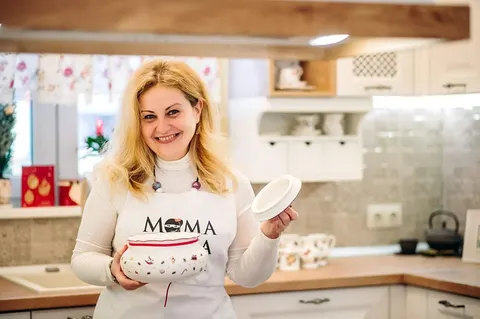
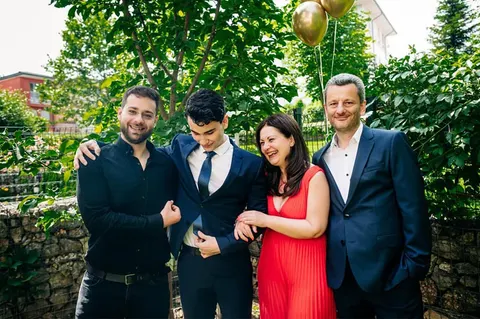
Who hasn't heard of Mama Ninja? Maria Peeva is a blogger and irrefutable proof that meaningful influencers exist. Influencers who know how to entertain their followers and also help them with knowledge and experience. “At first I thought I'd start a fashion blog, but the boys laughed out loud. They suggested a cooking blog, and that time it was me who laughed. In the end I decided to make a blog where I'd share the everyday life of a (not) entirely ordinary Bulgarian family,” she writes, and in recent years her texts have become priceless reading for many.
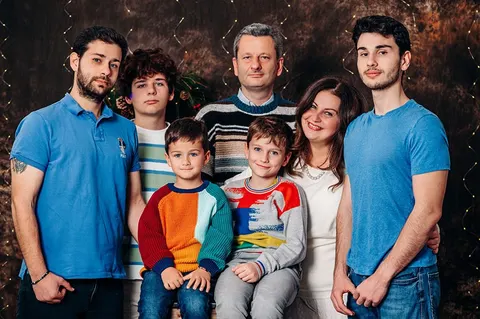
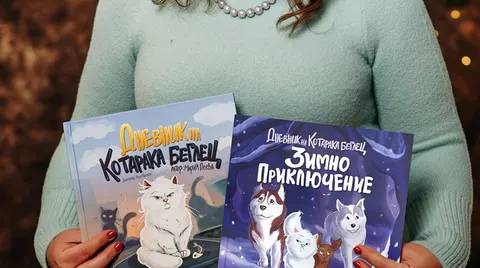
A mother of four sons spread across two decades, she is also a grandmother and the keeper of a colorful list of pets. A translator by training, Mama Ninja slipped almost unnoticed into the role of blogger, and then of writer.
How has the online world changed parenting? Should we protect children from technology? Why is it still important to be careful and picky about the advice we get online? And… what should a person never, ever say to their children?
– What are the most important skills a ninja mom needs?
– One of my sons came up with the nickname. He used to draw comics—he must have been seven or eight—and the characters were his father, his brothers and me. He drew me as a ninja. I'll admit I felt a little hurt. I thought: “Oh, why couldn't he draw me as a princess, or as Wonder Woman, say, instead of some ninja?” So I asked him, and he calmly explained that I was a ninja because I was fast, quiet and
on top of everything, I always catch him when he's plotting some mischief.
So apparently those are the qualities.
The nickname caught on because, I think, all mothers recognize themselves in it. When we have to, we become brave and fast, and nothing can stop us—ninja moms. The rest of the time there's no harm in being ladies, or housewives, or whatever anyone wants to be.
– And how do the most important skills of a ninja dad differ?
– Fathers today are far more present in their children's lives than they were twenty or thirty years ago. I've seen this positive change in our own dad at least, and the blog and my page let me stay in touch with hundreds, not to say thousands, of parents.
It used to be accepted that women raised the children, even though they worked too. Fathers… it was good, it was a gift from God, if they decided it was proper to “help” around the house. Other men even looked down on it.
For me, a real ninja dad is one who is present in his child's life not just as the person who takes them to the movies once a week. He takes part in all the countless obligations on an equal footing with the mother.
– How has the internet changed parenting?
– It's much easier to find all kinds of information and different points of view and to sift out what suits you. It's much easier to find people with similar interests and make friends with them, and not only virtual ones.
There are downsides, of course. One of them is
the pursuit of perfect parenting and the guilt of not measuring up to your role models.
But with time, quite naturally, that corrects itself and the fake role models fall away.
Another downside is that parents now worry not only about whom their child might meet on the street, but also on the internet. Every era comes with new problems. And with new solutions.
– Tell us some interesting stories from readers who've reached you online.
– There are hundreds of them, but I can say one thing about all of them—our family stories and the readers' alike.
Even the most unpleasant, embarrassing and confusing situation isn't so terrible if, some time later, you can tell it at the table and laugh about it with friends.
That point of view has helped me a lot over the years. That's why I always tell it to mothers and fathers when they share a problem.
The kid threw up on the dog and the dog ate it? Your husband's favorite sweater shrank? You dropped the car keys in the washing machine? You brushed your teeth with hair-removal cream because you were so sleepy you couldn't see what you were doing?
Imagine telling it to a group of friends and everyone laughing, you included. Well, yes, it's unpleasant, but it's also terribly funny. Like 90 percent of all the little things we get worked up about at home.
A friend once
told me I was as patient as an ox. To this day I don't know whether it was a compliment.
Patience may well be a parent's most valuable quality. But don't worry—even if you don't have it, like it or not, you'll develop it.

– Should we protect children from technology?
– No. They live in a world that is technological and will only become more so.
Protecting them from technology is like not teaching them to read so they won't read some bad book
and go down a bad path. Not protect them, no, but we do have to teach them to use it to their benefit, not their harm.
– When does using the phone as a babysitter become a problem?
– You mean giving the child a phone so they won't make noise, say when you're at a restaurant or a bank, right? I've done it, of course. But yes, it becomes a problem when there's no sense of measure. Same as with the TV and everything else. “The dose makes the poison” is a good principle, and not only in pharmacy.
– Your eldest son is a programmer. When did you realize that's what he'd do? How did you take it, given all the stereotypes around this profession of ours?
– I always knew he'd work with something to do with computers. He was practically glued to the computer, and not just playing games but making things—it interested him.
He talked me into letting him build me a website, just like that, so he could learn. At one point he enrolled in psychology—now that did surprise me. But his father and I never stopped him or talked him out of anything. All knowledge is useful and sooner or later it comes in handy.
– What's behind the success of your site?
– Lots of people write well and lots of people have something to say. Let's say my great talent is gathering such people together.
– Your children belong to quite different generations, so you have perspective. What changes most—in qualities, interests, worldview?
– I can speak for my own children; I don't know whether these observations hold in general. But it seems to me that
they're becoming more and more independent and standing up for themselves more and more, and from an earlier age.
They're much better informed—they know what's dangerous for them. Recently my husband was trying to persuade the boys to go to their youngest brother's match. It was a very interesting dialogue; I laughed out loud. After hearing him out, one of them told him he was manipulating them with “guilt tripping,” and the other added there were also elements of “gaslighting.” Our eldest son still comes when his father asks. I don't know what the youngest will answer when he grows up. I don't know whether that's good or bad. But I wish I'd once had the chance to defend my position like that in front of my own parents, who were quite strict and always right, even when they were wrong. I'm at peace knowing my children will never let anyone manipulate, boss or use them. That's not a bad thing.
– Has online advice been useful to you in raising your children?
– Yes, of course, both online advice and books. But always in moderation and always with critical thinking. It's good that the information is there; being able to sift through it is priceless.
– And what's the most destructive advice you've come across?
– The most awful advice I ever got was from my father, who was a very loving and responsible parent, but also a strict one. They never hit me or anything like that, but I was always afraid of them, which isn't the same as respect. Let me get back to the question. My first son was a gentle child, and I had a lot of help with him. The second, though, has always been a kid with character, and once he stood up to his grandfather. And then
my dad said: “You have to break him while he's little. Children are broken when they're small.”
And I looked at him in astonishment: why on earth would I want to break my child? Can't he just be stubborn? People are different, after all. I don't want a broken child.
After that I stopped leaving the kids with my mother and father. I was worried they might go and break him on me. With good intentions, of course. They weren't bad parents, just rather conservative.
Still, I owe some of the good traits in my character to their mistakes, so it isn't so terrible for parents to make mistakes. We're most likely making mistakes as parents too, but that will only become clear a good while from now.
– Can the mother-in-law, that legendary villain, turn into… a friend?
– She can. My son's mother-in-law and I became best friends. And the funniest part is that our children divorced, but the two of us stayed friends. Which, of course, isn't a must—sometimes you click with someone, and with someone else you may not get that close; it's a matter of character and interests, too. But even if there's no friendship, there has to be respect and consideration. That part is a must.
– Is the institution of the grandmother still alive?
– What a lovely question. Grandparents are a source of fascination for children. And the other way around. They're a leap into a completely different time and generation. I think contact between grandparents and grandchildren is equally good for everyone involved. And in that sense—yes, the institution is alive.
It has changed a lot, because very few grandparents take an active part in raising the children—not only because people rarely live in the same town these days, but also because the grandparents are still working. But whether you see your grandchild every day, every week, or just take them somewhere on vacation in the summer, that contact is important and rewarding.
I hope all mothers and fathers get the joy of a grandchild. It really is very different.
– Why are there so few women in politics and in leadership positions in Bulgaria? We've never had a woman president or an elected woman prime minister…
– Because to a large extent we're traditionalists. Once we had workmen over. I work from home, so we decided I'd deal with them—keep an eye on them, give them tasks. On the first day they came to ask where my husband was. I said he was at work, but why? They wanted to ask him something about a shelf. I answered them, and they still insisted on asking him. It was very strange; I've rarely felt discriminated against, but those workmen, otherwise very polite, did exactly that. They treated me as if I were feeble-minded and couldn't tell them where to mount a shelf. How do you imagine
those people voting for a woman president, when they don't think a woman can judge where a shelf should go?
– I have two little ones, aged two and five. What should I never, ever say to them?
– Oh, may they be healthy and well!
I never tell mine that they won't be able to manage something.
Even when I'm not sure they'll manage, I don't tell them. Even when I'm sure they won't, I don't tell them. Let them try. And it's amazing how often they do far better than we expected. Sometimes I think our children turn into good people not because of us, but in spite of us.
– What's the best thing about having lots of children?
– The best thing is that the emotions are always mixed, and even if you're worried about some particular story with one of the kids, at the same time there will always be joy about another. And
it's never boring, never ever. You live several lives at once.
– What's the strongest argument for not stopping at one or two children? Does the motivation always have to come from within?
– I don't know how this will sound, but I don't talk anyone into having children. However a person feels about it, that's how it should be. It's not something we should do under pressure because society or our mothers are pushing us. The only thing I can say is that
I don't know a mother or father who has held their baby and said: “Ugh, why did I ever have you, go back where you came from!”
There are probably some like that; I just don't know any. But it isn't easy either. A friend once accused me of making it look easy. It isn't. Not for me either. Only you manage, and not just manage—you have a pretty good time along the way.
– As someone who has contributed personally… how do we get out of this wretched demographic crisis?
– Maybe a good step would be for people to feel more secure. Bulgarians love children. But we have no sense of security—we don't trust our healthcare or our education, nor are we confident our children will grow up in a safe environment. Maybe if we had that kind of peace of mind, people would have more children.
Around me there are many families with more than two children, but they're all people with professions and businesses that give them some independence to raise their kids without relying on the state. We manage in spite of the state, not with its help. Maybe if we had a state you could rely on, more people would have children. God willing, that will happen too.
– They say “little children, little problems; big children, big problems.” Is there any truth to it?
– It's the plain truth. And it's rather unfair, because I used to imagine: there, now they'll finish school, go off to study, and I'll stop thinking about them. There, now they'll finish university and I'll stop thinking about them. Now they'll get married and I'll stop thinking about them.
But you never, ever stop, and there's always something to worry about with them.
In that sense the saying is true. As for independence, though—it gets easier and easier. And time, too: there's a huge difference between the time and care a baby demands, when you have to be available 24/7, and a teen who just needs a full fridge and clean clothes. And for you to be available whenever they deign to talk to you or sit down to watch a movie together once every few days.
– Do you have any favorite kids' sayings about technology?
– When my eldest son, the programmer, was little, he had a limit on how many hours he could spend at the computer. And he kept repeating how unfair it was—I remember his little face, those angry blue eyes, the knitted brows, the pouting mouth. He'd say: “One day, when I have a child, I'll never, ever limit them in anything.”
Guess how it turned out? My grandson Bobby wasn't even allowed to watch TV until he was two. I laugh a lot at those memories.
– Can we teach artificial intelligence to be funny?
– We're trying, but it doesn't come easily to it.
– Won't blogs become redundant now that ChatGPT can already give us even the most convoluted recipe?
– It's entirely possible they'll become redundant. People write books with artificial intelligence, paint pictures and so on. But I don't know a single creative person who's genuinely worried about it.
– Soon technology will allow children to grow in artificial wombs. As an experienced parent, how does such a future strike you?
– Very gentle on mothers. Why not? I believe in science.