“A great love story!” says a teenage girl… about Under the Yoke?! How can that be, when Ivan Vazov’s 1894 novel about life under Ottoman rule, Bulgaria’s great national classic, is supposedly incomprehensible to today’s young people and we have to “translate” it for them…
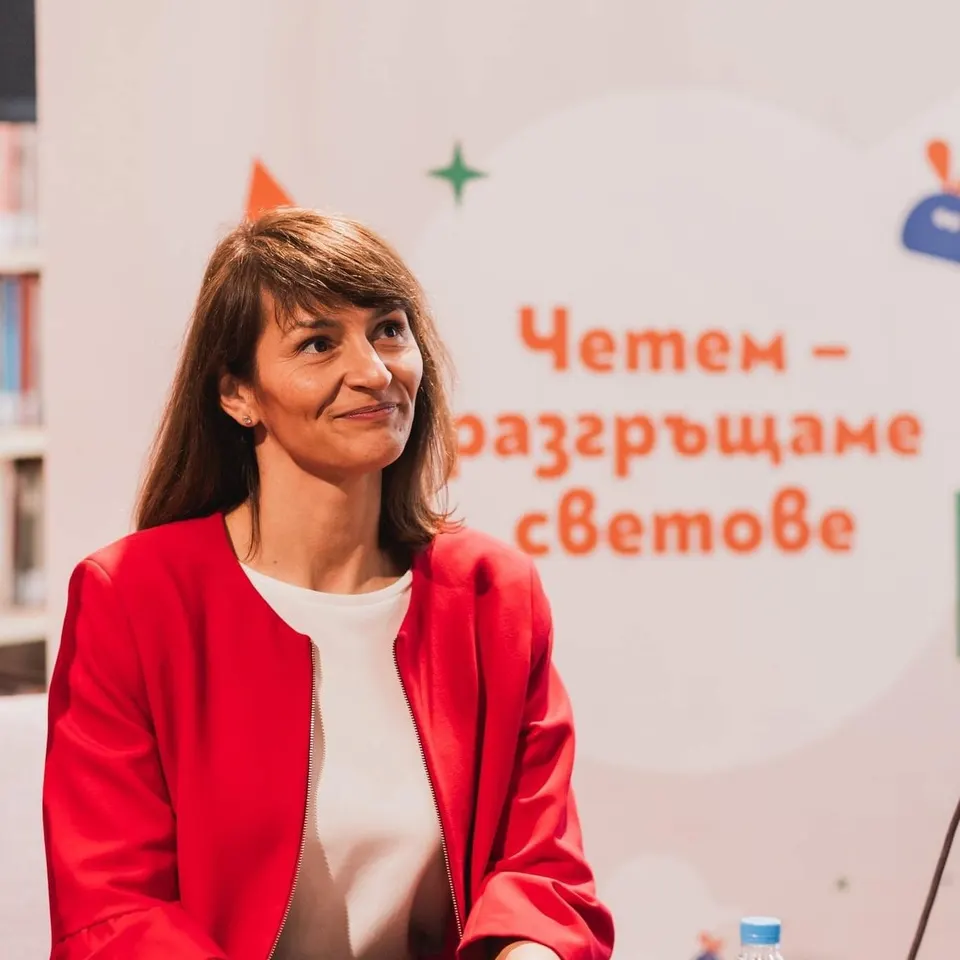
Val Stoeva is the ideal guest for a conversation about children and books, about the love of reading. She is the creator of the invaluable platform Detski Knigi.com (Children’s Books.com) and the foundation of the same name.
Why is reading more important than ever for children in the technological world we live in? How do we choose reading for them from a sea of titles and light the spark? Which books will a child like, given their age and interests?
The series “Digital Children” continues. I am looking for the important points of view and the useful advice that can help us as parents and adults. Your opinion matters too! Take part in the survey, and let’s paint together the picture of parenting in digital times.
– What is the point of children learning to read today? We live in a technological world, reading and books are visibly not much of a social value, and we rarely ask each other about our favorite reads…
– It’s very important to clarify here that we have different definitions of reading. Mine is that it is the cognitive process that helps us extract and analyze information from various sources so that we can make sense of it and make decisions.
It is impossible to develop in any direction at all if we don’t know how to read.
Science confirms that if we want to retain information lastingly and be able to connect it into a big picture and with what we already know, it’s important to read on paper. That is the surest way to transfer information into long-term memory.
And although in our society reading really is understood more as something we do in our free time, on the beach, it is very important to make an effort not only to teach children to read, but to have them do it willingly, rather than to answer the question “what did the author mean.” Otherwise we are doomed, and so are they.
– What determines whether they do it willingly?
– Many factors. Another thing we don’t realize is that reading is a complex process. We need to develop and build many neural connections, because it isn’t built into us by evolution.
To read willingly, children first of all need support in the family and a good example. A child who has been read to since birth knows the object called a book, knows that books contain interesting things, and will learn easily. If that happens, if they see information that interests them and explains the world, they will be much more inclined later, when they learn to read on their own, to make that effort even if it’s hard.
Access to books matters a great deal too. When children have at hand editions that look like bad brochures, and texts that offer them nothing, they naturally won’t read for pleasure, because it isn’t an interesting, fun, useful or pleasant activity.
But reading for pleasure also depends enormously on access to new technologies, which change the way the brain takes in information. We adults read shorter forms too, and we struggle to concentrate. That applies with full force to children, who, however, never get to learn that reading brings satisfaction, even if it is delayed.
Reading for pleasure depends above all on support, on access to books and on sensible adults who help the child in every way,
without pulling, pushing and shoving them and telling them what they must read and which is the greatest book.
– But how can we lead by example when 40 percent of Bulgarians say they didn’t read a single book last year?
– That is our big problem: adults treat reading as something unimportant and set it against new technologies.
We all want our children to do well with technology. As parents, that is our big worry—to be sure they will adapt, that the professions of the future will be something they can handle. But this opposition distorts our understanding of reading. We don’t realize that we read all the time. Everything we can decode, as long as we know the code, we read.
If the family can’t support the children for one reason or another, the teachers and librarians step to the fore. They work with large groups of children, and their main role should be to support them in becoming active readers.
– Can that happen if a child is already used to the phone to the point of addiction? To quick stimuli, TikTok… The book is the competition, a slow carbohydrate; it demands more effort, which children aren’t inclined to make, because it’s harder for them to find intrinsic motivation.
– That’s true. Alas, the answer is more likely no. If the parent doesn’t introduce limits, it can’t happen, especially if the child has had access to devices from an early age, when they still can’t filter information. And if we’re talking about TikTok, the extremely rapid switching of video content,
to me it looks like a rabbit standing frozen in a car’s headlights, too terrified to run.
I firmly believe that instead of giving in to the familiar “but everyone does it” or “I don’t know what to do, my child whines all the time,” we have to be very clear that devices can “fry” the brain. That this undermines our children’s ability to concentrate for long, to process large volumes of information, even to know what they are looking at. Because often they can’t name things, objects, and that creates problems.
That is exactly what I am calling for—to realize that we are not bad parents if our child complains that we’re different from the others and limit screen time.
– But if we’ve already let it happen and at some point realize that screen time has grown too much, can we turn the book into a substitute and a helper?
– That takes a comprehensive approach. First of all, the child has to have access to great books that can compete with devices. Whether they are encyclopedic editions with various features, 3D filters that show different animals, or game elements. Or comics, which have little text but are often hard for adults to read, because they demand serious powers of concentration and observation, which we gradually lose once we get used to reading huge volumes of text.
We have to find the right books and help the child see that they are interesting, by reading together, explaining, sharing, spending quality time with them.
In the teenage years, when life runs entirely through the internet, we could hardly impose limits, but with younger children we can easily do it.
My son is in fourth grade and has only 15 minutes a day of internet access on his phone; almost all apps are restricted. Of course, he uses a computer, watches TV and plays games now and then, but the rule I apply is balance.
– I give my boys half an hour each, but it often happens that the older one doesn’t want to use up his “quota” so that he has time to read. That’s more enjoyable for him right now. He’s in first grade, but he’s on the fourth volume of Harry Potter.
– By the way, I’ve noticed that children who read a lot often find it hard to make friends. My son was like that too. At some point he found his crowd; now he reads only in the evening, but regularly, about 100 pages.
– How do we choose the right book? When I go to the book fair, I find it very hard—I’m met by an ocean of children’s titles, many times more than those for adults. They’re all glossy, cute… What do we do then?
– We go to detskiknigi.com. My colleagues and I have been reading and writing professional reviews for 15 years. Right now we have a great category on the website of the Orange bookstores, part of the campaign “We Read—We Unfold Worlds.” There we put a “recommended” seal only on books that really work. Of course, parents should take a look to judge whether they suit their child, but they can trust us on quality.
Statistics show that our recommendations are 98 percent successful.
The child’s taste matters too. My son, for example, doesn’t like fantasy. I wouldn’t recommend Harry Potter to him—we’ve read it, but because I’m a big fan. He likes technology, encyclopedic editions; many children prefer comics.
It’s important, on the one hand, to try
not to be swayed by the recommendation that “this book is the biggest hit,” because it usually isn’t the best one. To seek advice.
At the same time, to give the child freedom, the right to choose. The little ones especially, of preschool age, choose intuitively, and that turns out to be exactly the right book. I don’t know how they do it!
It’s good that there are libraries too. The children’s section of the Sofia City Library is well developed, and the big regional libraries are also trying to meet the needs and interests of their readers.
For me, the most important are school libraries. There, though, the situation is very grim, because there isn’t always a librarian to judge which book will suit a child according to reading level, age and interests. Or, if there is a librarian, there are no books. But school libraries with qualified librarians could solve our literacy problem.
– As a parent, I often rescue myself with classic books, ones I read myself. Often, when I talk about children’s books with friends, we always end up at Astrid Lindgren, Erich Kästner, or Elin Pelin and Ran Bosilek, the beloved Bulgarian classics of children’s literature. Why is that?
– I, on the other hand, think of encyclopedic editions and biographies…
For many of today’s children, even Pippi isn’t all that easy to take in.
Classic works are very important, and I don’t support calls to remove them from the curriculum. Yes, it has weaknesses; up to fourth grade, the focus should rather be on actively developing reading technique with books that are accessible to children.
On the other hand, classic works are a bridge to the past. And if we cut them off, children will never read them on their own, because they would struggle without knowledge of the historical period, the context, even how, say, French names are pronounced, if we think of Les Misérables, for example.
Cognitive psychologists say that
if more than 2 percent of the words in a text are unfamiliar, the brain stops following the big picture,
because that requires too much effort.
But classic works can and should be read together with a parent. The parent can give an introduction, explain what Sweden was like in the 1930s, give information about household objects, a woodbox, for example, because the child may have no idea that wood stoves exist, if we go back to Astrid Lindgren’s stories.
We have to share them with children, not hand them over and say: “This is the greatest book, nothing else matters. I insist you read it.” I see three parental mistakes here that can put a child off reading altogether. Because unconfident readers give up very quickly if the text is too difficult; they aren’t inclined to like a text just because we feel sentimental about it; and the adult’s insistence turns reading into a tedious chore that kills any desire.
It’s not bad to recommend our favorite books, of course. We just have to make an effort to present them in an engaging way, and at the same time be ready for our child not to be moved at all. I really like Gena the Crocodile, and we must have read it 30 times when my son was of preschool age. And on the 24th time I realized that he thought Gena lived on Golyama Pasta Street as in toothpaste, not the pastry, since паста (pasta) means both, and he had no way of knowing this quirk of my childhood. You can always be surprised by what your child saw and sees, and that is the foundation of building good bonds.
Reading is the glue between parents and children.

– Beautifully put! In that context, what do you think of the modernized version of Under the Yoke?
– Rusi Chanev’s version is good, because it would help children and their parents enter the big picture and the plot. The fact is that many of today’s parents wouldn’t understand a large part of the words in the original text.
This, of course, should also make it easier for children who don’t get enough support in their families, whose teachers don’t have time to explain every detail the children don’t know. Also for Bulgarian children who don’t live in Bulgaria or whose mother tongue isn’t Bulgarian, but who are part of the education system, and we can’t isolate them.
I’m well disposed toward it, but I think that on the whole
the drama around Under the Yoke is one we adults create.
If, before they have to read this novel, children have good knowledge of Bulgarian history, they won’t have any problem with the Turkish loanwords; they pick up the context and can cope. My daughter is a good example. She read it in three days in an edition from the 1960s, which has no footnotes at all, because back then the Turkish words were clear to everyone. And she said: “A great love story!”
I was shocked—come on, she can’t not have asked me anything. And she replied: “None of my classmates knows what a ‘minder’ is. I know, because when we go to museums, you explain everything to me, I’m honestly sick of it. I understood what was going on. These Turkish words aren’t a problem for getting the whole idea. And it’s a great love story!”
That shows that if they have enough information about the period, they will appreciate Under the Yoke. By the way, there is also a comic adaptation, made by Zhan Nare in the 1960s. Very few adults know about it, and it deserves to be offered to today’s generation.
– I hadn’t heard of it either, interesting. Back when I started reading in the ’90s, somehow comics came first, then gamebooks. What comes next for today’s teenagers? This genre they call “young adult”?
– We adults often don’t consider either comics or gamebooks to be books. I personally have been fighting a long-distance battle with teachers over this for years. Convincing a teacher that comics are worth offering, that this is reading and it is complex, takes a lot of effort.
Otherwise teenagers, unfortunately, in my view, mostly don’t find books that interest them.
They either read e-books in the original English or listen to audiobooks. They are a very different generation. Many of them don’t have well-developed skills for reading on paper, and the topics offered in books don’t excite them.
There are others, though, who, once they’ve been through fantasy and young adult,
jump very quickly to the classics. That amazes me,
the leap is to truly serious works.
Otherwise publishers, and this is global, don’t put out that many books for teenagers. It’s a great pity, because books suited to that age aren’t translated, and then people say: “They don’t read.” But what are they supposed to read? It’s a paradox.
The same goes for books for boys; there are almost none. They’re usually girls’ stories, with one boy thrown in for color, but the dynamic plots that appeal to boys are missing. And this isn’t only in Bulgaria; it’s driven by the market.
It’s a great pity. In this case, I think the theory of self-fulfilling prophecies applies too.
– You say the child doesn’t read, and the child doesn’t read…
– Absolutely! What’s more, parents say it in front of their children. “He’s a boy, he’ll be a footballer, he doesn’t read.” How is he supposed to show interest when you crush him with your words from the very start?
This affects everything. Because
when you don’t train your reading skills, you have problems with critical thinking, with understanding the consequences of your actions,
which is a serious problem; it leads to slower economic growth, even to problems with democracy.
– It’s precisely because of these topics that this site exists… Do you believe we can change this on a broad enough scale?
– If I had given up on the idea entirely, I would probably have stopped doing what I’ve been working on for 15 years. Yes, I’m an idealist, but it’s getting harder and harder.
People usually say we have to change something at school. But these problems start much earlier. You have
seven years, and if they are missed, the first-grade teacher has a very hard time.
The children who come to that teacher are already formed, with a value system in place; they’ve usually already had heavy access to devices, their concentration is reduced, their knowledge is reduced. More and more psychologists and speech therapists say that children start talking with great difficulty and late. That, too, is largely due to misguided investment in supporting families.
– Still, as far as I can tell, over these 15 years of working in this direction, you see mostly negative trends.
– That’s true, but I console myself with the thought that if no one had done anything—my colleagues and I, and the many people we work with on the ground, teachers, librarians, specialists from all over the country—
things would be far scarier than these 53 percent of 15-year-olds who are functionally illiterate.
Right now, though, thanks to social media—we’re all watching it happen—the general level is falling drastically. On social media you measure yourself against the crowd, however intelligent you are. Thanks to Facebook, the network of older people, who are the more active teachers and parents, we see the level dropping headlong. That is frightening.
– Against all this, how do you explain that so many people write children’s books?
– Because it looks easiest. Often someone who has a child, or has become a grandfather or grandmother, decides they’ll string five words together in rhyme and the book is done.
We have no understanding of what a quality children’s book is, because we have no literary criticism. Expertise no longer counts.
So everyone thinks they can publish the very best, unique and one of a kind, and that is yet another confirmation that people don’t read. If they had taken the trouble to read a few more children’s books by established writers, I don’t think they would dare.
This is where the realization comes in that children’s books are the most important ones, because they lay the foundation.
If you give your child junk food, you’ll see them gain weight and their health decline. The same happens with books, but you don’t see the effect right away, and that is very frightening.
I feel myself becoming more and more critical in my book reviews—of both translated and Bulgarian books. But I don’t know how we can deal with this phenomenon. Usually these “creators” think they’re doing brilliantly and don’t use editors. Social media helps them. If you’re loud and invest your efforts the right way, you’ll easily sell the print run, and that gives you confidence. A phenomenon like this is very frightening. Our children don’t deserve it.
– Let’s end on something good, and practical too. Recommend me some authors I haven’t heard of, for different ages!
– Books by good writers usually aren’t the most popular. The great books that work best usually go the most unnoticed. That makes sense, because they aim higher.
Take the books of Roald Dahl, which fewer and fewer parents offer their children. Dahl is an exceptional author: spicy, frank, with a magnificent imagination and style. I used to recommend him widely to children from 6 or 7 up, but today I see that he is quite difficult for many readers aged 9 or 10. If I had to choose one of his books, it would be his autobiography, Boy.
The same goes for the novels of Michael Morpurgo, who writes about important social issues and offers children layered novels with rich language that make them think, take a position, look for answers. My favorites are Becky’s Diary, An Elephant in the Garden, Shadow and Private Peaceful—magnificent reads that would appeal not only to children but to adults too.
I really like encyclopedic editions, because they give children extra knowledge about the world, which we often fail to offer them. People have clutched like drowning men at a straw at Einstein’s idea that we should read them fairy tales. When we read fairy tales, we develop emotional intelligence—the ability to see how the other person feels, to be tolerant. But that way we fail to tell them what kind of world they actually live in.
An encyclopedic edition I recommend is Bees. A wonderful book, large format, looks impressive, works perfectly from 1st to 12th grade; we’ve tested it in our reading clubs.
Tsveta Brestnichka is also one of the writers whose books I love working with. Nebivalitsi s bukvite ot A do Ya (Tall Tales with the Letters from A to Z)—parents usually buy it for first grade because it has the alphabet, but in 3rd and 4th grade this book really opens up: children can play, invent, build their vocabulary.
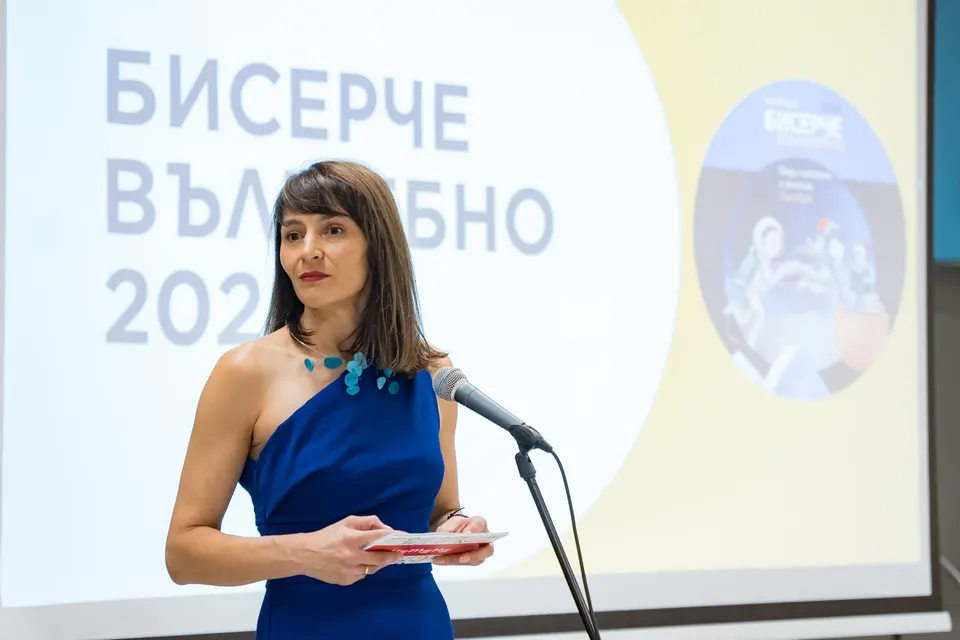
Of course, you can find all the recommended books in the category we curate for Orange. We try to update it every month, and I personally use it when I need to recommend a book, because we’ve divided everything by age. We work with many children; we get feedback from 10,000 children every year through the Biserche Valshebno (Magic Little Pearl) award.
You’ll find the book recommendations for different ages here.
So far in the series “Digital Children”: