“Words have the power not only to change our lives; they create them. Words, as the bearers of meaning, are the greatest treasure our Creator has given us. The word is the most perfect bridge between people, between the times we live in; it has the power to inspire ideas, to destroy worlds, to create lives. If there is any problem with words today, it is that they are being worn out.” Our guest today told me this during our previous conversation. Three years later, these words are more relevant than ever.
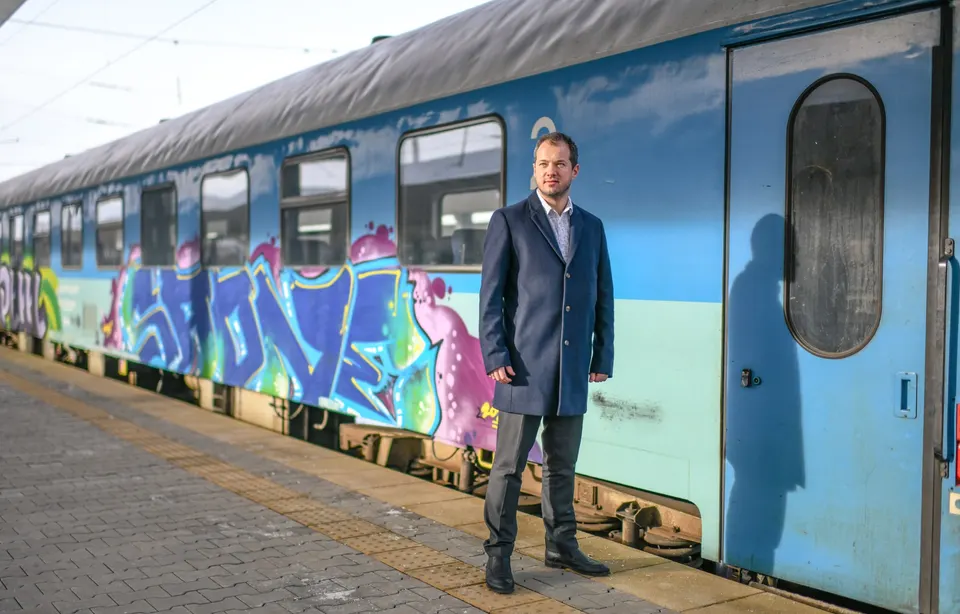
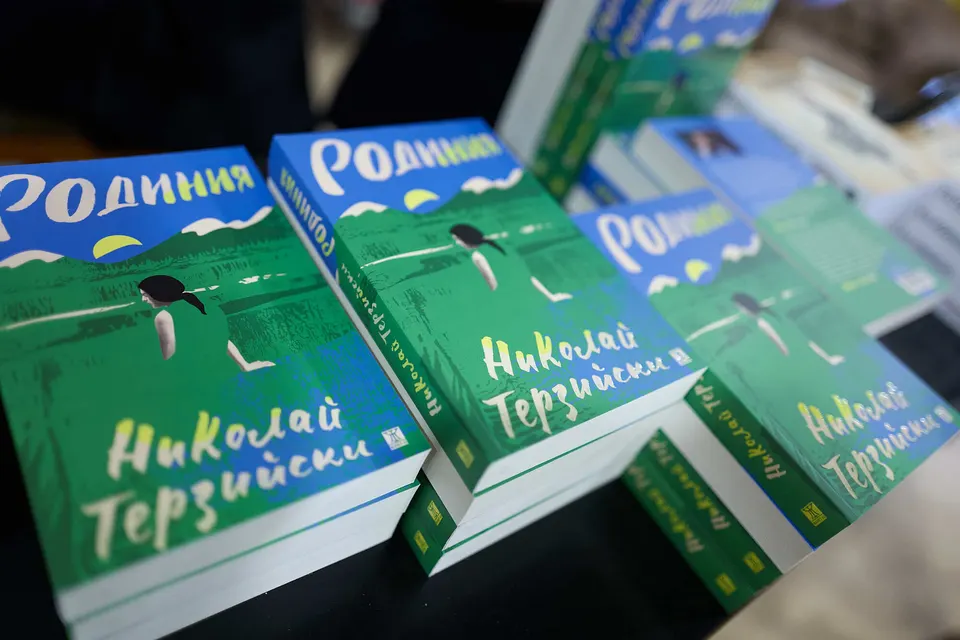
Nikolay Terziyski is a writer and journalist. He was born in Smolyan, a town in Bulgaria's Rhodope Mountains, in 1983. He studied journalism and philosophy and is the author of four books. The latest, Rodinia, is a novel of 16 stories written over the course of ten years. A book of journeys and a book of homecomings, devoted to coming together, drifting apart and the way we stay connected to others through memory and words.
It is a book I sincerely recommend. In the lines that follow, you will not only find out why. They will also provoke you to think. About people breaking away into their own worlds and continents, and about the chance that they might meet again. About imagination as a way of making sense of things, and imperfection as perfection. About the past and the future, which come together in the search for meaning. Let us look for it together.
– “No man is an island, entire of itself; every man is a piece of the continent, a part of the main.” Your new book, Rodinia, opens with these words by John Donne. Today we seem to find more and more reasons—online or offline—to break away onto our own islands, to get distracted by the trivia of the day, to quarrel over anything and everything. Why?
– Perhaps on these islands of ours we feel protected. Untouchable. But since no one can survive alone, each of us lets other voices onto our island too—voices we choose very carefully.
Why? So that we hear only the voices of the chosen ones. Made in our own image and likeness—that is how a person comes to feel almost like God,
all-powerful and almighty, approved and approving. The voices of everyone else, the unworthy ones, are drowned out. Yes, today we are more like football ultras, separated by buffer zones and police, shouting louder and louder not to defend their own side but to drown out the other. Sadly, that is what we are like in politics and in society, and more and more often even in culture. And
once we start behaving like football fans in culture, woe to us.
– I think we got there a long time ago. Those are exactly the right words—woe to us. In your novel, too, the bond between generations, between people on different islands, keeps breaking. Is it too late to find a common language, a connection?
– I believe it isn't. It can't be too late. However insignificant reason may seem today as we watch everything happening in the world, however much it feels as if we are sliding back to the middle of the last century, I believe there is hope. My hope used to lie in human reason, but today that sounds both sad and funny. What reason are we even talking about?
Even so, I go on believing in people, and I always will. Even buried in the eternal struggle for power and money, even drowned out by the shouting and the refrains of inhumanity, the human being will resurface, if only out of the natural instinct to survive. With their last ounce of strength, people will stop that finger reaching for the button that says “self-destruct.”
– When do today's technologies, which have monopolized the connection between us, help us in this respect, and when do they get in the way?
– Technology has outpaced our souls, but that is not its fault. It does not stand in people's way or make them spiritually empty—quite the opposite. It lets you see a painting that once would have required you to travel across the world. It lets you read a book, learn a language, listen to music, think. But here lies the contradiction I have no answer to.
Might it not be better to travel for months to reach that painting you dreamed of,
months in which to think about it, to long for it, to dream of it, even to invent it? Doesn't the button that can show you the painting in seconds take away your greatest power—imagination?
– And the desire, and the value… As for imagination specifically, I think the notorious artificial intelligence is an even quieter and more frightening killer. But back to the book: Rodinia is labeled a “novel in stories,” a rather rare choice. The first things that spring to my mind are Ray Bradbury's Dandelion Wine and The Martian Chronicles. Why did you choose this literary form? Is a novel in stories harder to write?
– Writing every single word of Rodinia was a pleasure, a delight for me. Even when I had to throw some version of a story into the bin and write it again, I still enjoyed it. I always feel wonderful while I'm writing.
The sense of freedom, of communing with everything you know and with everything you know you don't know, is incomparable.
I have laughed with my characters and grieved with them. As for the form, I never gave it much thought. At some point it crystallized in my mind, and I was sure it couldn't be any other way. So there it is—Rodinia is a novel in stories. You can read the book as a novel, but at the same time each story in it has its own ending, its own vibration. And to make it even more interesting, each story in the book is mirrored in another. The first in the last. The second in the second-to-last. And so on to the middle, to the heart of the book. It turned out that way simply because that was what I found interesting to write.
– And I found it interesting to read. That is exactly why I invited you to talk again. Can strong, highbrow, elite literature also be popular? Should there even be such a division, which still survives in conversations about literature?
– I believe that
literature is much more than the labels we put on it.
On the other hand, things are quite simple. Look—I'm an author of books. I write about what moves me, what challenges me creatively, intellectually, purely as a human being. If the work I've written moves the reader (or challenges them creatively, intellectually, purely as a human being), what does that mean? That I'm an author of highbrow literature or of popular literature? And if what I've written makes no impression on anyone, that doesn't automatically make it “elite,” does it?
– Rodinia is a mythical supercontinent that may have existed in the distant past. But today the wordplay between Rodinia and rodina, the Bulgarian word for homeland, is so apt—in the sense that we can travel, live in yet another country, make the whole world our homeland, while somewhere our aging parents are waiting for us. Where do the borders of your Rodinia run?
– Oh, that's a very cool and cunning question, but I'm going to give you a sneaky answer. The borders of Rodinia are inside the book, in its text… All right, all right, I won't be that sneaky. I'll give readers a hint: “The borders are on pages nine, twenty-four, twenty-six, twenty-seven, thirty-eight, one hundred and fifty, one hundred and fifty-four, two hundred and ninety-six and three hundred and four of the book.” I don't think I can be any more specific. I would only add that even if the borders between continents disappear, as they did on the continent of Rodinia, every human journey could be a border. There are borders in the sky today too—just look up some evening when the sun lights up the trails of the planes.
– “Falling in love with someone who doesn't exist” is a motif that runs through many of the stories. Today, especially with the enormous progress of artificial intelligence, this sounds more and more like a true story. What will we lose over time, now that it is easier than ever to talk to, learn from, work with, live with and fall in love with someone who doesn't exist?
– I wouldn't want us to part with imagination. With fantasy. With the beauty of contemplation. Even with the charm of boredom. And yet sometimes falling in love with someone who doesn't exist can be a far more powerful experience. More uplifting and, at the same time, more intimate. And on the other hand—isn't every human act of falling in love like that? We always fall in love with someone who doesn't exist, because we compose them, idealize them, fill in the rest ourselves. Isn't that what most defines a person in love?
– “Those are the times” and “those were the times,” says one of your characters, as an explanation for everything in life. We often quote Vasil Levski, the nineteenth-century revolutionary and Bulgaria's national hero, who said that “time is within us and we are within time; it changes us and we change it.” Can an ordinary person change the time they live in? And if not, is it worth getting angry at it?
– Human beings have neither beginning nor end. In both time and space we are limited. But isn't that limitation our strength? We have one eternal direction, one aspiration we will never achieve. But
that takes nothing away from the meaning of striving toward that infinity, and even toward that beginninglessness.
It may sound paradoxical, even absurd, but isn't the ordinary person's greatest extraordinariness found precisely in their ordinariness? Time and the times are movement, even if that movement is an illusion. That is exactly what we must not lose—the sense of movement, even an illusory one.
– Ivan Peychev, the Bulgarian poet, writes that “no one returns anywhere, and Odysseus does not return to Ithaca”—in my view because the return is already to a different place, you are different and the moment is another. When is a homecoming complete?
– Yes, I agree—both with Ivan Peychev and with your reasoning. But in the spirit of my previous answer… what can we say about the feeling of coming home? Can it happen even in a place you have never been? In that sense every journey can be a homecoming—and a perfectly complete one. The magic is in the same place again. Inside, in the person.
– The plot of Rodinia unfolds in the fictional town of Sredovgrad (roughly “Middletown”), which sounds like something out of Tolkien—and it's not me who says so, but the late Queen Elizabeth II herself, in your novel. Around it lie the fictional villages of Upper Pole and Lower Pole. So many Bulgarians have their own Sredovgrad, their own Poles, even though a huge number of us have ended up in the capital, Sofia.
– By the way, the Queen slightly twists the name of Sredovgrad. She calls it Sredograd—much more “Tolkienesque,” a kind of Middle-earth. Just the other day I read a review of the book that called it Srednovgrad. Look at all these variations! Doesn't that answer the question beautifully? Yes, every reader has their own Sredovgrad, their own Upper and Lower Pole that hold their world together. Sometimes the distance between them is enormous, sometimes very small… but that, too, is a human notion, isn't it?
– Sometimes the poles flip. Could villages and small towns come back to life and draw in the next generations?
– There's a feeling that this is already happening. But it's exaggerated—
for people of working age, these places are more of an escape than a haven.
Yes, it's true that the more global the world becomes and the more powerful communications grow, the more attractive these places seem. Yes, more and more people say they are tired of the big city, of the noise, of the dirt. They say their children can study online there now, in the fresh air, amid the quiet and the beauty of nature. The problem is something else. Even if education goes online, healthcare is unlikely to anytime soon. For these places to become a haven, it will take much more than fresh air and silence.
– Your characters often struggle with losing their roots, their sense of belonging—either literally (when emigrating from their homeland) or metaphorically (when forgetting the past and themselves). What do you think defines human identity most strongly? Language, memory, birthplace, family?
– I can't say which is strongest; they're all connected. Like a weave in which, if you pull out one thread, everything else loses its wholeness and the person becomes someone else. That's why the characters in my stories struggle with precisely these absences—that's how they provoke me to see their essence, to dig deeper into them, to try to understand what is human and what a human being is.
– Rodinia paints a painfully clear picture of depopulated Bulgarian villages and small towns, a world that young people are leaving en masse. What prompted you to focus on this theme? Does this process of the slow disappearance of a warm and cozy collective world worry you?
– Yes. It worries me and saddens me. The thought of an empty village where only one 90-year-old man lives prompted me to write the first of these stories, which comes at the end of the book—“Grandpa Doncho's Laptop.” I get goosebumps every time I ask myself
what it's like to live in such loneliness. Or else—with the hope that someone will come. That someone will call you.
That someone will send you a photo of the grandchildren or great-grandchildren. You describe it like a literary critic—“the process of the slow disappearance of a warm and cozy collective world.” Yes, it's a world that, sadly, will never come back. It won't be what we remember. In 20 or 30 years, these stories will seem to children as if they came from two centuries ago. That is exactly why I wrote them.
I wanted to capture this vanishing world, to press its beauty and meaning like flowers in a herbarium in Rodinia.
– In one of the stories you portray a character who gradually loses his memory—first he forgets his parents, then his childhood, and finally even his native language. And he does it without anxiety, apathetically. What idea did you put into this storyline? Did you want to show how easily a person today can break away from their past and their roots? How can we save ourselves from the oblivion modern technology is pushing us into?
– This character of mine forgets everything because he has lost the thing he does best. In fact, it's the only thing he can do better than others. And to prove to himself that he exists, that he hasn't vanished, he clings to the memories of his talent, starts searching for them and living in them. These memories obsess him to such an extent that they make him forget everything else. But actually, in this story from Rodinia, what matters to me are his parents, who wait for him for years while he travels the world.
– Surprise! ChatGPT came up with the last two questions, and I liked them. Could you have told them apart?
– So you're telling me that ChatGPT asked me “How can we save ourselves from the oblivion modern technology is pushing us into?”?!? Well, look at that—the questions it cares about! And the phrase that reminded me of a literary critic—“the process of the slow disappearance of a warm and cozy collective world”—turned out to be its own, too.
Maybe I could have a good time with ChatGPT if we talked about books?
– Believe me, you could! Even about poetry—you've probably come across the news of how it ranked among the best in two poetry competitions in a row! Does the progress of artificial intelligence impress you, or does it frighten you more?
– Its development impresses me, of course. What provokes me is the question of where all this will lead. And what it will turn us into—us and our children. What frightens me is not so much that it won a poetry competition, but that someday
the people who want to read poetry may become so few that ChatGPT will be the only recipient of what poets write.
But I'm sure the poets themselves will never disappear—the imperfect ones, the vain ones, the mad ones. That gives me hope.
– And is there a chance that AI will “take” from us the unnecessary, heavy tasks, the ambitions, the vanity, and that we will return to our own “rodinia” of the simple, the creative, the human?
– Ah, how lovely that sounds as a finale! Lovely and… impossible.
Ambition and vanity cannot disappear from us humans. They define us.
So do the heavy tasks. I would rather wish that artificial intelligence not so much simplify and ease our tasks as steer us toward new, even more complex and interesting ones. Because
human development is a process. We must not arrive at the answer, at the meaning of that famous 42
from Douglas Adams. On the contrary, we should use technology to ask ourselves more and more questions that demand far more complex answers. So that we have a reason to keep moving.