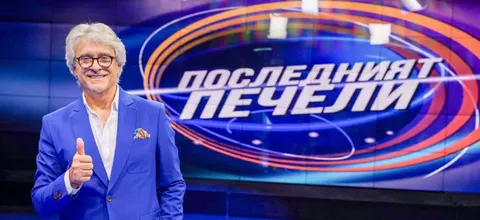
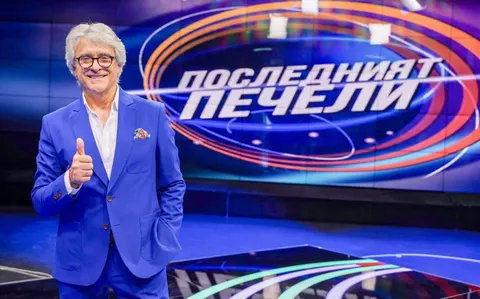
We all know Orlin Goranov as a wonderful singer, and yet lately he has proved himself, impressively, in a new role. At the height of the first COVID gloom he was asked to take on the hard job of hosting a television show that would make people smile.
“Posledniyat pecheli” (The Last One Wins) is an original quiz show format, unlike almost everything else that draws people to the screen today. As you will read in a moment, it somehow provoked me into trying my luck too, and you can see the result here, here, here and here. (And, a year later, here.)
The game is exactly why I got to chat with a singer loved by generations of Bulgarians, a man who has sung songs that will be remembered for quite a few generations more. He found the courage to perform at the Musical Theater and to step into cinema too… straight into the role of the Bulgarian president in Mission London.
On The Last One Wins he gave me a hard time with his questions; in return, I will try to provoke him with mine.
– What made you take on a television project like this? What motivated you?
– COVID is to blame for everything. One day the producers of the show called me and suggested we try to make something that was missing from the airwaves. Many of our compatriots remember “A Minute Is a Lot,” the classic Bulgarian quiz show, which was hugely entertaining and educational. This project is original; it is a very pleasant blend of several popular quiz shows from around the world, starting with Jeopardy!, passing through the Russian “What? Where? When?” and, naturally, built on “A Minute Is a Lot.” The goal was
at 7 p.m., when people are at home, for the family to gather at the table and have some fun.
And precisely in those hard COVID moments, when we were locked down, blocked, isolated. To recall some old, forgotten facts, to learn something new about life. In a word: an entertaining, educational show. On our show we don’t talk about money; we talk about the things of life. Because that is what matters.

– I signed up following exactly the plot you’re describing. I don’t have a TV at home, but during one COVID quarantine we were stuck indoors. We meant to put the news on, but got hooked on The Last One Wins and never made it to the news. My elder son, who is 4, fell in love with the show. Now he lies in wait for 7 o’clock and asks for “the favorite show,” and that’s what made me come too.
But how do you invent a show? Today almost everything is a ready-made format: you buy the license and copy…
– That’s the easiest option. But Bulgarian National Television (BNT), as the national broadcaster, dropped the local version of Who Wants to Be a Millionaire?, because it was a foreign show and serious royalties had to be paid. The goal, in my view, was precisely this: for the viewers of national television to have fun, and exactly in the time slot when the other channels are showing the news.
And back then the news invariably began with: “Today so many souls died, so many fell ill.” Nothing but bad news.
– What kind of work did hosting a TV show turn out to be?
– Over the years I’ve tried similar things as host of Melody of the Year and other shows. For more than 20 years I’ve also been doing acting work, even if it was in an opera house. But that is still a stage art, which demands preparation as an actor too. I’ve also appeared in films and theater productions.
This kind of hosting takes a slightly different preparation. The host of a show like this doesn’t have to be an actor; he can be a journalist or any other profession, as long as it’s clear to you what you need to do. My aim is to put people at ease so they enjoy themselves, to provoke them.
To draw out of them something that has fallen asleep or dozed off.
And so they don’t forget that on our show participation follows the Olympic principle: you come to learn something. And to show, of course, your knowledge, as far as you can.
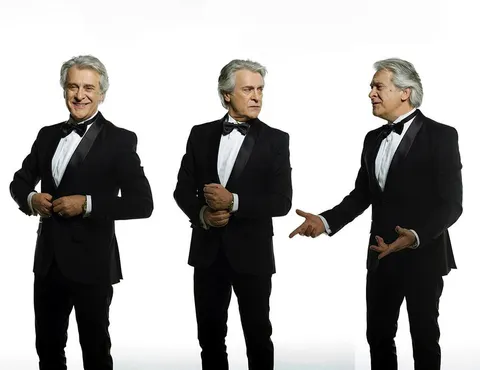
– What kind of people win?
– The calm ones. I appreciate the nerves of anyone who has never been in a studio. The moment they sit down under the spotlights and the cameras, with three other players they have to compete against, no longer alone with themselves in front of the TV, a lot of people get anxious. One of my goals is to try to put them at ease as best I can.
Those who have mastered their emotions in the studio react quickly and manage to answer; they remain last and win the right to continue in the next episode.
– In the end, though, you also need a lot of knowledge. And that is not something everyday life asks of us today.
– Other formats require a good deal of encyclopedic knowledge, and so does ours. But in the second round all the questions are in our own domain: what has happened in Bulgaria. Sixty years of history from BNT’s Golden Fund, its archive—whether it’s cinema, personalities, geography, historical facts. Something connected with our homeland and our history. That way everyone gets to see what happened once upon a time, who this historical figure is, what this film is, what awards it won, who the actors are.
This history is our shared memory, and it is good to talk about it, because today begins with yesterday.
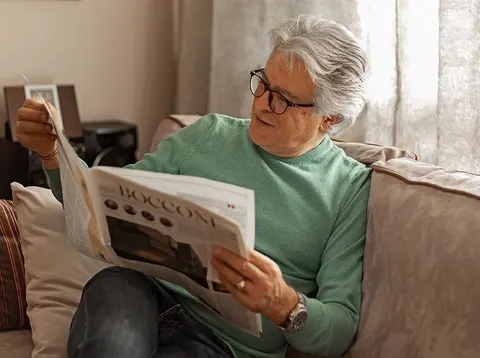
– What is the point today of knowing things like who wrote the screenplay of some good film, when you can find it on the internet instantly?
– The point?! Everyone finds the point within themselves—whether they need it and whether it interests them.
The internet, I won’t lie, has made us rather lazy in recent years, because everyone relies on it.
“Well, so I don’t know it, so what.” On my show the winners are people who think analytically, logically. I have quite a few champions who are at the modest age of 30 or so. They gave me terrific answers in fields they weren’t necessarily expected to know, but by way of logic and analytical thinking they reached the right answers, and very quickly at that.
On our show people display their knowledge and prove to themselves what they can do and how far they can go.
Whether they still have dreams to fulfill. Youth is no vice.
– I read that you’re not exactly fond of social media…
– I don’t have Facebook. I have an official page, run by someone else, where I post things related to my work, but burying myself in Facebook is not my thing.
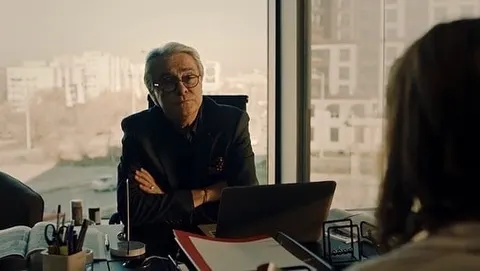
– Why?
– It’s not my kind of movie. I’ve tried, but I prefer live contact. If I want to see someone, I call them on the phone, we meet, sit down and have a good chat. Nowadays it’s hiding behind some nickname, writing posts, hating. Apparently that’s fashionable. But I’m old-fashioned, old school.
– There’s an urban legend that in Japan you sang “One afternoon I walked without aim or direction” and people wondered how that was even possible. Today, though, any of us would wonder—we’re always rushing somewhere. Could it be that we’ve become like the Japanese?
– God grant that we do. But many years must pass and many generations must change before we change our way of thinking. Because
the only thing that can be called ours in this world is time.
And we, to be honest, don’t value it enough. So when we learn to value the time we have on this Earth, and to do what needs to be done, then little by little things will fall into place. Let’s stop calling on Hardship, like the old man in the folk tale, and become Andreshkos instead, like the shrewd peasant in Elin Pelin’s classic story. Then we might sort ourselves out.
And quite quickly, too, because the Bulgarian is hewn stone. But he’s also a wily one, that he is. “Why should I do this job when someone else will do it?” “It’s not a rabbit, it won’t run away.”
In that sense I am happy and proud that I can somehow contribute to a slightly better life for everyone who, at 7 o’clock every weekday, is tuned to BNT watching The Last One Wins.
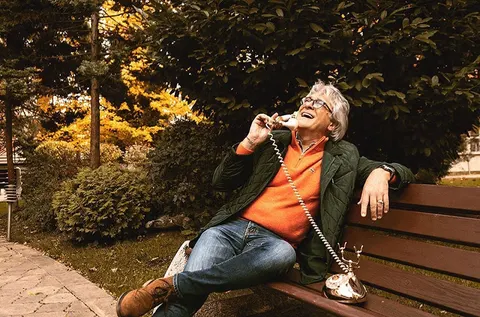
– How do you manage to always keep in good spirits? All sorts of things happen to a person every day, and it’s getting harder and harder to keep smiling.
– There is a secret and there isn’t. I’ll quote the words of the great Tatyana Lolova, the beloved Bulgarian comic actress: “When they ask you ‘How are you?’, say: ‘Thank you, wonderful! And you?’” There, see how simple it is. Yes, today I woke up again, today is a beautiful day again, and today something lovely will surely happen again. I’ll meet an interesting person, I’ll try to make someone happy. What will happen tomorrow, I don’t know.
As the old philosophers say: “Every falling asleep is a small death, and every awakening is a small birth.”
It’s no accident that my book is called that too: Let’s Start Over. Every day is a new beginning.
– A very sensible starting point, no argument there. But it seems we prefer complaining, and that traps us in some kind of vicious circle.
– Yes, because we always look for the cause of our failures outside ourselves. One should always begin with the question: “I wonder, why did this happen, and where am I in the whole situation?”
– Technology, though, also offers plenty of opportunities. As far as I know, your daughter has been abroad for a long time; before it came along, communicating at a distance was much harder.
– Technology is a derivative of us, humans. And, as Nobel said, when he invented dynamite he didn’t know its power—that in the wrong hands it would turn into its opposite. I can’t help drawing a comparison with technology. Yes, there is an enormous amount of information on the internet, but it is so chaotic that getting to the true part takes an awful lot of time, and you have to be prepared for it. The old philosophers say knowledge is not for every pumpkinhead. And to reach a certain level of knowledge, it’s like a ladder—you have to have climbed the earlier rungs to be ready for the next one.
– Instead, though, we seem to be heading downhill. We used to talk more about space, for example, and now we’re back to wars and diseases.
– It has been there before and it will be there in the future. Nobody is insured against there being diseases or wars. In recent decades there have been military conflicts all over the planet; they have never stopped. But evidently some other minds don’t want peace, because in peacetime there’s no way to keep business turning. War is profitable.
– But it seems we ourselves have come down to earth, too; we don’t look up at the sky. Few children, when you ask them, dream of becoming cosmonauts. Why is that?
– A few years ago they did a very interesting project: a camp for children where all “smart” devices are banned. So the kids get the chance to get to know nature, to catch fish with their hands in the river, to climb rocks, to light fires. To be able to communicate face to face, not through a chat.
At first people wondered whether anyone would sign up. Now, two or three years later, they can’t keep up with taking in all the children who want to see the real world, nature, to gather in the evening, sing by the fire and tell each other stories.
Otherwise you very often come across kids on a bench who aren’t talking but chatting.
To me that is desocialization and a herding into the matrix, something designed long ago that has evidently become a fact.
– Some are getting out, while others are only just entering the metaverse.
– Where are we going? We’ve forgotten the fundamental things we ought to do. To be human, to see each other, to talk face to face, to think, to dream. The phone will do the job. But what if the internet stops worldwide for 24 hours, what do we do then?
– Then the winners of The Last One Wins will survive, because they know quite a lot.
We already have very sophisticated technologies that can play and sing like humans, yet people are still needed, and we still go out to listen to music. Will technology ever be able to replace us in art?
– Maybe. If the level of artificial intelligence becomes so high that it starts creating on its own, that could happen in the foreseeable future. But at this stage I think people shouldn’t let go of artificial intelligence and leave it to develop by itself. Because no one knows which direction it will take.
As long as these things are created by humans, humans are the ones who will control them.
Everything in this world is vibration. Even music is higher mathematics. And it’s no accident that all the old composers wrote their works in particular keys that act best on the human subconscious. That is higher mathematics. Whether it’s in A major or E minor, the feeling is entirely different. There are so many interesting things in this wretched wide world. But to reach a certain level of information, you have to be prepared for it.
An algorithm can account for human errors, but it cannot create. Huge, large-scale projects are being developed, but they are there to help people. Computers can do anything, except calculate the future. Human nature is unique!