Facebook will now be called Meta, a company that wants to be associated not with the social network but with the metaverse. We found out just minutes ago. But… what is Meta?
The news had been smoldering for a few weeks. What is Zuckerberg preparing for us? What is this metaverse? Should we expect to land in some alternative reality within a week or two? And what, in the end, is it?
Facebook is hiring 10,000 highly skilled specialists in Europe to develop its hyper-ambitious project called the metaverse. A few days ago the news, announced on the company's website, drew unprecedented attention to the subject. And yet a huge share of the media either simply quoted the information or recycled one and the same old article, and it is no exaggeration to say that both left more questions than they painted any real news. With the announcement of the new name, the same thing happened again. Zuckerberg was not especially generous with details.
Hocus-Pocus-Meta
First of all, let's calm things down a little. Yes, the idea is quite ambitious, but it may not be entirely a coincidence that the loud fanfare came just days after the social network crashed several times for a huge part of the world. Then came the serious revelations of former company product manager Frances Haugen that Facebook puts growth and profits above the safety of its users and of society.
Only a few days later came a hint that the social network would soon change its name… here in the Wild East we have seen plenty of such attention-diverting strategies (have you been vaccinated, by the way?), and still nothing stops us from falling for the next one. And today, most unexpectedly, Facebook really did become Meta. Yes, as a parent company, the owner of the social network, of Instagram and WhatsApp. But still, as the big new name. This metaverse must be pretty important, then.
Once we start talking about the metaverse, we are definitely talking about an area that matters to all of us, whether we realize it or not—our future relationship with technology.
Heavy Metal Universe
Today that relationship is closer than ever, and it is yet to reach even greater heights. That much is certain; what is uncertain is the more important part: exactly what it will look like. Elon Musk, for example, is working toward a future in which technology and humans will merge, and our brains will connect directly to the network.
The idea of a metaverse is an equally ambitious and logical possibility. Of course, in essence both are utopias; for now there is no way to take them as a real forecast of the future. Besides, as befits utopias, they paint an end point that cannot be reached. Because there will be many nuances, fluctuations and meanderings, and our future will certainly not look exactly as expected.
Memeta
And still: 10,000 IT specialists will be working on this future in Europe alone. What does the metaverse look like? That is the important question, and we can only give a very tentative answer.
I don't know about you, but I find it rather frightening that this brave new world is being created unilaterally by one tech giant, a huge company that, on top of everything, has already shown clearly that it doesn't do a good enough job protecting its users' data. It resists regulation on a global scale and decides by itself what is tolerated, which news is fake, who is convenient.
In fact, we know very few concrete facts about the project. The metaverse largely overlaps with what we once, at the start of the millennium, expected to arrive as virtual reality. It is a new kind of interaction with technology, through which we find ourselves in a hyper-realistic technological version of the real world.
Metaphorically Speaking
The term itself, as often happens in this business, comes from science fiction. The first to write about the metaverse was Neal Stephenson, in a 1992 novel. His description comes quite close to what Facebook is painting too—the blending of physical, augmented and virtual reality into a shared online space.
In recent years, computer games have appeared that embody some of the principles to a degree, yet remain far from the full meaning of the term. Some call them embryos of sorts. For example, the role-playing game platform Roblox, or Fortnite, the hit shooter with 350 million players!
In an essay on the subject from 2020 that became especially popular, entrepreneur Matthew Ball laid out the key characteristics of the metaverse. It must bring together the physical and virtual worlds, contain a fully developed economy and offer “unprecedented interoperability”—users must be able to “carry” their avatar, their virtual persona, and their possessions from one part of the new space to another.
Building the technology will draw on today's achievements in virtual and augmented reality, which will, however, take a very serious step forward, so that the virtual stops being distinguishable from the real. In a way, it will merge with it.
Betaverse
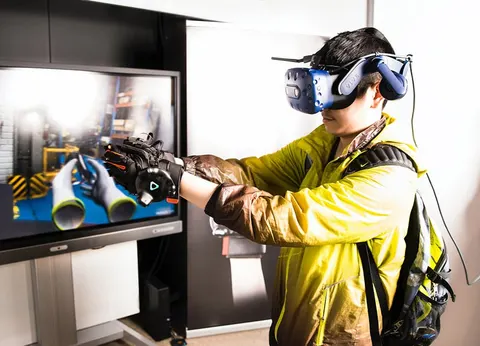
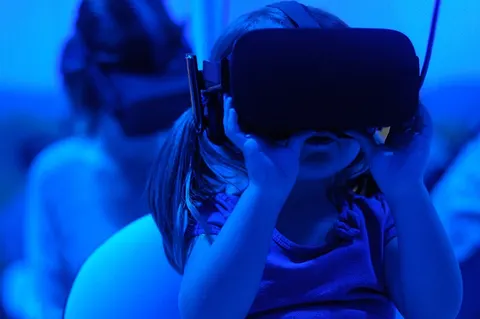
Clearly, at first this will happen with the help of relatively familiar devices such as virtual reality headsets and sensors that read movements precisely. Later on, things may go much further. Through projects like the aforementioned Neuralink, there are more and more indications that we may achieve a brain-computer interface, the moment when we will quite literally move into the virtual computer world.
Sounds like an oxymoron? Well, today we are already so virtualized that we hardly ever let go of our phones. And what will happen when our phones become unnecessary and we can connect to the network directly through brain impulses?
Well, of course, we have a long way to go until then, and it really is certain that reality will differ from expectations, even if the main trends are captured.
And so, about Facebook's project we know more general talk and ideas than concrete concepts, implementations, technologies, paradigms. The giant's notorious announcement, released a week ago, makes clear that the idea is “by creating a greater sense of digital presence, to make online interactions feel more like interactions with people.” That is even more general and abstract than my own explanations in the paragraphs above. One possibility is that Mark Zuckerberg and company do not yet have a clear and precise enough plan; the other is that for some reason they are not sharing it. Given the resources they work with, I wouldn't bet on the first.
Fly Me to the Meta
“The metaverse has the potential to help unlock access to new creative, social, and economic opportunities,” the announcement goes on. Here things start to sound more like a campaign slogan (and even artificial intelligence could come up with a stronger one).
The 10,000 highly skilled employees will be hired within the European Union alone over the next five years. This information comes garnished with paeans to the importance of European technology for the future of Facebook (and of the Universe).
A little earlier, on September 27, another blog post on the subject was published, with just a touch more substance. It announced that Facebook would invest $50 million in the project over two years. And that the metaverse would not be built by a single company, since it is too vast a project and of enormous significance.
Another definition of the metaverse from the same post: “a set of virtual spaces where you can create and explore with other people who aren't in the same physical space as you. You'll be able to hang out with friends, work, play, learn, shop, create and more.”
A Clean Sweep
“It's not necessarily about spending more time online—it's about making the time you do spend online more meaningful.” Yes, surely Facebook's first and only concern is to look after the quality of our service, not to keep us online so it can collect and unscrupulously sell our data, taking advantage of its monopoly position. Not to lock us into filter bubbles and manipulate us.
Actually, it is rather strange that the metaverse is suddenly getting so much attention now. Yes, obviously this will be a very serious investment, one that is already under way. But back in June, Mark Zuckerberg gave a lengthy interview on the subject to The Verge, in which he said everything that has now come to the fore, and even more. On top of that, the main leitmotifs get said and repeated, just like the mantras of our leading parties before an election.
In the interview he explained that a month earlier he had already announced the big goal to his employees: before long, people would associate the name Facebook not with the social network but with a company building the metaverse. Zuckerberg says he had been thinking about this subject since he was learning to code in high school, long before he created his main project. He describes his big goal as “an embodied internet.” He is adamant that no single company can build it; it has to be a decentralized and democratic world.
Mister Universe
“You can think of the technology as a successor to the mobile internet,” he goes on. “Already today almost all of us keep our phone by the bed, and the first thing we do when we wake up is check for messages. I pick up my phone even before I put on my glasses. That is already a huge amount of engagement, which is why I don't think it can become even more intense in the future.
Right now we live our lives and communicate through these small, glowing rectangles. I don't think that's how people are meant to interact. The metaverse will be something much more natural. You'll feel the presence of other people, you'll feel like you're in other places, having a totally different experience compared to today's two-dimensional apps and web pages.”
Brave New Zuck
“I don't think the main goal is more engagement with the internet. I think the goal is a more natural experience online,” says the multibillionaire. “Besides, the metaverse will bring huge opportunities to creators and artists; to those who want to work from home, far from urban centers; to people living in places where opportunities for education and development are more limited. A realized metaverse will be a lot like the ability to teleport.”
Further on, Zuckerberg explains that thanks to this project it will be much easier to work remotely without losing natural communication. The picture he paints reminds me, at least, of the lockdowns we keep “living through,” only taken to the next level. Children studying online, but in virtual classrooms indistinguishable from real ones. Us holding our daily team meetings not over Zoom but in something resembling a real conference room…
Metamphetamine
Is such a future wonderful or terrible? A little of both. By all indications, the technology will advance fast enough; let's hope the civilizational, ethical and social aspects catch up.
Let's hope we get to the point where, as a society, we think about problems like addiction and desocialization, which came with the internet, with virtual life. It is perfectly logical for them to erupt with much greater force in the future the creator of Facebook is painting for us. And speaking of Facebook, just imagine how much more wonderful filter bubbles the new network will be able to build for us. How much stronger it could make the tech giants, how much more power it would give them over users.
According to Zuckerberg, if all goes as planned, the first version of the brave new world will be with us in about five years. And I don't want to overdo the irony: let's hope it really is brave and new, and some of the possibilities sound wonderful. As long as we are ready for them. So that the metaverse doesn't turn out to be like methamphetamine.
Perhaps there are more reasons for optimism that the metaverse will soon be here than it seems at first glance? If so, I'll be glad to meet you virtually and chat very soon. With the small detail that by then we may have already gone through our greatest transformation as a biological species…