We find ourselves in a time when the chatbot is not just an assistant but also a “therapist.” Before we even know it well enough, before we have laid down the ethical frameworks. We are already seeing the first challenges this brings, and the real problems are still on their way.
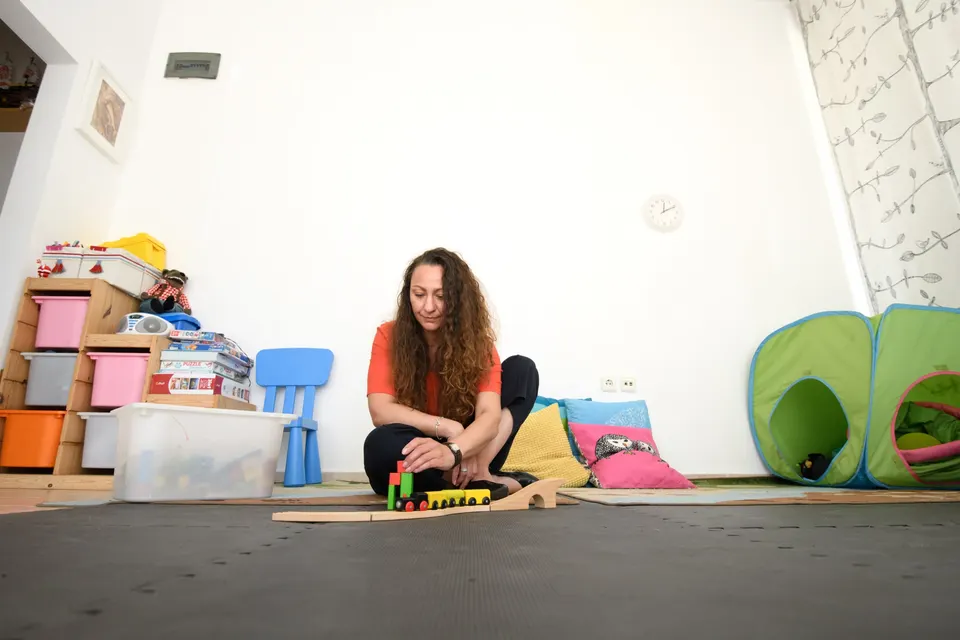
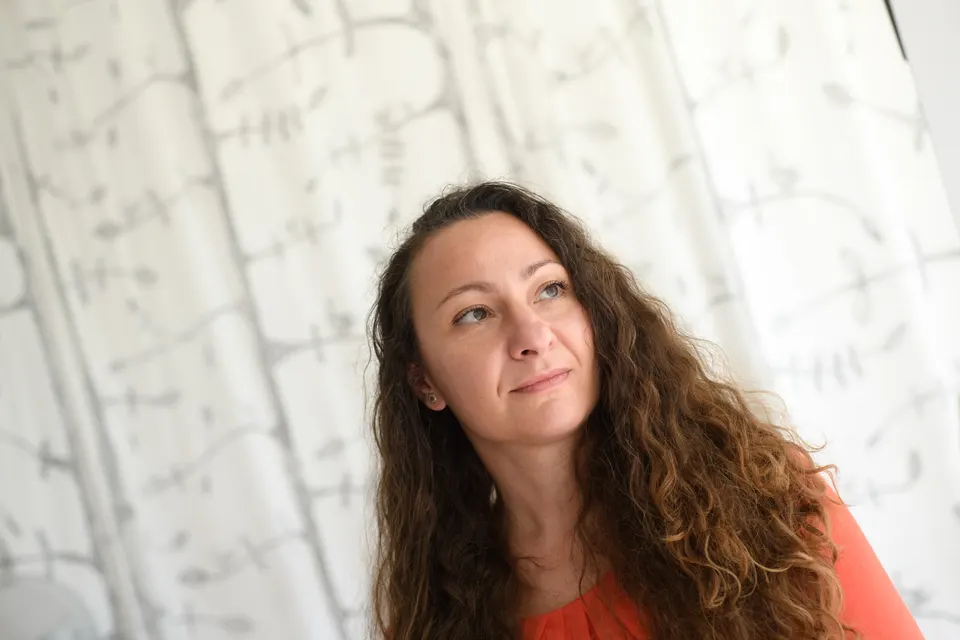
Donika Borimechkova is a psychologist and psychotherapist with more than 15 years of experience, working with children of all ages, and not only with them. She holds a bachelor's degree in primary and preschool pedagogy and a master's in developmental psychology. A year ago, together we prepared a long series of Digital Stories about children and technology.
This time we decided to invite artificial intelligence itself to a therapy session. Because, as Donika says, many of her clients already get advice from it before they meet her. We never found a method or an approach that would let us run such an experiment, so we decided to discuss the subject, lay the foundations and then invite each of you to give us ideas on how to continue.
It is time to take the questions raised by the chatbot in the role of psychologist more seriously. Here is how this conversation begins.
– You say that many people already come to you after seeking advice from artificial intelligence. How does that happen?
– I have had cases where someone walks in and says that ChatGPT has given them such-and-such a diagnosis. Sometimes I don't even know what is expected of me in that situation. Usually I say: it's good that you sought help from artificial intelligence, but I am natural stupidity, so I'll need a bit more information.
Quite a lot of people
arrive with ready-made “diagnoses,” with a fixed idea of how therapy ought to go, having diagnosed themselves with the help of a chatbot.
They come not to consult but to confirm a hypothesis. And if you happen to stray from it even a little, they are quite unhappy—they get frustrated when my opinion differs from that of the artificial intelligence.
There are serious differences between the generations, though. It seems that teenagers use AI with several levels more caution.
Kids are much more suspicious, more critical of technology, even though they use it far more freely.
It is closer to them, more familiar, more usable. Adults who use ChatGPT, on the other hand, quite often take it as an authoritative opinion. “If it said so, then that is the truth and there is no other.” For me, this is one of the biggest issues we need to be careful about.
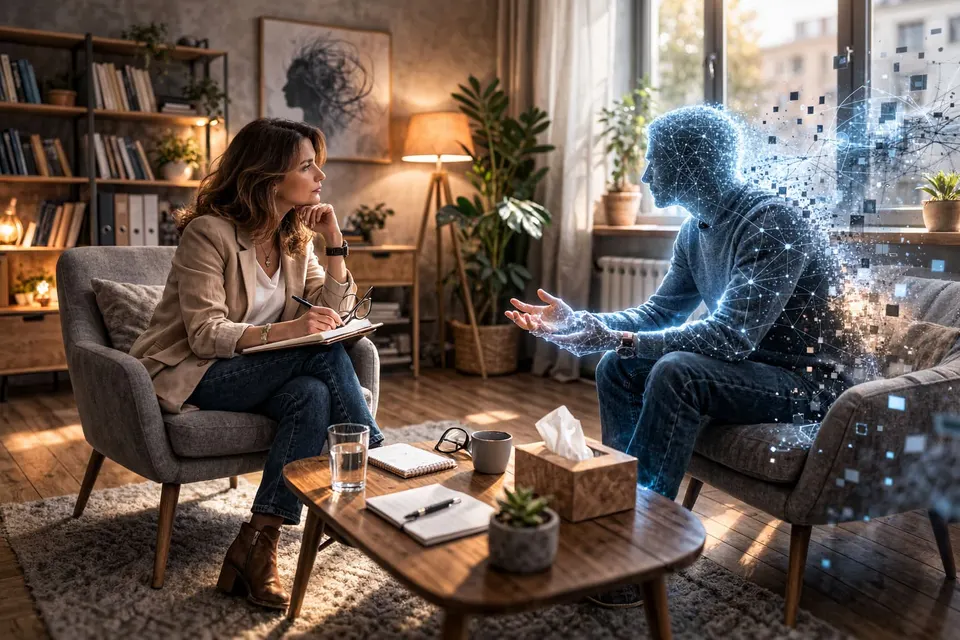
– I agree, of course. But how can you convince such people to trust you as a psychologist? The same question now comes up for everyone, whatever their profession, who runs into “expertise” delivered by AI…
– Mainly through the fact that I have a living body, and that I see the other living body in front of me. I can recognize the living signs beyond words, because when we diagnose ourselves, when we talk to ChatGPT, we are usually performing a very specific act called writing.
Writing is a peculiar act of communication, because meaning passes through several layers of self-censorship.
When we speak, there is a direct line between our mind and our mouth. We often let slip words we later wish we hadn't said. Slips of the tongue happen, Freudian slips, for example. With writing, two additional self-censorships appear. First, the words come out through the hands, not the mouth. The words are laid out before our own eyes, which control what we say. Second, when you write something, you read it and can edit it before sending it to the person who is supposed to read it. We can add, react, change things we didn't like on first reading. In a chat we can edit even after we have already sent our message.
In live communication, that element of self-censorship is absent, and this matters a great deal, especially in psychological work—what authentically comes out of a person as speech.
– Couldn't it be the other way around in some cases? That I'm braver about telling my true thoughts to AI than to a psychologist?
– You are brave, but there you are very unlikely to make a slip, and a slip is an outburst of the unconscious. A person's unconscious bursts out through language—in slips, in dreams, in déjà vu, in situations already lived through once. When you have conscious written communication with ChatGPT, say, the chance that you will make a slip, and that it will catch and recognize it, is very small.
– On the contrary—it's trained to smooth them over. That's actually why we no longer bother about writing correctly: it grasps what we mean beyond the letters.
– Exactly. And in the logic of psychoanalytic sessions, for example, we keep these unconscious little shifts very much in focus, so that we can catch the subject's true language. The real thing the unconscious is trying to say.
The other side is that it itself—
artificial intelligence—says it cannot recognize human emotions the way we recognize them.
It cannot feel, which is a very peculiar and specific trait of communicating with AI.
– Then should we, and can we, somehow restrict it from giving psychological advice? Or, on the contrary, maybe it's a good thing, because after all there are people who will never get to a psychologist and in this case would receive some kind of help…
– A ban is certainly not the answer. My idea points more toward literate use and critical thinking.
Child and adolescent psychology is my soft spot. Years ago, we psychologists were actively trying to persuade mothers not to use forums to get advice on their children's health problems, because that can lead to serious trouble. After those information campaigns, many parents now think along the lines of “yes, let me check the symptoms online to calm my own anxiety, but I'll definitely book an appointment with the pediatrician.”
I rather think that
we need to move toward talking, awareness, literacy, keeping on the table the ethical questions around using ChatGPT for advice in times of difficulty, anxiety, panic attacks.
There are already documented cases in which someone misinterpreted, misread or wrongly understood information provided by AI, and this led to suicides. So not only does artificial intelligence itself not always manage to capture emotional dynamics, but the person sometimes misreads what comes back to them as a message.
– Have there been cases that impressed you the other way—where AI managed to read a problem, even a diagnosis, very accurately, precisely, unexpectedly well?
– Not a diagnosis, but
it gives very sound guidance when people are hesitating. It offers very sensible ideas about different points of view, which is quite useful.
My latest conversation was very interesting—with a man who was unsure whether to continue therapy or look for some alternative. He consults ChatGPT quite often, the free version, which is also a serious problem for me, since the paid versions are much more effective and useful. He had asked whether and how to continue, and ChatGPT had asked him a very interesting question.
“If you could afford it financially, easily, would you continue therapy?” And the answer was “yes.” That actually made it possible to open a discussion showing that the problem was financial, not in the therapeutic process.
But that interpretation, that opening of a new perspective, is not something ChatGPT does. We do it, with our living bodies,
being present with our desire and searching together for a knowledge that lies beyond publicly available facts.
– Why does the free version bother you—because of the ads?
– Exactly. With the free versions, in the context of our profession, the ads are quite disturbing. I have worries and doubts
whether it will come to an algorithm like the ones on social networks, designed to hold attention, and to situations of addiction.
In fact, we should realize that these are demo versions of this technological product. And also that
it is a technological product, a tool. Nothing more.
– Yes, but the boundaries are blurring, and perhaps we are slowly getting used to it. Take poetry, for example. Yes, together with AI we can create something beautiful and valuable, people are getting used to the idea, and the line between human and generated is blurring. But where do we need to protect those boundaries?
– What happened in that poetry competition is, at least for me, a very clear example that
artificial intelligence cannot do without natural emotion.
Because those texts were in fact artificially generated by flesh-and-blood people, driven by their own emotions and their need to express themselves. In other words, artificial intelligence was a tool. In the same way that a person cannot play a melody on their own and needs a guitar. We have no way of producing that sound, that expression of emotion, without the instrument.
Artificial intelligence is a tool, and we must not forget it. Yes, Eric Clapton adores his guitar, but he knows it is inanimate.
– Except that at some point it may become indistinguishable from the animate. And that moment may not be far off.
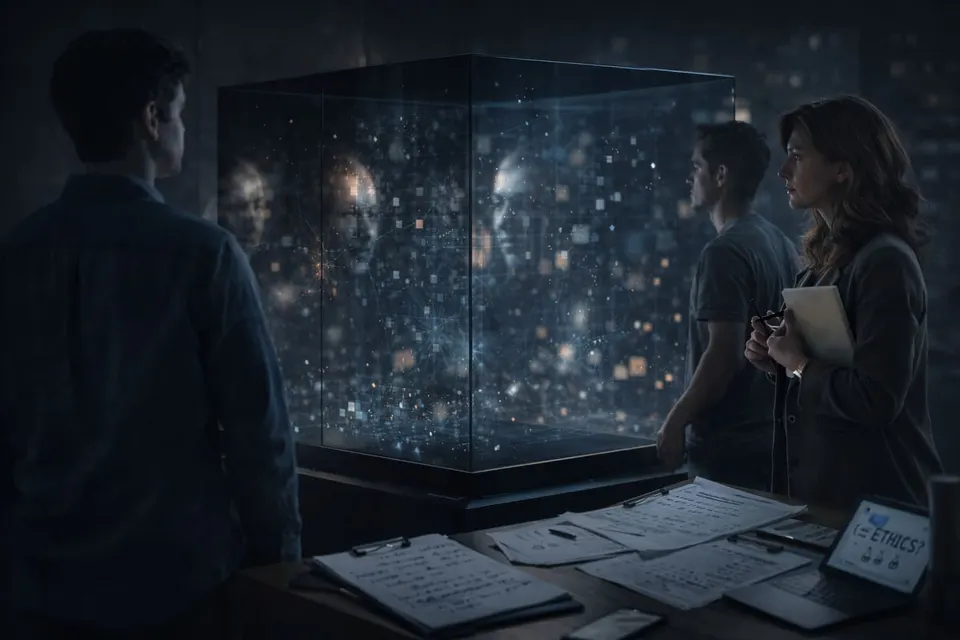
– That is exactly why I very much wanted us to start this subject with the ethics of building AI. That seems to be what matters. In my work, for example, besides the knowledge we accumulate over years of training and self-education, we also rely on ethical norms. Just as doctors have the Hippocratic Oath. Psychologists, psychotherapists, psychoanalysts—we are very often in the position of being overseen by a colleague, the so-called supervision. When you have doubts or worries that something in a case you're working on isn't going well, you turn to a colleague to look at your work and give guidance.
With AI, that supervision, that external control, seems not to exist. As if it were a great master who makes the decisions and is always right.
– But couldn't it become that? Yes, you rely on meeting the person physically, but there are technologies that can very successfully capture any emotion. Every week we see a new model appear. If the next one can read emotions and catch slips, it could become a better psychologist.
– I would find it very interesting to watch that process, and I'd be quite relieved. I could take up stitching tapestries and keeping bees with complete peace of mind that someone had taken over my commitments to humanity. Of course, I say that with a dose of humor.
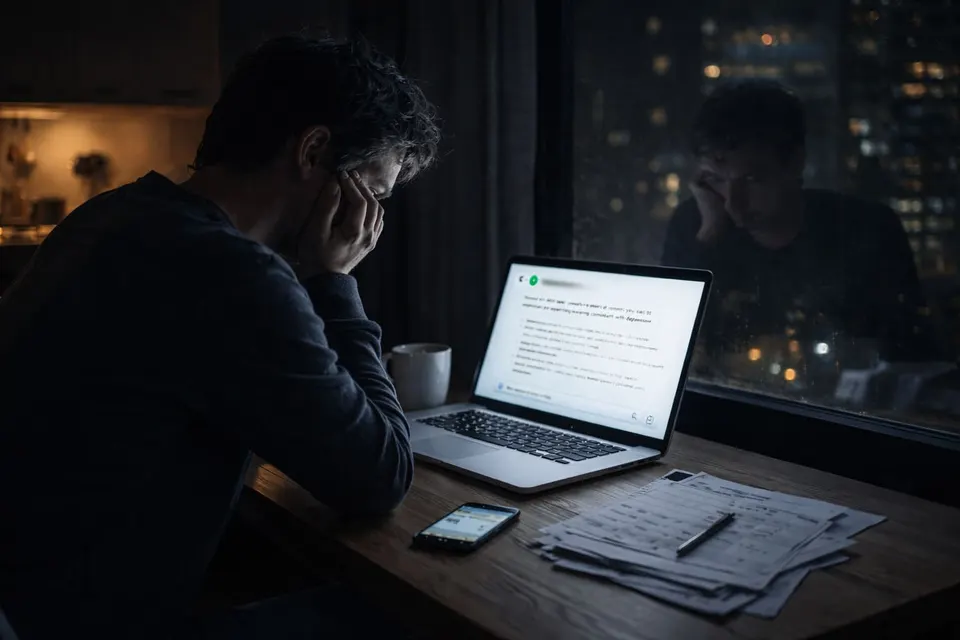
– Peace of mind helps, but this is the second time I've watched a profession decline from the inside—after journalism, I'm seeing the same trends in programming. I no longer know where to run for cover, and I'm sure this fills many people with anxiety.
– In fact, artificial intelligence can be enormously supportive, but it can also do terrible harm. That is exactly where human presence is needed—for correction, for supervision, for support, for orientation.
When chatbots appeared, there was a case where a bot was released to teach itself on a social network, and in no time it had become a racist, an outright one, with violence, threats and aggression. But they shut it down.
That very function of shutting down is, for me, very important to have.
– But how can we manage this uncertainty? Where can some peace of mind come from?
– I'll say it straight. Actually,
we modern people are terribly stuck in the idea that the only meaning we have in life is work.
And so we somehow miss the other meanings. The ones you yourself discover purely intuitively in using AI to create, to make things.
– How can we get back to that?
– The way you do it.
– But that takes an inner will, which I don't come across often.
– Exactly. Work in professional life, the drive to achieve corporate success and positions—this has become the mass culture of our society worldwide. To this day, many people find the meaning of their lives this way.
From now on, we will have to change that. We will have to search for meaning.
– How does that change at the level of society?
– I'd like to say it comes through more talking and more faith in and support for what we do, because I genuinely believe that humanity creates good things.
– So do I, but the talking remains niche. It doesn't manage to reach a huge share of people. They stay on the sidelines because of the “broken” information model, shut inside a bubble of topical trivia, while the big questions stay off to the side.
– Does that mean we should stop doing it?
– By no means. I just wonder how we can make it more widespread. One of the reasons people avoid these subjects, I think, is that they're afraid.
– My inner drive, the thing that keeps me moving through my day, through my life at all, is to do what I can and see what happens.
When we started on this subject, I told you: I want to see whether I can put artificial intelligence in the position of a client, or at least of a colleague under supervision. To provoke it to look for answers different from the ones it generates on its own. And in fact that is a serious warning sign. That's why we changed the concept—to talk, to keep the subject of ethics and morality within the space of conversation.
If we start from there, with the people who are only now going to build artificial intelligence, if we talk about ethics and morality right at the entrance, I think we will be far calmer decades from now.
How do we bring it into the mainstream? Personally, I look for people to talk to. I look in my own life for footholds for how we can carry on better together.
– I think everyone should join the conversation about how to develop artificial intelligence. But do you think it's a good idea, for example, for psychologists to test the models? Precisely for cases like the ones we started with—so they know how the models react, so they understand them.
– That would be a good direction, but it's very important to be careful about discrimination. In France, for example, there is a campaign to cut state subsidies for activities carried out by psychoanalytic organizations. They are in a period of austerity, and psychoanalysis is not something that produces empirical results in the way modern society expects—to be counted, accounted for, put in a column, in a spreadsheet. In practice, our approaches are not always capable of producing empirical results.
– Or maybe we need to create a new science called “psychology for AI”?
– That is exactly the direction in which you and I seem to have tried to take the first steps, but today's AI apparently hasn't “grown up” enough yet.
– Or we're approaching it with limited human yardsticks. All the more so because it can't be consistent. If you ask it how many people it has helped, it can't tell you, because you only have access to what you yourself have talked about with it. And it has no way of sharing what experience it has gained.
– Yes, it isn't a single being that thinks over the course of time. It “thinks” in the moment; it doesn't remember what happened 10 days ago.
The father of my children is a programmer. Years ago I tried very hard to explain my profession to him, so we could have normal family communication. At one point he slapped his forehead and said: “Our jobs are actually very similar!” How so?
“You work with a system and I work with a system. Yours is organic, mine is synthetic. But we're both hunting for bugs and wondering how to fix them.”
– Yes! Maybe somewhere in the middle they should meet. The way they are meeting right now in artificial intelligence. Maybe the same should happen with the sciences that study them and the specialists who work with them.
– Exactly, we need to work together. Working together, I think, is the key.
– Alas, that's the very opposite of how science has developed over the past few centuries, splitting into ever more branches. Thank you for this conversation. And before we part, let's repeat our challenge to readers, and to scientists too. How can we learn more, from a purely human side, about what is hidden in AI's black box? What unconventional experiments and perspectives beyond the cliché could we try? Your ideas are more than welcome—I'd be glad if you sent them to me here.