INSAIT is the best news in decades for the Bulgarian IT world, and for the entire education sector, too. As if out of nowhere, a modern center unique in the whole region appeared in Sofia at the start of 2022. The Institute for Computer Science, Artificial Intelligence and Technology is bringing top faculty from the world's biggest centers to Bulgaria, and will soon be training bachelor's, master's and doctoral students. All of this is happening in cooperation with the state, and with business as well.
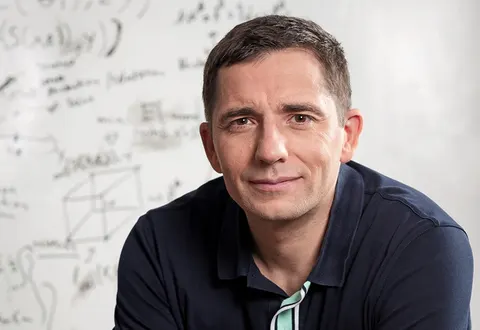
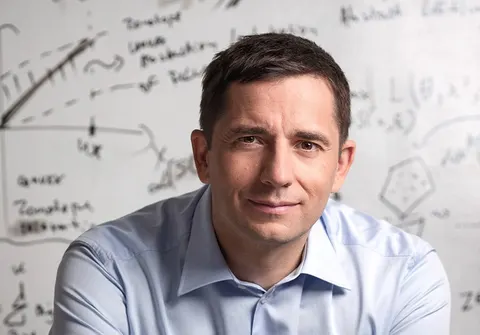
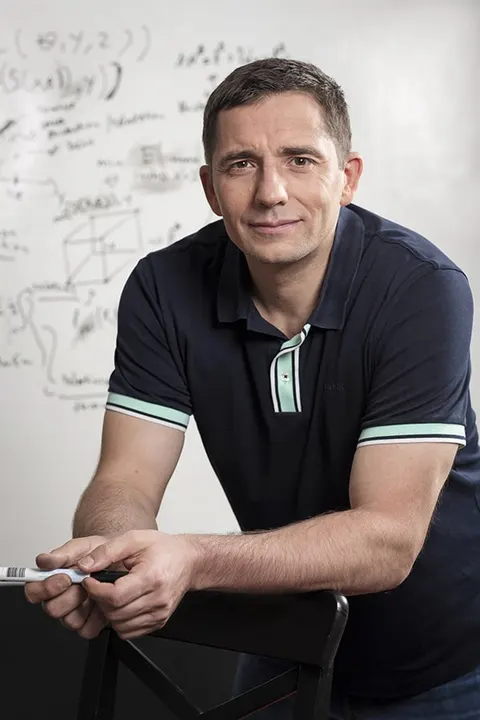
INSAIT was born thanks to the stubborn efforts of Prof. Martin Vechev. The idea came to him in 2003, while he was applying for a PhD at Cambridge and had to fill in, on yet another form, what he dreamed of achieving over the next 20 years. On the spur of the moment he wrote that he wanted to create a world-class computer science research center in Bulgaria. And now the venture is a fact.
On Friday and Saturday, INSAIT is holding its first annual conference. Incredible names from the world of artificial intelligence are arriving in Sofia. (More about the event here.) Scientists from Google, Waymo, AWS and MIT will talk about their research, which will transform the technology of tomorrow from the ground up.
But how did this quiet scientific revolution happen? What are the biggest risks facing the venture? What will Bulgaria look like if the project develops as expected? What does its creator dream of?
– On Friday, world-class AI scientists are coming to Bulgaria—people who have achieved impressive things and who are only beginning to draw the outlines of tomorrow. What arguments do you use to convince them to come?
– Of course, I know many of them through my professional work and personal contacts. But more importantly, these people want to have an impact on society. They already see INSAIT as the only unit similar to the ones they know, but this time in Eastern Europe, and that is the main reason they are in Sofia.
The interesting thing here is that
all top universities and labs today work in a very similar way,
whether they are in the States, China, Switzerland or Israel. In Eastern Europe, INSAIT is the first institution with the ambition to work this way.
Most of these scientists are mentors in the doctoral program; they see the enormous gap and, at the same time, the enormous potential, and they want to help.

– Why is this really the first venture of its kind in Eastern Europe? Was it very hard to create, did it require the joint efforts of the state, business and scientists, or had it simply not occurred to anyone that it was possible?
– These centers function in a very complex way, and in Eastern Europe in general the know-how for structuring them just isn't there. In Bulgaria, for example, we have hubs, clusters, all sorts of units, but they have nothing to do with real world-class research and innovation.
The other reason is that it takes gigantic effort for something like INSAIT to get off the ground here at all.
I have been working very actively on this project for four years now, and it is almost like a second full-time job. And yes, this kind of work can't be done with advisers from abroad; it takes hands-on work on the ground. The way these institutions operate is intricate, and if one piece shifts out of place, the system doesn't work.
The third thing is timing—the right moment, when both the state and society want it. In my view, the situation in Bulgaria and Eastern Europe is such that big companies are already arriving and people increasingly want something like this to happen. We want to move closer and closer to Israel, Singapore, Switzerland, and no one has come up with any other way to do that than institutions like INSAIT.
– Based on your experience, what is the image of Bulgarian IT scientists in the West? Does it help?
– If we're talking about top innovation, Bulgaria isn't on the map at all. At the top scientific conferences in machine learning, for example, there are no papers from Bulgarian institutions, while a single lab at a top university might publish 10 or 15. Bulgaria has the image of a good technical nation, but not of a place where the technologies of the future are invented.
– And yet at the same time there are Bulgarians in every big company and research unit; we'll see plenty of examples at the conference…
– That's true, but as a percentage there are far fewer Bulgarians at top universities and R&D units than, say, Israelis or people from countries with a similar population. On the whole,
we are still living off the image created in the communist era,
of a good technical nation, of strong olympiad competitors at school level. That is very important and we must build on it, but it is far from enough, and that is why institutes like INSAIT are needed.
– From here on, what are the biggest risks that things won't work out?
– There are many, of different kinds. For example, the laws on the development of academic staff are outdated and inadequate for modern science and innovation. Outdated legislation can prevent us from working at the speed we need to. Institutes of this type move extremely fast;
they are closer to startups, but on a much larger scale.
And if you can't reach that speed, there's no way you can be competitive.
Then comes the image of the country—how easy it is to attract top scientists, top students, top investors. That is a test not only for INSAIT but for the whole country. What the healthcare is like, the quality of the air, of the schools, the tolerance toward foreigners, the absence of corruption. That is perhaps the hardest part: attracting people to Bulgaria.
And the third is the danger of a lack of understanding—for instance, the government failing to appreciate that this is the most strategic project for Bulgaria in the last 30 to 40 years, one with the potential to raise Bulgaria's image in the eyes of the world.
The key question is whether the state will keep standing more and more firmly behind this venture,
and whether it will present and position it abroad the right way.
– Understanding is a very interesting point. The sector is very enthusiastic, but are we managing to catch the attention of people outside it? Because in Bulgaria this sector has a somewhat hard time finding common ground with the rest of society.
– As President Rumen Radev said at the opening,
INSAIT has managed to connect many different parts of Bulgaria's fragmented ecosystem:
four different governments, entrepreneurs, top Western companies such as Google, AWS and VMware, Bulgarian companies such as SiteGround, the best Bulgarian university and many others.
The next task is for that understanding to reach people outside the sector, and that matters because, in the end, INSAIT is the way we will keep our children in Bulgaria. Better education makes children stay in Bulgaria and come back from abroad. INSAIT is proving that this is possible by attracting some of the strongest Bulgarian students. This is in the interest of the whole nation.
– What is the next big goal?
– Soon we will hold an event devoted solely to INSAIT and its connection with society and education; there are many topics in Bulgaria where disinformation reigns and which need explaining.
For example, for many parents and children it is not clear how to continue their education after 12th grade. What happens, what they should do, what the real prospects are and what to optimize for. And these are topics that concern all of society.
– Isn't it a problem that much smaller generations are reaching higher education, while the sector suffers more and more from a shortage of people?
– Bulgaria has many development strategies, but not a single one is followed. In Israel, for example, there is a very clear system for where good students should go—to their top universities. In Bulgaria it's not like that: there's no strategy, the universities are on the whole considerably weaker, and chaos sets in.
One of INSAIT's missions is to bring order to this chaos, so that
the status of the scientist, of the researcher, becomes something different.
So that these become prestigious professions, as they are in the West. Then children will be much keener to pursue them, too. To that end, INSAIT will certainly reach down to the level of schoolchildren as well, so that this movement toward real science, toward knowledge, can start much earlier.
– But either way, we have far fewer people, compared with neighboring countries, for example.
– We're not that few. Israel and Switzerland are no bigger than us in population or territory, yet they manage to be among the leaders in the world of technology. One of the good things about INSAIT is that it works in a field that doesn't require huge initial investment, as other fields do, and change can come considerably faster.
– The idea is to cover all areas of information technology and artificial intelligence. Wouldn't it have been easier to try to specialize in something specific?
– That's dangerous, because if you concentrate on one or two areas, you may fail to attract top people because of the risks we talked about.
– Your project seems to carry the force of a revolution. But revolutions are rarely the work of scientists.
– I do science, but I'm also an entrepreneur. When you're on the other side and working at a top university like ETH Zurich, where there are thousands of applicants for a single program every year, it becomes very clear that without something like INSAIT, Bulgaria simply has no chance of being competitive.
A country can easily reach some average level and sit there. But for the next level of knowledge, education, research and innovation, without an institution like INSAIT, we don't stand a chance.
I know many people in the ecosystem; everyone sees how fragmented everything is and that it doesn't work the way it should. As an entrepreneur, that motivates me to do something that will bring change. We have enormous potential, but it needs to be channeled.
Foreigners won't do it for us; we have to do it ourselves, we Bulgarians.
When they come, they say how wonderful it is, but then they leave.
To succeed, we need to keep two things apart: when we talk among ourselves in Bulgaria, we should honestly name our problems and solve them, and abroad we should always promote ourselves in the best possible way.
In this field, Bulgaria should be among the top 5 countries in Europe, even the top 3—we have that potential. With INSAIT we will find out whether we manage to use it or not.