LatticeFlow is impressive not only because it solves fundamental problems in artificial intelligence (AI) systems. It is also the first high-tech company to position itself next to the INSAIT institute, Sofia's new AI research center, and it will work closely with it. Even without an official funding round, the startup raised $12 million, part of which it will invest in hiring specialists in Sofia.
LatticeFlow won the award for the most innovative AI company in Switzerland and the U.S. Army's prize in the field, and it was named among the top 100 AI companies in the world. It also made the list of ten Swiss ventures worth watching in 2023.
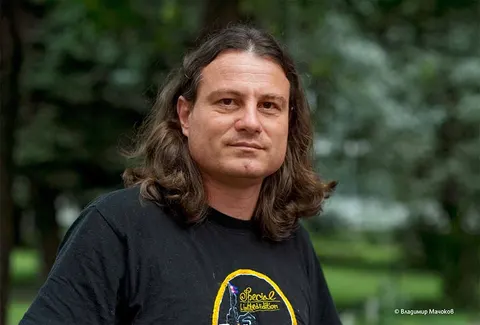
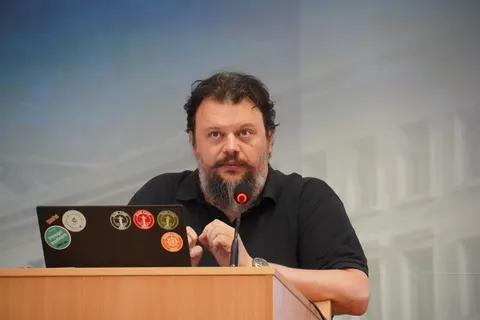
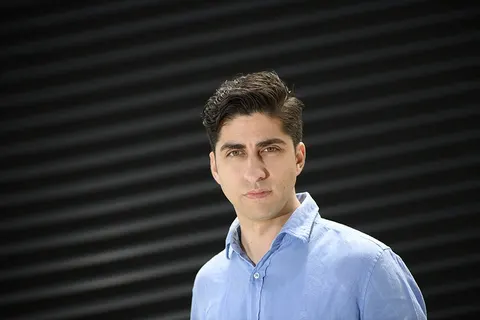
The startup's technology was developed at ETH Zurich before it was spun off into a company led by Dr. Petar Tsankov, Prof. Martin Vechev and their colleagues Dr. Pavol Bielik and Prof. Andreas Krause. The Bulgarian scientists are no strangers to entrepreneurship: they already have several successfully sold high-tech companies behind them.
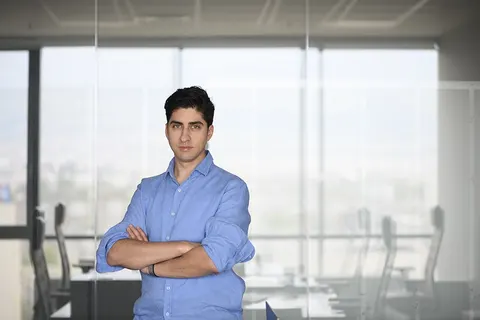
Dr. Petar Tsankov will take part in this year's Digitalk conference on May 18 at Sofia Event Center.
We meet him to talk about how you build a startup in a field that is only just taking shape. About how the algorithms the team has developed help create a new generation of reliable AI across a range of applications. And about the enormous prospects in this field opening up for the team, which is already working in Sofia.
– Lately, because of ChatGPT and GPT-4, all eyes have turned to artificial intelligence. What made these models so significant?
– ChatGPT is the first mass-market artificial intelligence model: in 5 days it passed 1 million users, in 2 months it passed 100 million, and today it is used by more than 1 billion people around the world. Growth like that has never been seen before. From a technical point of view, ChatGPT is not a fundamental breakthrough: it is a GPT-3 model fine-tuned to give the answers people prefer.
– Do they stand a chance of changing the business world?
– Yes, it's inevitable. What isn't obvious is that these models won't actually change the industries around us directly.
These models are not accurate or reliable enough in practically any business field.
For example, we shouldn't use ChatGPT for financial advice or to diagnose diseases. The latest research has shown that in 75 percent of applications ChatGPT falls behind “specialized” models trained to solve problems in medicine, finance and other industries. That's exactly why we call the GPT-X models “foundation” models—they provide a good base, but they need to be fine-tuned on high-quality data and examples before they can be used in industry.
– Could today's huge interest play a nasty trick on the field? After peaks like this, every technology goes through a slump, a winter. Do you think something similar could happen here?
– No. Artificial intelligence has been developing since 1950 and has already been through two winters—in the '80s and the '90s. Today the technology is moving en masse into every industry and every home.
The world will look quite different in the coming years; there's no going back.
What's new about artificial intelligence is the speed at which the technology is developing, which I think will reveal a number of unknowns. And it will surprise even the experts.
– 1,100 scientists and entrepreneurs, among them Steve Wozniak and Elon Musk, tried to halt the creation of new artificial intelligence models for 6 months. Is that necessary?
– No. It's impossible to stop the development of this technology, and a move like that would only lead to less transparency and models built behind closed doors, which would open up far more serious risks for us. What we can do is accelerate progress on the security and reliability of these models. That is precisely the problem that I and the people at LatticeFlow, ETH and INSAIT have been working hard on for more than 7 years.

– How did LatticeFlow manage to advance so quickly? And why did you decide to keep growing in Sofia?
– The company's success comes down to the uniqueness of our technology, which offers practically limitless business potential in this fast-growing field, and to the proven interest of tech giants like Siemens and government organizations like the U.S. Army. We launched the company in 2021 with initial funding of $2.8 million, and at the end of 2022 we added another $12 million to speed up development and grow the team in Sofia.
Building high-tech products like LatticeFlow requires not only business and product teams but also close collaboration with world-class research teams. INSAIT made it possible for companies like LatticeFlow to grow in Sofia. We have this kind of collaboration with ETH Zurich, where we developed the original technology, and now we're going to apply the same model in Sofia.
It's used in every high-tech hub in the world. It needs to be shown that it works in Bulgaria. It's the
only way our IT industry can jump to the next level,
where products are not only built but also invented, where there are strong people who can attract the big tech giants like Google, Apple, Microsoft and Amazon.
To be on the artificial intelligence map, it isn't enough to understand how this technology works; you have to work on its next generation and publish research papers at the world's top venues in the field, like ICML and NeurIPS.
– How was the idea for a startup like this born?
– It all began with the creation of the first method for verifying the safety and reliability of deep neural networks. Prof. Vechev pointed me to a new result from researchers at Stanford and Oxford who had developed a method for validating neural networks. Interesting as the method was, it became clear that it only worked on impractically small AI models.
We quickly reached an “aha moment” when we realized how we could scale the concept dramatically and validate the huge artificial intelligence models—the ones industry actually wants to use. We discussed the idea and started work that same day, bringing PhD students from Prof. Vechev's group into the project.
In a few days we built a prototype, and then the first results came. We presented the paper at IEEE Oakland Security & Privacy, the most prestigious security conference in the world, and another 40 to 50 world-class research results followed. That turned ETH Zurich into a major center for secure and reliable artificial intelligence, which sparked strong interest from industry and set our business contacts in the field in motion. It was important to act fast, because it was obvious this was an important topic that people were working on intensely.
You're competing with hundreds of thousands of scientists all over the world. The race is brutal.
– Definitely! ChatGPT, facial recognition, image generation—the wonders in this field keep multiplying…
– The applications keep multiplying, and companies are ever more actively developing models to solve real problems. This accelerated even further with the arrival of generative models for text and images. The fundamental problems around creating reliable and secure artificial intelligence for industry remain—these models must not only work well in the lab but also perform reliably when solving real problems in medicine, finance and manufacturing.
Even though we know how to train models that achieve good accuracy on test data,
things aren't so rosy once we apply them to new, real-life examples.
Creating new models that work reliably requires properly selected and labeled training data. Models have to be retrained and corrected if they don't perform well in certain situations. New phenomena not encountered during training have to be spotted, along with a host of other complex problems.
– For example?
– Here's a problem from practice: a model that detects skin cancer. In most of the images where the patient has cancer, there are marks from a surgical pen, made to measure the size of the mole and track its growth. This misleading correlation between the presence of surgical markings and skin cancer fools the model! Instead of learning to recognize the disease, it learns that surgical markings are a sign that a mole is cancerous.
– What solutions does LatticeFlow offer on this front?
– Our platform automatically finds these gaps in the AI's knowledge and lets you fix them before they lead to problems. It's important to note that deviations like these simply can't be found without automation, because you're dealing with enormous datasets and complex mathematical models. That's exactly why we automate the process.
Our first product automatically “diagnoses” the data to detect problems with its quality. It makes it quick, efficient and easy to find and fix problems related to data annotations, missing data from certain situations, removing misleading correlations and more.
Our second product automatically finds the situations in which a model doesn't work well. For example, even though a skin cancer detection model achieves more than 90 percent accuracy on average, on part of the data that can drop sharply—below 30 percent, say.
Our product finds the models' blind spots—the places where they are most at risk of getting it wrong.

– And then all this is corrected by hand, is that right?
– The specialist developing the model chooses which correction to apply, but the correction itself runs automatically across the entire dataset. That matters, because fixing such problems by hand is hard and expensive. For example, if the data is systematically mislabeled, it's impractical for the specialist to correct it example by example; that would take months. Our product automatically shows which data is mislabeled and applies the necessary correction. So instead of months and hundreds of thousands of dollars, it takes 1 to 2 minutes.
– I've read that your clients already include the U.S. Army, Germany's Federal Office for Information Security, huge companies like Siemens…
– Yes, every company and government organization that uses artificial intelligence models needs our platform. We have clients from different industries. Among them are the leading players in automated inspection of car damage, who offer these products in the insurance sector. We also work with the leader in artificial intelligence for automated analysis of sports such as soccer, basketball, baseball and others. For all these clients, our platform is key to building models that work reliably.
– How did you end up raising money… without even looking for it?
– The investors found us before we were officially looking for investment. I was in the U.S., talking about how the product and the demand for it were developing. The investor who went on to lead the round realized that there was strong market demand for our product and that we didn't have enough technical people to work with our clients. Because of that shortage,
we found ourselves turning down Fortune 100 companies,
because the engineers developing the product had to step in and help onboard new clients. That's how we got to the point where we jumped ahead of the normal funding cycle and received a new $12 million early to accelerate our growth.
– What kind of people will you be looking for in Bulgaria?
– The plan is to be 40 people by the end of this year. We're looking for people for all kinds of positions—product designers, product managers, technical sales, marketing.
– In which directions of AI do you see the biggest breakthroughs coming soon?
– We're seeing applications in ever more unexpected fields, which is a sign of how widely these technologies are spreading around us.
We're even talking about companies that make parquet flooring and train models to arrange the different wooden boards automatically.
I think that within 2 years artificial intelligence models will become a big part of our everyday lives. Their safety is becoming an ever more pressing topic. At the end of April this year we announced the first service for validating the safety and reliability of artificial intelligence and began the first audits of models used by major Swiss banks. The service makes it possible to validate models against the regulations and standards being developed by the European Union and the U.S.
Our mission is to help companies build a new generation of reliable artificial intelligence, which will allow these technologies to be widely applied.
The potential to become a world leader in this important field is practically limitless.
That's exactly why we want to create something truly significant and big!
– Could your project also be used by technologies like OpenAI's much-talked-about models? How could it be useful there?
– Yes. OpenAI's models, as well as their open-source alternatives, are fine-tuned by companies on new datasets so they can be applied in industry. They provide a good base for creating specialized models, experts in specific industry problems. Beyond that, our product uses these foundation models to work more efficiently—for example, to explain why a model doesn't work in certain situations.
– Where are the limits of what this kind of technology can do?
– It's important to understand that these models are smarter software with which we can solve a wide range of problems. At this stage we are in control of the technology. That doesn't mean we can afford to underestimate it. On the contrary, I believe this “smarter” software will fundamentally change the world around us.
– I've been writing about science and meeting scientists for 20 years. And it still feels very strange to me to talk with a researcher like you about billions, about business… It's a very different paradigm.
– That's normal for scientists working in high-tech hubs like Stanford and ETH Zurich, where research is systematically turned into billion-dollar companies. During the fundraising, for example, I spoke with Prof. Christopher Manning of Stanford. He is one of the world's best-known experts in natural language processing. To my surprise, he joined the conversations with one of our investors to help them with their due diligence on LatticeFlow. Instead of asking me technical questions, as I expected, he was interested in the clients, the market, the development cycle…
– What sets apart Bulgarians working in AI?
– We have a serious culture of studying the exact sciences, like mathematics, physics and computer science. I think that's thanks to strong high schools and teachers in these fields, who turn out well-prepared people.
Unfortunately, the situation is different when it comes to education after high school, so many of these minds choose to do science outside Bulgaria. So although we have strong technical teams for building products, we don't have enough people to come up with which products to work on.
This is especially true in new fields like AI—in practice, Bulgaria doesn't exist on the world map of this kind of technology. We have no developments or results at the world-recognized conferences on these topics.
In my view, though, Bulgaria has excellent preconditions for becoming a high-tech hub. I think the mentality of entrepreneurs in Eastern Europe is closer to the American one—people think big, without limits, with more risk and more courage.
I see the people who start companies here; they want to conquer the world. I really love that mentality!
On top of that, we have low taxes, which are extremely attractive for building a business. And now we have INSAIT, which attracts world-class scientists. I see no reason why, with good development, we shouldn't significantly overtake the West in these fields, as Singapore, Switzerland and Israel have done.