A long-underestimated technology, finally come of age, could save many lives.
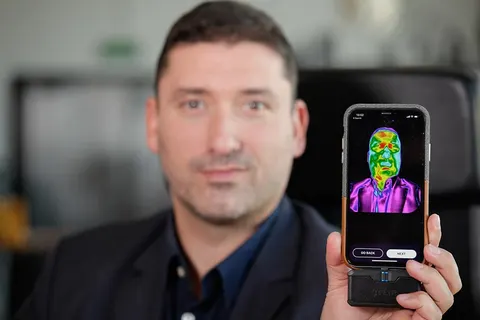
Sometimes, in the world of fast-moving technology, stories meander between the big dream and the unreal. But there are many arguments suggesting that a huge, unexpected breakthrough is hiding here. Small changes in the temperature of certain areas of the body, captured by a thermal camera and processed with the help of artificial intelligence, can predict a whole range of health problems. The venture is being developed by the Bulgarian startup Kelvin Health.
Georgi Kadrev is an information technology specialist who has long been an entrepreneur as well. For many years he developed the project Imagga, which almost imperceptibly turned into a company and a technology leader in image recognition.
Kelvin Health's journey began in the first days of the pandemic. The team faced the challenge of processing images showing the temperature of the human body, in an attempt to recognize a COVID infection instantly. Gradually it turned out that this method, regarded as almost alternative medicine, could become a breakthrough for medicine. A technology that could enter every home and save lives. The venture's medical director is the well-known cardiovascular specialist Prof. Ivo Petrov.
Can thermal diagnostics become a revolution in medicine? Which diseases will the new technology diagnose? Can artificial intelligence lengthen our lives? What does it mean for a startup to become a unicorn—not with a billion-dollar valuation, but because of… a billion human lives saved?
– How does thermography work? And how can it help us catch diseases early?
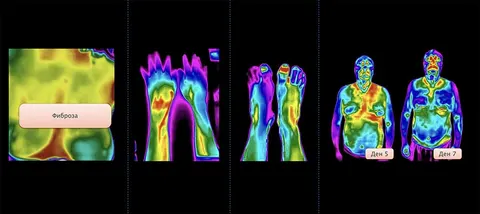
– It's based on the fact that the body is warmer where there is more blood, and the other way around. There is a relatively small number of causes that affect local blood circulation. Most often, the reason for warming is inflammation—more blood, nutrients and immune cells are directed to the spot. What we feel with inflammation—warmth, discomfort or pain—is due to the increased blood supply. Another cause is the presence of tumor cells—they feed and also “pull in” more blood.
If an area is colder than usual, the cause is very often a blockage or narrowing of a blood vessel. Or a spasm—for example, I observed it myself, exactly three weeks after the start of the project. I had a small grain of sand in my kidney and
they couldn't diagnose me. Yet on the thermal images the spasm was clearly visible!
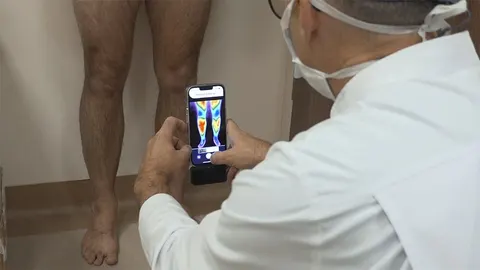
Our main focus over the last two years has been to use the images to find blockages or narrowing of blood vessels, which happens in the arteries of the arms and, above all, the legs. This very often leads to severe complications such as the loss of a limb.
It can also be a sign of a future heart attack or stroke.
At the same time, there are very few fast and accessible methods that can show it precisely and early enough, and people rarely get to a vascular specialist in time.
– For many years you and your team have worked on image recognition. How did you turn to healthcare?
– Since 2012 at Imagga we've been working on analyzing photos with AI, and we established ourselves as a pioneer. At the start of the pandemic, on March 19, 2020, a young entrepreneur and a medical scientist contacted us. They told us they wanted to develop an app that would recognize COVID with a thermal camera on a mobile phone. It was the period when nobody knew what should be done, and everyone wanted to help.
The idea of a COVID test was dropped very quickly, because there was no way to get access to the patients—you could only go in to them in hazmat suits. But we found the concept very interesting, so we bought a few thermal cameras, started handing them out to friends who had COVID, and watched. It turned out that you really could see interesting things. The very concept of preventive medicine won us over quickly.
You have some condition—acute or chronic—and you can monitor it and see the changes before you feel them. Our body often masks symptoms until they become so hard to hide that they come to the surface. From an everyday point of view that's a good thing, but it means problems go unnoticed until they reach an advanced stage.
Gradually we became convinced that this technology has enormous potential, and we concentrated on it.
– Besides narrowed blood vessels, your technology is also being applied to the early detection of breast cancer. How did you arrive at these particular conditions?
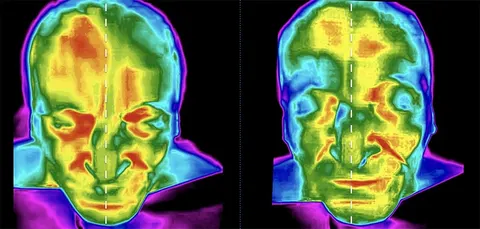
– Because access to patients was so difficult, we joined an industry organization—the Bulgarian Cluster for Digital Solutions and Innovation in Healthcare—where we met Novartis Oncology, and they became interested in how the method could be applied to breast cancer. It turned out to be one of the most promising areas, because when there are tumor cells, they grow and feed more aggressively, and that increases the blood supply.
In this area one of the standards is the mammogram, but it's used for older women—the tissue density has to be lower for it to work accurately. So we concluded that thermal medicine could be very useful for early screening.
For purely administrative reasons, it took a year and a half before a research collaboration was officially signed. That's why we're only now starting to image patients and train algorithms in this area.
– How did you bring a physician and researcher like Prof. Ivo Petrov onto the team?
– We met in September 2021. Besides being a cardiologist, he is also a vascular specialist, focused on various minimally invasive procedures for restoring blood supply—not cutting off the limb, but doing everything possible to break up the clot and widen the narrowing. At first he was a bit more conservative, but he took the idea with an open mind, and they began preventively imaging patients who came in with complaints.
At some point
he and his team became even more enthusiastic than we were, as they began to see how clearly this approach reveals a problem—
it becomes clear where the problem area is and how severe the blockage is. We've already imaged more than 820 patients, and we keep adding between 3 and 10 every day. We're preparing for a clinical study of the already trained algorithm, applied to the analysis of new patients, including from different ethnic groups. We plan to run it both in Europe and in the US, and we'll be waiting for approvals from the EMA and the FDA. That's how we'll prove the method's diagnostic value. The very way we process the thermal signal and visualize it turns out to be quite convenient for specialists.
– What sets your method apart?
– In the long run, our deep expertise in analyzing images with artificial intelligence. We also do good image segmentation—we separate background from object and focus where it's needed. That way, with fairly basic hardware, you can see a very detailed snapshot of blood circulation.
Our software itself is also very convenient. There are other similar programs, but they usually require quite expensive thermal cameras—between $5,000 and $20,000. We use “pocket” cameras for $400.
What's more, we're in advanced talks with a Bulgarian company that is very strong in manufacturing thermal hardware, and there's a prospect of developing our own camera.
Our concept is to capture the temperature of different parts of the body, analyze what is normal, what the deviations are and what they tell us.
This is very important for enabling much broader use—so that you don't need a person trained to read the images, but the software does it.
At some point we want it to become something you keep at home, like a thermometer. But far more sophisticated—tracking your condition and the changes and, if needed, alerting your GP and/or your treating physician.
– Then we'll be able to take meaningful selfies, though with a thermal camera rather than a phone… This kind of technology is in every airport, and a change in temperature is an obvious symptom that has been known for as long as medicine has existed. Why hasn't science pursued this direction more actively until now? Was the measuring technology simply not good enough?
– I think so. Let me use an analogy with image analysis methods, what we do at Imagga. They've existed since the 1970s; in the 1990s there was huge interest, a very strong algorithmic foundation and science, but the hardware wasn't powerful enough and there wasn't enough content.
Smartphones appeared at the start of the century, and that created a much bigger context—billions of photos began to be generated every day. Since modern methods are based mainly on machine learning, they need very large volumes of data to find patterns and anomalies. So it was only in 2010–2013 that the boom in visual recognition technology came.
I believe the same thing is happening with thermography. As Prof. Ivo Petrov says, it has existed as a method of medical diagnosis since
Hippocrates, who said that “if this part of the body is warmer than it should be, there is a problem. If it is colder, there is also a problem.”
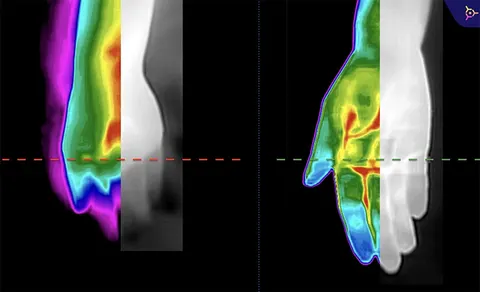
In other words, medicine has known for millennia that body temperature is an indicator of health. Thermographic equipment was first used in medical diagnosis in the 1970s, initially as a complementary method for diagnosing breast cancer alongside mammography. But it turned out not to be reliable enough on its own. With the appearance of quite a few alternative medicine centers using thermography, it gained a reputation as an unscientific discipline. Many small studies were done, but so far no one has carried out a large enough study—let alone one relying on mobile cameras.
This is very important, because it changes the context. You don't need a stationary machine in the doctor's office, but something every patient can have, even in the least developed and most remote regions.
So it's the combination of several things: thermography is mobile; since 2017 there has been mobile thermography of good enough quality; and artificial intelligence and image analysis technologies have advanced a lot overall. That gives us great confidence that something precise can be built, rather than a fantasy or “quackery.”
These are the things we've taken on.
We believe we are very well positioned to be pioneers in the whole field of thermography plus AI.
We hope not only to be the ones who prove it, but also the ones who manage to scale it up enough to be useful to the largest possible number of people.
– As an experienced entrepreneur, where do you see the biggest risks of it not working out?
– Right now the biggest brake is regulatory approval. As I mentioned, thermography is viewed a bit skeptically; in 2019 the American FDA even issued a warning against claims that it can be used on its own to diagnose breast cancer.
We are certain that the technical and product implementation of this technology will happen; the question is rather how long regulatory approval will take,
since quite a few things have to be proven from scratch—something completely new, from a technological and scientific point of view, on a serious scale.
From a commercial point of view, it depends on what diagnostic methods emerge in the meantime in the therapeutic areas we're focused on, and whether any of them might make our application pointless. But so far we're seeing very good acceptance from specialist physicians.
Another factor that might prevent the method from going mainstream is that a change in temperature isn't only a sign of a vascular blockage—it can also indicate inflammation, and we have yet to analyze to what extent the causes can be told apart.
But from an entrepreneurial point of view, the possibilities of using this method to diagnose many different conditions are enormous. One by one, of course, worked out and scientifically proven. We're not standing on one leg that, if potentially cut off by another method, would make us lose everything.
– When the pandemic began, there were forecasts that the medical technology sector would suddenly explode, that many new methods of diagnosis and treatment would start taking hold. But for now nothing like that seems to be visible. Are they still accumulating because there's little data, or will there be no such phenomenon at all?
– We listen to a lot of startups pitch; some of them are a little ahead of us, others behind. And we say to ourselves, as technically literate people and as human beings: “What cool things are being made, what things are coming!” It doesn't matter at all whether they're competitors—in most cases they aren't. They analyze portable ultrasound images, pick up certain biomarkers and detect conditions through them.
In my view, one possible answer really is the delay caused by the need for accumulation. It's tied to what slows us down most seriously as well—the whole process of regulatory approval. Vaccines were the only thing that took quite a shortcut through it, since approving them with relatively little research was considered extremely urgent.
There haven't been any specific, large-scale changes that would help technologies in this field develop faster. But it's a fact that COVID and all its socioeconomic, political and other effects gave the impulse for a wave that, I think, we'll see reach the shore a little later because of these longer regulatory cycles.
In this wave there will be many new successful methods of diagnosis and treatment. They'll be more accessible financially and logistically, and that matters, because even in the most developed countries diagnosis is a big problem and there aren't enough programs for preventive care.
Let's not forget that the effect of treatment varies enormously depending on the stage at diagnosis. Take breast cancer: five-year survival drops from over 95 percent to under 28 percent between detection at stage 1 and stage 4!
– Amid the huge buzz around ChatGPT, we keep talking about how it will leave us jobless and whether it will destroy us. Meanwhile Bill Gates writes that it will fundamentally change, above all, education and healthcare, by allowing much wider access.
– Artificial intelligence is a technology that, given a sufficient volume of data, can draw the right statistical conclusions. This allows every kind of structured information in the healthcare system to be analyzed in some way—to raise a signal, to extract knowledge. Whether we're talking about the whole healthcare system or a subsystem, analyzing different kinds of trends, some of them hidden, or about the level of the individual patient.
If there's an electronic medical record with structured data, it can help the patient be diagnosed much more accurately. Home diagnostics in all sorts of forms—under the watchful eye of a supervising physician, of course. But what is a mission for us is much easier access to healthcare and much greater efficiency of the process.
There are dozens of areas where artificial intelligence can help. Put most simply, it can replace at least the initial need for human intelligence to step in—wherever some kind of pattern or repetition has to be recognized. Healthcare is complex and different in every country, and in some economically developed countries such as the US it is extremely expensive and not socially oriented enough.
Technology can change the way we take care of our health as a civilization.
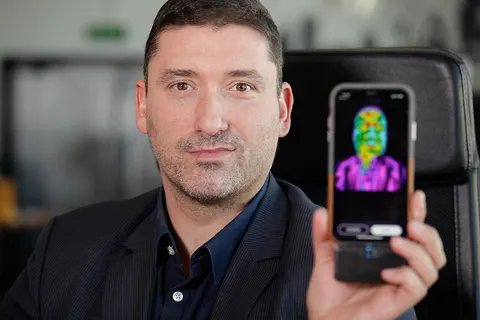
– I read that you dream of becoming a unicorn—not with a $1 billion valuation, but by saving a billion people. Do you think it's possible?
– We don't rule out the valuation either—if we can help that many people, it will be much bigger too. But we've never thought about how to make as much money as possible. When it comes to healthcare, we find that rather tasteless.
Let me go back to the beginning. At first the idea was for Imagga to help with its technology and expertise; in the first weeks of the COVID lockdown we were all shut in our homes and had nothing else to do.
But gradually a very strong vision took shape of how people all over the world, from every group—economic, geographic, races, genders—will have such a thermal camera at home, and it will help them understand much more easily when they have a health problem.
We really want to help by sparing a billion people suffering. And we connect it with their families too—when one person is ill, everyone around them suffers.
We believe the thermal camera can be “the next thermometer,” only with a far greater positive effect on the patient's health. Unfortunately, all healthcare systems today are reactive—they respond to a problem instead of preventing it. We believe we can change that!