Is the end of humanity coming because of AI? Whose jobs will it take, and will it change our society from the ground up? Will it destroy us, or grant us immortality? Or are we simply witnessing a giant marketing trick? Here I sum up some of the most important views on the subject from undisputed authorities in the world of technology and beyond.
This is what Elon Musk and Bill Gates, Sam Altman and Jaron Lanier, Noam Chomsky and Yuval Harari have to say.
Artificial intelligence has quite literally taken over the global agenda. We have finally realized that we have acquired a new generation of technologies with the power to change our lives. ChatGPT is what made the news about machine learning catch everyone's eye.
Once that happened, opinions split into extremes. While some are convinced we already have a technology that will replace and enslave us, others answer with mockery and skepticism. You will come across both points of view often in various Digital Stories. Here they will collide head-on, in an attempt to bring the arguments face to face. One thing is certain: a great deal really does hang on this debate…
1. The Robot Cries “Stop the Robot!”
“Let us pause the development of large language models for six months, so there is time to introduce regulations!”
You have surely heard last week's big news—the letter in which Elon Musk, Steve Wozniak and 1,100 other impressive figures from the tech world called for a six-month ban on developing powerful algorithms. According to the initiators, before we take the next steps, it is important to have the ethical frameworks ready—the limits we will set for this kind of technology.
There is no arguing that these topics need to be discussed more and more, or that regulations are needed, but… isn't it strange, to put it mildly, that it is precisely some of the tech geniuses who are slipping into the role of Luddites and asking us to simply stop a technology, just like that? What if, in the meantime, the countries that do not accept the restriction pull ahead in this kind of development? What if postponing work in the field of medicine costs lives?
It gets even more interesting if we dig into the backstory. The trigger for the letter, of course, is the buzz that came with the notorious ChatGPT platform and continued with the next generation of the algorithm behind it—GPT-4.
Audacity and Beauty
OpenAI, the company that stirred up such passions with these steps, was founded by like-minded entrepreneurs, Musk himself among them. What's more, it was created to counter Google's dominant project of the day—DeepMind. At its founding, one of the priorities announced by Musk himself was precisely to break the monopoly on artificial intelligence development. The next models were to be built under public oversight, as open source. Back then, the richest man in human history was saying that humanity's only chance of surviving the advance of AI was for “the technology to be not us, but them”—for society to have access, to control the development and naturally to integrate it into everyday life.
Then things changed so much that Musk ended up on the other side. All that remains from those days is his rhetoric, according to which the unchecked development of artificial intelligence “poses greater dangers to humanity than nuclear weapons.”
“Tech companies should immediately stop training any AI systems that could be more powerful than GPT-4,” the letter urges. “Such models are becoming more and more capable of handling complex tasks than humans.” All of this opens the door to spreading disinformation on an unimaginable scale and will make many jobs unnecessary.
Moreover: the creation of a computer superintelligence could turn into a risk for all of humanity and should not be “delegated to unelected tech leaders.” Such systems should be “developed only once we are confident that their effects will be positive and their risks will be manageable.”

Stop the Machines!
But is that even possible? What exactly will change in six months? There is talk of coalitions of companies developing safety protocols… But not of how to answer all the enormous ethical questions in this field.
“Unfortunately, this level of planning and management is not happening, even though recent months have seen AI labs locked in an out-of-control race to develop and deploy ever more powerful digital minds that no one—not even their creators—can understand, predict, or reliably control,” the letter goes on.
It is more than impressive that 1,100 big names have united behind such an appeal. Among them are Emad Mostaque, founder of the company that developed the Stable Diffusion algorithm, and Evan Sharp—the “daddy” of Pinterest. All people we might suspect of having a certain commercial interest in preventing OpenAI's dominance. But there are also many undisputed authorities, such as Yoshua Bengio, one of the pioneers of AI development and a winner of the Turing Award. The presence of the historian and writer Yuval Noah Harari is striking.
And so, the first important point of view: we have created something with enormous capabilities that we still do not understand. It is time to stop, introduce regulations and only then carry on!
2. Sam the Warrior
An interesting comment came from another pioneer of the AI world—Andrew Ng.
“The call for a six-month moratorium on making AI progress beyond GPT-4 is a terrible idea. I'm seeing many new applications in education, healthcare, food… that'll help many people! Improving GPT-4 will help. Let's balance the huge value AI is creating against realistic risks.”
“There is no realistic way to implement a moratorium,” Ng writes. “Unless governments step in. But having governments pause emerging technologies they don't understand is anti-competitive. It sets a terrible precedent and is awful innovation policy.”
I admit, Ng's opinion sounds to me like a note of common sense. “Responsible AI is important, and AI has risks. The popular press narrative that AI companies are running amok, shipping unsafe code, is not true. The vast majority (sadly, not all) of AI teams take responsible AI and safety seriously. Let's invest more in safety while we advance the technology, rather than stifle progress!”
Sam, All Alone
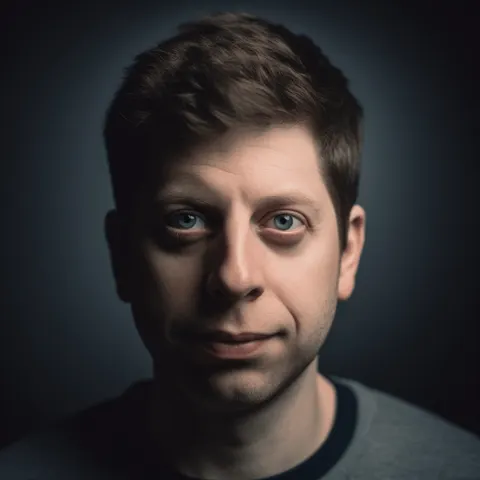
We cannot skip the words of the man to whom we largely owe the current boom. Yes, Sam Altman, the leader of OpenAI, has not yet said what he thinks specifically about the idea of a moratorium, but his views are clear enough.
He says what drives him forward is the idea of artificial general intelligence—an algorithm capable of solving any kind of task with a success rate comparable to a human's.
“I'm also driven by the goal of getting to a world of abundance.”
At the same time, Sam says, the next steps will bring a very serious change to all our lives. “I think capitalism is awesome. I love capitalism,” the multimillionaire admits. “But if AGI arrives in its full form, I can imagine all the ways it will break it.”
This is how Sam answers the criticism that he prematurely opened mass access to a technology not proven to be safe: “I believe society needs to feel this, to wrestle with it, to see the benefits and understand the downsides. So I think the most important thing we can do is put these things out there, so the world can start to understand what's coming.”
“We need time to figure out what exactly to do,” Sam says. “Regulation is necessary, but it will take time. Although this generation of tools isn't very scary, I think we are not that far from potentially scary AI technologies.”
The second important point of view: Yes, the dangers are here, but they must not stop us, especially when, in this kind of algorithm, we have acquired a technology that can be useful to us in so many areas!
3. The Bill, Please
As in “the check, please.” It certainly matters who will foot the bill for decisions about our technological future. It matters even more what that bill will be.
I trust that, having read this far, you too are convinced these technologies have enormous potential. If you don't believe me, I hand the floor to the next serious authority in the field.
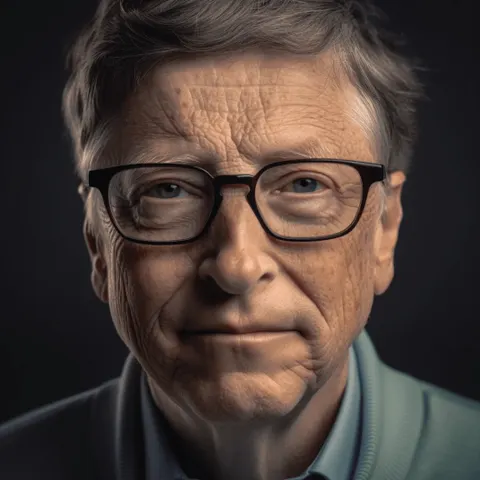
Days before the manifesto of the 1,100, Bill Gates published a long, substantial piece on his personal blog, explaining in detail why he believes the age of artificial intelligence has just begun and will bring us changes as revolutionary as those the internet or mobile phones gave us.
“In my lifetime, I've seen two demonstrations of technology that struck me as revolutionary,” Bill recounts, recalling 1980, when he first came across the modern graphical user interface—a convenient way of working that made computers accessible and eventually brought the internet in its wake.
Well, the next thing that strikes him as a revolution is the news that has come out of OpenAI over the past six months. Specifically, the ability to create a large language model that can answer questions it was not trained on in advance. That is why, according to Gates, ChatGPT marks the beginning of the revolution.
This inspires him to think about everything AI could achieve in the next ten years. “It will change the way people work, learn, travel, get health care, and communicate with each other. Entire industries will reorient around it. Businesses will distinguish themselves by how well they use it,” Gates writes.
Gatekeepers
Literally, the people who keep the gate, but the term has come to cover those who must somehow guard an important public good. The media, for instance, when it comes to information—or at least that is how it used to be.
According to Bill Gates, these technologies can help people become significantly more productive and creative. Moreover, they are capable of reducing some of the world's worst inequalities, such as child mortality in developing countries. In the United States, the greatest benefit will come from progress in education.
Of course, whenever the man who held the gold medal for richest earthling for decades talks about eliminating inequality, it is worth keeping our wits about us. Especially given his overall media image from Microsoft's early years. Here, though, what shows through is not just enthusiasm but also experience, perspective and knowledge of the tech world.
Gates sees AI as our only chance of tackling climate change.
But, of course, he also acknowledges the other side of the coin: “Any new technology that's so disruptive is bound to make people uneasy, and that's certainly true with artificial intelligence. I understand why—it raises hard questions about the workforce, the legal system, privacy, bias.”
Billionaires of the World…
Gates dwells on the ethical aspects, convinced that all of them can find reasonable solutions with sufficiently focused work.
“No matter what, the subject of AIs will dominate the public discussion for the foreseeable future,” Gates sums up, proposing three principles that are worth guiding the conversation.
“First, we should try to balance fears about the downsides of AI—which are understandable and valid—with its ability to improve people's lives.”
The second principle concerns equal access—market forces alone will not deliver the benefits of AI to those who, in the billionaire's view, need them most: poor countries and poor classes. “Just as the world needs its brightest people focused on its biggest problems, we will need to focus the world's best AIs on its biggest problems.”
“Finally, we should keep in mind that we're only at the beginning of what AI can accomplish. Whatever limitations it has today will be gone before we know it.”
The third important point of view: however we approach it, we must not underestimate the importance of what is coming. Nor should we be overly gloomy!
4. In Cold Blood
If you believed Gates wanted to microchip us through vaccines, just imagine what is coming here…
Too much enthusiasm for you? Well, here is a little grumbling on the subject, once again from the ever-present Musk. “I remember the early meetings with Gates,” he wrote on Twitter. “His understanding of AI was limited. Still is.” As we well know, in his view there is only one person on this planet who knows and understands everything…
Here is a bit more, for balance. Yann LeCun is also among the pioneers of the AI world, a Turing Award winner, and he heads this kind of research at Facebook's parent company. According to him, ChatGPT is “nothing revolutionary,” “not particularly innovative” and “can't be truly creative.” “It's not only Google and Meta, but half a dozen startups that basically have very similar technology. I don't want to say it's not complex, but let's say there's no particular secret behind it.”
Well, sure, nothing special has happened, just some little chatbot… That must be why his boss, Mark Zuckerberg, suddenly announced that AI development is becoming a top priority for Meta, too.
Let us follow Bill Gates's abstract and rather enthusiastic—especially for a billionaire—musings with a few specifics. The estimates in a recent report by Goldman Sachs are striking.
In its study, the global bank announced that as a result of advances in large language models, up to 300 million people could lose their jobs! If this kind of technology keeps developing as expected, it will bring enormous changes to the labor market. A full two-thirds of jobs in the US could be automated with the help of AI, and in half of them humans could be replaced entirely.
Of course, the report makes it clear that the complete replacement of humans will happen more slowly and is far from certain. Whereas the fact that such systems will automate a very large part of the work seems indisputable—and in the near term, too.
On the other hand, a look at the past suggests this need not frighten us. Sixty percent of today's workforce is in jobs that did not exist in 1940.
The fourth point of view? We are only beginning to realize what exactly we have achieved and what we are about to achieve. It is a time for extreme opinions to clash. But also for great opportunities!
5. Heart of Hearts
Where the commercial ends, the human begins. For the finale, as is typically Bulgarian, I am saving a bit of healthy gloom. And from undisputed authorities in their fields, at that.
The psychologist Gerd Gigerenzer, longtime director at the Max Planck Institute for Human Development, says: “We need to keep in mind that we could end up in a situation where tech companies sell black-box algorithms that determine important aspects of our lives.”
“Deep neural networks have many, many layers, but they are still calculating machines. They can paint, they can construct text. But understand that they don't do it in the sense that applies to humans,” the psychologist adds.
He hopes societies “will realize that it is not a good idea to hand over their data and the responsibility for their own decisions to tech companies that use them to make money. That cannot be our future!”
Ostriches, as Always…
But what is most likely to happen on all these fronts? What struck me here was the so humanly logical view of the economist Jacques Attali, who describes his impressions of meeting the algorithms, what we ought to do and what we will not dare to do.
“All the dangers being discussed are real. And they are far more inevitable than we think. There is no way to avoid them or ignore them,” Attali writes. “We must not merely marvel at the innocent games these programs now allow us, nor at the enormous means they will give us to reflect better, to create, to advance and to enchant.”
Attali is firmly convinced that a genuine global charter must be introduced as quickly as possible, one that acknowledges the hopes these artificial intelligences place in us but forbids them from harming their human authors. The guidelines Isaac Asimov left us back in 1942 could help here too.
“Naturally, we will not do it. Just as we have not done it effectively for taxes, nuclear weapons or genetic engineering. Unless we finally recognize, on this question as on so many others, the urgent need for a planetary rule of law.”
On the Tip of the Tongue
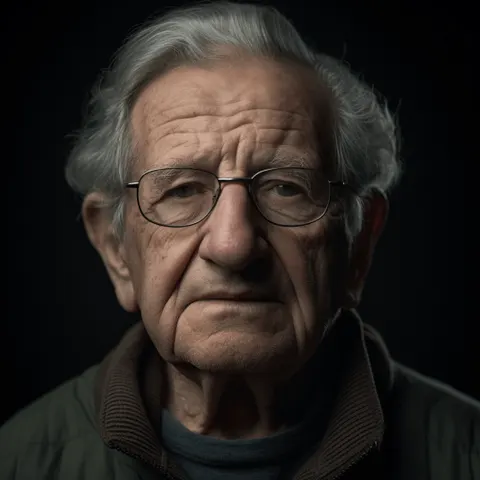
You can always count on Noam Chomsky for an extreme opinion. Well, here it is. In his view, we are very far from real problems in this field.
“However useful these programs may be hailed as the first glimmers on the horizon of artificial general intelligence, we are nowhere near that level. That day may come, but its dawn is not yet breaking, contrary to what can be read in hyperbolic headlines,” the linguist reflects.
“However useful these programs may be in some narrow domains, there is no way machine learning as it is today can compete with the human mind,” Chomsky adds. “Because, unlike the human mind, ChatGPT and its ilk are a lumbering statistical engine for pattern matching, gorging on hundreds of terabytes of data and extrapolating the most likely response. The human mind, by contrast, is a surprisingly efficient and even elegant system that operates with small amounts of information. It seeks not to infer brute correlations among data points but to create explanations.”
Long Live the Madmen
“The danger isn't that AI destroys us. It's that it drives us insane,” says a remarkable figure. Jaron Lanier is at once a pioneer of virtual reality and one of the biggest critics of what technology has become today.
“Can AI really outsmart us and take over the world? The question doesn't make sense; it's a set of terms that to me are fiction. They come from science-fiction movies like The Matrix or The Terminator,” Lanier continues. In his view, it is not even appropriate to use the word “intelligence” for this kind of technology, or to wonder whether we can compete with it.
“The idea of surpassing human ability is silly. It's made of human abilities,” Lanier says. In his view, comparing ourselves with this kind of technology is as silly as comparing ourselves with a car. “It's like saying a car can go faster than a runner. Of course it can, and yet we don't say that the car has become a better runner.”
“From my perspective, the danger today isn't that a new alien entity will speak through our technology and take over and destroy us. To me the danger is that we'll use our technology to become mutually unintelligible. To become insane, to reach a point where we can't communicate, where we forget our own survival instincts. Well, then we will die through insanity,” Lanier concludes.
The fifth point of view: we are far from anything we have any grounds to call “artificial intelligence”; it is time to calm down and rethink our concepts and our goals.
The Mirages Are Near, the Road Is Long
So, are we close to artificial general intelligence? Have the recent breakthroughs in the field really been that big?
I hope that among all the possible answers gathered here, you have already found the one closest to your own. But the most important thing, to my mind, would be if you have started asking these questions yourself—that is precisely the purpose of the site you have opened. Only then can the answers begin to come…