Microsoft, Apple, Facebook… are all fairy-tale heroes who walked the startup path before becoming what they are today. Multibillion-dollar mastodons that, one way or another, set the world's agenda.
How does an investment with a return of… 200,000 percent sound to you?! One that is perfectly legal and has nothing to do with mythical figures like pyramids and pharaohs. Only with fairy-tale heroes.
Startup X raised X billion dollars in investment. Y's market valuation hit Y hundred billion. Z became… a unicorn!
Modern technology is like a fairy tale. It has created a huge new economic sector where miracles happen. Yes, quite literally: unicorns fly, angel investors stroll about, and billions of dollars are the smallest unit of measurement.
And if you are somehow connected to this kind of venture, you have probably already had to learn the prosaic (if undeniably rather expensive) meanings behind these miracles. Even so, you may still find the following lines interesting. Because in all the commotion and the sea of information, anyone can miss something useful.
Perhaps you often hear about startups and wonder what they are and what sets them apart. Which ones have been the most successful so far, and where our country stands in this field. Well, then I hope you will find the answers below. They cover everything that matters about one of the fields creating miracles in the world of today's Digital Stories.
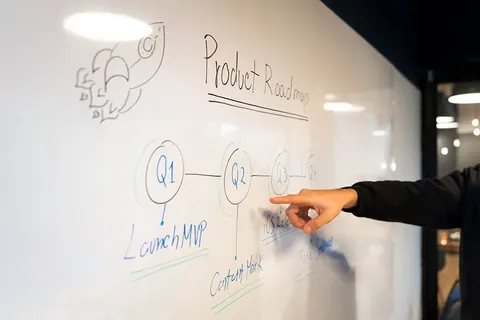
Once Upon a Time…
The fates of some of the most successful projects online are real fairy tales. They began in garages, like the pioneers in the days of Bill Gates, or as university projects, like the one that has turned us into Facebook-scrolling creatures today, all the way to the modern super(anti?)hero Elon Musk.
At the heart of every project that has changed the world of technology in any serious way there is always an idea. A notion for something that may turn out to be ahead of its time. Or that simply gets packaged the right way. That offers the small edge over competitors which finds fertile soil among users. If I tried to list even a fraction of the successful projects all of us have heard of, you would have to scroll for a long time.
Still: LinkedIn, Twitter, Instagram, AirBnB, Revolut, Uber, SpaceX… are (or were) startups too. You find them in financial technology, in the development of artificial intelligence, in just about any other field you can think of.
What unites them is this. For a good idea to become a mass solution, a multibillion-dollar company and a real force, it needs investment. Someone has to believe in it and put up enough money for at least a pilot product to be built, one that can then continue on its way. And so we come to the fairy tale of startups.
Pulling the Giant Turnip
The term “startup” appeared as early as the mid-1970s in the pages of American financial publications. Back then, however, the phenomenon was far from common; it became truly popular at the end of the 1990s. It got a special push from the so-called “dot-com bubble.” In the first years after the internet established itself as a mass global solution, a huge number of companies appeared, developing the next generation of projects. But access to these technologies was still not all that widespread. Neither the technology nor the users were ripe. Most ventures turned out to be ahead of their time and ingloriously turned enormous investments into a bubble that burst spectacularly.
Fortunately, the tech world woke up sober, and in the 21st century digital technology truly swallowed our daily lives. All of this happened thanks to the next generation of startups.
In Bulgarian we also call them “starting companies,” although you will more often hear the borrowed word. Neither term, on its own, tells you very much. Every company is a starting one at some point, isn't it?

Cinderella
Well, what sets startups apart is that they do it on a grand scale, spectacularly and riskily. The classification is loose; according to one definition, it is a project built on the idea of a specific product that needs funding.
Some definitions describe the startup as a temporary structure that exists before a real business model is created. Others put the emphasis on its being an organization that creates its product under a high degree of uncertainty.
A startup is, as a rule, a risky undertaking. Yes… again, just like in fairy tales. An adventure undertaken by heroes brave enough. A daring quest that may work wonders at slaying dragons, but also runs a great risk of ending ingloriously, burnt to ashes in the fire they breathe.
You will also come across the view that a startup is more a culture than a framework. An entrepreneurial model in which you bet on speed and risk, on trial and error. On a flexibility that stands against the more monolithic and cumbersome large, established companies.
According to Peter Thiel, co-founder of PayPal and the first investor in Facebook, the main characteristic of startups is that they grow fast. (That investment of his, by the way, brought him a return of 200,000 percent!)
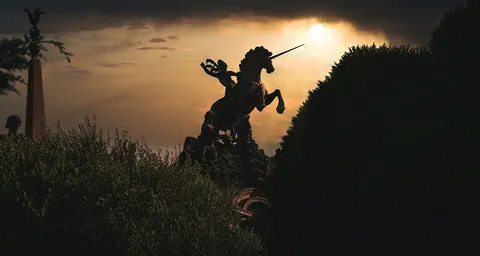
Unicorns vs. Zombies
He even sets specific limits—to stay in this category, a company must grow by an astonishing 4 to 7 percent a week on the metric that best measures its success.
In keeping with the amusing terminology used in this industry, it is worth noting that a startup that fails to meet the requirements for such growth is called a “zombie.”
And so it turns out that a company doesn't even have to be a tech company to make the list. Although most definitions include the requirement of an innovative product, which, in the end, is almost always tied to technology.
Not long ago, the Bulgarian media project The Recursive, which specializes in telling the stories of… successful startups from across the region, raised impressive funding. So perhaps this kind of venture is the model for the media of the new age?
The definitions, as you can see, have many sides. But the common thread is that this is a venture in need of serious initial funding. You remember how Rockefeller got rich after buying an apple, polishing it and selling it for twice the price. Well, maybe you have tried it; the result is rarely worth millions, as it was in his case.
My Angel
Innovation, there is no way around it, is an expensive undertaking. Even when it comes to software, which isn't material… programmers apparently earn quite a lot, given how many people are heading into the profession.
In this sense, every company starts with some form of initial investment. But the ecosystem has a few specific and interesting mechanisms through which firms can get going and develop at the breakneck speed that the definition “startup” demands of them.
The reason all this works is that investing in such ventures is risky but can sometimes lead to huge profits. That is why startups fight for funds. And on the other side, investors of various kinds can be said to fight for the most promising projects.
Here we come to the heavenly creatures. Angel investors are people who specialize in putting money into the first steps of a venture, usually in exchange for a minority stake in the future company. Most often this happens at the idea stage, before the minimal product that can be shown to the world has even appeared.
There are surprisingly many such investors, including in the Bulgarian startup ecosystem.
Another form of support at this very early stage is the so-called startup accelerator. These are most often organizations that select ideas and projects competitively and then help them—with funding, or simply with mentorship and know-how—through their first steps.
Overall, mentorship is an important form of interaction in this field. Angel investors often help with advice and guidance too, because they are usually people with experience in the industry.

The Uppercut
And then come the big steps. After the fairy-tale terminology, we move on to sports. Usually, once a startup has made progress, the time comes to look for more serious investment so it can grow. This is also a sign of whether the idea has really shown that it has serious potential to become a successful project.
An investment round is a kind of debt. The startup announces that it is raising funds, that it needs a certain amount of new capital before carrying out the next stage of its development. And once it has raised the funds, the round is closed. In return, the investor eventually receives a certain profit or a stake in the company.
Many of the more complex ventures, those requiring global infrastructure, for example, go through a series of such fundraising rounds. The order of a round is marked with a letter of the Latin alphabet—it begins with a Series A round, then Series B… and as many more letters as needed.
This kind of investment sometimes involves enormous sums. Of course, all this depends on the field, on the country where it happens and on the type of project, but headlines often appear about hundreds of billions of dollars successfully raised in a single funding round.
Sometimes this mechanism is also used for the initial investment; then it is called seed funding. Venture capital funds usually come in at the earlier stages, while private equity funds join when things are further along.

Gold Is King
And so we come to the unicorns. That is the name for startups whose market capitalization exceeds 1 billion dollars. These are the truly massive, proven projects that have managed to take their idea a long way.
In March 2022, the moment finally came for such a contender to appear in Bulgaria too. The fintech project Payhawk became our first unicorn, at a time when almost every country in the region already had companies like it.
When does a startup stop being one? When it has become a proven company and goes public in the classic way. Or when it is simply acquired by another, bigger player. Then the fairy tale ends happily ever after…

Mirror, Mirror
That, of course, is not all that often the case, however fairy-tale the terminology may be. Very few companies reach this stage. According to most studies, their share is measured in single digits. In other words: early investors will lose all the money they put in with 90 percent of startups.
A lot of investors' money vanishes, but the risk is clear. It is the factor that dictates the rules of this system. And the projects that succeed truly paint the technological future and give new strength to the next ones in the cycle. The next startups, which will become the next unicorns and the next angel investors.
Fortunately, in Bulgaria the whole ecosystem has been developing at breakneck speed over the past decade. There are more and more successful Bulgarian startups in various fields, boldly climbing the ladder. The number of funds, of angel investors, of people with knowledge in this promising field keeps growing.
This fairy tale definitely has a happy ending, at least insofar as it has an “ending” at all. The story of this kind of project is in full bloom, which is why we will continue it. On Friday, look out for a meeting with an exceptionally successful Bulgarian startup that went from idea to world-class company in just 3 years. You will learn interesting lessons about how companies of this kind work.
And why not find the inspiration to set out on such an adventure yourself? Sometimes fairy tales really do come to life…