How is technology about to settle the eternal battle between dictatorship and freedom? Why might the great technological threat to humanity actually come from the East? And this backed by the serious arguments of a man who knows China and its peculiarities up close.
Technology specialists, artists, scientists, entrepreneurs and even clergymen have shared their views on technological change with Digital Stories. Now the time has come for a fascinating meeting with a special guest from the world of design.
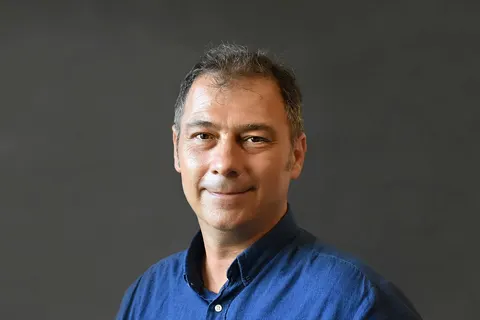
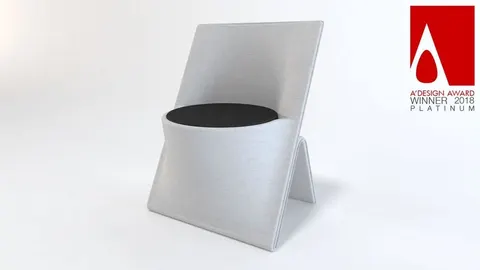
Svilen Gamolov is a world-renowned product and interior designer who has worked for more than 23 years in Bulgaria, Cyprus and China. In 2018 he made the top 100 of the Design Intelligence Award world design ranking in Hangzhou, China. That same year, in Como, Italy, he won a platinum design award in a competition with 45,906 projects from around the world. He is working to turn Varna, Bulgaria's largest city on the Black Sea, into a meeting place for design in Bulgaria and the world through Design Hub Varna. He runs Gamolov Design Studio.
What will the homes of the future look like? Why will the real estate market change from the ground up in just a few years? Should humans give up competing with the machine and learn to offer an alternative instead? Why is technology here to wake us from decades of complacent stagnation?
– In your view, creating technologies that interfere with our creativity is the next step against human creativity, against our freedom, in a battle that has been going on for a long time. What does that battle look like?
– For me, the war being waged right now is digital, but it hasn't stopped since the world began. There has always been a drive toward some kind of dictatorship. We can see this trend in what is happening in the world right now. The political troubles and dramatic events are a direct reflection of
what is being fought out on an intellectual level when it comes to the trends toward merging man with machine.
But it won't turn out that way; the stronger one will prevail. Temporarily…
– In one way or another, all the tech leaders admit that the idea is for us to merge with technology, because the other option—if it's “them” and not “us”—would destroy us as a species.
– Absolutely! But let's start with something positive. This is a natural process in human history, yet another technological leap. We just have to survive the shock! There was a similar one during the Industrial Revolution. The fears that machines would take the bread from our mouths, take our professions—the same thing is repeating itself now.
This is a natural evolutionary stage in humanity's development, and it is inevitably for our own good… in some way. It offers enormous opportunities. Good or bad? In confronting what lies ahead, humanity will build a strategy for incorporating it as a tool for its own development.
There is no way we'll reach the stars and search for life on distant planets if we keep treading water. In any case, artificial intelligence increases humanity's capacity to advance in many fields, including medicine and space exploration. Besides that, it represents a
crude, shattering jolt to wake up a humanity that has spent the last decades resting complacently on its achievements.
We started crisscrossing the planet on cheap flights; we became a global village. But we discovered that this isn't necessarily the best civilization has to offer. Because at the same time we're still using primitive technologies—burning mixtures. Even generating electricity from nuclear power still works through steam! Such colossal, primitive-stage waste of resources can't go on. Humanity has to make a very serious leap, in technology and in everything it does—art, computation…
– Haven't our instincts atrophied somehow, so that we're no longer capable of such a leap? Because we're lured by the easy way…
– The instincts that have atrophied belong to people who never thought of changing.
They arrived in an orderly world with certain postulates and decided it would stay that way their whole lives.
That security people strive for, the planning of the future—it's clear it no longer exists. This is the first leap, an attempt at awakening. In fact, the surest thing in the world right now is that there is no security at all. On the one hand, that's bad for people who are psychologically weak. And the opposite for the psychologically strong, who achieve truly great results only in extreme circumstances. In other words,
humanity will once again be sifted through a great sieve—those who are ready, and the rest.
For the latter, the good news is that this transition is still controlled. In some way it will give time for a breath of air, for people who want to carry on the old way to adapt. A sort of buffer period of five or six years.
Everything new will have two faces. One will be utter dehumanization; dictatorships will use this tool for their own purposes. Democracies will use it differently, so the manifestations of AI's end product, and everything it can bring humanity, will be different.
We have to take a stand as an alternative, because the other one, looming from the East, is utterly inhuman!
It is about the complete merging of man and machine, with the aim of the East's technological superiority over the West. When a person enhances himself physically and mentally through his link with the machine, he becomes a superhuman, as in science fiction.
The alternative is exactly the opposite—for man to remain at the center of his universe, and for all new technologies to be adopted sensibly. That is the approach of Europe, which has this advantage over the rest of the world: it looks far more sensibly and pragmatically at everything new that is coming. It runs it through its own prism and shapes it into the best and most useful form possible for all of humanity. I think the alternative to the East is European civilization, with its history, with the lessons of the Renaissance.
– Except that the East has very important lessons in those same directions. That's why your point of view interests me so much—as someone with rich experience of China and, at the same time, such a harsh assessment. I think they too are looking for ways to humanize technology, to make sense of it through creativity and art.
– This process is inevitable; it will develop there too, with some kind of alternative. But I'm more extreme because I've observed what they delight in and how they raise their young people.
This is a society in which everything that moves, flashes, blinks, stirs, everything mechanical, is revered.
Something similar can be seen in the modern world. In the southern city of Shenzhen, China's technology capital, 75 percent of the people are young—programmers, tech specialists.
In one district called Huaqiangbei, there are skyscrapers full of shops selling the latest achievements of Chinese electronics. They can assemble any phone you want right in front of you—it can be called Nokia, Samsung, iPhone; they ask how many cameras it should have, how much memory, and you get your own phone. I witnessed it happening. Anyone who understands what an iPhone is knows what's being done there on a micro scale. But on a macro scale, this is a country that is an experiment in every respect.
Let's not forget that China was quite backward five decades ago. I still remember how we made parcels for our little Chinese comrades; we sent them sugar, rice, flour.
A very deep social experiment concerning all of humanity is being carried out in China
and nothing that happens there should be underestimated.
– More than interesting! So much so that today the Chinese are practically learning… to be idle. And with all the rumors and truths about the notorious social credit system. Lately we've somehow gotten used to looking at what's happening in the West whenever technology comes up. Yet everything there is developing in parallel, without being discussed or regulated.
– Let's not forget that China “freed” the West of all its “harmful” manufacturing. They accumulated incredible experience, all kinds of technologies and ideas for at least 10 years ahead. Another thing that sets them apart from European thinking is that they plan years ahead, at the central level, what they'll do with their country.
In some way China reached the standard it was striving for, and now the reverse process has begun. Whereas companies used to be swamped with applicants, now they have trouble finding workers, because people have much higher demands. Little by little they're becoming an extension of the Western world in terms of their social base. This will inevitably lead to conflicts. And this is a very complex society we understand nothing about. China is made up of 150 nations—different cultures, beliefs, languages, united under one umbrella.
China has absorbed these nations over the centuries, assimilated their experience and achievements, and stored them away. It adapted them to a common culture. If we ask ourselves why these processes are happening precisely there—precisely in that diversity and immersion in Eastern philosophy—we'll also find answers as to why the process there is so important today.
– To survive the coming years of great change, what is worth studying? Technology, philosophy, history…
– We can't calculate faster than a calculator, let alone artificial intelligence. Man wasn't made to compete with the machine at computation; that battle was lost long ago.
What man must do is not compete with the machine, but offer an alternative.
I think it lies in what the machine cannot do, although it will try to imitate, to adapt. I teach at two universities in Varna, and design students often ask me about this. In the various branches of design, the machine is getting better and better. And now we are witnessing art, drawings, created from prompts. Yes, a mechanical approach to the tasks still shows; you can see mistakes. Let's say that within five to 10 years they'll disappear. A machine will be able to design buildings, create product and interior design, and do it very well.
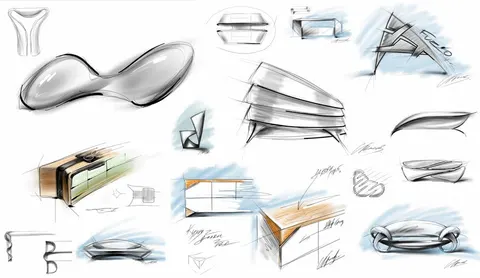
We'll reach the stage where we can't keep up with artificial intelligence in these fields either.
What it still cannot do, however, is love and hate.
It is precisely this human factor—the feelings that led to one decision or another—that the machine won't be able to mimic any time soon.
Take the design of a chair. If, when you see it, it makes you tremble, makes you feel cozy, stirs an emotion, the machine won't understand that. It will do its best, but only people are capable of making the final product something emotional.
The world will simply consist of two different things—people and machines. Cooperation between them is possible, but not at any cost. We should use them simply as a tool, not swoon over them.
– But they'll be able to imitate feelings and emotions better and better. Besides… I'm not sure I'd choose a chair that affects me emotionally, and I don't think there is such a thing. I'd choose the more comfortable one, which the algorithm will create specifically for me. In fact, for most people there aren't many areas where they look for that kind of emotion.
– But that is what will distinguish human design from artificial design. There will always be a chair that moves someone to tears of tenderness. The other will simply be comfortable.
– How do you think the homes we live in will change?
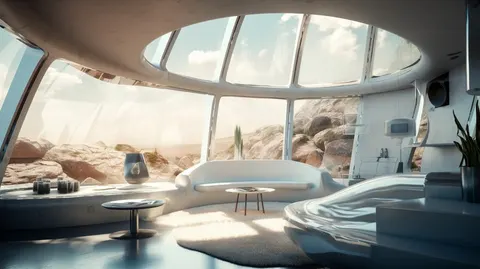
– I think they'll become extremely comfortable and practical. Very serious upheavals lie ahead in the real estate market, because a considerable part of a property's value is the human labor put into it. We're five to 10 years away from a very serious drama.
There are more and more examples—from Belgium, Germany, Italy—of fantastic buildings, still designed by people but created through 3D printing. They use a mixture that can be concrete or clay-based, and this guarantees strength and durability.
Recently I saw an example of a two-story house in Belgium; these are buildings of an entirely new type. They use an almost ingenious system for reinforcing a self-supporting structure—without a frame or columns. You simply print a building that boasts incredible structural strength.
Printing such a house takes 10 days. Right now, at the fastest pace using traditional methods, it takes two to three months. Thirty to 40 workers work on one site. The new technology instantly cuts the cost of construction—much cheaper, sturdier, flawless. All that remains is for artificial intelligence to apply its computing power and start building all kinds of buildings in no time at all, eliminating the human factor here too. Human errors in design will also be avoided by the machines. Homes will become far more perfect and cheaper, accessible to more people. This will become widespread in 10 years all over the world.
Technology cannot be stopped!
– Nor should it be. But this will probably also affect urbanization; thanks to technology it's much easier to work and study anywhere, to get access to healthcare. Those are the things that keep us in big cities now. Otherwise, it's not that pleasant in an apartment with dirty air, surrounded by noise and a poor microclimate.
– Yes, but what would happen if the same people who are supposed to populate these ideal cities have to deal tomorrow with an economic reality where some income will still be needed—to pay bills, to buy this or that?
What will happen when people are massively unemployed? That's the big problem right there.
We have to think about how the two things can exist side by side—technology and human civilization.
With artificial intelligence, that's what lies ahead—mass unemployment. More and more spheres of a pampered human society leaning on its achievements will be affected.
If people don't start now, if a strategy for the development of society isn't introduced into education systems right away, I think a very serious drama lies ahead.
– I think so too, but so far, as a species and a civilization, we don't seem particularly good at long-term strategies. I have two boys, aged six and three. For now, one plans to become a carpenter, the other a handyman. To me, too, that sounds like a good idea for the time when we'll have printed houses—there will still be things breaking, and we'll be less and less able to fix them ourselves.
– Absolutely, they're on the right track! New craftsmen and new professions will appear. That's why people need to be intelligent and adapt quickly.
Humanity owes its survival to its quick adaptation to all kinds of conditions—favorable or not.
Once a printed house dries, if I pick up a hammer to drive a nail for a picture in a spot that isn't meant for it, a huge hole will gape open. And if I know nothing about plaster and construction work, I'll call a handyman. But then the mixtures will be different, because they'll have to be compatible with the ones used for printing. Yes, everything will change.
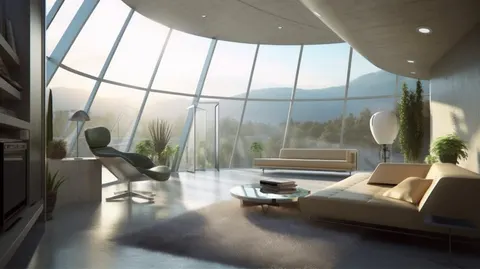
– There's another point of view: that at moments like these we tend to overestimate technology. The apartment block they're building across the street is hardly different from the one I live in, and furnishings haven't changed all that much in half a century. Aren't we humans more conservative, after all, than we tend to believe in our predictions about technology?
– We are conservative, and we strive for that in order to keep our sanity, so we don't snap from overload.
But I think you're making a mistake. You're comparing Bulgaria, the local reality. I, on the other hand, can tell you that while I was in China, I watched them build skyscrapers across the street. I'd been away for two months, I found myself in the same room of the same hotel… and across the street I saw a finished skyscraper, with connections on two levels, to city highways, to the metro. All of that done in two months! And you're talking about an apartment block in Bulgaria…
But while they work so fast there, they also experience all the negatives, all the flaws of new technologies that aren't yet understood. Thousands of mistakes were made in China that way, and then covered up.
We here in Bulgaria are so inert that we sleep through all the technologies, all the mistakes and advantages.
You could say we've figured out the trick, we've found the alternative.
Perhaps the picture I'm painting is too bleak, but in my view it will inevitably happen. Whether slower or faster, all roads lead there.
If you're a construction company working with traditional materials and familiar methods, and I decide to compete with you with printed houses, I won't pay workers, I'll use high technology. At some point I'll take both your bread and your market. In the world of modern economic relations, that's perfectly normal practice. As the Americans say, it's just business, nothing personal. But what do we do then?
– Yet even today, when you walk into a modern hypermarket, there are self-checkout machines that are much cheaper to run. Only hardly anyone uses them.
– On the contrary, they do! Have you noticed who? Young people. That's the buffer. When this generation changes—tomorrow, in 10 years—there won't be any cashiers. I guarantee you, that profession will die out.
– And if we peek inside, into our homes—besides, of course, more and more smart devices—how will our “burrow” change?
– Man will increasingly become a nomad rather than a settler. Uber makes cheaper travel possible. If we follow Tesla's plans, the world is becoming more and more shared. Even with the notorious e-scooters, we're experiencing sharing in urban mobility. In the future, these traffic jams, these huge areas occupied by cars, will be cleared, because there will be companies offering shared cars. You use one when you need it.
At first, every novelty is received pessimistically. We talked about the checkout—a very good idea; before long people will wonder how it was ever possible to have a human cashier. For urban mobility, this is still to come.
Someone will also offer a shared home: you use it for a while, but you're not tied to a permanent property hanging like a millstone around your neck.
– You have a very interesting project for a portable, foldable house. Is that what we'll live in?
– COVID brought a new reality in which it's possible, and even preferable, to have no dealings with the people around you. You can withdraw to a remote place, be here today and somewhere else tomorrow, be a free person.
The home I built offers exactly that mobility and freedom, which has long been known—there are whole societies that live this way.
We have a Bulgarian proverb: “every evil is for the good.” For me, that's a perfect demonstration of Hermeticism. It really is true! But it can also be read the other way around—
every good is for evil, because so far humanity has had no good idea that didn't also bring tragedy,
atomic energy, for example.
This will be a good occasion for the development of our whole society. There will always be an alternative. Yes, there will be more people with mobile homes, but there will also be those with stationary ones, as it has always been. Every fashion will always have an alternative…