“Walking encyclopedia” is a cliché that is no exaggeration for a handful of Bulgarians. In my view, today's guest is one of them.
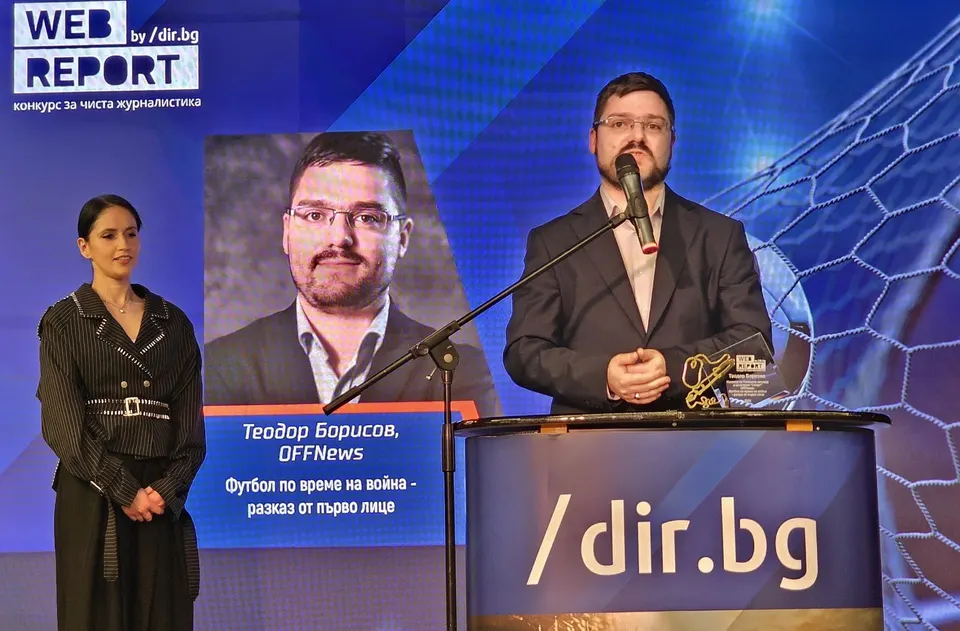
Teodor Borisov is a sports journalist who travels the planet in search of powerful football stories that are still being born in these technological times. A historian and author of books on Bulgarian history and sport. He writes questions for many of the most popular TV quiz shows, and his path in that field began when he won Minuta e mnogo (A Minute Is a Lot), a long-running Bulgarian TV quiz, three times.
There is no way to ask him about something from the past of Bulgarian (and not only Bulgarian) sport and find that he doesn't know it.
Today, though, something different will happen. I will ask him about the future. About the magic of sport and King Football. About the commercialization and oversaturation that come with technology and can drive away even the most loyal fans. About the crisis of authority.
If, like me, you love sport, I recommend this conversation. It will make you think in some very unexpected directions…
– What's the point of traveling the world to write about matches when you could just watch them on TV?
– They are two different sports—football live and football on television. At the moment
sport is developing more as a media product than as a competition.
Everything is done with an eye to making it more attractive to a wider circle of people.
It's no accident that Real Madrid president Florentino Pérez said their biggest rival would not be other teams but TikTok and Netflix. It's very hard to hold young people's attention on one thing for that long—to sit through 90 minutes of football. But when you're in the stadium, that question doesn't arise; the atmosphere immerses you in something completely different.
Watching football on TV or on various platforms has its advantages, especially with live multi-match coverage, when you have five or six games and the broadcast cuts to whichever stadium something interesting is happening in. That has its own inner dynamic, because uncertainty is added.
– Unless you're a die-hard fan watching your own team…
– Exactly, then those options can't possibly interest you.
Years ago all the games in a given round were played on the same day, at the same time. Now, because of television, they're scheduled one after another. If a foreigner comes to Sofia, in two or three days he can see two or three matches. And if you're truly devoted in front of the TV, it means sitting down at noon and not getting up until midnight. You just switch channels.
More and more people reach a point of saturation, because football is gushing out from everywhere.
But
for me at least, there's nothing better than being in a packed stadium.
Fans of one team, of the other, neutrals. An atmosphere builds that for an hour and a half tears you away from everything that torments you in daily life.
– Absolutely! I would love to be able to take my kids to matches without worrying, because that is the sport, not the thing that will be fighting Netflix and HBO. But apparently that's not what pays the bills. What do you think the future of this competition with the platforms will look like?
– It's a battle between the new and the old. When, in 2014, at the World Cup match between France and Honduras, a goal was awarded for the first time with the help of goal-line technology, it was seen as some kind of evolutionary step forward.
Football is a far more conservative game than, say, tennis, which had perfected Hawk-Eye by 2006. And very different from Formula 1, which is a sport-as-technology in itself. There, without the technology, we'd be back with Fangio in the 1950s.
I expect the new Formula 1 film with Brad Pitt to inspire a lot of people to turn to that sport. There is definitely a crisis of big names there. Before,
there were more pronounced personalities like Schumacher, Häkkinen, Coulthard, Montoya, and back then technology took a back seat.
Now the drivers' individuality doesn't seem to matter as much as how the car has been developed.
And then football got VAR. The curious thing is that it was first used officially in the Australian league… Australia isn't exactly considered a football nation, but they decided to try it there. And then there's the technology where, after the referee watches the replay, his conversation with the video assistants' room is broadcast live—that already has an element of reality show. You hear them talking and how the decision is argued.
All to reach the point where referees first have to explain to TV viewers and fans in the stands why a goal was disallowed or why it stood. Or what was introduced at the Club World Cup: cameras showing the referees' point of view.
The direction football in particular has taken, as the most commercial sport, is more and more reality elements. To fight Netflix, HBO and all the other platforms, you apparently have to provide content that isn't just sport.
– And then social media comes into it…
– I consider it the biggest enemy of sports journalism. For footballers, the media aren't what they used to be.
Everyone can now communicate directly with their followers through photos and comments. They don't even have to do it themselves; they have a team that runs the profile. So
journalists are now seen as some kind of pests who wait for you after the match for an interview when you're not in the mood.
The same clichéd things you can just say on Facebook, on Twitter.
– Only polished, because you have a team writing them. And you don't even need to string three sentences together, which often isn't within your intellectual capacity anyway.
– Absolutely! Besides, as a classic book put it, “everyone is equal, but some are more equal than others” when it comes to the media. Television is king. The channels holding the rights to the leagues have exclusive access to players and coaches after the match. And usually, so as not to be fined,
most of the protagonists give an interview to those outlets and then simply walk past the rest.
You sit for 40 minutes just to watch someone come out and wave at you. Meanwhile, influencers are also now filed under “sports journalists” and get exclusive access.
You see that a given influencer has 300,000 followers, while the outlet you write for has a potential audience of 30,000. Who are you going to give access to?
– It's a very sad trend, because the responsibility influencers and journalists carry is so different—whether we're talking about sport, technology or anything else.
– In top-level football, as the Club World Cup in the US showed too,
the idea is rather to accumulate as much money as possible, which is supposedly distributed to everyone,
while, naturally, the richest will get the most.
Quite a few people, besides complaining about an overdose of football, are looking for something alternative, something that reminds them of the '80s and '90s. That's why, strange as it may seem, lower-league football in England enjoys enormous popularity.
We'll see how the trends develop, but the general direction is that way.
FIFA, UEFA, the big players are looking for every possible way to capitalize on football's popularity, to open new markets.
Women's football is the next link in the chain. UEFA launched a program to invest €1 billion in it by 2030. The women truly deserve it, because over the years they have endured a great deal of mockery and humiliation. But it's yet another sign that
money will play an ever more important role.
– Indeed, we're heading toward more and more reality—cameras, first-person stories, ever closer coverage. And we come back to what you said about Formula 1, which I see in every sport: fewer athletes who are remarkable personalities, who come with genuinely powerful stories, an intriguing path, charisma… Isn't that a strange paradox?
– There are always interesting stories, as long as you know where to look for them.
– Definitely!
– But there's also the other way technology affects sport negatively. Yes,
right now is the best possible time to be an active athlete, and a footballer in particular.
Technology helps coaches and scouts constantly monitor anthropometric data and metrics—speed, stamina, quickness. That's what all those modern vests are for, measuring every indicator in real time.
That's how footballers are selected now. The days of watching videotapes, DVDs and highlight compilations are long gone. Every team is looking for a specific profile, the player it needs, and that saves a lot on scouting. But on the other hand,
it largely robotizes the whole process.
Clubs produce a certain type of player who has to meet certain physical characteristics, while
individualists are looked down on, because everything has to happen at high speed, you have to get rid of the ball quickly.
In England, for example, the pace is dizzying. Most elements are mechanically built in, and imagination is somehow missing, and that becomes more visible every year.
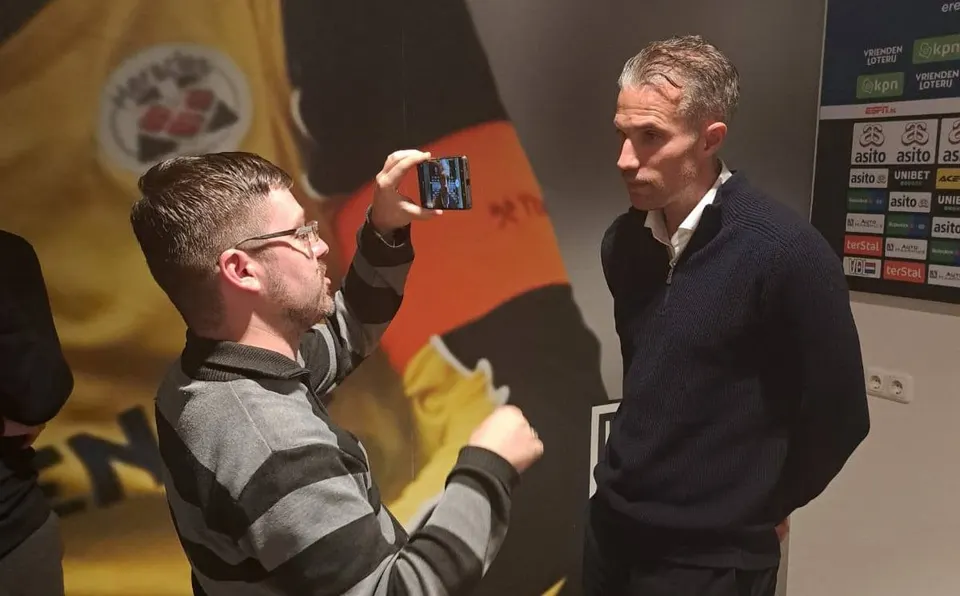
– Alas… Is that what makes you travel to write about matches in more exotic places, less popular, less commercial?
– For me, football is something different.
211 countries are members of FIFA, while the UN has 197.
In other words, it's easier for a nation to be recognized as a football entity than as a political one.
Football is always bound up with social processes, with public life, with politics.
It's definitely not just a sport in which 22 people kick a ball around and others watch them.
The chance not to focus on just one league or one country, to see all the different nuances, is what can enrich not only your sporting knowledge but your general culture too.
Once upon a time, World Cups and European Championships were clashes of cultures, of nations. Little by little, football became globalized. Luxembourg, for example, was an underdog for many years, until the immigrant communities, especially the Portuguese one, started taking part and the profile changed. New players appeared with a completely new mentality, foreign to the nation itself.
Right now everything has been melted down
and only in women's football can you still see such differences, because in purely evolutionary terms it hasn't reached the level of the men's game. It's still at the level of men's football in the early '90s.
These days little kids support Barcelona, Real Madrid, Liverpool. Nobody bothers with the local league if it isn't competitive enough,
when you can switch to any channel you like and watch high-quality football. There are, however, countries that have kept that culture. Take Serbia—they don't play some out-of-this-world football, but you're either Partizan or Red Star, and until recently the stadiums were full for the derby.
– Isn't it suicidal that the identity of different countries is being lost? As you said, everyone wants to be fast and efficient, but maybe it's more valuable when the Italians have a strong defense, the Brazilians are technical and the English rely on crosses…
– On the one hand, yes, it really is being lost. If everyone becomes the same, it will still be attractive if they're at a high level, but you'll only be able to tell who's who by the color of their shirts.
The other way of thinking is that in sport, winning is always what matters most—titles, success. And today it matters even more, because it comes with serious money. Prize funds are at levels nobody even dreamed of back then. Especially in club football, it's a
food chain where you have to qualify regularly for big competitions to get the corresponding revenue.
Each country chooses its own path. For a long time South American countries exported big names to Europe. Today in Brazil, despite all the unstable politics and sporting problems, local clubs have managed to find serious funding and are now bringing Brazilians back from Europe in their prime. Brazilian clubs dominate South America, while at the same time the national team is in one of its weakest states ever, the players are as if cut from the same mold.
This Brazil has nothing in common with the one everyone remembers, the one that made so many people fall in love with football.
There isn't a single personality there now. Some will say Vinícius Júnior, but comparing him with Ronaldo, Rivaldo or Ronaldinho seems laughable to me.
If we go back to one of your earlier questions: after Messi and Ronaldo—a somewhat overhyped rivalry—football has Mbappé, Yamal, Haaland, but no figure about whom you could say, “See, here's a new Maradona, a new Pelé!”
Let's leave out Yamal, who, like Pelé, won a major tournament at 17. The boy has barely left puberty, decides to throw a slightly more “unconventional” birthday party, and immediately all the media jump on him, saying he's gone off the rails, the money has spoiled him.
It's the same in other sports. In athletics, is there anyone since Usain Bolt the whole world knows?

– Do you think this merry-go-round can be stopped?
– There are many scenarios. Football had a period of flying in the clouds at the end of the last century and the start of this one. Luís Figo moved from Barcelona to Real Madrid, transfer records were being broken. And then a media group—Kirch, which held the rights to many of the big leagues—went bankrupt. Three or four years of stagnation followed. That's when stricter licensing requirements were introduced for teams in European competitions: they had to have secured funding, independent of any particular sponsor.
Some unexpected event will certainly have to happen for this model to change. As long as something makes money, there's no way to change it, no way someone will decide out of goodwill to make a change.
Years ago Fabio Capello was in Sofia and I had the chance to interview him. I asked him, “Wasn't it better in your day, when European competitions were straight knockout, when in the very first round the champion of Bulgaria could be drawn against the European club champion, compared with now—group stages, countless matches…?”
Capello looked at me with pity for my naivety and replied, “No. Now it's better for the big clubs. If CSKA plays Nottingham, the European club champion, and knocks them out in the first round, in September, interest in the tournament will drop and the clubs will suffer financial losses.”
The big clubs want a sure guarantee that they'll go through. This new format—no group stage, a single league phase in the Champions League—helped PSG, who on their results would have been eliminated. Instead, with three strong matches across the whole opening stage, they qualified for the next phase and hit their stride there.
– That model is borrowed from the commercial American approach in the NBA or the NHL.
– Yes, Americans are known for successfully monetizing sport. But whatever we say, the dogs bark and the caravan moves on. Sport carries on, the big tournaments and championships follow one after another.
We see the audiences the Olympic Games and the World and European football championships attract—
in TV ratings, these are the biggest events in every country.
But perhaps it's no coincidence that when the pandemic began and the world stopped for several months, TV channels suddenly wondered what to do, and someone came up with the fresh idea of airing old sporting events. For many people that turned out to be one of the few joys of that moment.
Psychologically, if you think about it, how many things over the years have made you feel proud? Hand on heart,
no event since the transition from communism has generated as many positive emotions as 1994,
the summer Bulgaria finished fourth at the World Cup in the United States.
– Nothing compares. I'm sure everyone who was at least a kid back then remembers where they watched every single match, even if they have no interest in football at all.
– It's the only moment since the Second World War when the nation was truly united. That's why it hurts so much that it won't be repeated.
Things like that don't happen every day, and that's why it stays in history.

– After so many years in sports journalism, do you have your own explanation for why football in particular is the most successful sport? Is it really so brilliant, so different from all the others?
– That's a question colleagues who don't do football, who cover basketball or swimming, ask too. And so do the athletes themselves, ever since socialist times, when Bulgaria won medals in wrestling, rhythmic gymnastics and weightlifting, yet footballers were still the best paid.
It's very hard to explain to someone who has no feeling for football why this sport is the most popular.
There are theories that the rules are the easiest to understand, that it's the easiest to play. One of the other downsides of technology entering sport is that you have measuring devices, VAR, which make it more expensive. So it's no longer as accessible as it once was. Doing sport is now an investment, not something you just do in your free time.
Football, though, remains a sport in which a boy or girl from the bottom of society can break through and find a path in life. Ninety percent of the most famous footballers come from poor families, outlying neighborhoods, parents working several jobs to buy that first ball. Football established itself as an opportunity: if you're stubborn enough to break through, you can earn your living.
It's also a team sport. In tennis, for example, however much money you put in, the chance of reaching the top 100 is far lower than the chance in football of reaching a decent level somewhere.
– You mentioned that we no longer need line judges in tennis, and they're gone from volleyball too. Could we soon end up in a situation where we don't need the athletes themselves? Where technology imitates them beautifully and the human drops out of the picture?
– I don't know, maybe people are working in that direction too. I'm not that familiar with esports, but it's a fact that there
the prize funds are already at levels two-thirds of ordinary sports don't reach.
But I very much doubt that if you put the best FIFA or Football Manager players in one football team, they'd reach even a decent level.
The digital world is one thing, the real world is another.
One of the things that make sport universal is that it goes hand in hand with social processes. It isn't an isolated island. However far our digitalization goes, that's how far it will go in sport.
– Human imperfection is also, in a way, a plus in sport, I think. AI is already successful as an investment assistant. But I still haven't heard of an AI that's good enough at predicting matches. And in my view the reason is the human side, the imperfection, the mistake that sometimes makes the favorite lose.
– Here comes another problem, linked to social media and its dark side. You really can interact with fans. But not infrequently a footballer makes a mistake, loses a match, for example. And there are cases where he gets thousands of angry messages from someone because he got a red card and wrecked their fantasy team. That's extra pressure, digital harassment. If you're a bit more fragile psychologically, at some point you ask yourself, “Is it worth it?”
We have to accept that athletes are people. They're public figures, yes, they have to protect their image; it's one thing for you or me to down a couple of pints and go raise some hell, another for a public figure to do it. And still, that's life.
Right now we're all in a magnifying mirror,
everyone watches what everyone else is doing. Athletes know it very well, and they enjoy seeing a few thousand likes and hearts on their posts, yet at the same time they can't stand ten critical comments.
– Do you think human capabilities in sport have a limit? We keep improving in athletics and swimming, while elsewhere, like weightlifting, we have to change the conditions to make it look like records are still being broken…
– It's all a function of other fields—medicine and technology. Like it or not, I'll touch on the subject of doping. Clearly, with the athletics records from the '80s, we'd have to be very naive to think those who set them were on nothing but vitamins and mineral water, given that they haven't been beaten for so long.
It's no accident that Stefka Kostadinova, the Bulgarian high jumper whose 1987 world record still stands, once said, “Let someone finally beat my record, so we can see that the sport is moving forward.”
Spectators wouldn't want to watch something where a few sacred cows have sat for years.
LeBron James broke Wilt Chamberlain's record for most points in the NBA. Even though there was no three-point shot in Chamberlain's day, and if you recalculated, LeBron would surely be a long way behind.
– Just as they had to invent the regular-season goals record for Ovechkin, because otherwise there was no way he'd beat Gretzky's total goals.
– Exactly. And Wayne Gretzky didn't complain about it. Just as in Bulgaria, when Dimitar Berbatov beat Hristo Bonev's national-team scoring record, without comparing who each of them scored against.
– And how many matches the national teams played in each of their eras.
– The athletes themselves understand that
for sport to develop, there have to be new idols. Sometimes even at the cost of certain compromises.
But that's sport. There are positive examples, and there are negative ones. Like in life.
I've always been surprised when people accuse athletes of not taking an active public stance, or of being photographed with this or that person. Most of them are apolitical, and their activism extends only as far as being grateful afterward to whoever financed their preparation.
We have to learn to tell the difference—sporting idols aren't always idols in life. There are plenty of examples of people who are great footballers, basketball players, wrestlers, weightlifters, and in life they are… I won't use a bad word, but let's say their profile is controversial, to put it mildly.
If you're a fan of a sport, of an athlete, you have to learn to experience it in full. Yes, it's certainly disappointing when the person you watched on TV turns out to be someone else in real life. But that, too, is part of the magic of sport and of television.
– We very often underestimate sports journalism, including in media circles, yet there's a paradox: in recent years so many people like Plamen Mladenov, like Martin Ivanov, like you, are considered among the most erudite, a benchmark for general knowledge. How does that happen?
– I don't think attitudes toward journalists in general are any different. For some they're turkeys, for others they're called other names. I'll offend a lot of people, but for my doctorate I worked in Zagreb. There's no journalism faculty there, and no history faculty either. There's a Faculty of Philosophy that brings together all the humanities.
And journalism is part of the Faculty of Political Science. What does that mean? People believe it's tied to politics, and that to become a journalist you have to learn the fundamentals—sociology, political science, history, how things work. Only then, having built up some knowledge, do you become a journalist.
At the same time, to be a sports journalist you need to be interested in sport. I'm not saying you have to have competed or graduated from the National Sports Academy. Today's era gives you very good opportunities to follow events as a sports fan, as someone devoted to sport.
Speaking for myself, I try to keep the big picture too. To feel how significant a sport football is, how it's tied to politics, to history, to geography, you have to understand those as well. Not just care whether a team plays 4-4-2 or 3-5-2, whether there's a “diamond” or a “Christmas tree” in midfield.
You ask me why football is so big? If you put on a TV studio and the people there talk to you only in tactics and numbers, you'll change the channel. But at the big tournaments colleagues also invite actors, artists, public figures to talk about football. Precisely to show that it spans every sphere of society and everyone has a stake in it.
Whoever underestimates journalists, I think, generally underestimates people's work. Because if you want to grow, in any field, whether it's journalism or not, you have to devote a lot of time, improve yourself, move forward, not stand still. People see the final product. What it cost you to get there doesn't interest them much.
It's like with athletes, Bulgarian ones in particular. When Grigor wins, we're all happy. When he loses or pulls out of the US Open for health reasons: “Oh, Grisho's gone and found himself another girlfriend.” And at the same time, what it cost him to become our most recognizable athlete globally doesn't interest us. Being there for 58 consecutive Grand Slam tournaments… People who follow tennis know who Grigor Dimitrov is. But you only care whether he won this match and who he's sleeping with.
You can't expect that kind of person to respect journalists when they don't even respect the most famous Bulgarians.
– What would sports journalism look like one day if things developed the way you'd like?
– Sports journalism looks the way readers and viewers want it to look. The media are influenced by what people want, or what they assume people want.
A large part of the media think people want to read bedroom stories, and that's why they're full of them.
In sports journalism we have a dangerous combination of artificial intelligence and a lack of natural intelligence. Lots of copy-paste. Lots of writing without fact-checking. You can easily swallow some fake news and spread it. And,
let's say it plainly, a lack of depth. Fast-food journalism.
Simply because some people are too tired to read a text longer than three paragraphs. Let alone some more serious piece of work.
There is, fortunately, the opposite example too, which is why some newspapers still exist. There are people to read them, and that shows we haven't quite returned to the primitive communal system—expressing ourselves in pictures and inarticulate sounds.
Where journalism as a whole goes depends on people. If they want to read fast food, there will be more outlets serving it. If people want better things, the media themselves will raise the bar. But the “lots of output for little money” model that's being practiced is wrong from the start and doesn't lead to good results.