“We forget because we cannot keep up with processing all the information that reaches us and making connections between events. This makes us very easy to manipulate. And the consequences are plain to see—fears are sown, dividing lines are drawn, polarization sharpens at every level of society, which saddens and frightens me at the same time.”
“I love playing with words and telling stories that inform, enrich and inspire,” says today’s guest.
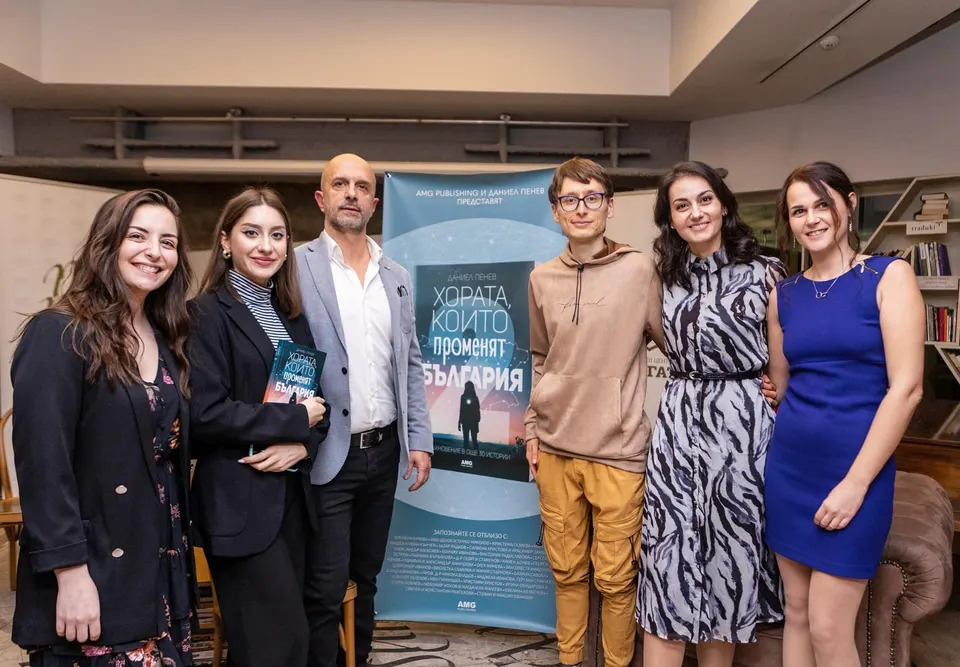
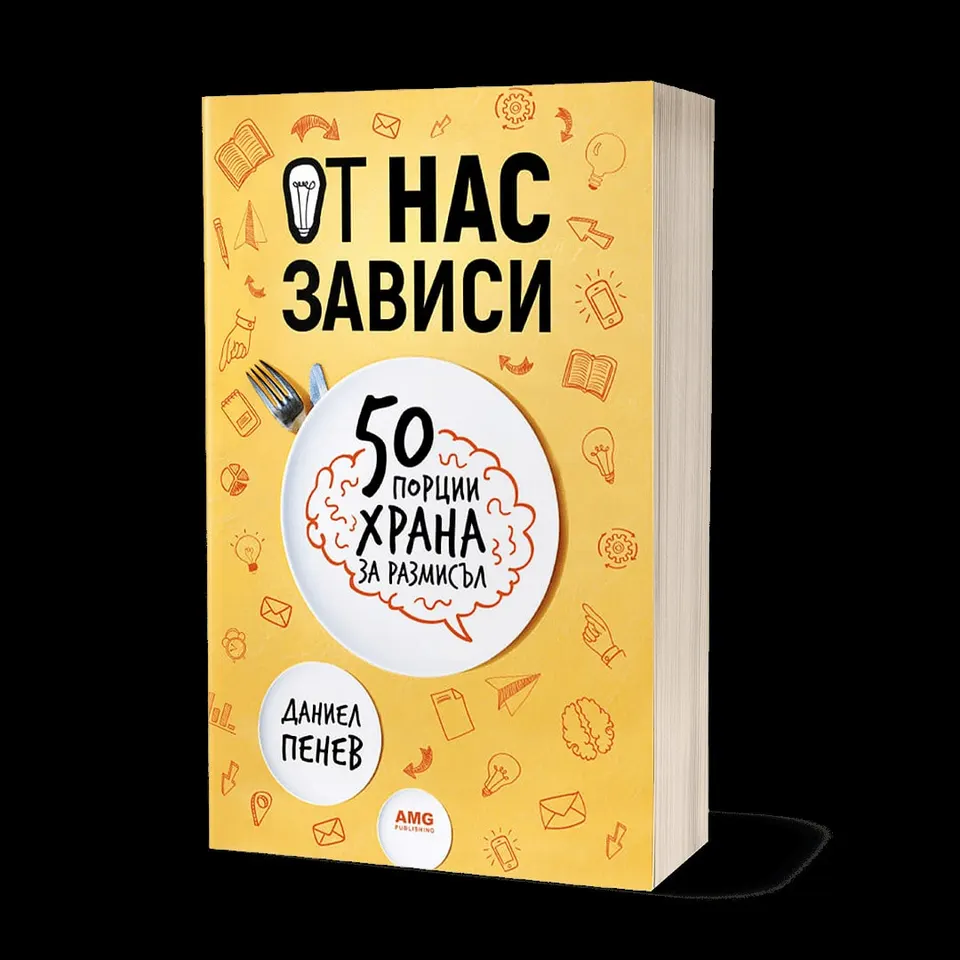
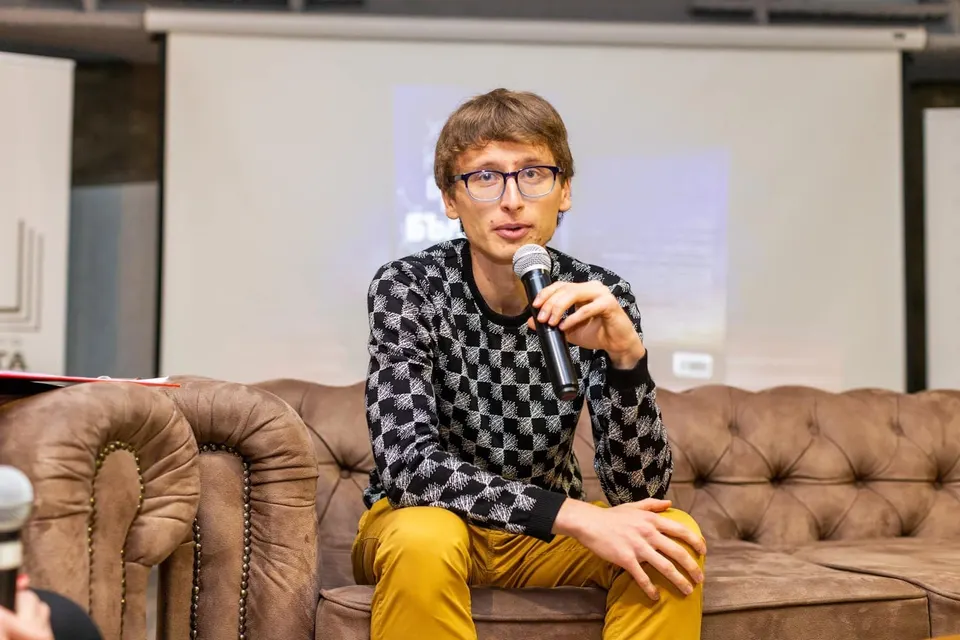
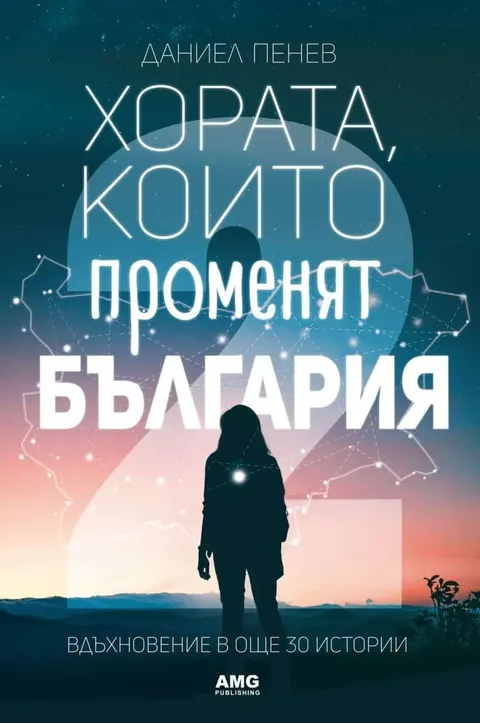
Daniel Penev is a journalist, a translator of nonfiction books from English in the fields of popular psychology, self-help, leadership and business, an editor and a creator of marketing content. He is the author of the books Horata, koito promenyat Bulgaria (The People Who Are Changing Bulgaria) (in two parts) and Ot nas zavisi (It’s Up to Us), and co-author of Da tichash kam sebe si (Running Toward Yourself) (together with the ultramarathon runner Krasi Georgiev).
Which are the important stories of today, and why are they worth telling? Is it the most unexpected and the least deserving ones that become successful? Why is it so important to talk to each other more and more in today’s world of daily divisions?
– You do something quite rare in our part of the world—you tell optimistic, positive and motivating stories. What makes you do it?
– Positivity isn’t my goal. I’ve had some very hard moments in life, and I still go through periods when I despair, when I hurt, or when I get angry at certain phenomena and events in Bulgaria, especially lately, against the backdrop of the marathon of elections—Bulgaria’s seemingly endless string of snap parliamentary votes—which is still going on today.
I think it’s normal for a person to feel despair or lose motivation from time to time. But through the stories I’ve been telling for the past eight or nine years, first on websites and then in books, I try to show a different Bulgaria. We shouldn’t go to either extreme and say “this is paradise” or “this is hell”; we should look for a healthier, more balanced view of the situation and the environment here.
There are problems everywhere, and there are opportunities everywhere. I’ve chosen to show the people who are trying to find solutions to the problems or at least, as the saying goes, not to harm others. I don’t limit myself to categories and areas of life; I write about the attitudes, values and work of people from the civic sector, business, technology, education and the media. I try to give a voice to good examples, because
I firmly believe that a good example is contagious.
– But it doesn’t “sell.” You’ve picked a rather nihilistic society for a venture like this.
– I try to avoid generalizations like that, because I realize they aren’t always justified. What does it mean that it doesn’t sell? I think the popularity of a book, an article or a film depends a great deal on the context in which it comes out, on how it’s promoted and on who works on the project.
We live in a world where many people think they can predict everything with numbers and data, but there are things you simply can’t forecast. For example, the first part of The People Who Are Changing Bulgaria was a sensation, while the second sells several times worse, even though I had already made something of a name for myself with the first part, readers were happy with it, and so it was logical to expect the second part to attract at least the same interest.
But in reality it doesn’t work that way, and not only for me. From my conversations with people in the book world, I’ve concluded that this is a global phenomenon. Take a world-famous author like Mark Manson—his book The Subtle Art of Not Giving a F*ck became a smash hit, including in Bulgaria, but his other books, though popular too, are nowhere near it in sales.
– Maybe it has always been that way, at least with books. But when, in your view, did journalism lose its role of shaping, of educating, of being a kind of conscience of society? Or did it never have that role?
– Journalism is one of the hardest sectors, because ideally it has to fulfill its public mission and at the same time function as a business in order to survive. A media outlet can’t exist and set standards without being sustainable.
At the same time, though, I believe that
if you want to do journalism, you must always put the public interest first.
I never stop being amazed at how various pseudo-journalists allow themselves to spread distorted facts, misleading headlines, tabloid trash and claims taken out of context. They know they are deceiving the audience and that they may damage the reputation or even the health of the people they write about—at the very least through the stress they cause them, or by holding back their professional development—and they do it anyway.
In my view, the difference between good, responsible journalism and all its yellow and “brown” varieties—brown being Bulgarian slang for paid smear journalism—which shouldn’t even be considered journalism, comes down mostly to the awareness and sense of personal responsibility of the person doing the work. You have to know the principles of media ethics and be aware that with your words you can inform but also mislead, explain but also confuse, inspire but also wound.
Information, especially in today’s world where it is so accessible, is an enormous power. A power that can build but can also destroy, that can unite communities but also turn them against each other.
We see how dependent we are—one technical bug in the system and the whole world suffers: airlines, banks and so on.
To me, there is no way to make everyone in an industry act conscientiously. What matters is that everyone who intends to be a journalist understands the responsibility they carry.
– Only the temptation is great, because it’s clear that it’s much harder to become popular by following professional and ethical rules.
– I
want to live in a world in which meaningful stories, stories that inform and enrich society, get the attention they deserve and are valued by readers, viewers and listeners.
The popularity of a piece of journalism shouldn’t be an end in itself. If you always cater to the interests of the audience, something is wrong, because a good journalist is aware of his moral duty to society. There is a principle in journalism that says
the public interest is different from what interests the public.
As a journalist, you have to put the public interest first, not what the public finds interesting. That means you have to filter the information that reaches you and that you pass on to society. If you give in to the temptation to serve the audience only what sells, you can’t do quality journalism. And this problem isn’t a product of social media; it has been part of our lives for decades, the result of the rise of television, reality formats and ever more numerous and accessible sources of information and entertainment. Today journalism looks more and more like a reality show—adequate questions often aren’t asked, people aren’t given time to answer the questions put to them. Or you ask a particular question in order to hurt the other person, rather than so that they can explain things in a way that helps both you and the audience understand the subject better.
Interviews are often used as a way to fill slots in a TV channel’s schedule. People tend to blame social media above all, but if we take television, I find it an inherently insane model to start work every day with the idea that the evening newscast is 35 to 37 minutes long and you have to fill that time, regardless of whether the information you give viewers meets the definition of news or whether it will be useful to them. In summer, for example, there isn’t always much news in the true sense of the word, but under pressure, journalists go hunting for news just to fill the allotted minutes. I would very much like to see a media outlet that, on a normal nice day, simply says: today the evening news will be 25 minutes, because there is no more news that deserves your attention, and we don’t want to burden you with useless information or information that might cause you needless anxiety, fear, despair or anger.
– Well, I don’t see anything wrong with it. That time can always be used to tell meaningful stories that otherwise don’t fit. And the media outlet itself can create news—I try to do that, for example through experiments.
– You’re right, but what matters is that the information you provide has value for the other side, and isn’t simply the fruit of the need to meet a predetermined quota. You run your site for the sake of meaning; it isn’t your main job, while for journalists, editors and producers at the leading TV channels this is their job. And sooner or later, whether they like it or not, people run dry, which you can see, for example, in the tendency of the two leading private TV channels here to copy each other so as not to fall behind the competition.
At some point the added value disappears—the value I look for, that you look for, that other journalists and media creators look for. I, for one, don’t understand why, since they claim to serve the public interest, the leading channels refuse to set aside half an hour a week for a newscast devoted only to good news and inspiring stories, when they have significant financial resources and journalists capable of producing material for such a program. That immediately leads me to think it’s done on purpose.
Maybe the scandalous, the frightening, the sad and the absurd really do sell more, because, as the popular maxim goes, when a dog bites a man, that’s not news; it’s news when a man bites a dog. At the same time, though, journalists, producers, editors and media owners have no moral right to claim that positive stories aren’t in sufficient demand, since they themselves tell such stories in some shows and newscasts and see that these pieces often generate enormous interest. The conclusion: what’s needed is balance, a middle way.
– Content like MrBeast’s, which is positive, can become popular. You give to people, you create a story, and you have more viewers than all the world’s biggest TV networks.
– There are many such examples—Mark Manson, Jay Shetty and many others who have podcasts and video channels and write books. There are also Bulgarians whose success proves there is a hunger for humbling, uplifting and inspiring stories—the vlogger and director Kris Zahariev, Georgi Nenov, creator of the podcast Svrahchovekat (The Superhuman), the US-based journalist Ivo Ivanov, whose stories reach the deepest corners of your heart and soul, and others.
The decision about what information and content to give the people you are trying to reach is an individual choice, but that choice shapes those people’s attitudes, values and tastes.
If you constantly serve people fear, depression, corruption and poverty, you can’t claim that they have no interest in different and more positive stories,
because they simply have limited access to such stories. After all, as a journalist or a media outlet, you are the strainer, the filter, the moderator.
– And do you think there is a generational difference? Does the famous Generation Z look more for the positive, the unconventional?
– To some extent, yes. For example, part of the childhood and adolescence of people of my generation coincided with the period after Bulgaria joined the European Union, and we got a clearer idea of what was happening in the West, what the opportunities there were, but also what the challenges were. Bulgarians who study, work or simply travel abroad are no better than Bulgarians who study and work here and have no direct view of what’s happening abroad; the difference is in perspective and outlook. You can bring back some experience from outside, something that can be improved. To me that’s a plus for our society as a whole.
Still, I try to avoid generalizing about people on the basis of their age, because different generations grow up and get to know the world in different conditions. For example, those born after 2005 have had access from an early age to smartphones, social networks and platforms like YouTube and TikTok. The more you use these platforms, the more your capacity for sustained concentration, deep work and mindful consumption of information declines, and you start to
look for ever shorter forms, which I see as a problem, because, as with television, you get information without the context you need to make sense of it.
This imperceptibly changes your picture of the world, your values, your expectations, your aspirations.
You see a very small piece of reality. And when millions of people see a very small piece of reality, it directly undermines journalism’s function of informing and explaining, because in order to capture the audience’s attention, journalists become more inclined to resort to short forms, news based on press releases, and superficial and sometimes even misleading commentary and analysis.
That’s why I love reading, watching and listening to more in-depth interviews, reportage and investigations. When you put information in context, you give the reader/viewer/listener the chance to make an informed decision, an informed choice, and to come away feeling that they understand the world a little better than before they read/watched/listened to the piece. However good a storyteller you are, you can’t answer a complex question of public interest or explain a tangled case involving several parties, each with its own point of view, in an article of two or three paragraphs or a two-minute report.
– That’s exactly why I insist on long texts, fully aware that this puts off many readers. But this brevity is changing both our perception in general and the way we think, in a very dangerous way. As Ivo Ivanov himself told me, there’s no one left to sit down and read Dostoevsky.
– You don’t have to read Dostoevsky specifically, or any other classic. I admit I haven’t read Dostoevsky, and I’m not ashamed of it, simply because I haven’t felt the need so far in my life. I’m convinced that even the most avid reader among readers hasn’t read many of the books presented as classics and included in lists of “books everyone must read.” But that doesn’t mean you can’t read longer books or draw knowledge and inspiration from media that offer in-depth pieces. Or real-life stories from gifted storytellers like Ivo Ivanov—his stories are long, but their charm lies precisely in the descriptive passages and the author’s philosophical reflections, which provoke you to ask questions, to look into yourself and those around you, to feel and to feel with, to live and to live through; they draw you into his world and the world of his characters. You can’t read Ivo Ivanov in passing—you have to be alone, settle into a comfortable spot, take your time, maybe pour yourself a glass of wine, tea or coffee, and immerse yourself in the story.
– Will this skill of concentration and immersion survive? Given that the trend really is visibly toward ever shorter content, toward an ever larger volume of information bombarding us, in which short forms often win because they require less effort and are more spectacular…
– I think there will be some pushback at various levels of society in the form of a
shift from seeking the superficial and the light to seeking the profound and the meaningful.
You can see this even in music and film—especially after COVID, more and more people are seeking out live concerts and screenings in movie theaters and open-air summer cinemas, as well as chances to talk with their favorite musicians, actors and directors. They’re looking for authentic experiences that some people once thought would disappear. Just as, at one time, some people thought radio or television would disappear.
I don’t think the short form will win in every sphere. At some point we’ll simply realize that the more complex the challenges before us, the more multilayered our response has to be. You can’t talk about climate change, globalization, resource distribution, social policy, artificial intelligence and so on in two sentences. That’s an illusion of conversation, a “fast food” conversation, going through the motions.
These areas involve extremely complex, large-scale phenomena. Many people talk about artificial intelligence, but beneath the surface of that concept lies a sea of questions, topics, unforeseen situations and cases. We can’t make sense of what’s happening and take adequate action if we rely solely on a 15-minute conversation in some TV studio.
– But in my view, that’s exactly what’s happening with artificial intelligence. That’s why I run my site on these topics—because I see that we don’t go deep into them, and I’m trying to change the situation as far as I can.
– Here we also come to the consumer of information—what matters is how they were brought up, what they look for and what they value. I also see that many people don’t read books at all. What I find very frightening, though, is that there are journalists, politicians, lawmakers and teachers who practically don’t read books. I stress that I’m talking about books, not news sites and social media posts. A book gives you perspective, shows you the big picture, offers context, helps you tie threads together and understand ideas and events that at first glance may have nothing to do with each other. News content by definition has a short life, it lives day to day, but that also means it can be offered in abundance.
If we take the last three years in Bulgaria, against the backdrop of all the elections, the economic shocks and the COVID pandemic, which together generated tons of news content, we’ll see how much we have already forgotten—and when those things happened, they were on every TV channel, radio station, website and newspaper.
We forget because there’s no way to keep up with all the information flooding us every minute from every direction.
We can’t manage to process and make sense of this information. We haven’t yet put together the pieces of one puzzle, and already we have to assemble another, even bigger and more complex. This drowning in confirmed and unconfirmed information, claims taken out of context, fake news and propaganda is frightening, because at some point a person becomes very easy to manipulate. And the consequences are plain to see.
Fears are being sown, which for me is the worst thing. If we look at the big picture, the worst thing is this division, this polarization at every single level.
It’s sad that now, whatever you say, whatever you do, someone immediately sees you as an enemy. We need more respect for one another, more humility and a stronger desire for fruitful cooperation at the neighborhood, local, regional and national level—in the civic sector, in business, in education, in politics, in the media, in culture and in sports.
– It seems that, to a huge extent, social media is to blame for the current state of affairs. But how can we break out of this vicious circle?
– I recently had the honor of interviewing Annie Duke, the author of several books on decision-making and a former poker player. Earlier this year I translated one of her books into Bulgarian—Quit. Annie Duke says that when people inclined to believe in conspiracy theories, cults and so on—the so-called flat-earthers, for example—come across facts that flatly refute their point of view, they fall prey to cognitive dissonance, a state in which your beliefs conflict with reality. In that case you have two options:
either you change your mind, or you look for explanations and arguments to prove you’re right.
Most people choose the second option—they try to twist things so that they fit their point of view. That’s precisely why, according to Annie Duke, our goal shouldn’t be to hurt these people but to try to have a good-faith conversation with them, to ask them questions in an attempt to open their eyes to the facts, for example: “Look, these are the facts and the evidence. Can you explain to me why you still hold this opinion?”
It’s more than obvious that they rarely change their minds on the basis of facts alone. So we have to try to talk with them, to get to know their way of thinking in depth, and in that way to increase the chances that they’ll become a little more willing to trust the facts available at the time of our conversation. Because
if we don’t talk, we live in separate bubbles that don’t interact with each other. And sooner or later those bubbles burst.
We’ll all be better off if we find a way to communicate fully, so that we can live in peace and enjoy life. When tension smolders in a society, sooner or later it breaks out.
– Exactly, and I too think the most important thing is to talk to each other. After all, we’re a small country; so many more things unite us than divide us. What divides us, after all, is mainly social media, which is too powerful to be regulated.
– I’m not an expert on the subject, and I don’t know to what extent regulating social media is possible or, if it is possible, who could guarantee that the regulations are respected, and how. They have algorithms for assessing content, but these can narrow the space for public conversation on certain topics, and they can also be abused. Appropriate and timely content filtering is one thing; censorship is something else entirely. Who can set clear boundaries, and how, and who can be responsible for upholding them in the information-saturated, easily offended world we live in? It’s naive to expect the companies behind social networks to solve all, or even most, of these problems, since they run businesses and prioritize profit.
– Definitely, and I don’t think that technology is helping us make sense of information at the moment—more often it gets in the way.
– What’s needed is a multilayered response from many different institutions and people. It won’t happen with the help of tech companies alone, governments alone or civic organizations alone. I think the key is education—both formal and informal.
There are nongovernmental organizations trying to guide children and young people (and not only them) so that they can develop their information and media literacy and find their way better in today’s information and media environment. There are also fact-checking projects. We are probably making gradual progress in this area, albeit more slowly than we’d like.
The other challenge is the gap between the capital, Sofia, and the smaller towns. We have to realize that not only in Bulgaria but in many countries around the world—with the exception of the Scandinavian countries and a few others that are more balanced in their socioeconomic and regional development—there is a very large difference in living standards, level of education, way of thinking and access to learning opportunities between people living in bigger and in smaller towns. This gap is problematic, because we are supposedly in one country, yet we may feel much closer in values to people from Britain, Germany or the United States than to our compatriots living in a small town in Bulgaria.
Marginalization takes hold within societies themselves. And when we add social media, anger, envy, hatred and aggression pile up.
We end up with very heated communication that at some point stops being dialogue and becomes monologue—I tell you one thing, you tell me another, but no one hears the other.
– Against this backdrop, how do you imagine the future of the media? I think journalism is dead in the form we know it, because it can’t compete with the feed. And it has to be reborn in a new and different way.
– Clearly, journalism is one of the fields undergoing the greatest changes as a result of the growing influence of new technologies and social media—that’s inevitable.
Some media are adapting. More and more of them are trying to offer video and/or audio content, to strike a balance between short and long forms, to explain and not just to inform, to practice so-called solutions journalism—a genre in which the journalist’s aim is not simply to criticize and look for culprits but to offer guidance and potential solutions to specific problems by studying others’ experience and interviewing people who know the subject—for example, how we can deal with traffic in a big city, or how to organize education so that it prepares children and young people for the challenges of life, rather than mainly for passing one exam or another.
Journalists must clearly realize that in this ocean of information we are swimming in, they must first and foremost give people value.
If you offer nothing more than superficial articles and reports of the kind that many social media users can produce, you can’t survive for long as a journalist and/or a media outlet. We need more slow, responsible journalism, in which you set aside enough time to gather enough information, verify its accuracy and synthesize it before presenting it to the audience—rather than rushing, say, right after some incident to report who was hurt, who died and what caused it, and even broadcasting the tragedy live, even though all you achieve that way is to deepen the grief and anxiety of the people watching the footage.
Unceremonious live coverage increasingly resembles a reality show in which the whole country watches the latest tragedy unfold in real time. I don’t see how exactly this approach to covering incidents, crashes and natural disasters helps the victims’ families or society as a whole. The alternative is to report briefly on what happened, without going into details whose accuracy you haven’t verified and without long live broadcasts. Only once you’ve gathered the most important information and checked the facts can you report it to viewers, taking care not to needlessly amplify their pain, fear or worries. In parallel, over time, you can prepare a piece examining what steps could be taken to prevent such tragedies in the future.
At times I’m gnawed by the thought that journalism itself, in order to maintain high ratings, wants there to be problems, because that way it can offer bread and circuses. And that is sad.
Conversations at the level of ideas are already rare. Conversations often come down to “I’ll crush you, I’ll hurt you, you’re from that party, from that team, do you know who I am, you don’t understand anything, only we can deal with these problems…” There is no desire to make sense of the problem itself, but the division into camps flourishes instead. That way we can’t win the battles that truly matter for our society.
– And yet supposedly everyone should have internet by now and thus access to the whole sea of information.
– Yes, but sometimes we simply take certain things for granted. And again we come back to the role of education and the need to develop information and media literacy.
I dream that in Bulgaria, as with influential businesspeople and politicians in the West like Bill Gates and Barack Obama, we will also see, hear and read about
influential Bulgarian businesspeople and politicians publishing their recommendations of books that have made an impression on them.
If nothing else, at least the topic of reading would then take a more central place on the public agenda. What do our politicians read? I worry that they don’t read much at all—neither fiction nor nonfiction. By not reading, they not only fail to set a good example for the rest of society and to show that reading books is a useful and enjoyable activity in itself, but they even complicate the already complicated problems we face—both out of ignorance and out of unwillingness to understand what is going on and what can be done.
In an environment steeped in ignorance, lack of education, vulgarity, envy, malice, aggression, impunity, arrogance and division into camps, we begin to lose our ability to appreciate the good, the beautiful and the valuable that surrounds us and will continue to surround us.
And one more great pain of mine—words are losing their power. We never stop indulging in empty verbiage, talking from morning till night about European values, Euro-Atlanticism, judicial reform, reform of the education system, reform of healthcare, rights, freedoms and other concepts that are being emptied of meaning by constant repetition combined with the lack of their application in practice.
I think each of us has a moral duty to try to help ennoble the environment around us and improve our relationships, by approaching more mindfully the words we use, the actions we take and the choices we make, and by looking for bridges between ourselves and others. If we make the necessary effort every day to become better people despite our imperfections and weaknesses, and to think of ourselves as part of a community rather than as free electrons that have nothing in common with their fellows, we significantly increase our chances of preserving ourselves as a country and a society and of living in peace and understanding.