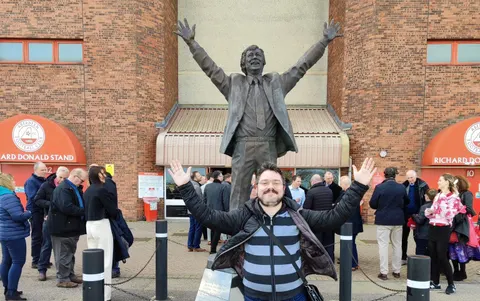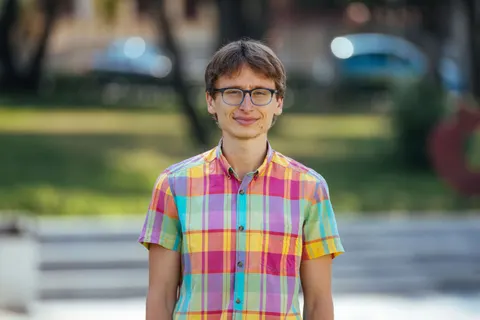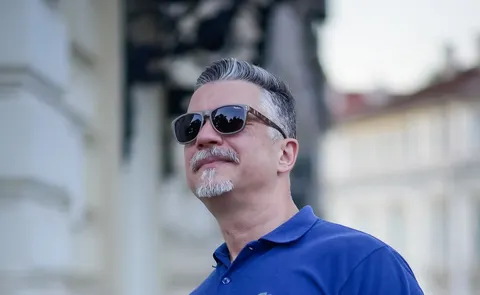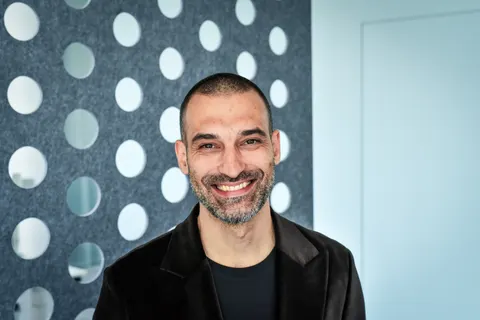
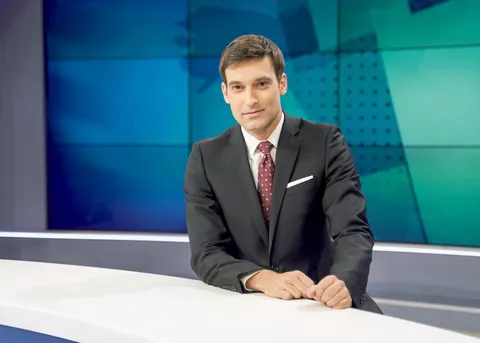
At 21, he stepped in front of the camera of Po sveta i u nas (Around the World and at Home), the flagship evening news of Bulgarian National Television. Seventeen years later he walked away and crossed over… into the world of technology. Because that is where he sees the change he wants to contribute to. That is where the future his three kids will live in lies.
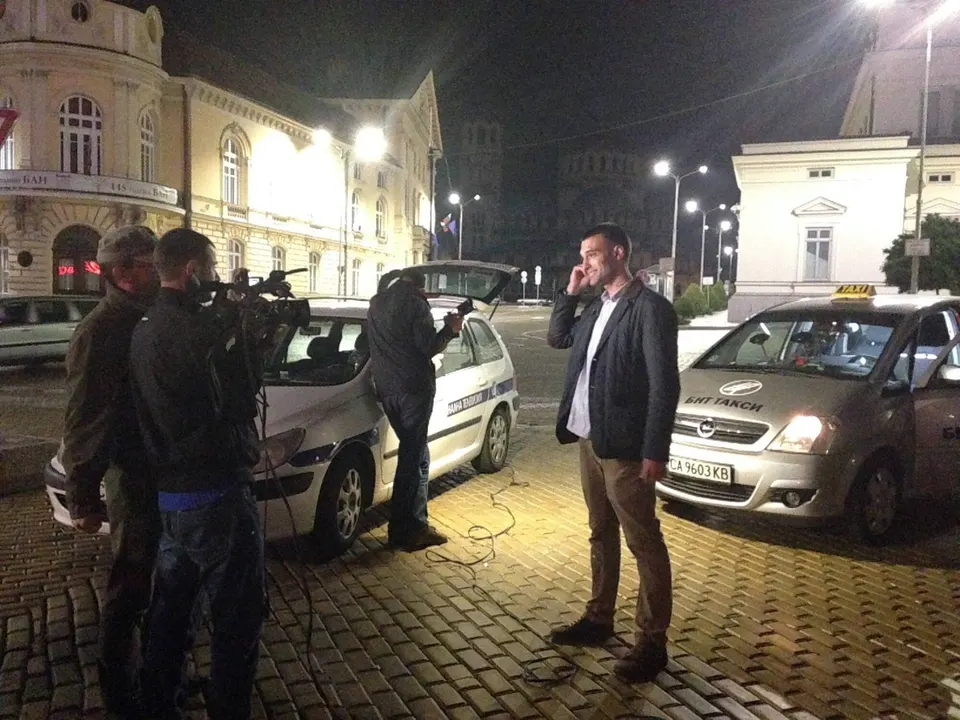
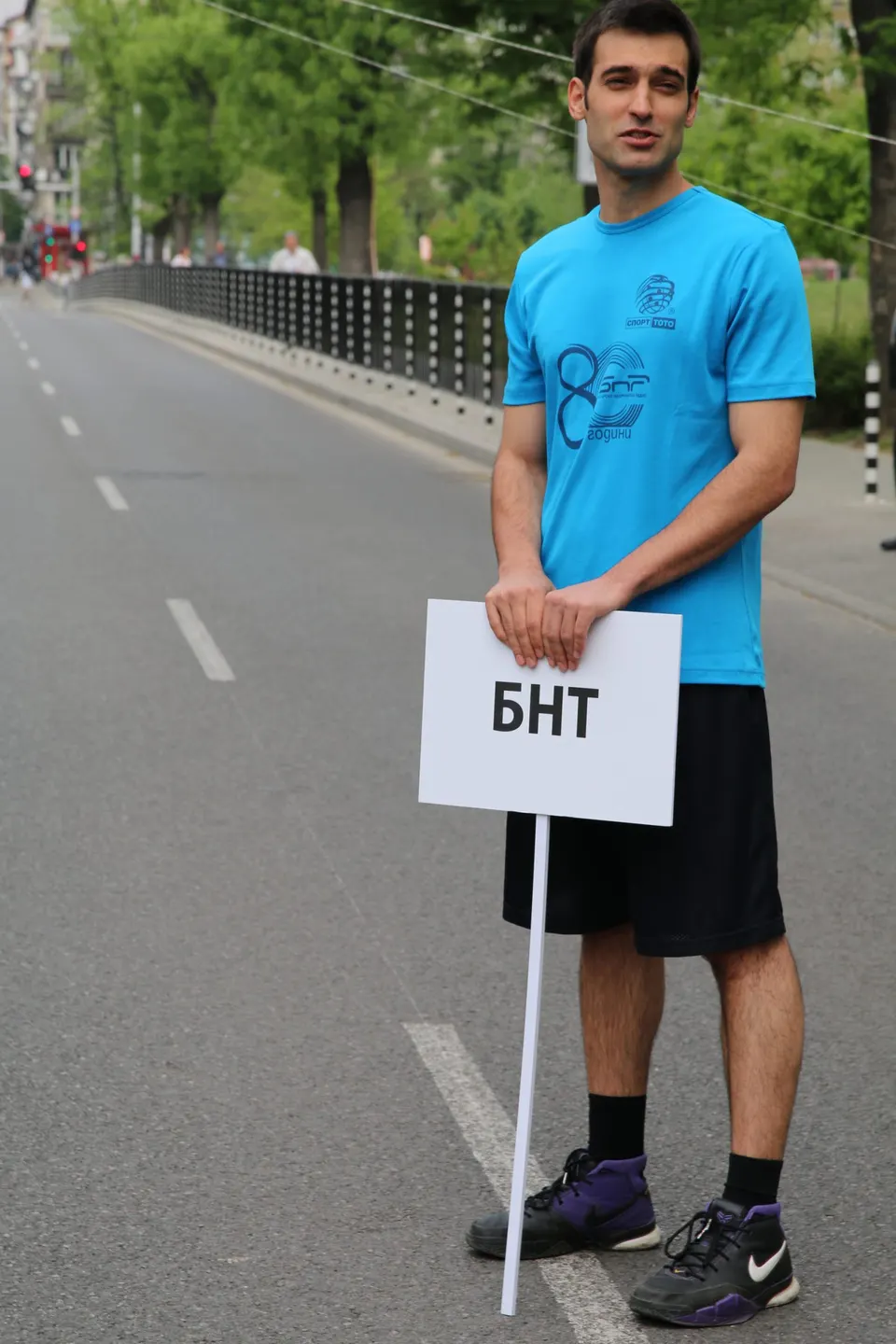
Spas Kyosev is one of the most recognizable faces on Bulgarian television, the youngest anchor of the main news in the history of BNT. For many years he drove the BNT Taxi, an award-winning and meaningful show that gave everyone a say on the important issues of the day.
There is so much for us to talk about—technology and journalism, television and reading, news and commentary.
Come on, hop into the Digital Stories taxi too! It’s free, and it always will be!
– You were the youngest anchor in the history of Po sveta i u nas, you became one of the most recognizable and longest-serving faces on the air. Then suddenly you “disappeared” and went off into the world of technology. Why such an abrupt change of direction?
– I decided to try something new. After investing half my life in journalism, and in television in particular, I think I gave plenty of chances both to myself and to television itself. At some point I decided our relationship had run its course—we took what we could from each other, we gave what we could, and I moved on.
The interesting thing is that only after I gave up this thing I had poured my entire youth into, all my dreams, all my love and strength, did it turn out that I hadn’t been making television at all, but something much more, something much bigger.
It wasn’t just television, and it wasn’t just journalism either—it was exploring people and telling stories.
Since I left, people often ask me whether I miss it. No, because that’s what I’m still doing.
For me, the definition of television is “I connect people.” And “I tell stories.”
– Stories are what survives—from the days of the caves all the way to the age of artificial intelligence. It’s no accident this site is called what it is.
– Looking back, and now afterward too, I keep doing the same thing I’ve done all my life. I’m driven by the same interests that have driven me all my life.
My mother tells a story from when I was just a few years old. Times were freer then, and she had let me out to play in front of our apartment block. I vanish, she goes looking for me and finds me on a bench with Stoyancho. Stoyancho is an 80-year-old grandpa, and the two of us are sitting there talking, telling each other stories.
Somehow that makes me realize I’ve been doing this my whole life, and television is just a platform. I changed the platform, but I keep doing the same thing.
– Then again, it’s quite an addictive platform. A lot of people find it hard to tear themselves away.
– The truth is that television changed a great deal over the 20 years I was in it.
I understood that largely when I went into the tech business, which no longer watches television, because the entrepreneurs are young.
And many of the successful entrepreneurs were abroad during my professional peak. When I started working with them, I always seemed familiar to them from somewhere, but they couldn’t quite say where. When it came up and I told them, they apologized for not watching television. And they immediately asked me why I had worked there—“it’s not really needed anymore, nobody watches TV.”
I had to explain to them that when I fell in love with television and pledged myself to it, it was something prestigious, relatively well paid and, most importantly, everybody watched you. You had everyone’s attention. These days that’s nowhere near as true.
– It depends. If we look at the statistics, a lot of people still watch it after all, though not always the traditional way—online, selectively. Yes, fewer people switch on the TV at 8 p.m. to watch the news, but the news from there reverberates, we discuss it, and it’s at the center, whether we’re talking about reality shows or politics.
– That’s true, but the way television is consumed and distributed has changed a lot since then. Before, you had to find the right topic, the right person, put them on at the right time, when the right viewers would be watching. It was a small miracle to get the best product, but also the best impact, to get a quality product. A lot of planets had to line up in space.
Now good things exist on their own, and they find you. Pieces of quality television find you, even though the ritual of everyone sitting down at 8 p.m. to watch the main news is gone.
Yes, people watch television, quality things keep spreading, but television doesn’t have the power it once had.
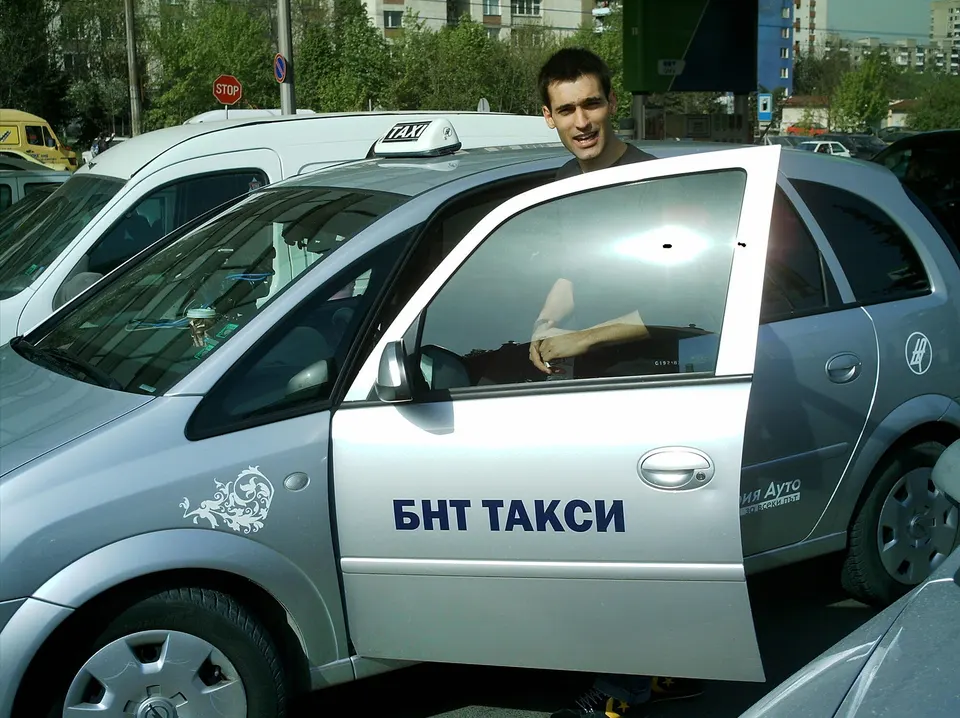
– I watched something similar from the front row with the decline of newspapers. When I was starting out as a journalist, 24 Chasa, one of Bulgaria’s biggest dailies, had a circulation of 200,000, and whatever was on its front page set society’s agenda.
– Yes, a lot depends on the function of television and the mass media too, because they used to exist as the main channel of communication—first for information, then for analysis. In my view, part of the reason television stations lost their viewers and their public influence is that for too long they kept, and perhaps to some extent still keep, playing the role of information suppliers.
But these days information is everywhere. It’s in your pocket, in your phone. You don’t need to watch an hour of news to hear the four minutes that interest you.
You no longer watch television so much to get informed—you’ve known the news since the morning, since your first coffee, because you open your email and there it is waiting for you. Rather, you watch the way it’s presented, “which way the wind is blowing,” what the interpretation is and on which outlet, because however murky media ownership is in Bulgaria, it’s clear to you which outlet plays for which team. In that sense,
what interests you is how the news is presented, not so much the news itself.
– But that, and I repeat it often on this site, is in my view the source of a huge share of our problems as a society today—that we have no central platforms, no gatekeepers of the kind the media used to be. So that balanced, quality information reaches you, and you don’t lock yourself in your own bubble and live in a world completely different from your neighbor’s.
– That’s right,
for me, commentary matters far more these days than news reporting.
In fact, national television stations were created after World War II for the purpose of channeling information. To rebuild society, to control information. And so that everyone would have one common platform bringing them together. Today that is very different.
In one interview I was asked: “What era would you like to live in?” My answer was precisely the moment of the television pioneers, when you invent things. Every step you take to the side is something new, a discovery. And second, it’s the moment when you have the audience’s full attention.
When I took it up, it was still largely like that. But
these days everything in television has already been invented.
The other problem, if we follow the thread of audience attention, is that these days everyone creates content and nobody consumes content.
Can we survive sustainably in a model like that?
– I don’t think we can. That’s how public conversation breaks down—when everyone creates and nobody consumes in volumes big enough to make it worthwhile for anyone to create something better.
– Right now we live in the kingdom of copying, of the shallow, of the fast. Our content is “junk.”
With all the assistive systems we have, including AI, anyone can fool themselves into thinking they understand something.
Or do you not need to understand something to get a job done? Fine, but only up to a point.
Nobody becomes a master that way. To become a master, you know, you have to put in 10,000 hours, 10 years, time and effort. These days we’re always looking for shortcuts, the direct route.
But shortcuts don’t create masters. It’s the other way around. Masters create shortcuts.
My problem is with the audience’s attention, that nobody can concentrate anymore. I can feel myself changing, and all of us changing, because of the whole rhythm of content creation, the whole assault our minds are getting from every direction.
We’re losing patience. We’re losing the ability and the desire to stay somewhere, to stop, to read a longer text. Not just to hear the wise sentences of the person we’re talking to, but to understand the context behind them. I believe that what we did on BNT Taxi is still the most important thing today.
Not so much what you think, but rather why you think it, and also who you are. What’s the context of your position? Who are you, and what do you represent as a piece of the social puzzle, so that we can have some kind of dialogue?
If you try something like that now, you get irritated. You want to know the what and the how right away. And the real mastery of narrative, of a story, a film, a book, is to create context.
What does every good story do? It takes something insignificant at the beginning and gives you something deeply significant at the end. Only, to build up meaning around something insignificant, you need context. And here I like to give the example of Titanic, which is already archaic. At first glance it’s a film about a ship sinking. At second glance it’s a film about love. At third glance…, and this is the interesting part for me, Titanic is a film about a pendant that means nothing in the first shot and everything in the last.
Why? Because of the context. That is exactly what we’re losing these days—both in telling and in taking in.
– Strong stories struggle to break through, because of everything you’re describing. Context and detail, depth, the ability to build a picture, to get out of the cliché. At the same time there are podcasters, internet influencers, people with huge audiences. Who, however, are rarely held responsible for their content.
– That’s exactly the paradox. People from my new circle say they don’t watch television. While at the same time everyone is trying to produce television at home, from their room, from their phone. Everyone makes podcasts.
We don’t value journalism. We have no respect for it, and at the same time everyone is trying to be a journalist.
It’s a very interesting paradox. One problem is that this only feeds the echo chambers, and the other is that to capture attention you have to be extreme, whatever the topic, and distort.
I’ve thought a lot about why podcasts succeeded, and still largely succeed, as an alternative to television. Considering that, if you look at it professionally, it’s the opposite of television. A podcast is “talking heads,” something television has spent years trying to avoid. It’s long, specialized. So why do people seek it out?
Because it’s specialized content for a specialized audience that can consume it whenever it’s convenient. When you’re on television, when you’re making BNT Taxi and you have to show nine minutes to the whole of Bulgaria, that’s an enormous commitment.
On the air of the traditional media, the more numerous and diverse the viewers you’re creating content for at once, the more objective and balanced you have to be. That deprives you of the “at any cost” flashiness of the internet and podcasts. That’s precisely the difference, and it’s why it’s much harder to manage to be interesting and watched on national television than in a podcast.
– I really like the metaphor about food, that what you choose to read is what you feed your soul. That’s why this question, which dates back to the 1990s, matters to me—when the level of the media drops, how can the process be reversed? Should we follow the audience, or should we educate it and bring it together? Can we somehow break out of this circle?
– I have friends at the Association of Bulgarian Animation Producers… Together with BESCO, the Bulgarian Startup Association, we tried to help one of their causes—changing the laws so that better films could be made. One of their leaders is convinced that
the moment will come when we return to calm conversation, to reason, to attention, to the person in front of us.
Because these days everyone wants to have their own say and doesn’t want our opinion. They listen to the other side only to see where they can jump in and say: “But wait, let me tell you.” That’s social media.
It’s the mirror on the wall, literally! “Tell me, who’s the fairest of them all?” That’s the world we live in.
We’re blinded by ourselves and have no regard for the other person. And the algorithms of social media exploit that. They sell us self-satisfaction. And we are self-satisfied; the other person isn’t needed.
Years ago I had to help a girl with an essay about what the Berlin Wall was. We built it like this: if there were an art installation depicting it, I would put up a piece of wall with mirrors on both sides, back to back. For three reasons—first, because a mirror doesn’t let you look through it, to see what’s hidden behind. Second, because a mirror shows only your own truth. And third, because a mirror shows you exactly where the wall itself is.
When the internet appeared, the hope it brought was that it would be a window onto the world. Instead it turned into a mirror.
– In my view all these processes are happening precisely because of technology and the haphazard way we embrace it. Both you and I in some sense went over “to the enemy’s side,” moving from journalism to technology. Why did you choose that particular direction?
– I’m a humanities type; I look for the future of humanity in the past, if anything. That’s what we do, those of us from the Classical High School, Sofia’s school of ancient languages and cultures. We look for values, the world of Plato and his ideas, the things that never change, regardless of conditions and conventions, regardless of platforms.
In the end, technology is whatever we want from it. We want to serve our vanity, our flaws, our human and animal needs, to find something that delivers them to us in the best possible way.
Why did I go into the tech world specifically? Here’s the story: BNT gave me the task of making a documentary about the Bulgarian tech sector. During the interviews I was extremely and sincerely impressed by the people I met. I had no idea such people were still around, which was strange to me—I worked with people every day. I’m a journalist.
I’ve met thousands of people in my work, year after year. And suddenly personalities appear whom I thought had left Bulgaria long ago.
People who believe they can be world-class. People who believe tomorrow can be better. People who won’t give up.
That impressed me a great deal, and that’s why I followed the people. They’re the kind who have worked on themselves; they’re educated, capable, they’ve tried things and they don’t give up, however hard it gets.
I like that idea, that cause—to tell everyone what I had just discovered and what had surprised me so pleasantly. Success stories, instead of the story of yet another truck crash.
– For me, too, it’s a great cause and mission to tell stories about technology, to provoke some kind of public dialogue. Alas, to be honest, I don’t think we’re succeeding. This sector remains cut off from the rest, and its stories don’t reach everyone else—at least that’s how it seems to me.
– I do think there’s been a huge change over the past five years, since I’ve been watching society from this side too. The media have changed as well; they’ve started paying more attention to these kinds of people. There’s good news, there’s inspiration, and many young people decide they should take this path, because it’s worth it, because it’s possible.
You can be a normal person, you can be a successful businessman without being a thief, a killer, a dealer, without walking around with 20 bodyguards.
– And still, it’s not enough. Take artificial intelligence: supposedly it’s talked about constantly and everywhere, yet we don’t arrive at any more meaningful public conversation. The reasons, in my view, lie in everything we’ve discussed so far. Somehow technology feels cozy staying apart. That’s my sense of it; it may not be true.
– If you have that sense, it may be because these are, after all, global companies. Bulgarian politics still isn’t interested in this sector and doesn’t understand it—unfortunately, and fortunately. Our politicians haven’t reached the world-class level that, thank God, the Bulgarian tech sector has managed to reach. I’ve tried to motivate successful entrepreneurs to talk in the media about success, about meaning, about technology. One person told me: “Whether I tell my story in Bulgaria doesn’t interest me, I work with the whole world.” Yet a few sentences later the very same person said: “But if one child hears me, gets inspired and believes, then it makes sense, and I’ll do it.” Many of them don’t go public in a centralized way, but they tour high schools, go out to the provinces and inspire a lot of young people.
I think this is happening, and if there is some kind of vacuum, perhaps the problem is rather that it isn’t centralized enough—as a medium, as a channel, as a platform, as a stage, as an association of people who would like to do it.
As for AI, it’s changing constantly, all the time. Perhaps the people working in the tech sector are themselves so busy right now trying to understand it and predict where it’s going that they have neither the time nor the focus to explain it to others.
– But there’s room for all of us in this conversation, because the future of all of us depends on it. Yet few people in the rest of society are aware of the big changes. They haven’t gone through the quiet moment of horror I felt when I realized readers couldn’t tell my story from one told by AI. Have you thought about such a moment—as you said yourself, your great skill is telling stories; what happens if a program does it better?
– Our brains are used to turning everything into pictures and situations. We remember and believe with our feelings.
Even though machines understand exactly which buttons to push to engage me emotionally, they don’t understand emotions.
The other day a friend played me a hip-hop track he’d ordered from an artificial intelligence, since I’m a fan of that style of music. Somehow you sense immediately, and I mean immediately, that the stew is oversalted. As someone who has worked with voice, sound and intonation for 20 years, I instantly noticed that the rapper’s voice had both a rasp and a buttery richness at the same time, and it’s anatomically impossible to have both. Each creates style and pleasure for the listener’s ear, but the stew was oversalted; there were too many cool things in it. That’s the sense of measure. I’ve heard that
the devil’s favorite weapon is doubt, and the devil’s curse is losing your sense of measure.
What we have and carry within us is tied to context. As we said, shortcuts don’t create masters—masters create shortcuts.
Measure is our refuge. Perhaps it’s exactly what will bring us back to the old way of understanding, but maybe at the next level. I don’t want us to go back to the caves, because technology helps tremendously in every respect.
No, no, I don’t want us to go back to the caves. I want us to go back to the human being.