Every person needs miracles. A little superstition, dreams, and living contact with other people too.
But how do we cope today with the shortage of all these things? Can we teach them to artificial intelligence as well? Does folklore hold the magic key?
Assoc. Prof. Dr. Vihra Baeva of the Institute of Ethnology and Folklore Studies with Ethnographic Museum at the Bulgarian Academy of Sciences (BAS) is a scholar of wide-ranging experience, with a substantial list of academic and popular publications (you will find a detailed bio here). One of the major themes of her research is the miracles described in folklore and oral narratives. She also studies beliefs in mythical creatures such as the zmeyove, the dragon-like lovers of Bulgarian legend, and the samodivi, the wild woodland fairies of the Bulgarian mountains.
We meet on Enyovden itself—Midsummer Day, June 24, the feast of St. John the Baptist, when Bulgarians gather healing herbs—at her village house, over a cup of lemon balm tea, to talk about all these digital and eternal subjects.
– Today many traditions “live” on social media. Does that preserve them or destroy them? Does it change them, add to them?
– It is a way for them to exist today. Traditions really do have a contemporary life that nobody could have imagined 20 years ago, and yet here it is. Folklore is an extraordinarily adaptive system. It always finds a way to reproduce itself, whatever the conditions, and that makes it a very vital phenomenon. Yes, this is no longer the folklore you see, say, at folk art festivals, but it is a new way for tradition to exist.
Lately we increasingly mark the holiday calendar on Facebook. Today, for instance, is Enyovden, and we post photos of herbs, of enyovche, the yellow lady’s bedstraw that is the flower of the day.
At the same time, the online format lacks the living presence. It is very characteristic of folklore for people to be together—side by side, face to face, communicating directly with each other and also with nature. Now communication is becoming more sterile and virtual, and in my view that limits it in quite a few respects.
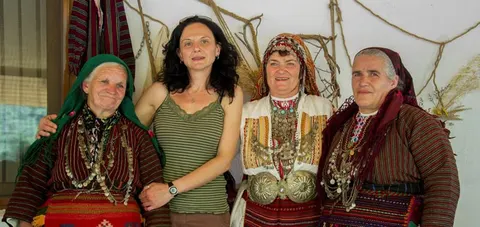
– But it does let us celebrate Christmas Eve online at opposite ends of the planet.
– We saw a great deal of this online celebrating, especially during the pandemic. We put together a collection, Etnologia i epidemii (Ethnology and Epidemics) (here), which came out at the beginning of 2021, and one of the articles was precisely about migration and celebration. It mentions how at Easter a mother and daughter knead their kozunak, the sweet Easter bread, together over a video call. Yes, it is one more way for people to connect.
– As an ethnologist, you study miracles in folklore. Are there miracles in online communication too?
– Yes, there are many patterns that existed long ago and are now adapting to a new environment. For example, on Facebook people share photos of miracle-working icons, and whoever shares one on their wall will have their prayers and wishes granted. This is
one of the examples showing that the virtual world largely repeats the real one.
Though it is more on one particular plane.
– Memes, for instance, are folklore too. But interestingly, we wouldn’t guess that intuitively; the word stays attached to folk songs and traditions, to the past somehow.
– According to the Institute for Bulgarian Language, the correct plural is even „мемета“ (memeta). We specifically checked while preparing that collection. They explained to us that „меме“ (meme, said in two syllables) is the picture with captions, while „мем“ (mem) is a cultural-studies category.
This really is a new, digital folklore, close to the joke, except that it lives in a different environment. But jokes today also spread mainly on the internet, and my colleagues who study them have found that people tell them to each other in person less and less. So
the new folklore exists and even uses the mechanisms of the traditional one, only it adapts to present conditions.
What do they have in common? For one, they are not authored works—both memes and jokes are anonymous. Also, they are not fixed; you can come across many variants of the same thing with slight changes. Everyone who consumes it and passes it down the chain can change whatever they like, and so becomes a co-author, an accomplice.
Very often these forms express stereotypes and attitudes that are not individual but collective, part of the communal culture each of us carries as a member of a certain people, region, town or village. What we have inherited, one way or another, from the culture we belong to.
– At some point, when we achieve artificial intelligence indistinguishable from the human kind, do you think it would need folklore, rituals, beliefs?
– If it resembles the human kind, probably yes. Because this is so human and appears always, at every time. From the earliest data we have on the first humans all the way to now, the digital age.
– After all, whenever there is more than one person in a place, beliefs and collective creativity are born.
– Even a single person can create rituals, images, symbols. A human being is always the product of some culture; he did not spring up by himself. Except, perhaps, Mowgli.
– And will an artificial intelligence that resembles humans be superstitious too? Because that is just as typical a human trait, however much we deny it, however much we run toward the pragmatic…
– What we call superstition is really the faith we don’t share.
In specialist language we use the term “beliefs,” because the word “superstition” already contains a judgment. Someone believes in something, but they are wrong. Whereas in fact we have no guarantee that certain beliefs are not valid for that person; that is our outside judgment. And if not everything can be explained by the laws of physics, it doesn’t mean it doesn’t exist, or at least doesn’t exist in the worldview of certain people and communities.
I think these beliefs, these so-called superstitions, will go on existing, because they are part of humanizing the world. A person needs to live in a world that resembles their own thinking, that is somehow cozier, explicable, a world that can be understood by our human measures.
– And one that has miracles in it.
– Yes, that is also part of being human, this hope that at the hardest moment something will happen, you will be saved. Someone will come from on high and help you. I have worked on this subject for many years and talked with a tremendous number of people.
The fact is that if you believe, it really does happen to you.
One way or another. It is a matter of choice.
– To be a good folklorist, do you have to believe in the things you describe? Or the opposite—be detached and impartial?
– I try to avoid that opposition—believe / don’t believe—and simply look at things the way the people I talk to see them. Not to judge
the people who were healed with the help of a miracle-working icon or who have seen zmeyove or samodivi. I accept that this is their world; I simply observe it and study it.
That world is interesting and enchanting to me.
– Do such phenomena have a harder time surviving today? We have access to incredible information; supposedly we are all much more connected to science.
– No. It’s just that the official discourse doesn’t admit this kind of story and this kind of knowledge, but it keeps spreading. My doctoral student Stefana Mincheva-Yorova wrote a dissertation on the samodivi, and at the defense one of my colleagues, a highly respected lecturer at the University of Plovdiv, told how she herself had once seen samodivi.
This is a person with a doctorate. A specialist who does science and at the same time can see this “invisible,” unprovable, unscientific aspect of the world.
– A while ago I wrote about beliefs in some little spirits, the zdravichki, and every folklore researcher said they had seen them, heard them—and these were people with very serious academic careers.
– Clearly it is not a matter of insufficient education. Especially under socialism, this was the mantra: because primitive people didn’t understand the laws of nature, they made up deities to explain natural phenomena. In reality things are much more complicated.
– But now the same thing comes from social media: if you say something contrary to the accepted, the official view, you become a kind of outsider. There is a mainstream, a dogma, behind which stands a failure to understand differing opinions. And as a bonus—the hate.
– The swarming of truths is characteristic of postmodern society. What is mainstream anymore? That is one of the questions that remain open.
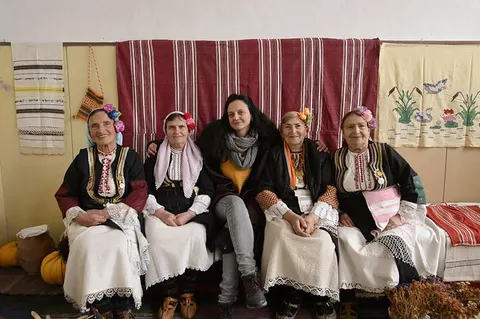
– For 30 years I have heard people say we have a last chance to preserve the traditions, to record what the grannies in the villages tell each other. And to this day there are still grannies with traditions to preserve. Will folklore exist as long as people do?
– I think so, although folklore itself changes. Thirty years ago it was different, and 150 years ago, when people began recording and collecting it, it was something else entirely. But it is there. It is a human need inherent in us. Just like the need for something sacred, divine, a connection with something greater than ourselves, which everyone carries in one form or another, this need to bond in a community through traditions, through forms of culture, is, I think, immanent. Yes, we should preserve what we learned from our grandmothers and grandfathers, but at the same time
we can rest assured that there will always be folklore.
The thing is that today some forms of folklore are moving quite close to kitsch and heading toward an ersatz that I personally don’t like. Sometimes it even irritates me badly, but on the other hand the researcher in me tries to keep calm and say: “Things are what they are. People probably need these things, however inadequate, eclectic, kitschy, saccharine, made-up or fake they look. For someone it is meaningful, it moves them. Who are we to judge?”
– But there is also the commercial side; plenty of people profit from it. And by describing traditions their own way, they can turn them into the norm. A generation from now, say, everyone might have a book of traditions at home that has nothing to do with real folklore.
– Folklore follows its own laws. Yes, we can try to educate, and especially to show young people what we consider valuable and meaningful. What we can do is leave behind what we have seen, recorded and studied.
Just leave it somewhere out there, and if someone needs it, they can reach out and take it.
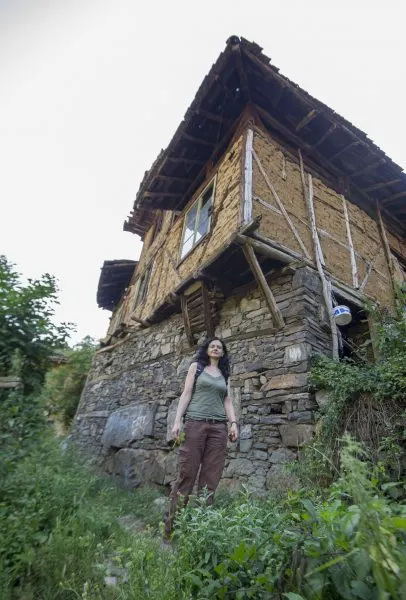
– Can Bulgarian folklore be presented in mass culture? Several very worthwhile projects never achieved much success. Meanwhile, globally this is a trend—so many TV series, for example, are inspired by Norse mythology.
– Maybe not on such a mass scale, but lately it has become fashionable to write novels based on folklore. Among them there are some good ones, besides the notoriously bad. And recently I consulted some young people who are making a board game based on elements of folklore—The Devil’s Bridge.
They exist; it’s just that perhaps the fact that there aren’t that many of us Bulgarians limits the trend. Besides, our return to folklore is recent, only from the last 10 to 15 years.
– What most distinguishes Bulgarian folklore from that of the neighboring peoples, with whom we share a history after all and are quite similar?
– It’s hard to point to one thing, but we are a very specific mixture—on the one hand the Slavic heritage, on the other the Thracian, plus the Balkan, which links us to our neighbors, and of course the Ottoman. We are a very interesting amalgam, and on a small territory we have a rich variety of traditions, texts, songs, tales, legends and lore. Our folklore is very rich also because we had the chance to preserve it through five centuries of Ottoman rule. We consider that a national trauma, but as far as folklore goes, it turned out to be extremely beneficial.
There were no strong institutions like the church and the school to enlighten people. To explain that there are no karakondzhuli, the goblins of the winter nights, and that it is sinful to dance as kukeri, the masked mummers, because those are some kind of demons.
People performed their rituals and sang their songs undisturbed, and in the end these reached us in all their enormous variety and richness. Most European peoples don’t have this; owing to the turn of historical circumstances, it was erased long ago by those institutional agents.
– Enyovden is associated with the healing power of herbs. Which herb would cure modern people of their absorption in technology?
– According to legend there are 77 and a half diseases and 77 herbs. For every ailment there is an herb; only for that half-disease there is none, and that is exactly the one people keep carrying around. Maybe technology belongs to that half-disease for which there is no cure.
On the other hand, I think gathering herbs, and closeness to nature and the earth in general, does help with this. That is how we connect with the natural rhythms we so badly lack today, especially those of us in big cities who live among asphalt and concrete and hardly see any greenery. Our ancestors were deeply connected with nature, and in traditional culture its rhythm is woven into the rhythms of nature. One lives with the seasons, with day and night, with the natural calendar, and we have cut ourselves off from that.
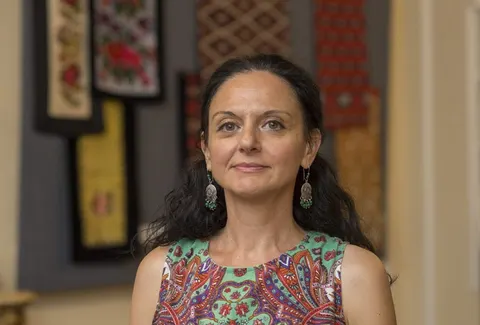
– Many places celebrate this holiday in some way. How are our customs different?
– Enyovden is close to the summer solstice, which is celebrated everywhere. The Sun was worshipped as a god until late, and it is even suggested that Christ is in some way connected to the Sun god, since he is born around the winter solstice.
The Sun is truly very important, which is why it is celebrated widely in all sorts of ways. Perhaps the herbs are something of a Bulgarian specificity, this idea that
the sun is reflected in the dew that sprinkles the herbs, and in this way its power seeps into the magical grasses and charges them with a special energy.
That is exactly when their power is greatest, and so they must be picked at sunrise on that day, when the Sun is at its strongest and radiates its mightiest energy. There are also songs about Enyo as a particular character, quite different from St. John the Baptist precisely in leaning toward a solar deity.
There is also the story of the girl abducted on Enyovden by the Sun. It lowers swings from above and snatches the most beautiful maiden in the village to become the Sun’s bride.
Vihra Baeva is a researcher and author in the fields of folklore studies, ethnology and cultural anthropology.
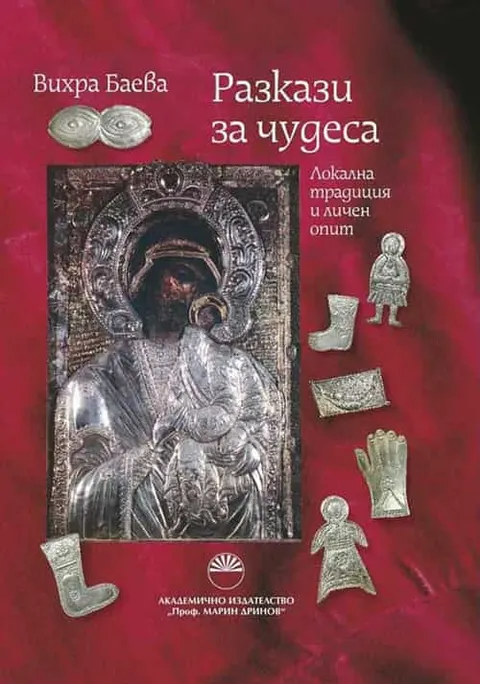
She holds a doctorate in folklore studies and is an associate professor in the Anthropology of Verbal Traditions section of the Institute of Ethnology and Folklore Studies with Ethnographic Museum at BAS. She is the author of the monographs Razkazi za chudesa: lokalna traditsia i lichen opit (Stories of Miracles: Local Tradition and Personal Experience, 2001; 2013) and Nishkata na zhivota: mezhdu kolancheto za rozhba i Bogorodichnia poyas (The Thread of Life: Between the Childbirth Belt and the Girdle of the Virgin, 2012), as well as the popular-science books Golyama kniga na balgarskite praznitsi i obichai (The Big Book of Bulgarian Holidays and Customs, 2019) and Golyama kniga. Predania i legendi ot Bulgaria (The Big Book: Lore and Legends from Bulgaria, 2021), co-written with Veselka Toncheva. She compiled and edited (with J. Otčenášek) Rechnik na terminite ot slovesnia folklor. Bulgaria (Dictionary of Terms of Verbal Folklore: Bulgaria, 2013); was editor-in-chief of the collection of folklore texts Zmey. Zmeitsa. Lamya i hala (Zmey, Zmeitsa, Lamya and Hala, 2016); and compiled and edited, with Angelina Ilieva, the collection of academic articles Ethnology and Epidemics: Sociocultural Dimensions of the COVID-19 Pandemic (2021).
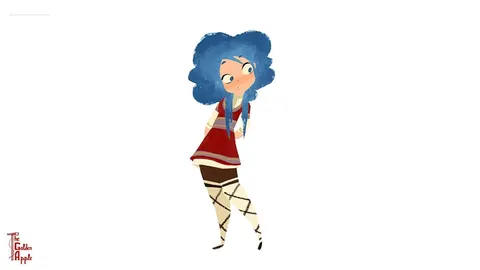
She is the author of more than 50 articles and studies in Bulgaria and abroad, published in Bulgarian, English, German, Serbian, Czech and Slovak. She has lectured at the University of Plovdiv and Sofia University, as well as at universities in Kraków, Łódź, Palermo, Prague and Bratislava. She is a consultant on the animation project The Golden Apple by Zmei studio and on Irena Parvanova’s novel Prikazka za dolnata zemya (A Tale of the Underworld), as well as on The Devil’s Bridge, a board game currently in development by Yellow Madhouse.
She has published popular-science pieces in the daily 24 Chasa, Spisanie 8 (8 Magazine), on the Radio Bulgaria website, in Literaturen Vestnik (The Literary Newspaper) and elsewhere. She has appeared on numerous radio and TV programs, as well as in online media.