“Sometimes I’ll Come…”: How AI Illustrated 10 Classic Bulgarian Verses
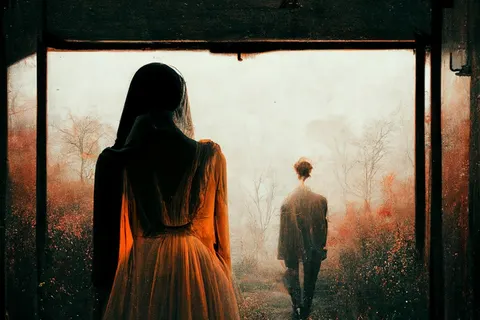
What illustrations could artificial intelligence draw from the works of Botev, Debelyanov, Boris Hristov and Georgi Gospodinov, and how would image-generating algorithms interpret classic lines of Bulgarian literature? This kind of AI has been a hit in recent months, a striking example of what technology can already do, and it has given rise to a new skill: describing an image so precisely that the algorithm generates exactly what you expect. So what happens when we “feed” it the stanzas of proven masters? Here are the fascinating results!
 02
An Experiment: Has AI Learned to Translate Yet?
Is the technology finally here for high-quality translation, including to and from less widely spoken languages like Bulgarian? DeepL boasts of being “the world’s most accurate translator,” and plenty of people already use it every day, but how will it handle classic passages by Tolstoy, Murakami, Remarque or Gospodinov? Will we end up lost in translation, or is translation one more field where we can now rely on artificial intelligence, so that the money spent on the kids’ private language lessons turns out to be thrown to the wind?
 03
How AI Painted 10 Classic Bulgarian Verses: 2022 vs. 2026
In 2022, I called on MidJourney, the first truly impressive AI image model, to carry out an unexpected task. I fed it 10 quotes from beloved Bulgarian poets to see what it would draw. The results were striking and thought-provoking, and it became one of the most read and discussed Digital Stories. Almost a whole five-year plan has gone by since then. What will the pictures drawn from the very same verses by today's most advanced models look like? AI will undoubtedly show more skill, but will it also show creativity, understanding? Will its illustrations come closer to art? Judge for yourselves… “Never in my life had I dared to hope for a compliment quite so kind: AI invited me—the newest AI—to its home for a glass of absinthe.”
 04
Will There Be a Bulgarian Author? Book Picks from IT Leaders, Part III
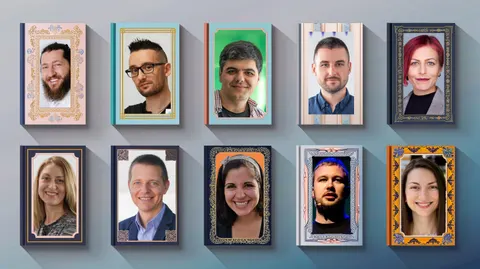
Would you have guessed that Bulgarian IT leaders read Harry Potter, or even Dostoevsky? I wouldn't have, at least until a week ago, when I asked them and it turned out they do. On the eve of the Day of the Buditeli, I invited 30 remarkable people to recommend three favorite books to the readers of Digital Stories, and today I present the second half of their answers.
 05
How DALL·E “Read” Beloved Bulgarian Books
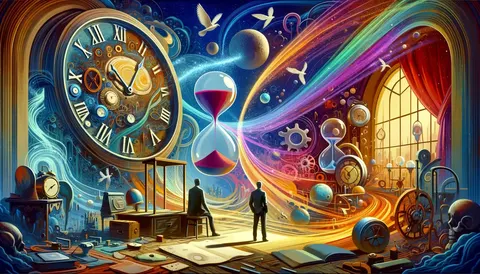
The Chukchi is no reader, he’s a writer, as the old Soviet joke goes. But what about ChatGPT? Time for another fascinating experiment to show what today’s algorithms can do, both at creating images and at understanding context. I will ask DALL·E 3, part of the paid version of ChatGPT, to illustrate classic works of Bulgarian literature from different periods. Why is this interesting? It will show how well the large language model works in Bulgarian and how far it recognizes some of our undisputed classics. And, not least, because… might it show us some unexpected, different, striking points of view? Could we speak of some form of collective unconscious? Will the pictures overlap, at least in part, with the images each of us carries in our head for these books?
 06
The Mamnik Lurks Online, Too
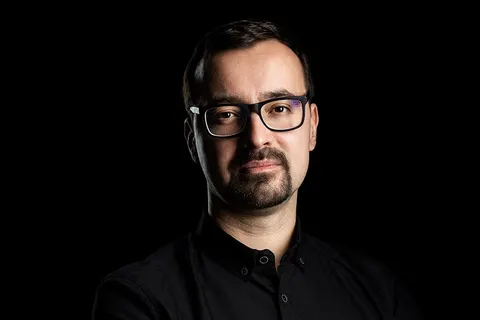
“Mamnik”—such a melodious, expressive word. And lately, much more than that. The fearsome mythical bird of Bulgarian folklore took flight as an audio series on Storytel and then carried on as a novel on paper. If you have yet to read (or hear) the book, I envy you. In it, Vasil Popov shows how Bulgarian folklore can be told in a modern, gripping, thrilling way, with taste and literary skill. We invite the mamnik to our conversation, too, as a vivid character and a powerful metaphor: the terrifying bird that is almost immortal and whose feathers keep changing color. Why do we so rarely manage to turn the stirring images and stories of Bulgarian folklore into art? And why, at the same time, do legends from distant times feel so close to us? Where is the thin line between patriotism and flag-waving jingoism? Here is what Vasil Popov and I had to say about it.
 07
Tang Ping: Lying Down in Order to Stand Up
Several generations of Chinese grew up with the “ideal” of “9-9-6”: you work without a break from 9 a.m. to 9 p.m., six days a week. It is the only way to survive the fierce competition and keep climbing the ladder. But the end of endless grinding may be in sight. “Tang ping” and “bai lan” are the two names of a movement gaining strength among young Chinese: lie down and think about life; relax instead of throwing all your strength into meaningless toil. Are the beatniks of our time coming from China? Will people in the East learn to idle? When can laziness become a constructive force? And shouldn't we all follow their example and prepare for our own future this way? The Chinese are learning to be lazy, and so inspiringly that you want to grab the quilt at once… Let's lie down!
 08
The Internet of Forgetting
Do you know the capital of Madagascar? Who cares—if for some reason you ever need it, the omnipresent Google will tell you everything about it in three seconds. Not so long ago we all “carried” the phone numbers of family and friends in our heads. The web has forever changed our relationship with knowledge. Storing facts is no longer a priority for our brains; today the ability to find what you need quickly and accurately has replaced actually knowing. What challenges does this shift create? Why does it bring both serious opportunities and countless risks? Is it changing us even… as a species?