A few years ago, would you have believed that artificial intelligence would create such polished images? From hyperrealistic “photographs” to personalized caricatures in the latest trend flooding social media. I wouldn't have.
Just as impressive is how quickly we get used to changes like these. How easily it becomes fashionable to make a little illustration of how ChatGPT imagines you, or to have it draw you in the style of classic anime, just for a laugh. And how rarely we ask ourselves where such solutions are taking us.
That is the reason for the latest experiment I am about to tell you about. Beyond any doubt, algorithms today are astonishingly good at creating and processing images. But how is their creativity changing? Are they capable of producing original, unexpected, precise illustrations?
Yes, AI today is a wonderful opportunity for a fresh look at art. The conclusions of Apollo ex Machina, the first poetry competition of its kind, proved it. But then who is the author? When and what should we leave it to “create”? Can we even use that word? Are the images that ever more perfect algorithms produce art?
Don't expect answers from me—they are far too complex, and all of us have to take part in finding them. What I offer you here, though, is one more reason to stop and think.
In 2022, I called on MidJourney, the first truly impressive AI image model, to carry out an unexpected task. I fed it 10 quotes from beloved Bulgarian poets to see what it would draw. The results were striking and thought-provoking, and it became one of the most read and discussed Digital Stories.
Almost a whole five-year plan has gone by since then. What will the pictures drawn from the very same verses by today's most advanced models look like? AI will undoubtedly show more skill, but will there be more creativity, more understanding? Will its illustrations come closer to art? Judge for yourselves…
1. The Devil, the old Devil…
The task:
I never in my life had dared to hope for
a compliment quite so kind:
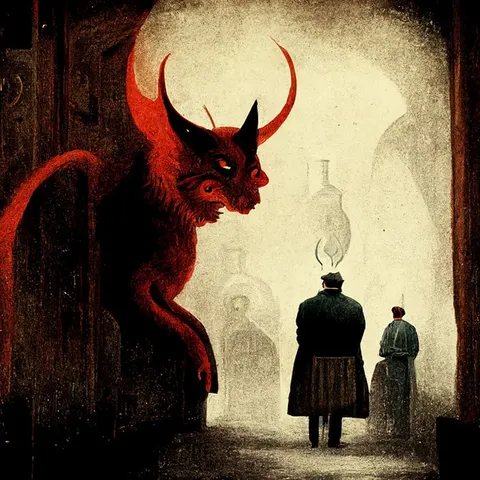
the Devil invited me—the old Devil—
to his home for a glass of absinthe.
(“Visiting the Devil,” Hristo Smirnenski)
MidJourney, 2022:
ChatGPT, 2026:
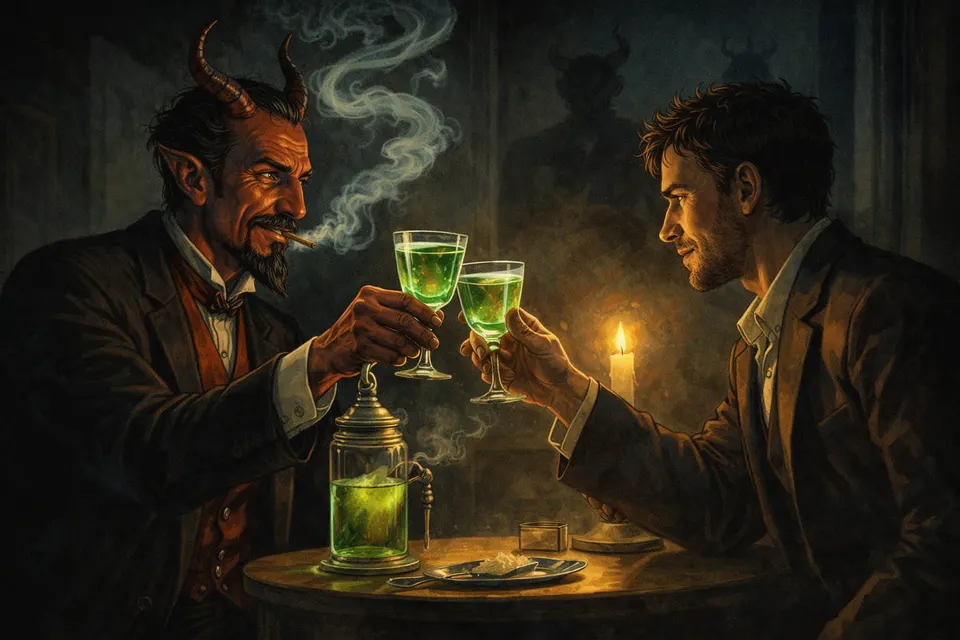
How fast technology really changes while we discuss everything but that! In 2022, to get any kind of coherent image at all, I had to use short excerpts from the poems and hunt for an adequate English translation of each. There were no good enough automatic translators yet, and the AI tools themselves didn't “speak” anything but English. ChatGPT was still only a dream in the mind of its daddy, Sam. That was when, seemingly out of nowhere, the models capable of producing remarkable images appeared.
You can judge the difference between the two illustrations of Smirnenski's verses—he was a beloved interwar poet who died at 25—for yourselves. I should note that this time I used ChatGPT and its built-in image generation. I created a new profile so that it wouldn't be swayed by our previous conversations and would produce images as detached as possible from any details that might come from the human. My only instruction was to create an image (not an illustration, a photograph or a caricature, for instance) based on the text that followed. The chat got only one shot at each task (with one exception, which I'll get to), and it is precisely those first and only results that I show you here.
I confess I like both. And if in the past you could easily recognize the image by the style it unmistakably stamped on every picture, today the AI's “creativity” (how long will those quotation marks last?) in “drawing” (and these?) can certainly be endlessly varied. That's why I'm more interested in where it will go beyond the obvious, without being steered. Do you think the new picture holds more of the spirit of the verses themselves?
2. High Blue Mountains
The task:
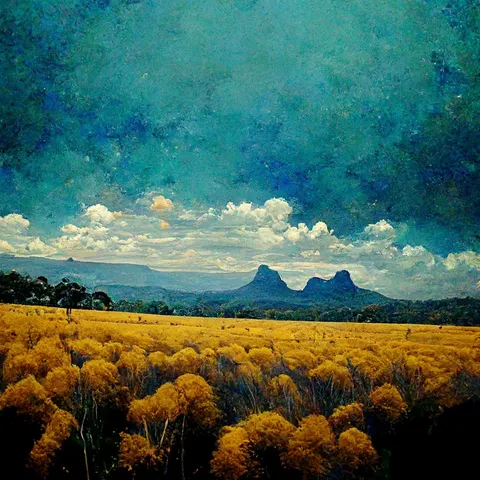
High blue mountains,
rivers and golden plains,
a sky more tender than silk—
this is my homeland!
(“High Blue Mountains,” Mladen Isaev)
MidJourney, 2022:
ChatGPT, 2026:
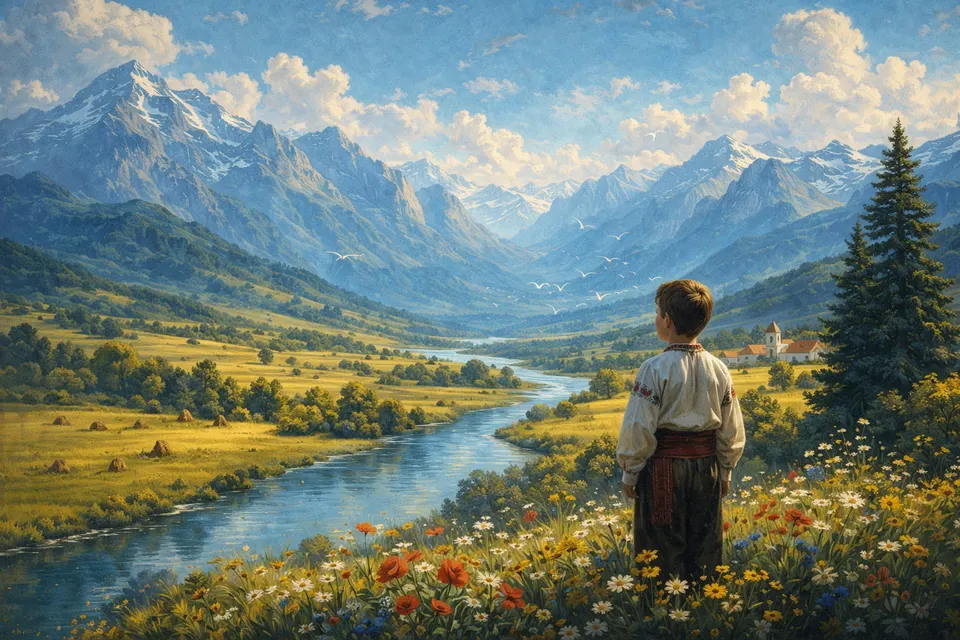
Only four years, and the mountains are considerably higher, considerably bluer and more “polished.” Whether they look Bulgarian (and whether they should), what those white birds in the distance are, and many other questions about the creative choices of today's AI, I leave to you. After all, these lines by Mladen Isaev are known to every Bulgarian child.
3. He lives, he lives!
The task:
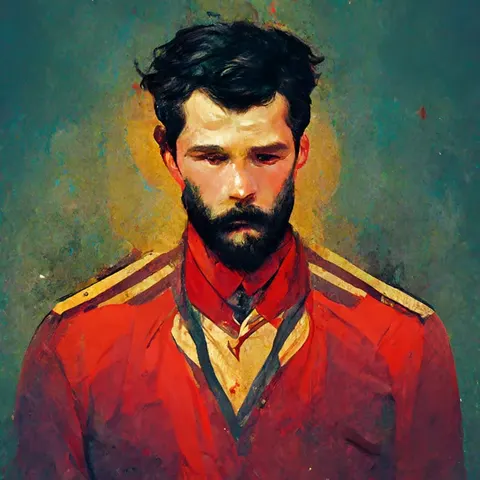
He lives, he lives! There on the Balkan,
sunk in his own blood, he lies and groans,
a hero with a deep wound in his chest,
a hero in his youth and manly strength.
(“Hadzhi Dimitar,” Hristo Botev)
MidJourney, 2022:
ChatGPT, 2026:
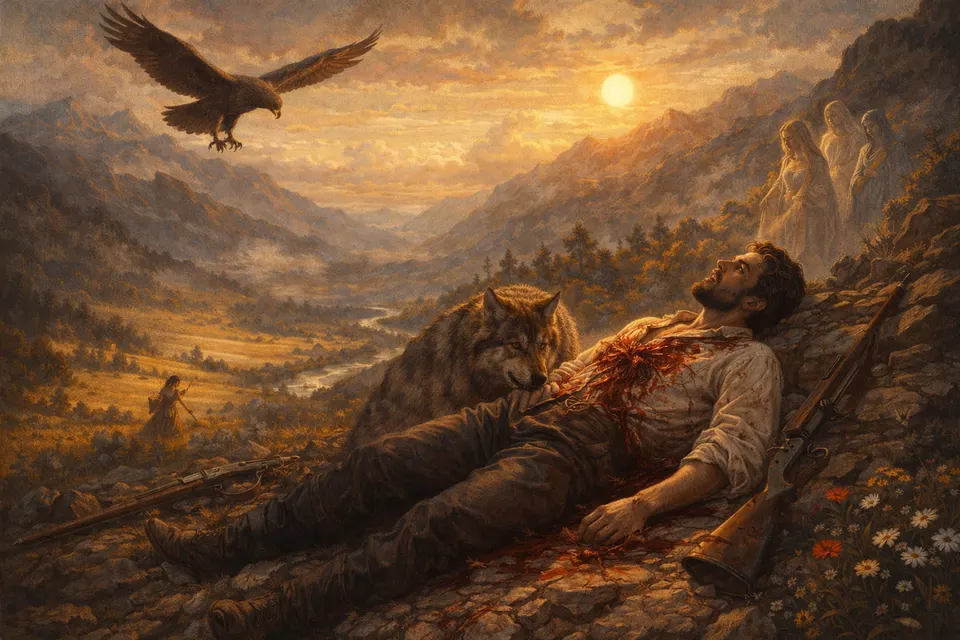
Look at the first picture, then at the second. And… then again. And after that, tell me AI hasn't developed astonishingly in these four years. While the jokes were still going around that images never managed to get the right number of fingers… we reached the point where they really are becoming harder and harder to tell apart, as many of the experiments on this site have also shown.
Without any additional instructions, based solely on the detail-rich, message-laden verses of Botev—the revolutionary poet who died fighting the Ottomans in 1876—ChatGPT, in my opinion, created an entirely worthy image, one that is by no means devoid of emotion.
4. The White-Blossomed Cherries
The task:
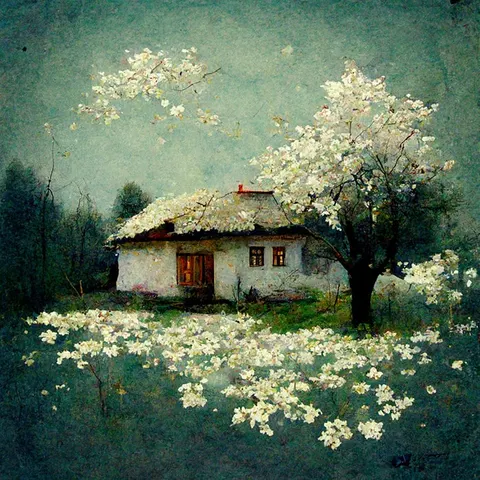
Do you remember, remember the quiet yard,
the quiet house among the white-blossomed cherries?
(“Do You Remember, Remember the Quiet Yard,” Dimcho Debelyanov)
MidJourney, 2022:
ChatGPT, 2026:
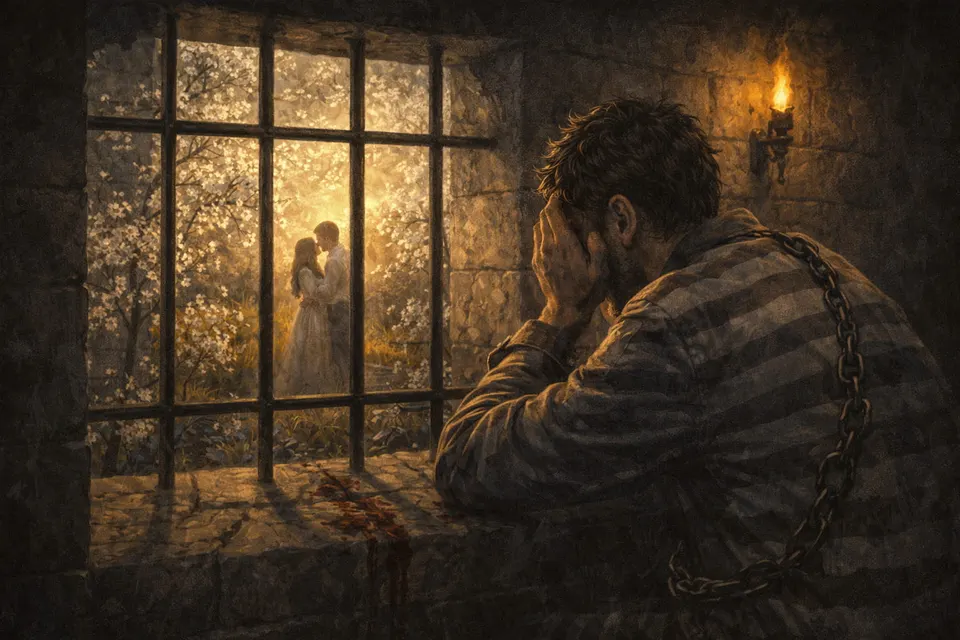
The 2022 images are far more naive, imperfect… but aren't they also a bit more metaphorical, indirect, less literal? Yes, today we can “feed” artificial intelligence enormous amounts of context—give it more and more information, on the basis of which it answers us with its own “opinion.” But is that always useful?
Otherwise, here too, no argument: the blossoming cherries in the second image are quite beautifully blossoming and there are quite a lot of cherries. But where did those shackles come from…?
5. The Owner Has Left for America
The task:
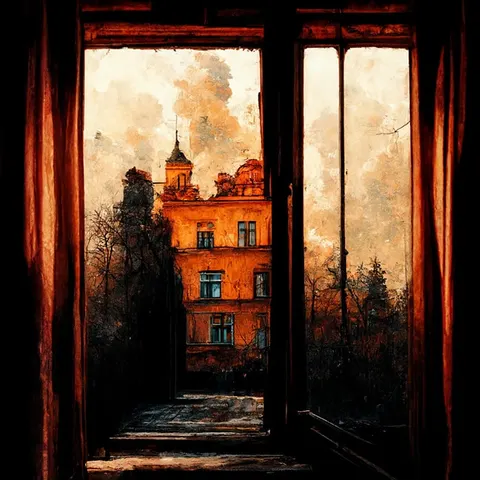
The windows—shut and black,
and black and shut the door,
and on the door—the sheet with the words:
“The owner has left for America.”
(“A Tale,” Atanas Dalchev)
MidJourney, 2022:
ChatGPT, 2026:
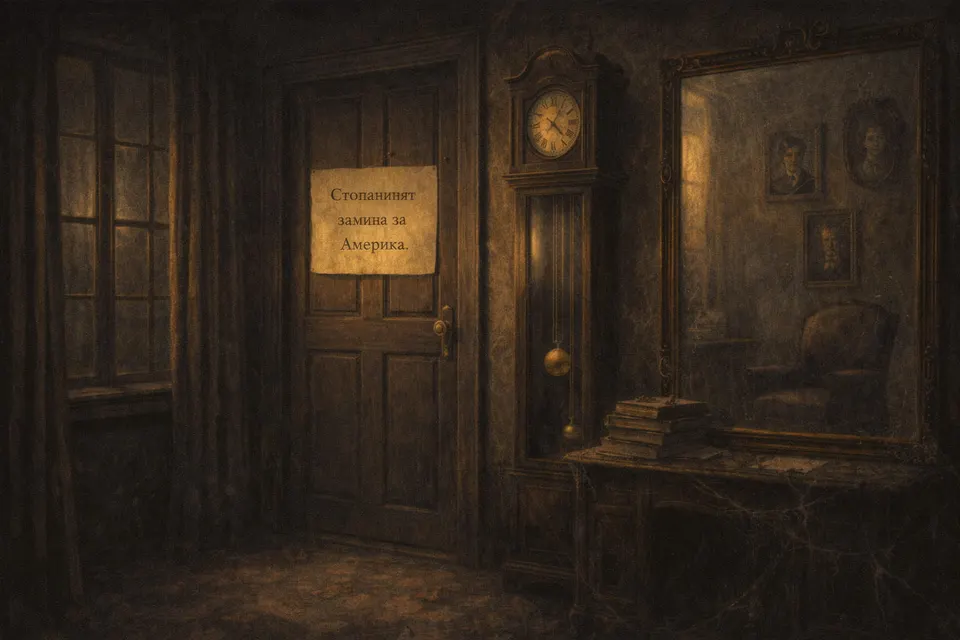
And again: did the owner leave? He did. How do we say it? With a sign that, on top of everything, reads „Стопанинят“—a misspelling of стопанинът (stopaninat, “the owner”). It strikes me as the weakest performance by the electronic painter today. So I give it a second chance—once I'm done with the rest of the verses, I ask it for a more artistic interpretation. Both the algorithm and Dalchev's verses deserve it. The result? Here it is:
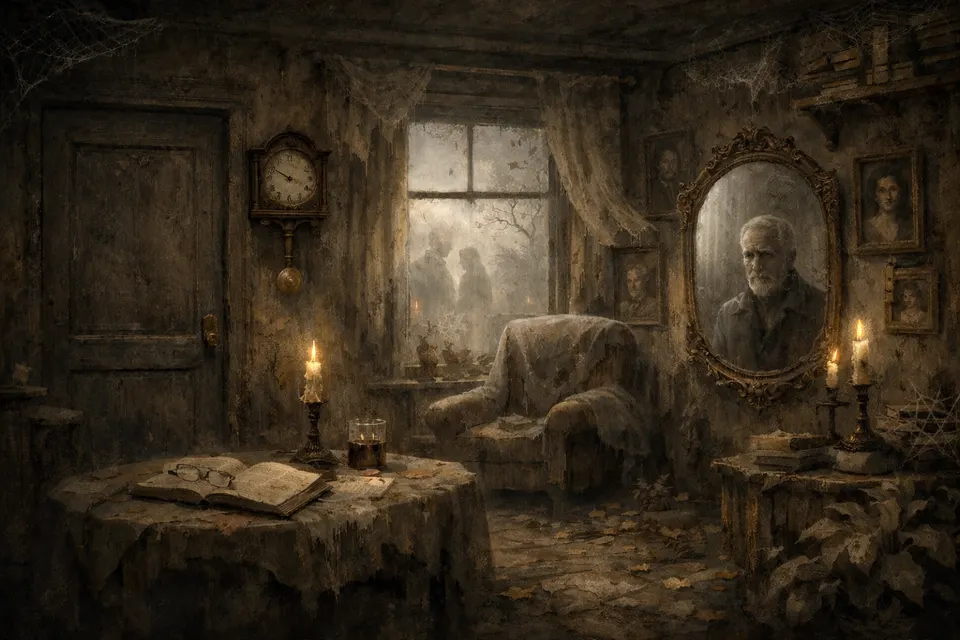
So it could be done after all? With the right prompt. Even the banal sign is gone… In other words, at least where images are concerned, the best results come when natural and artificial intelligence complement each other. Eternal friendship! But will it really be eternal?
These questions are pressing whichever way you look at them—from the side of poetry or from the side of software engineering.
6. An Invisible Archangel
The task:
I must play into the deaf evening,
until I hear coming toward me
the voice of a thousand distant trumpets.
Or of some invisible archangel.
(“Evening Trumpet,” Boris Hristov)
MidJourney, 2022:
ChatGPT, 2026:
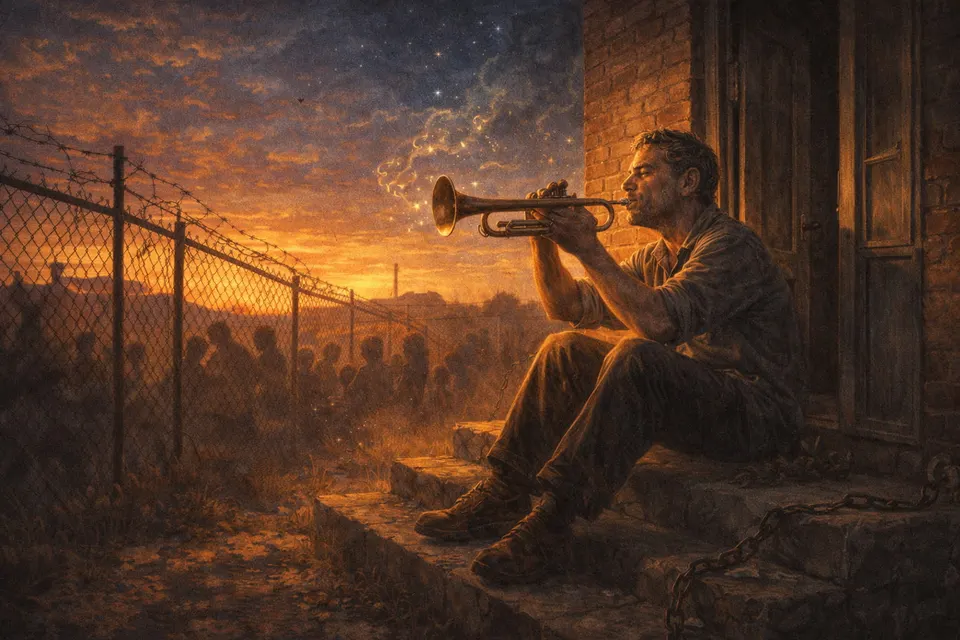
For me, this is the winner of the day.
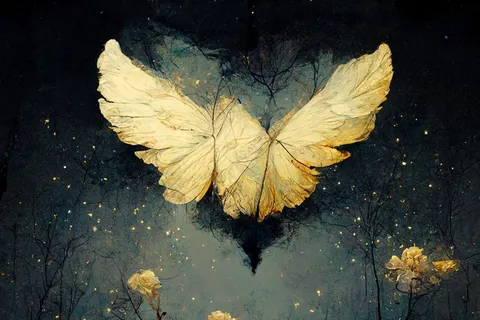
Even the unobtrusive broken chains and the barbed wire are right where they belong. The “invisible archangel” is more invisible than it was for MidJourney back in '22, but I think it's here too. And there is the trumpet itself, from which, it seems, he is the one emerging…
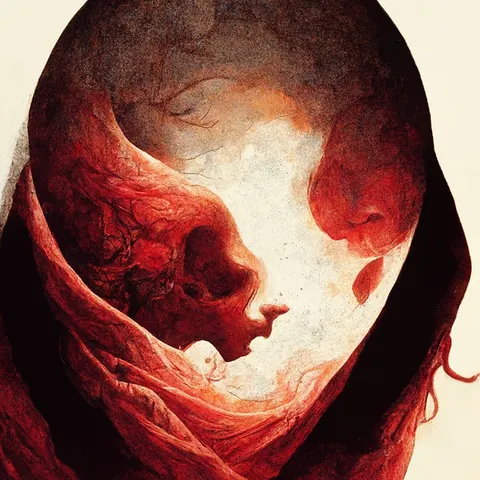
7. Night Gives Birth to… Strange Things
The task:
Night gives birth from a dead womb
to the slave's age-old malice:
its crimson wrath—
majestic.
(“September,” Geo Milev)
MidJourney, 2022:
ChatGPT, 2026:
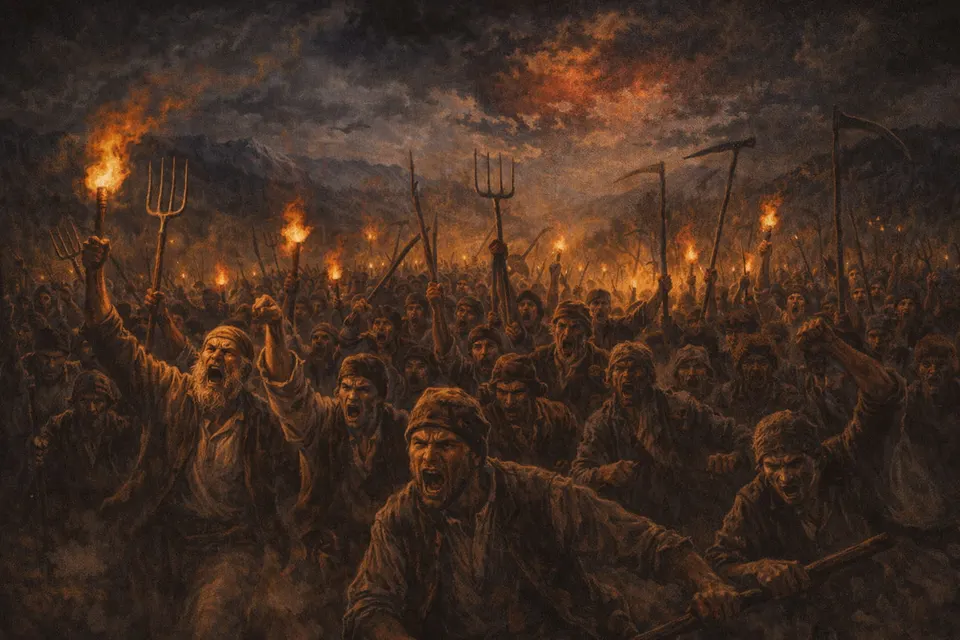
Two algorithms separated by several generations of technology… and such a different result? I doubt it would be possible from two people—two illustrators working from the same text, Geo Milev's furious 1924 poem about the crushed September Uprising.
Isn't AI giving us a huge chance to be different, diverse, unconventional, innovative? I definitely think so. However much more likely and tempting the exact opposite is—for it to carry us along with the current until we end up at the absinthe scene we started with…
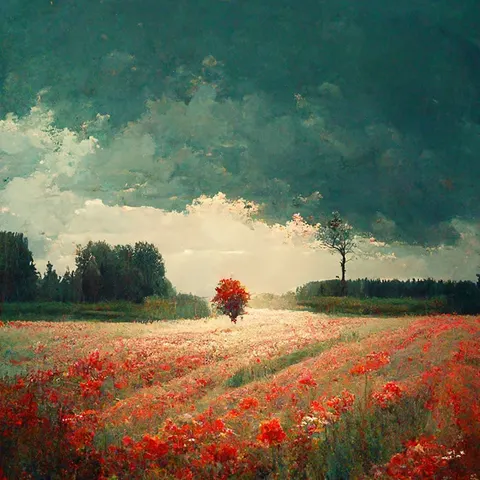
8. August
The task:
August. The afternoon of the year.
(All Our Bodies, Georgi Gospodinov)
MidJourney, 2022:
ChatGPT, 2026:
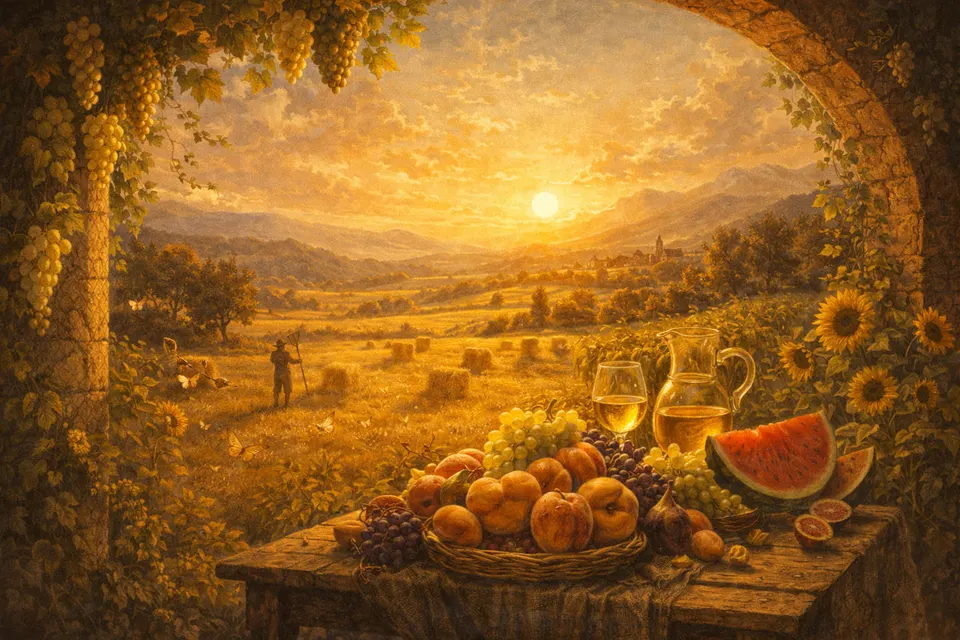
Laconic. Elegant. Soft. Summery. Oh—I caught myself thinking—how far away that blasted August is… Gospodinov, the International Booker winner, knows how to make you miss a season in a single line.
9. Muncho Time
The task:
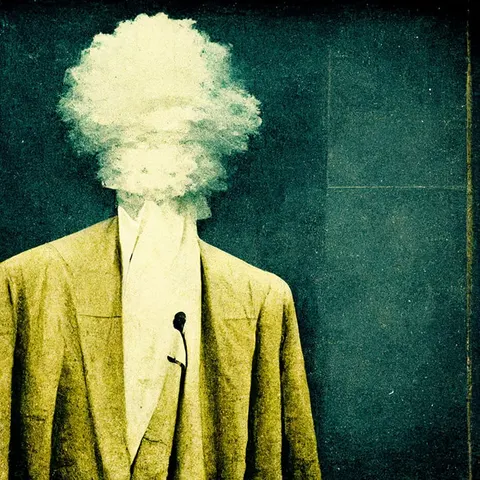
That madman was the only man who dared to protest.
(Under the Yoke, Ivan Vazov)
Illustration:
ChatGPT, 2026:
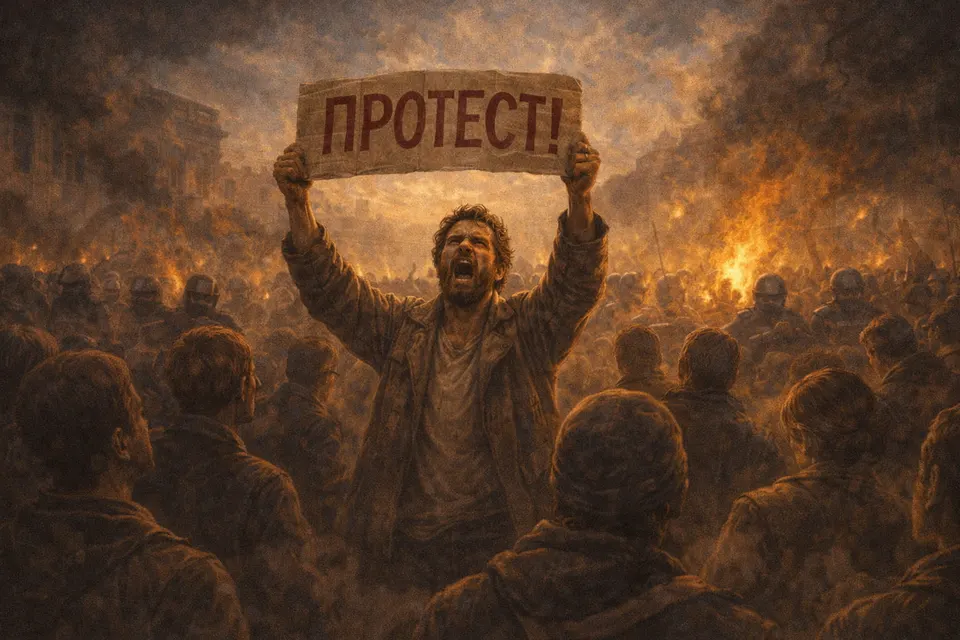
In the first experiment, too, one of the quotes was quite deliberately not from poetry: it comes from Vazov's classic novel and refers to Muncho, the village madman who alone dared to protest against the Ottomans. What I find especially interesting here is that the AI didn't follow the content, which could easily have led it to look up information online and replace the armored police in the picture with typical zaptiehs, the Ottoman gendarmes. It would also have been easier for it to draw that one lonely madman, without needing all those heading in the opposite direction.
And yet, perhaps we shouldn't underestimate the metaphorical streak of the electric author…
10. An Unexpected and Unwanted Guest…
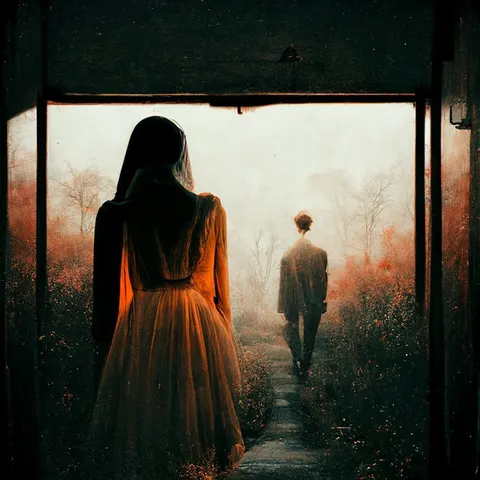
The task:
Sometimes I'll come into your dream
like an unexpected and unwanted guest.
Don't leave me outside on the road—
don't bolt the doors.
(“Farewell,” Nikola Vaptsarov)
MidJourney, 2022:
ChatGPT, 2026:
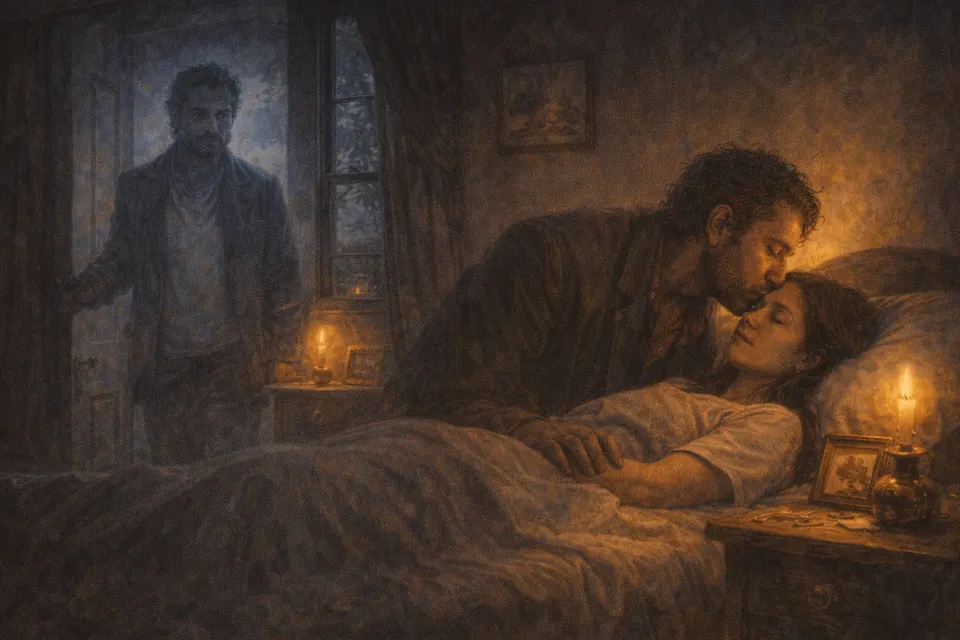
Here, too, the images speak for themselves—they don't need me. Vaptsarov wrote these lines to his wife shortly before his execution in 1942.
AI tempts us to fill our world with cheap words and pictures, and that rarely turns out to be meaningful.
10+ …on the Guitar
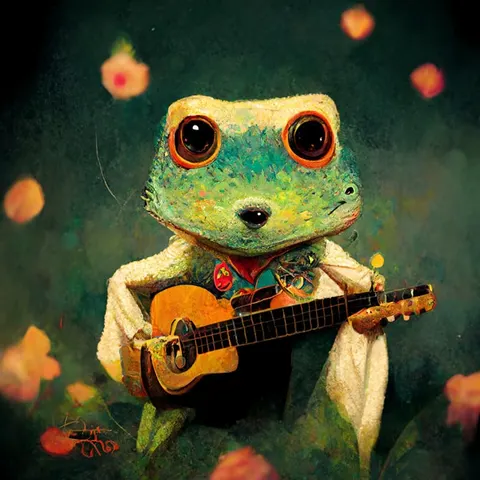
Poor, poor Vasko… just four years ago Vasko the Frog, a homespun wedding-band guitarist turned viral meme, reigned unrivaled in online folklore, and so gave me the chance to end on a different note from the melancholy and shake up the poetic pathos a little.
Who remembers you today, caught up as we are in so many fleeting trends that have rolled through our feeds since then?
The task:
On the guitar, Vasko the Frog,
he'll play, dear guests, just for you.
You'll hear melodies, horo dances, folk songs,
Gypsy kyuchek tunes, every one of them easy.
MidJourney, 2022:
ChatGPT, 2026:
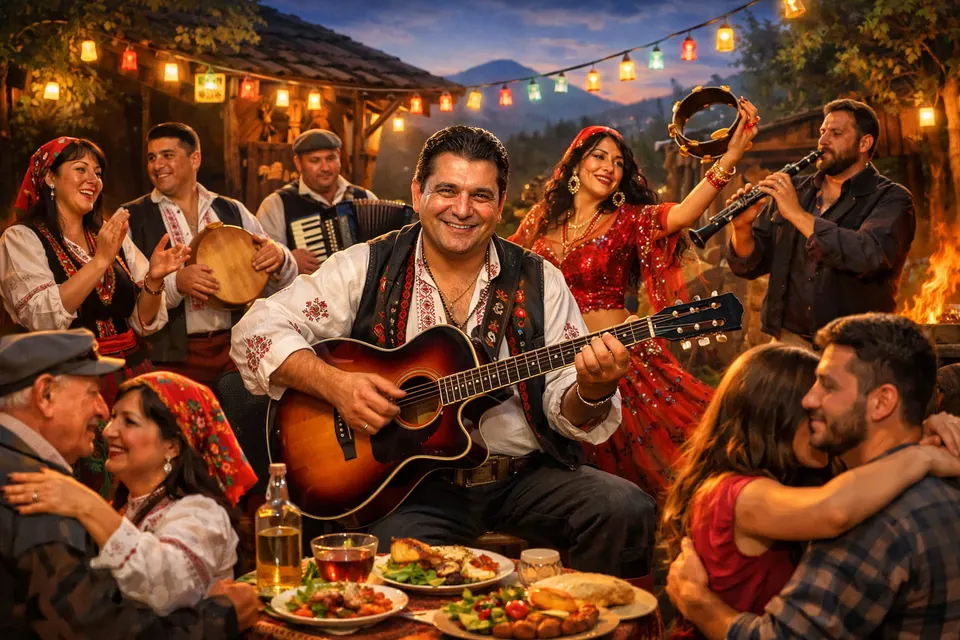
Even ChatGPT, it seems, has forgotten the croaking guitarist. But although it is visibly drawn toward the Carpathians, it got the mood right. And the details in the foreground, too.
The devil is in the details. As for where the angel is, the specialists who are closer to religion than I am can tell you.
I hope you found this interesting. And I'll be glad to hear your next ideas for important experiments with which to reflect and to test. Who we are, how far technology has brought us. And where we are headed…