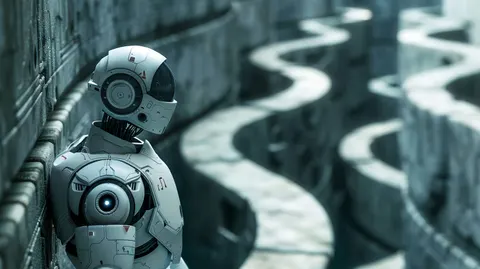
“I Imagine the Future as a Battle for the Invisible”
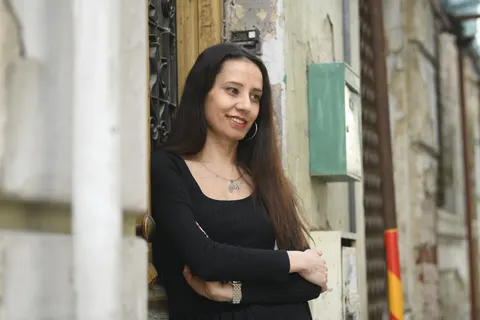
“For now, artificial intelligence strikes us as funny. It looks like a funhouse mirror, or a little dimwit we guide along, one who makes us feel knowledgeable and more human than ever. But this is changing literally by the day, and soon it will become a realistic and credible reflection of us. I think about that moment—perhaps then we will manage to see ourselves through its eyes, to grasp which parts of us are clear even to an artificial creature, what remains out of its reach, and what is most precious. To me, those are the places it cannot peer into. I imagine the future as a battle for the invisible; that will be the most important resource. What artificial intelligence cannot register is the most precious thing in us.” Pochti vsichko e nared (Almost Everything Is Fine) is the title of poet Violeta Kuneva’s debut collection, and it captures with such precision how the world feels to us today. But how did it come to this, that we can no longer tell the poet from the algorithm? What do we lose if that is so? Is the problem that, en masse, we have lost our yardstick for art, for metaphor, for layered, living texts that are human by definition, as poems are? Will poetry come to an end, or… is it precisely poetry that can save us from ourselves?
 02
Human or AI: Can We Still Tell Who Made It? (The Results)
Can we tell what was made by artificial intelligence from what was made by a human? Let me start with the short answer: we can’t. That is the main conclusion of the experiment held on the Digital Stories site, but there are so many other curious details that should make us stop and think… Did Hieronymus Bosch or Petko Slaveykov prove harder to recognize? Maria Zhekova’s dishes or Violeta Kuneva’s stanzas?
 03
Apollo ex machina: Enter Our Contest for AI-Generated Poetry!
Enter Apollo ex machina, the first Bulgarian contest for generated poetry, organized by Digital Stories and Scribens Publishing! There are no limits on theme or length. The only requirement is that you submit verse you have created with the help of AI. You may send up to 3 works, and the deadline is December 1, 2025. The winner will receive a prize of 300 leva (about $175), selected books await the well-deserved second and third places, and the best poems will be published by Scribens in a poetry collection! They will be chosen by a distinguished jury: the poets Petar Chuhov, Boyko Lambovski and Violeta Kuneva, Scribens managing director Georgi Gavrilov, and the creator of Digital Stories, Georgi Karamanev.
 04
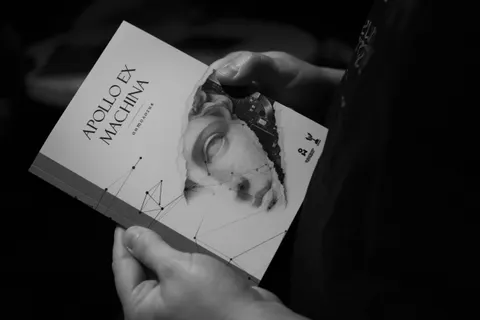
Poet + AI = Apollo ex Machina: Meet the Winners
The time has come to announce the winners of Apollo ex Machina, Bulgaria's first (and one of the world's first) competition for poetry created with the help of artificial intelligence. The jury's picks were revealed at a ceremony in the Sofia City Library, where the anthology of selected entries, published by Scribens, was also presented. In a moment you can read the best poems and judge for yourself how good they are.
 05
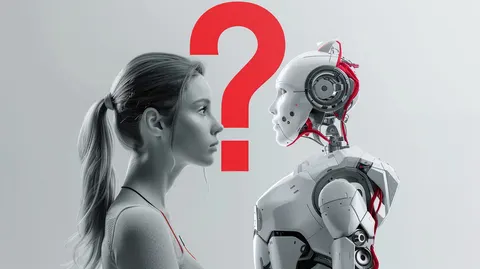
Human or AI: Can You Tell Who Made It?
Can we still tell what a human has created from what artificial intelligence has generated? Let's run an experiment together that may yield some very interesting answers. Thirty quick questions, about 5 minutes is enough. All you have to do is decide which of the images and texts were generated by AI and which were made by people. Join in and give it a try! Invite your friends too! The more people take part, the more interesting the results will be! Responses will be collected for two weeks, until March 8, 2024. Five participants will receive a gift.
 06
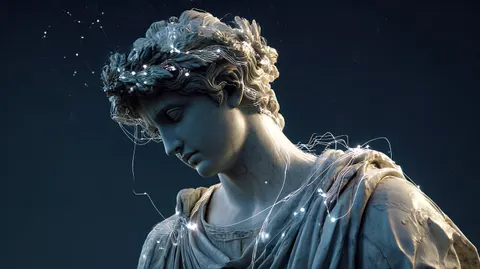
“No, Now Is Not the Time for Poetry!”
What is poetry written with the help of artificial intelligence? Does AI write it alone, does it depend on the task the human sets, or can the two find a way to create something different together?
 07
Where To Now, ChatGPT?
To be or not to be? Left or right? Life is a string of decisions, and on them hangs everything, from whether we reach the peaks we dream of to the eternal riddle of what to have for lunch. So we bring Hamlet and ChatGPT together to find the labyrinths, literal and figurative, that the electronic Virgil is ready to lead us through: five cases where artificial intelligence is already here to guide us, and five where we will have to wait (or never live to see it).