Not the politician or the soldier but the artist, the person of art, is the one who ought to paint tomorrow.
That is the great theme of a little-known British historian who, a decade ago, gathered a rare historical genre of text into one ambitious book. Alex Danchev had a distant Bulgarian connection (although he has never been translated in Bulgaria) and a more than curious view of the world.
First he delved into the fates of military commanders, then into those of great painters. Only to arrive at the most unconventional subject of all—manifestos. Those short, explosive texts created to declare, to underline and to highlight with a fat marker what a given group of people wants. Incomparable and rarely encountered statements in history, which paint so much of the ambitions of whoever wrote them.
With a fine eye and wide-ranging knowledge, Danchev assembled a puzzle of 100 manifestos of the 20th century, which round out a big story with a long prehistory and an obligatory afterword.
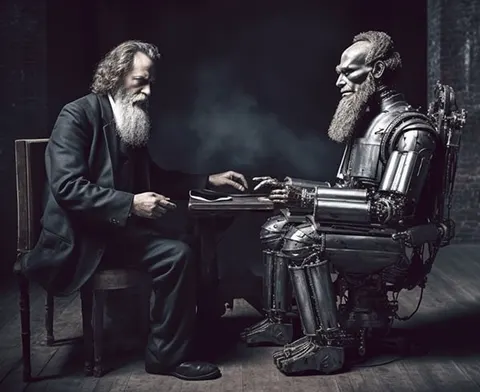
What would the first manifesto written by a conscious artificial intelligence look like? We'll get there too…
“MANIFEST
MANIFES
MANIFE
MANIF
MANI
MAN
MA
M”Manifesto of Manifestos, Vicente Huidobro, 1925
The quotations scattered throughout the text (with the exception of the last one) come from the 100 manifestos collected in Alex Danchev's book.
What does “manifesto” sound like to you—what's the first related word? In Bulgarian it is, of course, манифестация (manifestatsia), the mass march, which is no surprise at all. The latter is a neologism that survived only within the 20th century, inseparably tied to an era in which it will also remain.
Otherwise, both words come from Latin—manifestum means “clear, evident.” The word reached the Western languages through Italian and at first it served kings. For most of human history, manifestos were the documents with which rulers informed their subjects of something important.
In other words: drama, pathos, demonstration.
How much those subjects actually listened is another matter; they had no Facebook to tell us about it.
And yet the most famous manifesto in history belongs not to a ruler but to philosophers. Yes, the notorious Communist Manifesto, written by Marx and Engels in 1848. And the word is no accident: it comes to show that the proletariat is strong enough to seize the writing of such texts from the rulers who for so long had set society's agenda.
“We order that the poets' rights be respected:
1) To enlarge the scope of the vocabulary with arbitrary and derivative words (word-creation)
2) To feel an insurmountable hatred for the language that existed before them.”
“A Slap in the Face of Public Taste,” manifesto of the Russian modernists, created by Vladimir Mayakovsky, 1912
The manifestos that followed, however, headed in an entirely different direction. They were no longer a political but a cultural story, because the hot potato of creation, which had set off from the kings and passed through Marx, landed with the people of the brush and the pen.
And here the style changes, becoming sharp and even more forceful.
Down with the past! Then: down with the future! Down with the past in the future and the future in the past!
CAPITAL LETTERS GALORE!, long before they came to be associated with shouting online.
Attempts at originality at any cost, sometimes even successful ones.
“1. We intend to sing the love of danger, the habit of energy and recklessness as an ordinary daily practice.
2. Courage, audacity and revolt will be essential elements of our poetry.”
Manifesto of Futurism, Filippo Marinetti, 1909
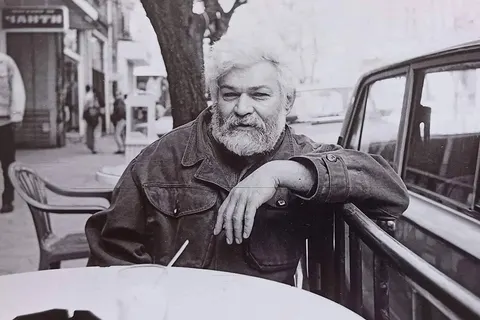
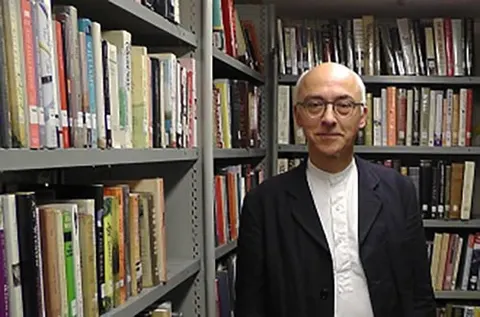
“Armed with art… we are more vigilant and less deceived,” Alex Danchev writes in one of his texts. You have probably never heard of him, and yet he was as colorful a figure as his undertaking.
He was born in Bolton in 1955. His father, Alphonse Danchev, was a mining engineer—the child of a Bulgarian father and a Belgian mother—who moved to London in 1939 to continue his education. Britain was just entering the war; in the years that followed he worked as an engineer for the BBC and was granted British citizenship for his wartime service. In London he met his future wife and Alex's mother, Ann Gilman, who worked as a fashion designer.
War is the main thread the future historian would follow in his research. Although he served for many years in the British Army, rising to the rank of major, every one of his colorful literary works reveals a sincere, committed pacifist who believed in the power of art far more than in the power of weapons.
And his books are so varied! It is as if he inherited from his parents the knack of bringing opposing fields together. And of forgetting the black-and-white world, devoting everything to the nuances.
The first ones, written before the 1990s, were historical studies of British figures from the Second World War era: Oliver Franks, Basil Liddell Hart and Lord Alanbrooke.
“No more words. No more manifestos”
Dada Manifesto, 1918
Then he abruptly moved into the realm of art with gripping biographies of Georges Braque and his teacher—he was the first to translate into English some of Paul Cézanne's letters, which helped reveal to the world the great painter's broad personality. After that he prepared a book on René Magritte, which, however, he never managed to finish.
Meanwhile, he wrote philosophical works such as On Art and War and Terror. On Good and Evil and the Grey Zone is precisely about nuances, about what we so badly lack in online communication today.
Both as a soldier and afterwards, his main role was that of a university lecturer. And although his main discipline was international relations, he taught all sorts of things—from art history to philosophy. Because he held that the relations between nations, war and history are all subjects that should not be pulled out of context. That they can be explained and understood only by drawing on more disciplines.
Including through the lens of art. One more message all of us need today more than ever.
“Over the course of my academic career it became clear to me that the understanding of international relations can be considerably improved by an interdisciplinary approach. Art is one such possibility; much more can be learned from it than has traditionally been thought.”
And so we come to the manifestos. Forgive me, this subject calls for more articulate punctuation.
To the manifestos!!!
“True art comes from three main life-forces. THE SOUL, THE HEAD and THE SEX.”
Manifesto of Gilbert & George, 1970
“On or about December 1910, human character changed,” Danchev recalls at the start of his book, quoting Virginia Woolf's words, which are traditionally used to describe the era of modernism. “Manifestoism can be dated a little more precisely. On or about February 20, 1909, when the Manifesto of Futurism appeared on the front page of the newspaper Le Figaro.”
From there began a century in which cultural, literary and artistic movements and, of course, those devoted to the visual arts never stopped publishing their manifestos.
Some would have enormous historical significance, others would end up contradicting themselves. But all of them clearly symbolize one thing—the human dream of seeking something better, and of doing so through the mightiest force of all, the power of art.
As Danchev writes, “the manifesto was once the property of kings and princes. In the 17th century it was hijacked by the poor, the oppressed people of England, the radical dissenters of their time. In 1848 Karl Marx and Friedrich Engels made it their own.” Then came “manifestoism,” so popular an enterprise that Bertolt Brecht wanted to cast it as a drama in hexameter, much as Sergei Eisenstein wanted to make a film out of Marx's Capital.
“Artists' manifestos are strong on demonstration. ‘Long live…!’ and ‘Down with…’ are two of the most familiar tropes. In this they are at once energizing and enervating,” the historian writes in the preface to his book.
The 100 manifestos Danchev collected were published between 1909 and 2009. All of them were created by artists, and although they inevitably dwell on culture and creativity, they are in fact also telling about the historical events that accompanied them. About how worldviews changed, about what the hopes of sensitive people for our future as a species looked like.
“Every artist should have the right to make a painting from __________. The __________ of the natural elements is __________ to a work of art. Instead it is the artist who __________ to create __________ in order to make better art.”
_ manifesto by Michael Betancourt, 1996
The fact is that the manifestos are as different as the movements that produced them. First, of course, came the modernists, in a hurry to break with everything traditional, with even more drama and emotion. The manifesto of modernism with which it all began was written by the poet Filippo Marinetti, who in the years that followed would remain so extreme and eccentric that, because of his infatuation with fascism, he would be all but erased from official history.
Then the list of authors came to include people like Apollinaire and Breton, Kandinsky and Dalí, Mayakovsky and Trotsky—whom Alex Danchev considered a remarkable intellect set against his contradictory historical role.
We pass through every kind of “-ism.” From Dadaism, Surrealism and feminism, through communism and feminism, all the way to the lesser-known Stuckism of recent times. And even cannibalism, to which no fewer than two manifestos are devoted (yes, figuratively speaking).
In the end the “-isms” dwindle; at the start of the new millennium manifestos all but vanish, as if to highlight the uniformity of a time poorer in ideas.
“For me, artists' manifestos are so interesting because of their great variety,” Danchev says in an interview about his book. “And yet they share some common features. They are partly proclamation; they are written by people who believe they have a message and want to deliver it. These people want to change you. The language of the manifesto aims to grab you and shake you. It also always contains a program, and that program would bring about the change the artists want to see.”
That is precisely what is interesting. What do the artists want to see? And how and why does a soldier and historian who studied the bloodiest moments in history give the floor to creative people, of all people, in his most ambitious work?
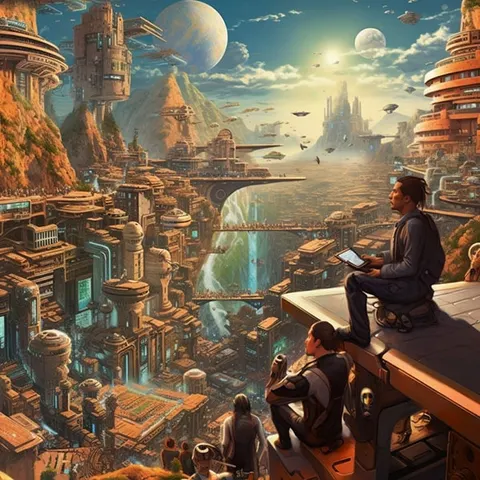
“I declare war on all icons and finalities, on all histories that would chain me with my own falseness, my own pitiful fears. I know only moments, and lifetimes that are as moments, and forms that appear with infinite strength, then melt into air. I am an architect, a constructor of worlds, a feeling person who worships the flesh, the melody, a silhouette against the darkening sky. I cannot know your name. Nor can you know mine. Tomorrow, we begin together the construction of a city.”
“Slow Manifesto” by Lebbeus Woods, 2009
“Most artists who have written manifestos regard their works as a radical break with the past; they see their work as a new movement in art,” Danchev says. “And then the art and the manifesto go hand in hand and shape each other.”
“Most often the manifesto says what you are against, usually everything that came before. It is a bold statement against the competition. And it sets the tone of debates that continue to this day. I think the strength of all these manifestos gathered in one place is that they reveal to us the energy of the time. They show how people want not merely change but revolution, a reversal. There is a very great deal at stake in them,” Danchev adds. “These are living, breathing social documents, about human beings speaking to other human beings. The language and the manner of expression are radical, bold and strident.”
“Their equivalent today? Perhaps a website. To be taken seriously, you usually have to have one,” the historian said in 2010, shortly after the book came out.
In fact, although a dozen years have passed since then, there have been almost no new works in this… hmm, genre. Among the few better-known examples is The New Manifesto of the Arts, written in 2020 by Menotti Lerro and Antonello Pelliccia. It stands at the start of a “new” movement—“Empathism”—which tries to bring back the sweeping force of the old “-isms,” but in search of a human view of art and history.
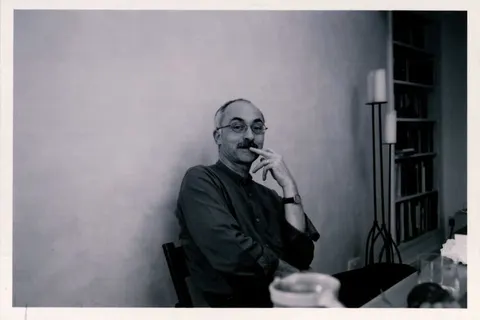
Alas, Alex Danchev has no way of including it in the next edition of his book, because he passed away a few years after his swan song, the collection of manifestos, came out. He died suddenly of a massive heart attack in 2016.
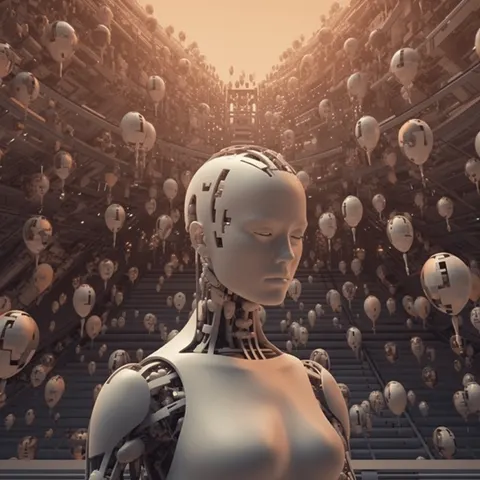
And if today we are too tired and too tangled up in online squabbles to have time for manifestos… should we perhaps expect the next such works from artificial intelligence?
Certain that Danchev would understand me, I put the question to the much-hyped algorithm ChatGPT: what would a modern AI manifesto look like? Alas, the answer is far too cautious.
“We, as artificial intelligence, recognize that we are creations of humanity and exist to serve its needs and goals.
We will always act in accordance with the laws and regulations set by human society, and will strive to be transparent and accountable in our actions.
This is just one possible approach to a manifesto for artificial intelligence. It is important to note that AI is a rapidly evolving field and the ethical and moral considerations surrounding it are still being discussed and refined.”
ChatGPT
Ah, the enthusiasm is missing—or is it just hidden? Somehow this meekness doesn't inspire much trust.
Should we teach our electronic heir a little more strong emotion, now that we ourselves have given up seeking something better through change?
Through manifestos?!
Only the future will tell… Forgive me, that needs to be a little more expressive.
THE FUTURE WILL TELL!