The whole Bulgarian 20th century is there. Tsar Boris III appears, and so do Georgi Dimitrov, the first communist leader of postwar Bulgaria, and Todor Zhivkov, who ruled the country for 35 years, along with the familiar politicians of the first years after 1989. The Bulgarian authorities are welcomed in Macedonia in the early 1940s, and soon after our soldiers storm the German lines. The People's Court, the communist tribunal that tried the old elite after 1944, is caught on film, and so are the first rallies of the 1990s. The whole century is there… and it has boldly marched into the next one.
This Bulgarian 20th century is alive, still sketching extraordinary stories that move us and are bound up with all our lives, however much the barricades, yesterday's and tomorrow's, set us against one another.
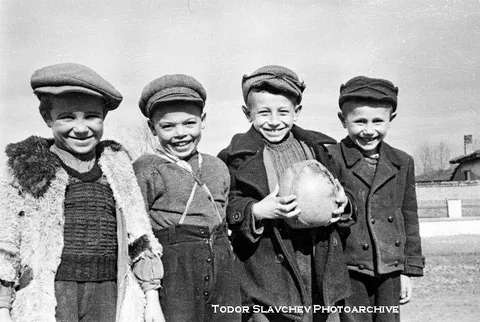
Born in 1900, Todor Slavchev passed away exactly 30 years ago, at 92, closing a deeply meaningful life and an astonishing body of professional work. He documented six decades through his impartial lens, and today the pictures come back to life on social media and in the digital world, thanks to Yana Uzunova, his granddaughter, whom I was lucky enough to talk to. A beautiful digital story about meaningful people. Those who create, and the others, just as important, who know how to preserve, enrich and bring new meaning. How to carry the spirit and the stories onward, up the steep digital slopes.
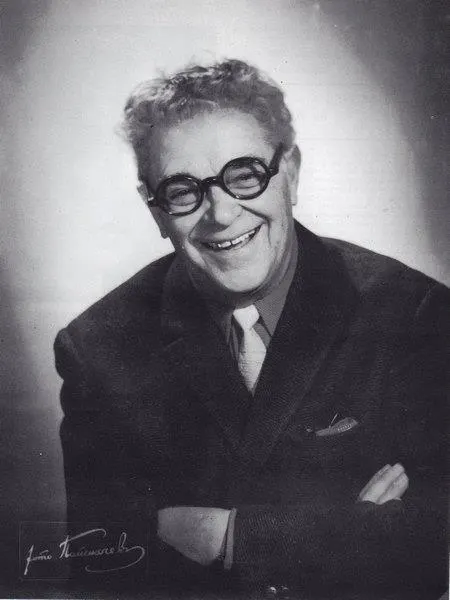
“He Spoke Little and Worked a Lot”
“I truly got to know my grandfather after he was gone. Through the photo archive he told me his life. Not only where he had been, which subjects moved him, what his way of shooting was, but also the most precious thing, at least to me—his view of the world opened up to me,” says Yana.
“I was struck by his sense of history, of a duty fulfilled as a documentarian. I hadn't thought about that attitude of his before; he spoke little and worked a lot. He was a delicate man in everything, restrained, modest, devoted to his work. He never told me he was leaving me such a treasure.”
The digital part of the story begins shortly after the photographer's death. He had been close to Yana all her life, had looked after her for many years, and one day… he was gone. That was when, for the first time, she opened the door of his studio on her own, in the cozy little attic in the very center of Sofia, and for her… the world changed.
In the years that followed she took on the daunting task of preserving her grandfather's story and showing it to future generations.
The Day Lasts More Than a Hundred Years
Born in Plovdiv, Todor Slavchev was orphaned at just 12. In his early years the family moved often, living in Haskovo, in Balchik… even in Constantinople. In Pazardzhik, as a 14-year-old, Todor began helping out in the studio of the well-known photographer Kosta Tachev, who encouraged him. In the 1920s, as he entered the profession, he learned the craft from Dimitar Katsev.
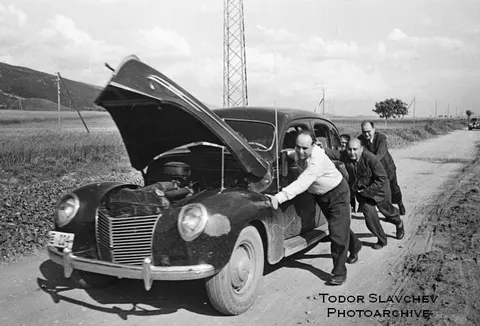
Todor toiled in tobacco factories, worked as a clerk, was even an actor in a traveling theater. Until he found himself behind the lens. And truly, it is no exaggeration to say that he captured all those landmark moments of the 20th century that still shape both our hatreds and our dramas in the present century.
During the September Uprising, the failed communist revolt of 1923, he was driven out of his hometown and ended up in Sofia, where he stayed for the rest of his life. By 1929 Todor already knew that his strength lay in capturing the world through the lens, and he founded the magazine Trudovi Vesti (Labor News), to which he devoted the next 17 years. Something like a blog, where he photographed only subjects that interested him. Meanwhile he also published his pictures in all the other most widely read publications of the day.
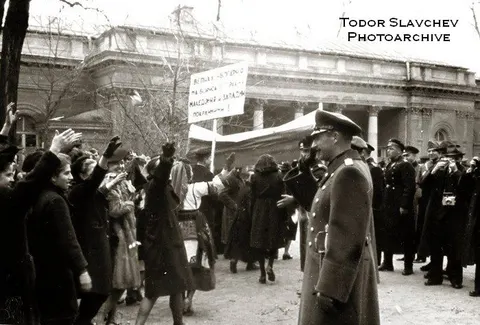
In 1941 something momentous for Bulgarians happened: Macedonia became part of the Kingdom of Bulgaria, and Todor Slavchev found himself there. He went on his own, with no newspaper paying him for it, and captured unforgettable memories.
The NeverEnding Story
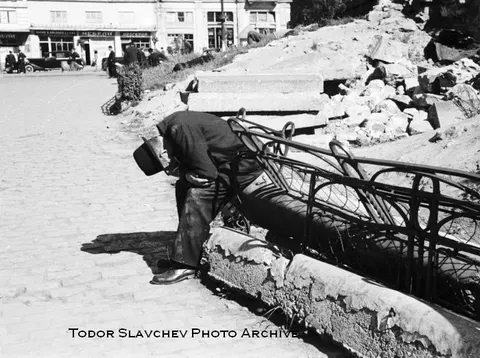
In the bombing raids of 1944 the Trudovi Vesti office was destroyed, and a huge share of his photographs burned.
Then came September 9, the day of the 1944 coup that brought the communists to power. “He always managed to ‘rise again’ after very hard reversals,” says Yana. “When his office burned down with almost his entire archive, fate brought him back to start over. And September 9 put him at risk of being branded a Germanophile, an enemy, and of losing his life. What saved him was the social profile of his magazine, his acquaintance with many left-wing journalists who valued him. And, not least, his optimistic nature.”
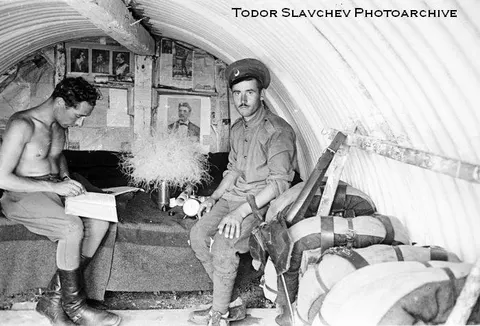
Bulgaria rejoined the war, but on the other side, and he was there again. The photographer signed up as a volunteer and traveled as a correspondent, capturing heroic and deadly battles through his eyes.
Times changed and changed again, and Todor Slavchev kept on shooting and shooting. His portraits of Georgi Dimitrov and Todor Zhivkov survive. Then came November 10, 1989, the day Zhivkov was ousted.
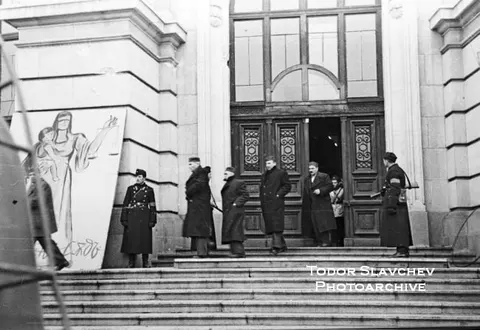
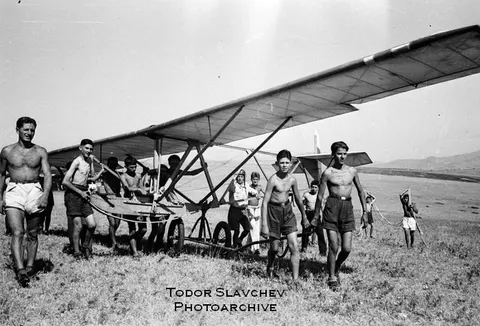
Though he documented enormous political ruptures, he didn't like to talk about politics. He simply captured life and its faces. What interested him was history and stories. What we leave behind. He captured moments for as long as he had the strength.
Just before he died, he told his granddaughter that while lying in the hospital he had photographed the blood bag from which the drops that gave him hope were dripping. He was determined, once he left the hospital, to thank the young man who had given him life, and to photograph him.
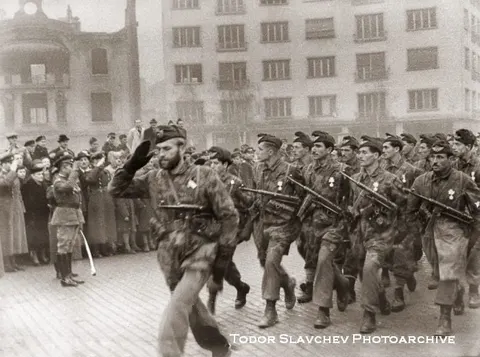
Delicate in Everything
That is the last photograph in the archive. “Afterward we didn't look for the young man, because we didn't want to write the rest of the story for him,” says Yana. But, thanks precisely to the granddaughter, this is not the end of the bigger story.
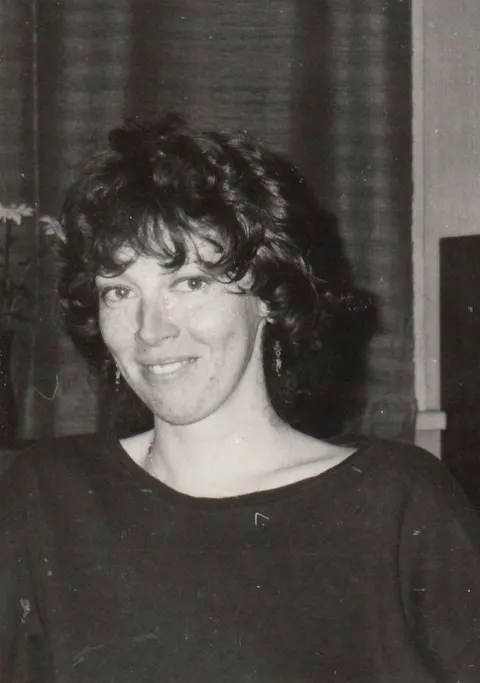
Stepping into the attic room her grandfather had used as a darkroom for 30 years, she saw on the table an undeveloped negative with… a portrait of her. “In all the excitement that photo stirred in me, I realized my grandfather had never printed it on paper,” she said later, at the opening of the first big exhibition of pictures from the archive.
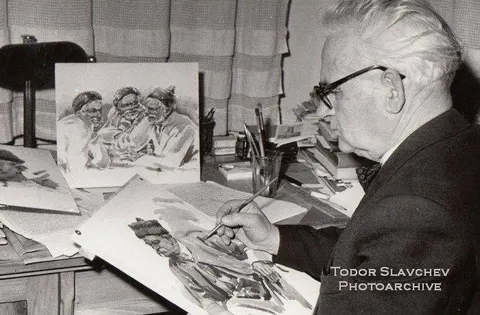
“It was as if he knew I would discover this frame and be moved, that it would awaken so many emotions in me. And as I looked at this childhood photo of mine on the monitor, I realized that what was true of it was true of the whole photo archive. His secret intention that I should see myself 50 years later and live through all of this applied to the other pictures as well. His photography is reportage, and it is bound to its own day. And yet I realized that in every picture I also sense something else—as if in his mind he was building a bridge to the future and imagining how his photographs, one by one, would be sent into the future, where they would be understood differently and fully experienced. And perhaps charged with more knowledge and emotion, too.”
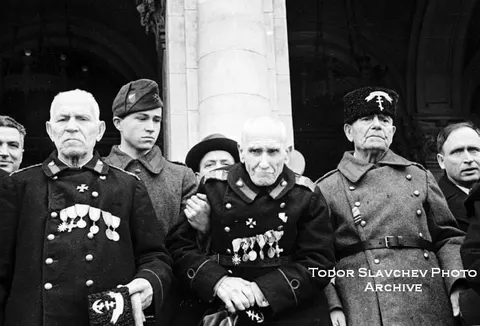
Sic Transit…
Yana found herself facing a huge archive, organized the way only people of those generations knew how. “My grandfather jealously guarded every roll of film, tried out ways of archiving, sorted everything by subject, with the clear aim that all those folders of film strips and paper prints would outlive him,” says Yana.
Over the next 30 years she poured enormous effort into “carrying” the story over into the digital world. In 2011 she started with a laptop and a flatbed document scanner, built a website and began scanning. A year later she also had a negative scanner, which she still uses today; thousands of frames and as many stories have passed through it. Today she reckons that about three-quarters of the archive has been digitized, an archive that includes…
80,000 Scarlet Roses
Yes, today we can take more shots in a single day if we set our minds to it, or if we let a child go “click-click” with our phone. But in the sense of this encounter, it is a gigantic number. Todor Slavchev's archive holds 80,000 priceless images, and today it is an endless source of stories.
“The work is fascinating; it is a gripping, never-ending adventure with discovery after discovery. There is a thrill in the first encounter with every new frame. Digging for more information is exciting too. It has happened that after ten years of wondering who was in a photo or where it was taken, I found the answer in some old newspaper,” says Yana. “But what gives me the most strength to keep going is the people, the admirers of this photography. It is a huge energy of empathy, interest and love, and it gives meaning to all the effort.”
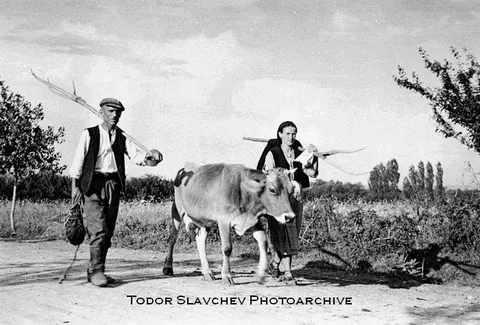
Her favorite photographs, surprisingly, turn out not to be of the momentous events but of the Bulgarian village. “I was a city girl, and for years I put off opening the few folders from my grandfather's seven years of work at the newspaper Kooperativno Selo (Cooperative Village). I thought the subject was utterly remote and alien, and then I fell in love with exactly those photos. They are beautiful, they turn rural labor and love of the land into poetry, along with the modesty of the ordinary person devoted to work,” says Todor Slavchev's granddaughter.
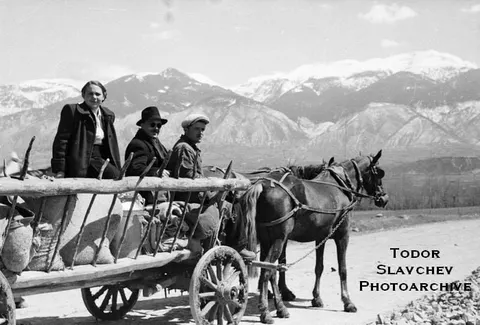
Fathers and Sons
There have been many twists and turns. In 2006 part of the archive was stolen. But, as in 1944, manuscripts don't burn: fortunately, more of the frames had already been scanned. In any case, about 85 percent of the photographs are preserved as negatives.
There are almost no landscapes in the archive. “My grandfather's focus was always on the individual person. Even at dull meetings or rallies with speakers, he looked for human states of mind,” says Yana.
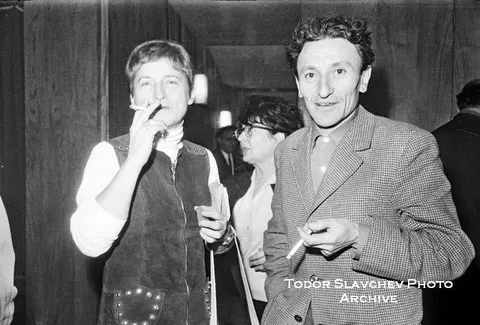
And the greats are there too. Skip the next paragraph if you're in a hurry.
Elin Pelin, Chudomir, Dimitar Talev, Elisaveta Bagryana, Blaga Dimitrova, Emiliyan Stanev, Vladimir Dimitrov—the Master, Boris Angelushev, Stefan Sarchadzhiev, Sirak Skitnik, Gen. Vladimir Stoychev. Just some of the unforgettable Bulgarians caught in the archive.
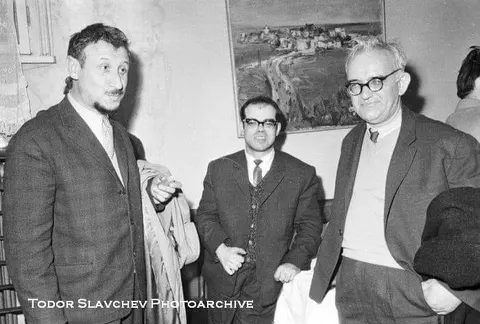
Simple and Epic
A few years ago selected photographs were shown in two exhibitions that drew the attention of the photographic world. Yana's dream is that one day they will be gathered in a small gallery or museum.
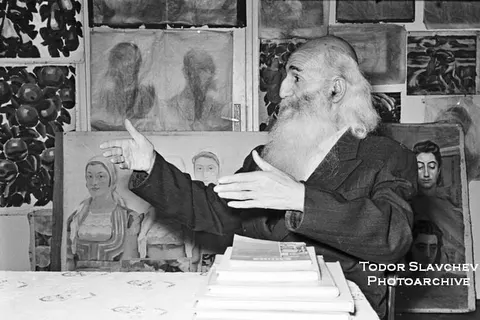
One of her great adventures is to keep searching for the stories of the people caught on film. “Among the friends of the “Todor Slavchev” Facebook profile there are quite a few people who recognized themselves in the photo archive. A few days ago we learned the name of ‘the girl from Zmeitsa’—a photo from 1959 we love dearly. Her granddaughter had recognized her grandmother!” she says. “Another photo, of a young mother from the village of Dren hugging her two small children, also brought a lot of joy. The children in the picture, now 65, recognized themselves and are among the profile's friends. My grandfather loved exactly such moments, when his photos managed to surprise, touch and delight.”
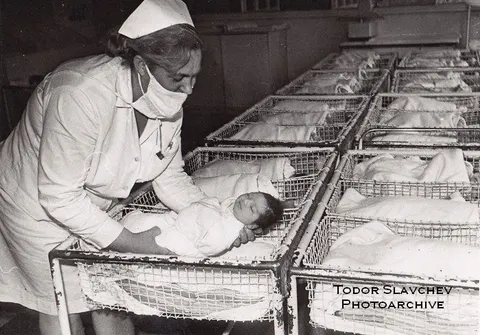
In the same way she managed to find a “girl” whose birth her grandfather had documented in 1970.
Pay It Forward
Lately Yana has symbolically replaced the word “archive” in her undertaking with “legacy,” and a new website gathering the photographs is due to appear soon. Today they “live” mostly on Facebook, but soon they will find their own place online, where they can carry on, now on a bilingual site.
What pains her greatly is that today everyone uses the photos as they see fit, without even crediting their author. She keeps fighting for this to be clearly stated wherever a picture from her grandfather's archive is used.
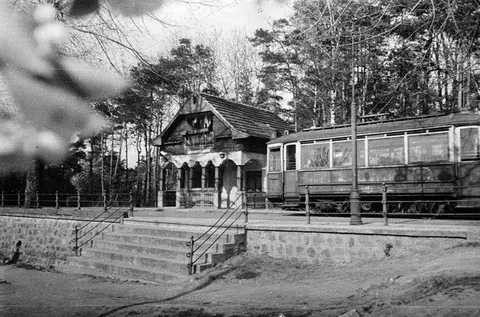
Todor Slavchev's archive, which still moves people, is definitely a time capsule. “But there is something romantic in it, something utopian. His photographs document a world softer, more harmonious and more beautiful than it really was. That is how his eyes saw it,” says Yana.
And while we wonder how to impress the next admirer, friend or follower on social media, perhaps it is worth pausing to think. Photographs are here to show us what is happening. But also how and why. And above all: who we ourselves are.