Sometimes life online throws up cases we could never dream up, however loose we let our imagination run. Picture it, almost as in a Kafka novel: suddenly ads from Chinese stores start popping up for you… offering you something you know perfectly well you created yourself.
What would you do in a situation like that?
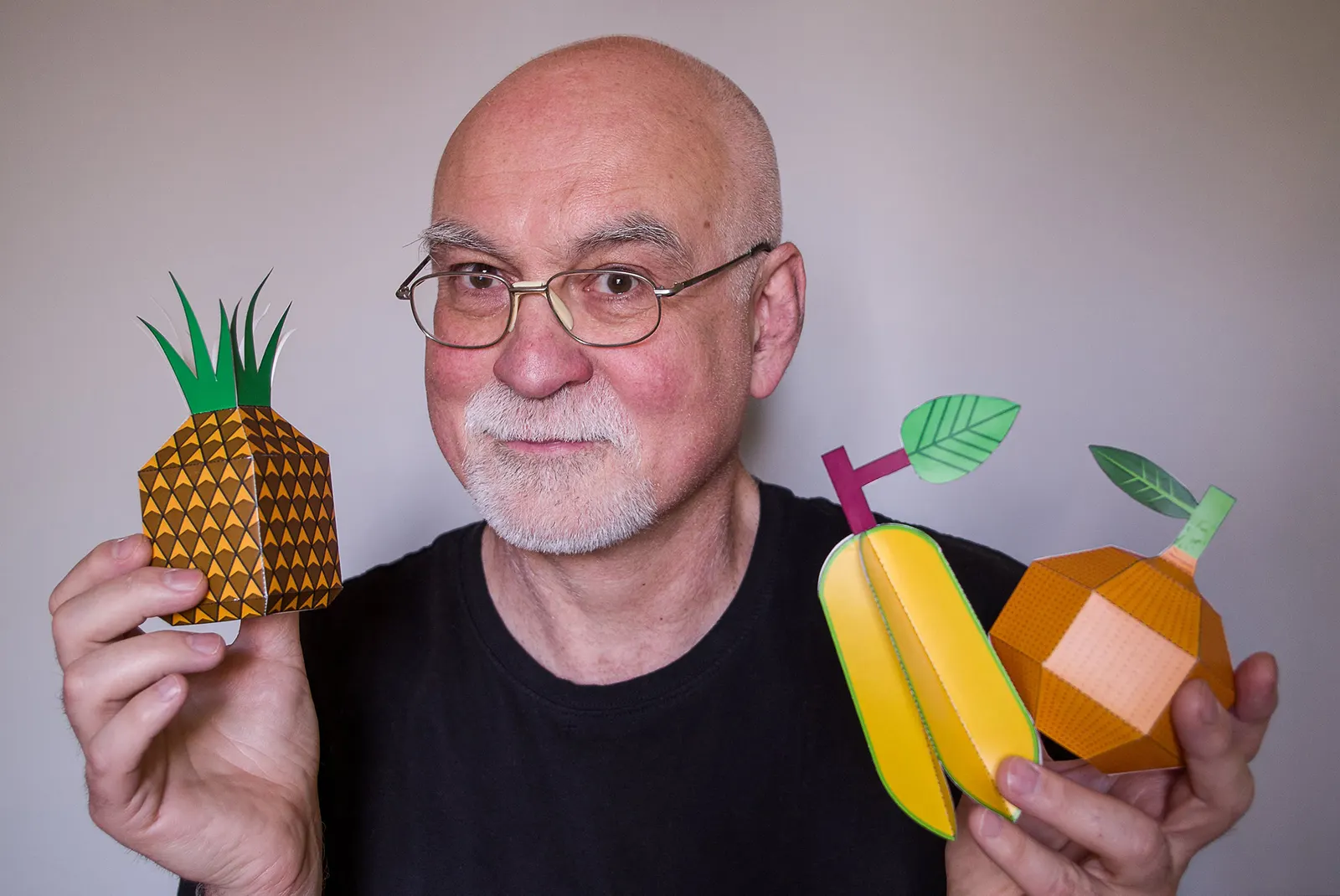
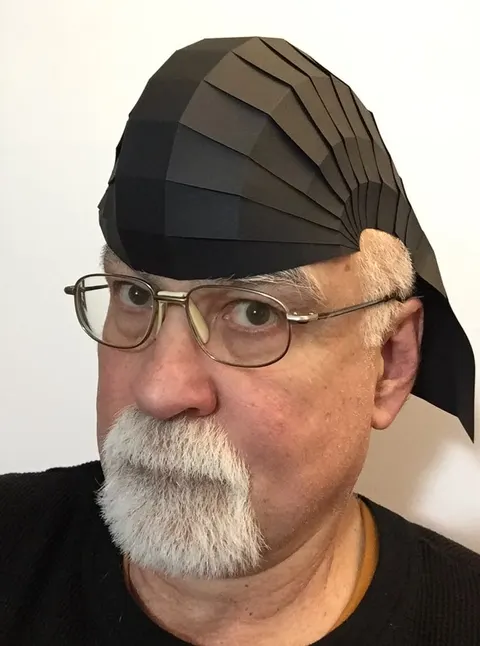
Our hero today is not called Gregor Samsa but Atanas Mihalchev. A photographer, artist and teacher, he has lived in Canada for three decades, developing his art. Besides his paintings—in a colorful palette of styles—he sells small, cleverly designed origami kits for children online, kits that stimulate imagination and dexterity. Kits which suddenly… turn out not to be his.
Have we really found good enough mechanisms to protect copyright online? Will today's hero manage to get back what was stolen from him? Will justice prevail?
Just for a Moment
“I am free and that is why I am lost,” Kafka writes in a work that is not The Metamorphosis. Life online is something like that. The network was born to give us the freedom to communicate, to express ourselves, to hold in our cupped hands the whole sea of information on our planet, so crowded with history and people. And at the same time it made us feel lost, while freedom gradually turned into more of a declaration than a right.
Take copyright, for example—a subject that, alas, in our part of the world has never quite found a good enough definition, one under which writers, translators, photographers, artists, musicians and all other creators are not only adequately paid for their work but can also rest assured that anyone who uses their works without permission will get what they deserve.
Yes, in some parts of the world things are often different, but… the world is an ever-smaller village, and the rules are ever harder to find. Not to mention the context of the coming artificial intelligence and the unexpected ethical dilemmas lurking around the corner, waiting to hit us with full force.
This Wild, Wild West
Atanas Mihalchev graduated in animation directing in Prague. When the changes of 1989 came to Bulgaria, he decided to try his luck abroad—he lived in France for several years, then he, his wife and their two daughters found their future in Canada. They chose the French-speaking part, since they managed better in that language, and since 1993 they have found in Montreal a place where they feel at home. Even when temperatures drop to -15°C, as the artist shows me while we talk.
At first Atanas worked as a graphic design teacher, then he began revealing the secrets of photography to students at the University of Montreal. Since 2015 he has been, as he puts it, “a happy pensioner who deals only with art and doesn't think about business and money.”
Ah, that certainly sounds like an idyll—I wish it on everyone reading this!
But since we started with Kafka, it's clear the idyll will soon change. Which way, I wonder?
Paper Doesn't Burn
I'm repeating myself, but as a happy pensioner (yes, in Bulgaria that sounds strange) Atanas discovered a new art form that drew him in. He often comes to Bulgaria, and the organizers of the annual paper festival in Sofia showed him how many creative possibilities lie in that direction.
“Today paper is seen as a material that works for everything—monumental art, sculptures, all kinds of installations. I started putting more energy there and discovered what an interesting direction paper toys are,” says the artist.
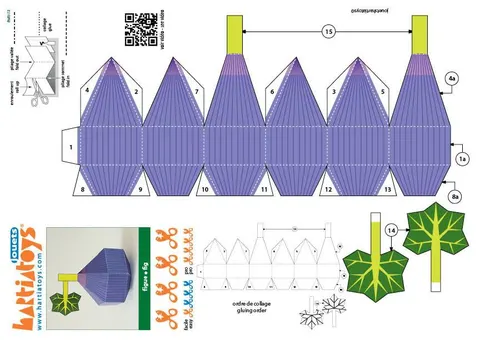
And while we all know what origami is—figures created by folding—in this case it's more precisely kirigami: “kiri” means cutting, and that's exactly how the fruits are made.
In fact, Atanas's interest in the subject was born 40 years ago. During his studies he was given the assignment of designing a paper toy representing a profession, and he created cut-and-glue firefighters. Later they grew into a series, ready to be printed and to appear in Bulgarian bookstores along with tropical and polar animals, but that never happened because of a shortage of paper.
The story continues in Canada. “I showed the paper figures and my colleagues all started persuading me that I should sell them. That's how my company, Jouets Hartiatoys, was born in 2003.
The firefighters put on new Canadian uniforms, and a new collection joined the sets—Farm. Now we offer 20 collections in total.”
Cut and Paste
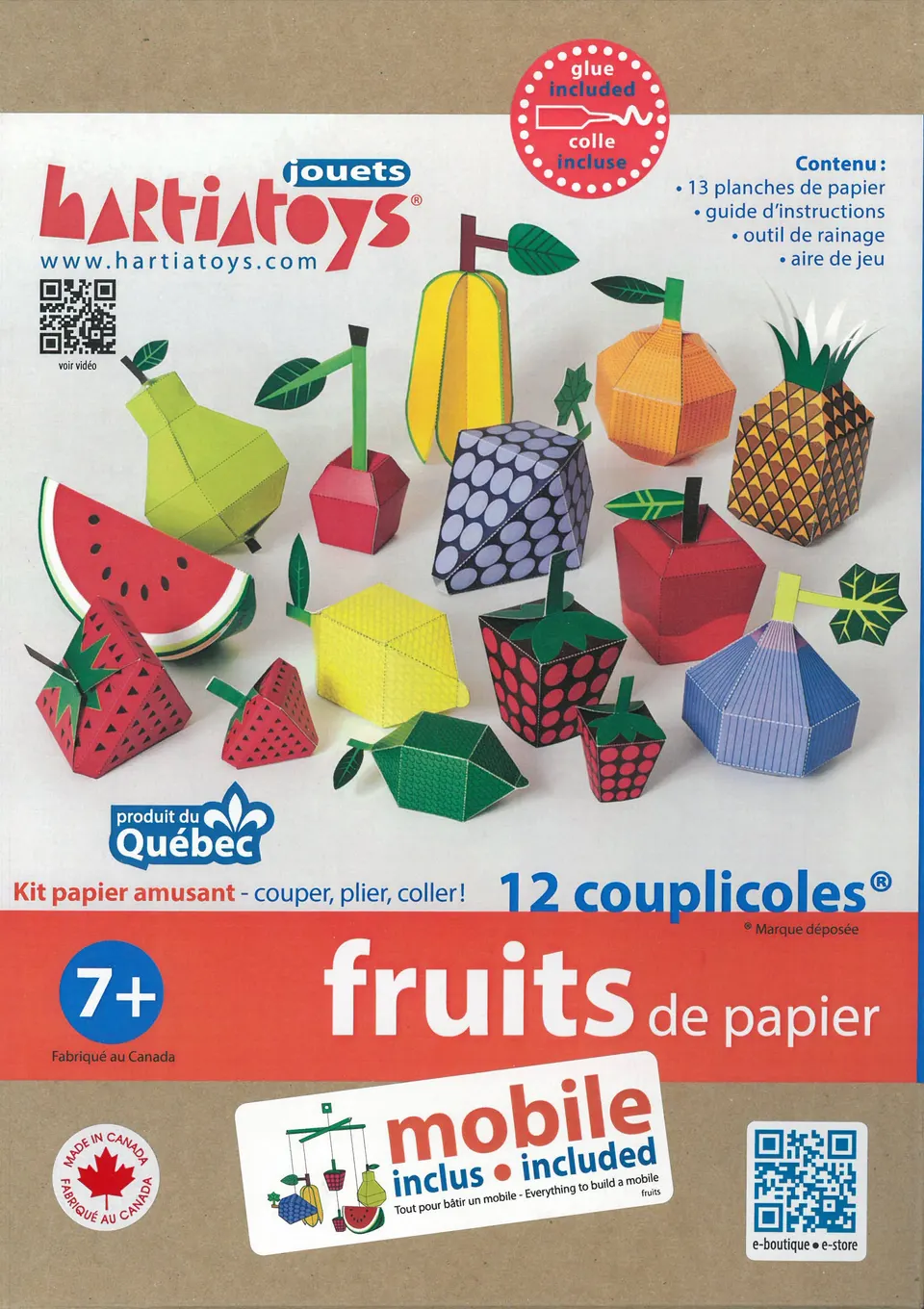
That's how he came up with the idea of designing kirigami kits for children. It would be good for kids to get up from their computers now and then, and they would be bringing to life something that interests them… So a series of colorful kits on various themes was born. One of the most successful is about fruits and vegetables—children assemble paper watermelons, carrots, pears…
Atanas showed his designs at the New York Toy Fair, one of the biggest events of its kind in the world. And he met serious interest! He signed a contract with a company called Bornelund, named after its Swedish founder, which owns 64 toy stores. It took on the task of distributing the Bulgarian artist's kirigami.
“In the last few years parents have begun to realize that computer games have a neuroticizing effect, and they've started looking again for half-forgotten handicrafts,” says Atanas. “To assemble the paper figures you need skill in cutting, three-dimensional thinking and patience in gluing. Our products aren't toys in the literal sense but a family activity—parents can help with the cutting, and the younger children with the gluing. That's really the philosophy of our product: to bring today's hurried parents and their children together for a few unforgettable moments.”
Borrowing
A happy pensioner, as has now been made clear twice, he got down to work and quickly produced a pilot run of 1,000 kits. Over the following years the origami sets appeared in stores; many of them found their future “assemblers,” while others had to wait…
“There's a mild ban at home—they tell me to stop developing this thing because I've filled the garage with boxes,” the artist smiles. The kits appeared on more websites; their creator himself offered them at Christmas fairs and events, meeting children who would delight in them.
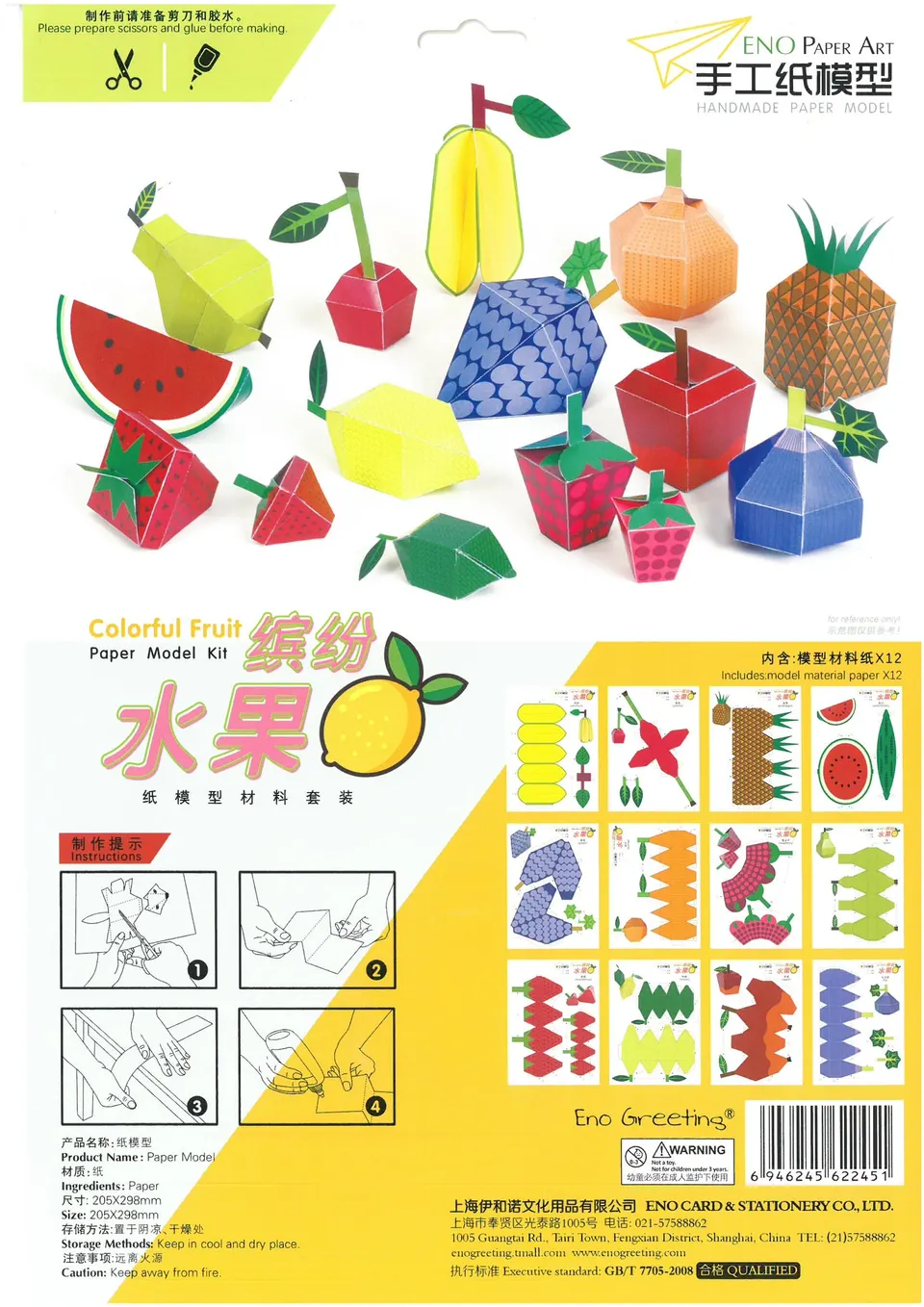
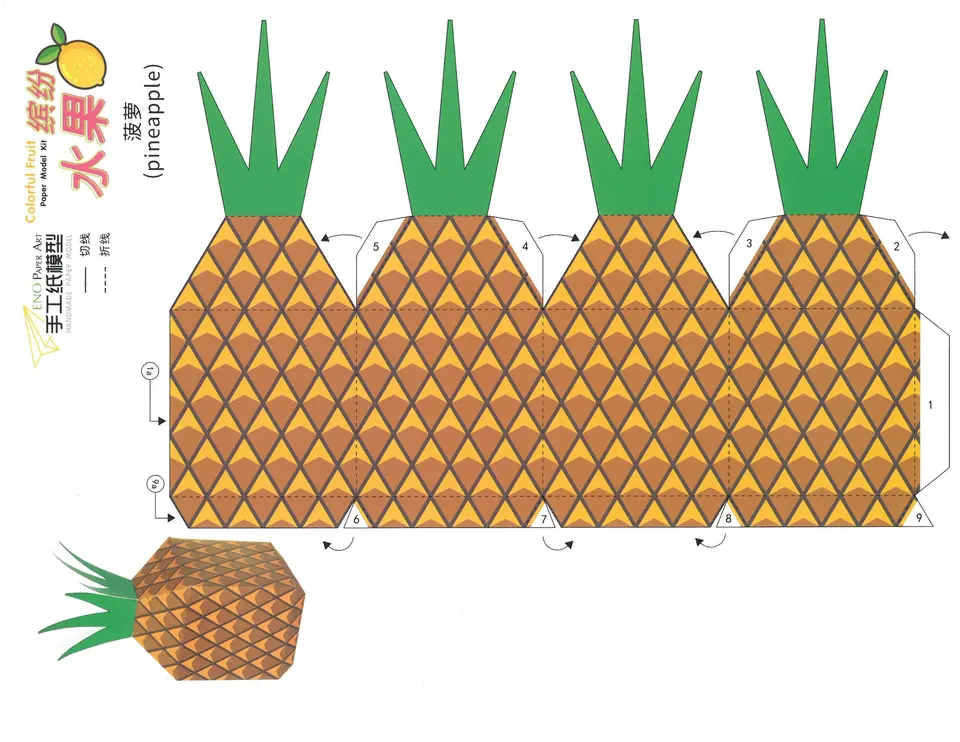
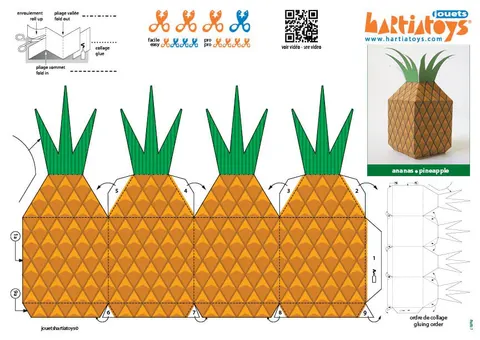
The origami sets found their fans and sold well, until… suddenly, while working at his computer and searching for the online stores that carried his kits, Atanas saw on AliExpress exactly 9 of his collections, including the “paper fruits,” and at an astonishingly low price. But… while they were his, they had been ever so slightly altered, reworked in a rather strange way.
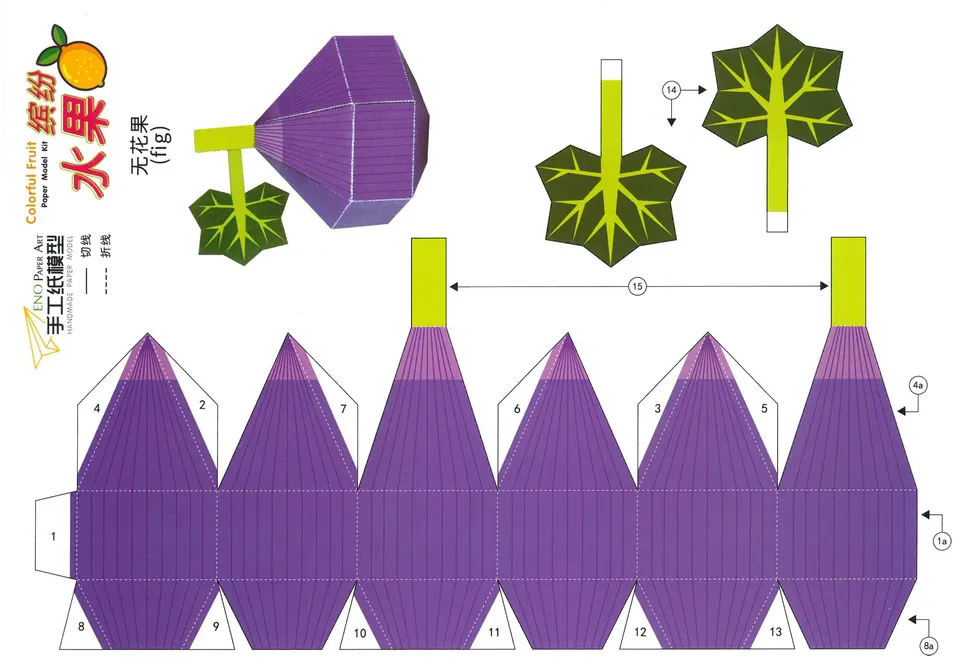
“I look… Good Lord, what is this? These people don't hold back at all.” The origami sets were practically the same, but someone had gone to the trouble of making them look a little different.
“They rephotographed my picture of the assembled products, redrew it, cut it out, and still the whole composition is the same, one to one. The shapes themselves were scanned and redrawn, you can see it very clearly. Here and there there are different lines and arrows—someone put in some effort—but that doesn't change the fact that they stole the core idea.”
Herr Samsa, are you still with us?
For a Lousy Dollar
Good ideas are in the air. But aren't we supposed to respect the author in modern times (at least until ChatGPT came along)? Incidentally, AliExpress lists no author for the origami kits.
So what do you do in a situation like this? “I don't know if it's worth taking any action, because it's an endless runaround. When I looked into it, it turned out that to start a lawsuit you need $20,000, and there's no guarantee I'd win,” Atanas continues.
According to John Grisham, that wasn't quite the idea behind the American justice system, was it? As far as I remember, he too is suing OpenAI for using his works without permission to train its next artificial intelligence models…
The composition of the Chinese version of the origami is absolutely identical. Atanas ordered a kit and was impressed: the quality of both the paper and the printing is good. Except it costs… one dollar. Whatever he does, there's no way he can produce a kit that costs less than 10. And one more thing—he used a promotion and shipping was free, something impossible for a Western store with such a small amount.
Another interesting subject to ponder against the backdrop of trade wars and today's global economic disputes between the world powers.
A Borrowed Life
“Even if you win, they may pay nothing, because they'll say: we have no money. After all, we have to realize that in China some people live on $2 a day,” says Atanas.
Gradually he got used to the idea that his works had been stolen. The online store lets you report that something is wrong with a product on offer, and he did so. So far there has been no reply.
And one more thing. He tells himself that if they copy him, he must be good at what he does. “Gradually I came to feel very flattered, I don't hide it!”
Though in Canada he has grown used to the rules of authorship being respected. “Yes, every little photo carries the author's name, the author gets paid… The other thing simply isn't in their heads! I've asked them what would happen if a police officer stopped me and I slipped $20 into his pocket. ‘Come on, no such thing!’ What do you mean, no such thing? ‘He'd arrest you on the spot and lock you up for bribing a public official.’”
Great Minds
Today looks unthinkable by yesterday's standards. And the future is an ephemeral fiction—I say this as someone who has been gathering Digital Stories for four years now, trying to peek into the near future while knowing full well that it's impossible.
And at the same time it's essential. Civilizations compete, artificial intelligence achieves things that were unbelievable until recently. And we remain humans, for whom the only way to find solutions to big problems is to talk them through.
What is a good idea worth?
Where will authorship and the role of the creator go in times when algorithms create not only indistinguishably but also “better” than most of us?
How will such different civilizations' views of the future meet?
Will we reach the moment when even the West has to sacrifice part of its personal freedom for the sake of the common good?
Personally, I look for the answer in stories. Sometimes the small stories are the most powerful. And you—how would you react if someone or something “created” what you had already created? Is the role of the human as author gone? I'd love to hear what you think.