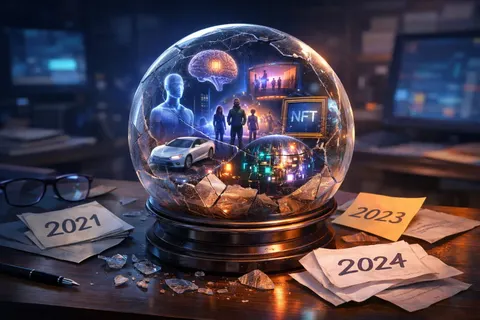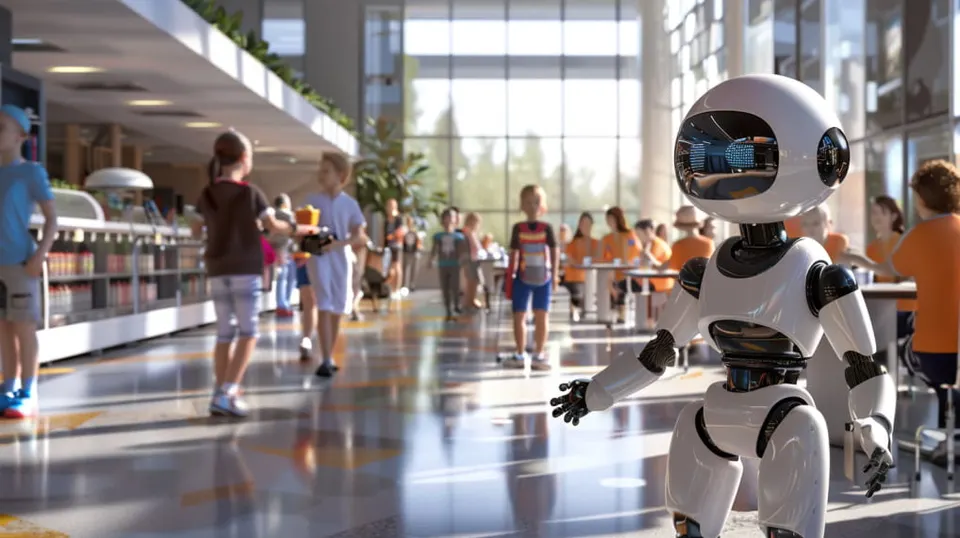
Can we predict the future? Not a chance, since every small step can change the direction. But is it worth trying? I think it is essential: however far off our ideas may turn out to be, the very act of looking, the attempt to make sense of it, is the first step toward preparing for it. Toward avoiding some of the dangers.
Will technology make our lives easier, or will it trigger a huge crisis by shaking up the job market? Will we enjoy the fruits of advanced artificial intelligence that has helped us dramatically extend human life, explore space and develop the next technologies? Or will we wake up in a world of total control, as predicted by the dystopias?
What will life look like in 2050? It is time to peek into the future and discuss the fascinating forecasts of an author who has the courage to make predictions in such a dynamic period of history. And he has already done it once, with enviable success.
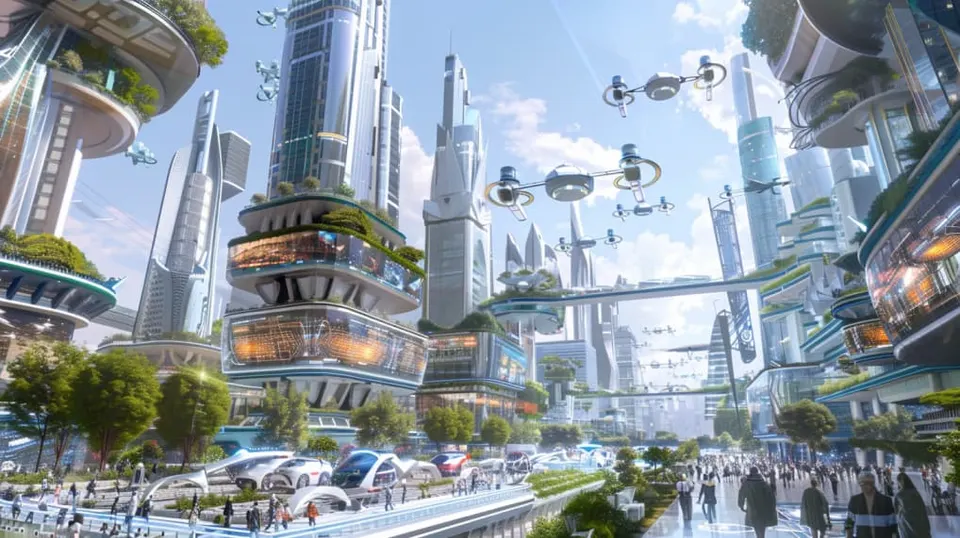
The Earth as a crystal ball
Hamish McRae is a journalist, and, as the publisher Philip Graham put it, “journalism is the first rough draft of history.” The Briton has more than 40 years of experience, and his main beat is economics. But also forecasting. In 1990 he published the book The World in 2020. He foresaw the problems facing American liberal democracy, embodied in the election of Trump as president, and predicted that within that period Britain would leave the EU. In his own peculiar way, he even foretold the COVID pandemic. True, as he himself admits, he did not do quite as well when it came to technology.
Technology, however, takes up far more room in his new book, The World in 2050, published in Bulgarian by Knigomania in a translation by Ilia Iliev.
McRae digs deep into international politics and economics. He prophesies that in 2050 the EU will look more like a museum than a laboratory for developing modern ideas. He predicts that not only China but also India will overtake the United States as the world's most productive economies. And that Western people will, to a greater or lesser extent, have to learn from Eastern ones to put the interests of the community above those of the individual.
He makes many fascinating forecasts which, as he writes himself, are more of a template meant to get us thinking. And they are worth reading, even if only to disagree with them. Here are 10 of the ideas in his book that relate specifically to technology and to the way it is changing, and will change, our lives…
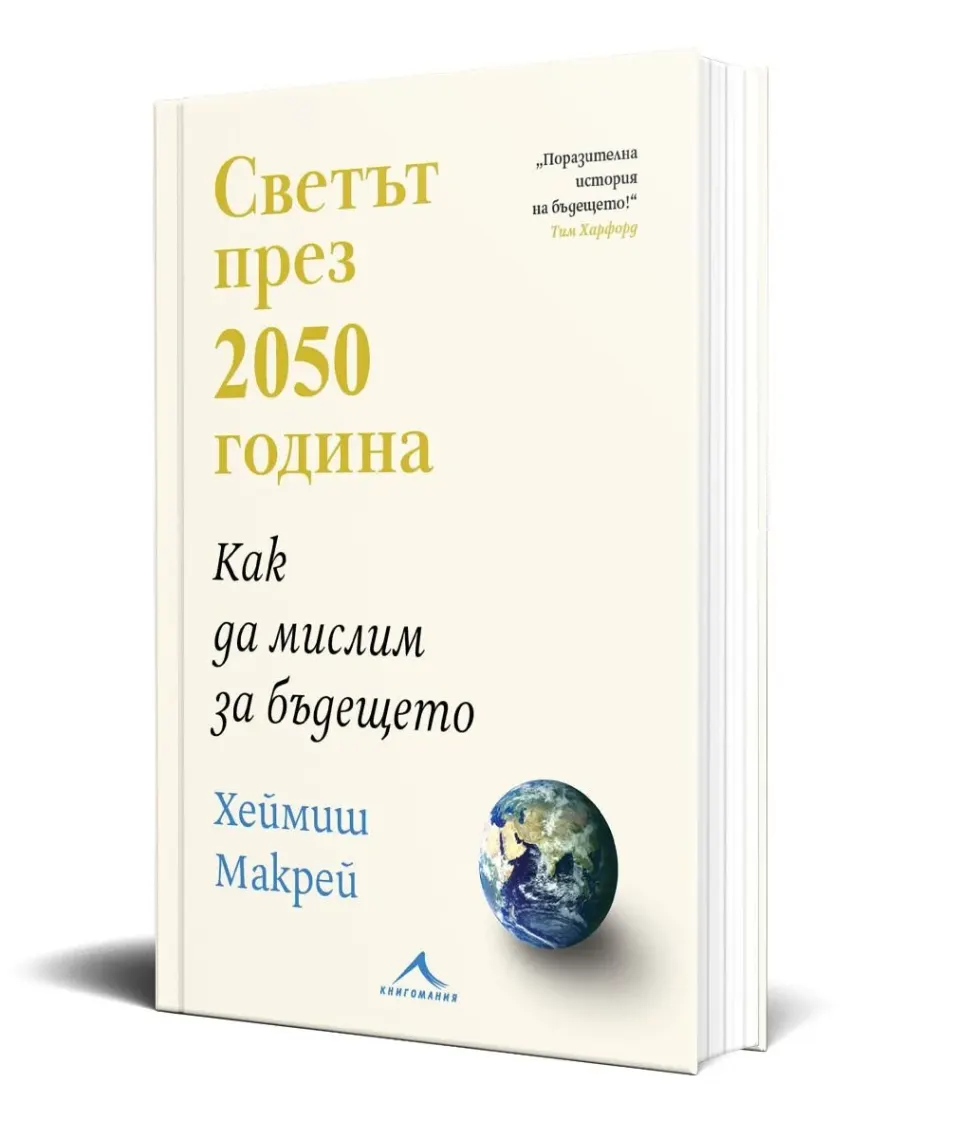
1. Being able to is one thing…
“Forecasting new technologies is much harder. We simply cannot know which innovations, currently considered bordering on the absurd, will one day really change the world, and which will hit a dead end as they are developed further. The fact that something can be done does not necessarily mean it would be of any practical use. Or its cost may turn out to be so high that it cannot be applied on a mass scale. There are, however, many areas of social life and the economy that are simply crying out for new technical solutions.”
“The difficulty in forecasting revolutionary changes also lies in the fact that once they have happened, they seem so obvious—how did no one think of this before?—but before they appear, we cannot even imagine that such a thing could exist.”
“Wanting is one thing, being able to is another, and actually doing it is a third and a fourth.” Yes, Nikolay Haytov, the Bulgarian writer famous for his earthy mountain tales, did not have technological progress in mind, and these days he would hardly lure readers with a story called Mazhki vremena (Manly Times).
In any case: robots indistinguishable from humans; self-driving cars; cold fusion; advanced quantum computers; artificial intelligence that can rival the human kind… The list could go on forever. There are so many technological fields in which we talk of a huge breakthrough, some of which have been expected for more than a century, and still… As Hamish McRae quite rightly writes, it is very hard to guess which technology will manage to break through and which will run into an unexpected obstacle. And, not least, whether a given solution will turn out to be economically attractive, ready for practical use and for meeting society's prejudices.
What do you think the next big technological breakthrough will be?
2. Never sit idle
“We do not choose professions that will soon be practiced only by robots. Most of us realize that during our working lives we will have to retrain several times. That is why creating some picture of the future would be useful for people, so they can clarify their ideas and expectations.”
“Just as in 1990 it was impossible to foresee the boom of new professions that occurred in the period up to 2020, so today it is impossible to know in what fields people would want to work in 2050. But we can guess some of the social and educational attitudes that will be in demand by then. They will include some ‘hard,’ or basic, skills such as literacy and numeracy, but also ‘soft’ ones—such as flexibility and empathy toward other human beings. How young people will be taught, encouraged and mentored to develop such qualities is another matter.”
Literacy… really?
“Which professions will artificial intelligence take from us?” Well… the ones we give it. Or the ones it will take for itself? For the past two years we have not stopped asking this question; I ask it of my guests too, and the answers range across a remarkably wide palette. Here you can read more about the trends, and still, it is worth thinking it over before the moment comes when the job market suddenly stops “selling” a given profession.
Will we be freed up with so much time that we will have to start learning to be bored well? Will we arrive at such extreme and hotly contested solutions as universal basic income?
Basic skills such as flexibility and getting along normally with other people will surely remain priceless. And perhaps most important of all is attitude—we live in ever more dynamic times, and that is unlikely to change any time soon.

3. Who could have told you?
“The future development of other kinds of services does not look so clear. A peculiarity of communication services is that nobody knows what service people would want to buy until someone invents it. We did not know we needed Facebook until it was offered to us. The same goes for the whole field of social media. Most of the information services that will dominate the market in the years up to 2050 have not even been created yet.”
“Revolutionary innovations come about either as a result of sudden scientific discoveries, or when several existing technologies are combined and refined to create a new product or service that spreads rapidly around the world.”
Indeed, who could have guessed that we would invent something like social networks, capable of hijacking such a share of our time and attention? Ready to fundamentally change the way we communicate as a species, but also the way we take in information and learn about everything happening around the world…
Lately there has been more and more talk of the successful startups of the future, which could generate attention and profits while being built by a single person helped by artificial intelligence.
The good ideas are “on the table,” the prejudices will not go away, and exciting new ideas are on the horizon. Which direction will they take?
4. Alive, well and educated
“In the future, the most valuable skills will be those of offering services that the whole world wants to buy. It is already clear what some of these services will be. Education and health care stand out in the top two places, because even now the need for both is boundless.”
“In 2050, health care will be of far higher quality and probably cheaper. Not only will we know better what is wrong in a patient's body, but their health will also be monitored in real time. Diagnosis will be automated, and medical intervention will be more precisely targeted for the optimal response to whatever is wrong.”
We often talk about the expected breakthroughs in the world of medicine (for example here and here) on Digital Stories. Many assumed the pandemic would attract huge investment in this field and that big news would quickly follow. Perhaps we still do not notice it, but there are definitely remarkable solutions simmering in the pot of medical innovation that will change all our lives.
And yet… out of all fields, should it really be health care and education that enjoy the most spectacular rise? Isn't Mr. McRae being a little too optimistic? If he turns out to be right, we may well get the chance, in good health and eternal youth, to discuss the topic again in 2050…
5. Learning is still learning
“Over the next thirty years, the boundary between the education industry and the businesses inspired by it will fade more and more. Universities will increasingly resemble business institutions, and businesses will resemble institutions of higher learning. This is already happening, but the change that has begun will gather pace. The only realistic way forward in this field is to use information technology to achieve greater efficiency.”
What now?! Is it worth getting a university education that will be outdated by the time we graduate, because of the next big technological steps? Should we seek narrow specialization, or turn toward what we used to call general knowledge?
One thing is certain: in the age of advanced artificial intelligence, education faces serious challenges. But also huge opportunities, as long as it finds well-grounded and meaningful applications for it.
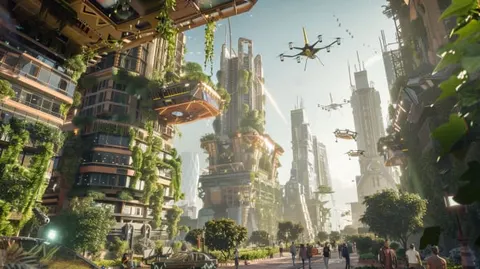
6. AI. So what?
“Artificial intelligence is a superb tool for analyzing data—much better than humans at this task. But it is useless in many other areas of life. It cannot empty the dishwasher, for example. So artificial intelligence is very useful as long as the sea of data keeps flooding us. It can beat us at chess, but it cannot help us find a cure for cancer. We are still at a very early stage of grasping the capabilities that artificial intelligence possesses.”
We come to the big question. A year and a half has passed since ChatGPT appeared on the horizon to show the general public how far we have come in imitating the human brain. And then… has artificial intelligence really stepped in everywhere? Has it fundamentally changed every area of our lives, or is it simply a matter of more “technological time”?
Are we on the road to the much-talked-about artificial general intelligence? Or are we close to the limit of our current approach to artificial intelligence, and of the data we can use to train it?
You will find meaningful and up-to-date answers on the subject here.
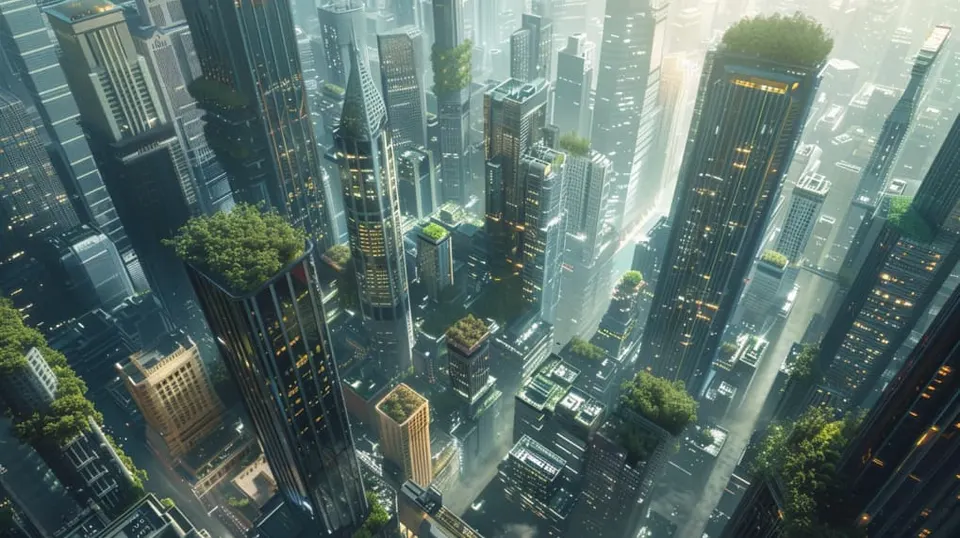
7. Nothing stays hidden
“The use of artificial intelligence raises a number of problems. One of them is the invasion of privacy. To what extent would we want not only our personal data to be analyzed, but also all the data we create in our everyday lives? Another problem is abuse, because it has become clear that artificial intelligence can be abusive just like the natural kind. A third problem: how do we use the more straightforward abilities of artificial intelligence to analyze data and reason logically alongside the more flexible abilities of human intelligence, such as empathy, creativity and imagination?”
“There is no precedent for such a state of affairs. The world has never been a place where almost everything is known about everyone, and where the system raises a flag if any gaps are found about someone. So we face a period of two or three decades in which individual societies will grope around until they find where to draw the line between privacy and publicly available personal information, and how to protect the former while expanding the latter.”
Here are some of the big questions on this topic whose resolution we keep postponing and postponing.
-
About the data we so casually leave all around us;
-
About the opportunities for manipulation to which we open the doors wide with every new technology;
-
About the crime-free future artificial intelligence could lead us to…, which can easily turn into a digital concentration camp;
-
About the huge, absolutely necessary changes facing today's democratic systems;
-
About the digital inequalities which, by all appearances, keep deepening with the progress of artificial intelligence.
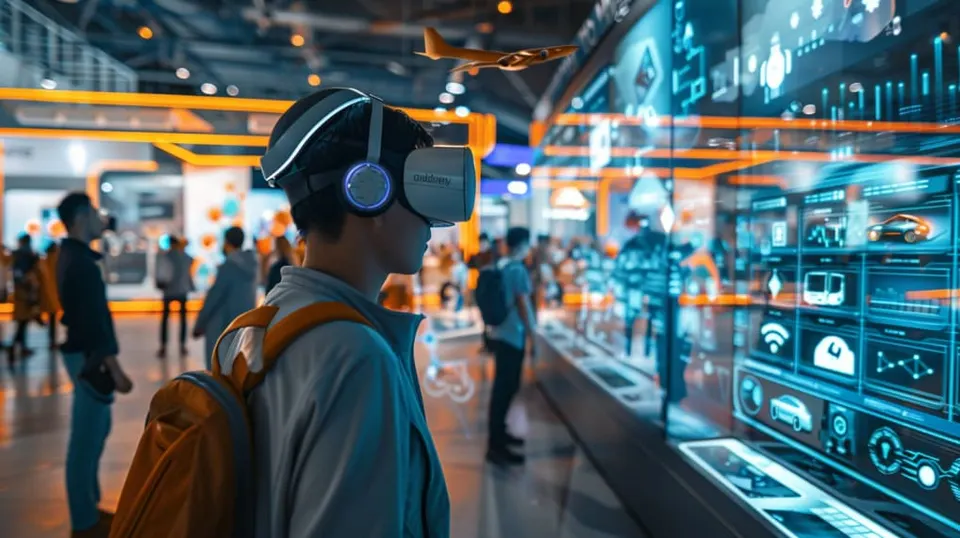
8. Babies made to order
“In the field of biotechnology, surprises can almost certainly be expected. Will rich people in developed countries try to create perfect babies, whatever that means? Or will the aspiration be more general, affecting people in many countries who will want the genes of their offspring manipulated so as to give those babies a better chance of becoming balanced, happy people? These questions sound rather disturbing, but with the development of genetic engineering it will become impossible to ignore them.”
And although in his book the economics journalist focuses precisely on economics and politics, other topics appear in it too, discussed far more rarely but no less important. Topics tied to discoveries that have the power to change us irreversibly as a species. From designer babies through uncontrolled genetic manipulation and artificial wombs to rethinking who we humans are and where we are heading…
9. The battle for truth
“The vast amounts of inaccessible information, along with the growth of social networks, have led people to believe less and less of what they read and watch. Many have started selecting the opinions and points of view that match their own. On top of that, such people also select the news that chimes with those views, making them even more favored. Very alarming is the observation that the more educated a person is, the more inclined they are to seek information confirming their opinion and to avoid information that calls it into question.”
“I hope that one day, when people get used to the abundance of information and to the dangers that social networks hide, the benefits of the wide availability of knowledge will be seen much more clearly. Cults and conspiracy theories will go on sprouting as they always have, but there will be enough common sense to allow humanity to keep walking the path of true knowledge.”
I like Hamish McRae's optimism that we will learn to treat information more carefully and critically. To treat the important topics, the conversation, that way.
Because, I truly believe it, you are not what you eat, but what you read.
Because what this future will look like depends on the very way we discuss it and make sense of it.
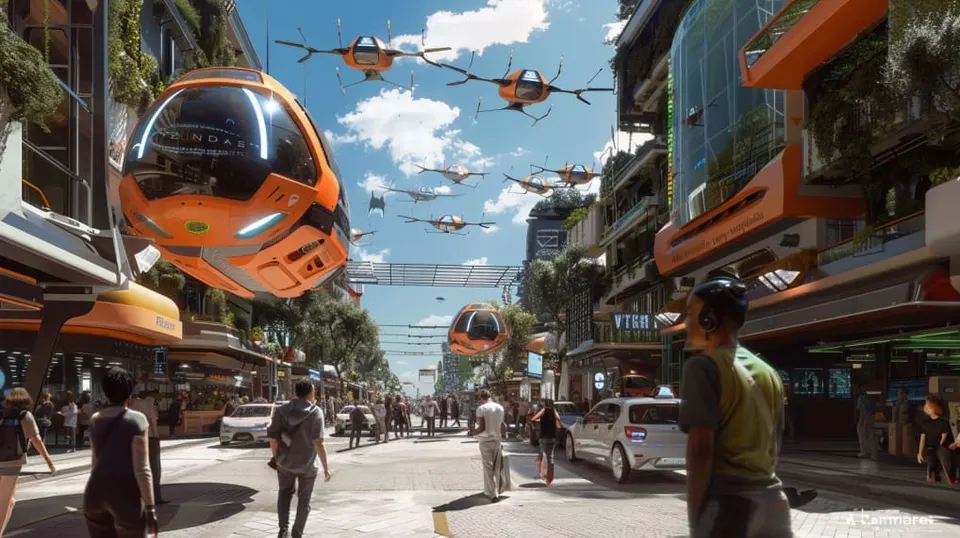
10. Evolution or revolution?
“Technology will continue to develop. In most cases this will happen gradually, but there will come a moment when human knowledge undergoes a radical change, after which everything we have known until then will appear to us in a different perspective. Will this change have anything in common with the way Charles Darwin explained the origin of the human species in his book ‘On the Origin of Species’? Or might it be some technical discovery comparable in importance to the discovery of antibiotics, or—God forbid—something like the atomic bomb? Both are possible, and equally so.”
Musk said recently that in his view, as early as 2025, artificial intelligence will become smarter than any human on the planet, and by 2029 it will surpass all of humanity combined. On the other side, countless skeptics can be quoted with ease.
Surrounded by information noise, and by all the illogic of technological progress we have talked about, it really is hard to judge exactly where the next big change will come from.
Or how. Will we wake up one day in an entirely different world, as happened, for example, after the first nuclear bomb was detonated? Or does change come slowly, imperceptibly, until new technologies are not only capable of replacing the work of people in a given profession but actually do replace them? When homes are no longer built but printed, when artificial intelligence takes on so many new roles…
What do you think the next big change will be? If it has not yet been discussed on Digital Stories, suggest it to me here, and a gift awaits you in return.