Lately we have all become boxing experts. From Bulgaria's first medal at the Paris Olympics to the fine print about chromosomes and who should and may hit whom, and when.
But why do we fight at all?
Wrestling is mercilessly brutal. Boxing is no gentler, and worldwide it is a far more sought-after, contested and glorified sport.
And over the past two weeks, thanks to the expected and unexpected drama of the Olympics, it has become the focus of so many conversations.
Two people stand in opposite corners of the ring with the open intention of landing as many hard punches as they can… while taking as few as possible themselves.
Chivalry or barbarism? Poetry in gloves, or life without mask or makeup, laying bare the most unchanging human qualities?
Hit Them So They Respect You
Anyone who takes up this subject runs head-on into one and the same big problem. The first to write about it was the American writer and journalist Paul Gallico. Exactly a century ago he was a cub reporter at the New York Daily News, assigned to cover combat sports.
He decided to start off with a bang, making a rather unusual request of the reigning world heavyweight champion: to face each other in the ring. In Gallico's view, you couldn't write anything with “depth and understanding” on such a subject unless you had felt it firsthand.
And so the man standing across from him was Jack Dempsey, remembered as one of the hardest-hitting and most aggressive boxers in history. The journalist's only request was that the big man spare his body and aim only for the head. The bout lasted a full minute—that's how long Dempsey gave him before landing his first and last punch of this “fight.” His opponent described it as “a terrible explosion deep inside the skull, followed by a bright light; a sense of being blown to pieces, and then darkness.”
If the reporter had been ChatGPT, or any of today's sportswriters, he wouldn't have put himself through that, would he?
Fencing with Fists
Well, I wouldn't either, so I'll take my colleague Gallico's word for it—all the more so because it matches what you can imagine watching the masters of the gloves pound each other, especially in professional boxing.
I also think of a story by Palmi Ranchev from his themed collection Boksyori i sluchayni minuvachi (Boxers and Random Passers-By), in which a professional fighter insists on tracking down the journalist who writes about his performances between the ropes, so he can explain to him, in a very direct way, just how big the difference is between the view from outside and the boxer's own…
So, precisely out of respect for the people in this sport, we won't rush to the dangers of brain damage and its other controversial sides. We'll begin with literature and with those colleagues who have something to say on the subject.
The Old Man and the Hook
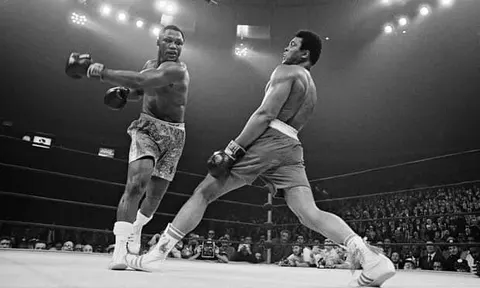
Boxing is a permanent fixture of pop culture, with an enormous string of box-office films, media and cultural images, archetypes.
Byron and Hemingway, Pavel Vezhinov—one of the best-loved Bulgarian writers of the twentieth century—and Camus, Jack London and Sherlock Holmes himself: here is a lineup of characters who know very well the “magic” of looking for a way to hit your opponent square in the face.
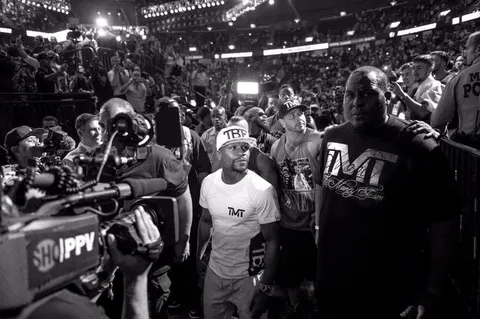
Muhammad Ali and the preacher George Foreman, “ear-eating” Mike Tyson and Kyiv mayor Vitali Klitschko, “Gypsy King” Tyson Fury and billionaire Floyd Mayweather—these are the colorful figures this so very controversial sport gives birth to.
Punching Bag
And how could it not be controversial, when it is perhaps the crudest form of combat contest? Stripped of the New Age gloss of the Eastern martial arts, which are also “arts,” yes, its goal is simply this: two people, fitted out with gloves, not merely to cause each other pain, but for one of them to lose the ability to stay on his feet altogether—the supreme victory, the knockout…
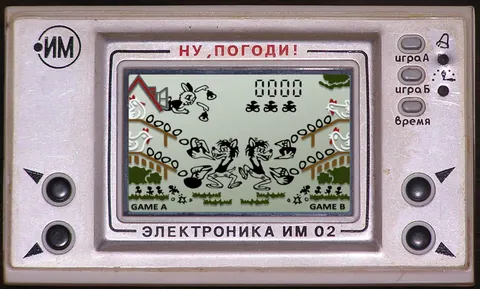
But let's go back in history. It begins long before counting to 10 became mandatory… or higher, like the wolf from Nu, Pogodi! (“Well, Just You Wait!”), the Soviet cartoon, who ran into a much stronger opponent and kept wondering where he'd landed while the count reached 1,000.
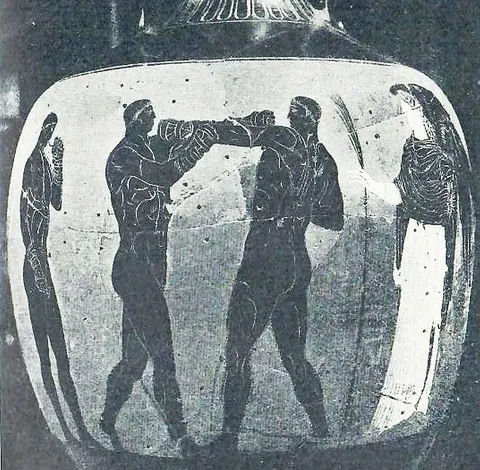
This story is older even than Soviet cartoons. Its first versions appear in Ancient Greece, like everything else; the Romans borrowed them and even carried them off to Albion… And still, between the simple urge to pummel someone as hard as you can with your hands and the professional sport of boxing as we know it today lie quite a few centuries.
Fighting Clinch with Clinch
It is no accident that this sport has become a cultural phenomenon today: it sits at the heart of the Anglo-Saxon tradition, which, more or less, dictates the Western worldview.
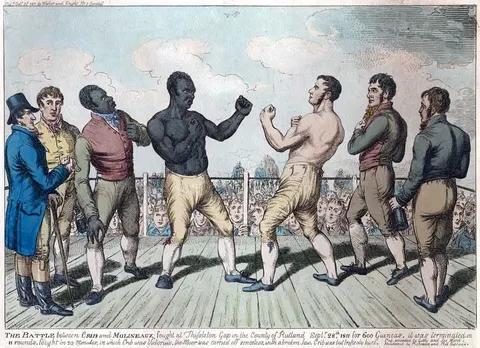
The rules began to take shape in the eighteenth century. England gave the world boxing well before it settled into the cliché of being the home of soccer. One of the pioneers, James Figg, presented it as “fencing with fists.”
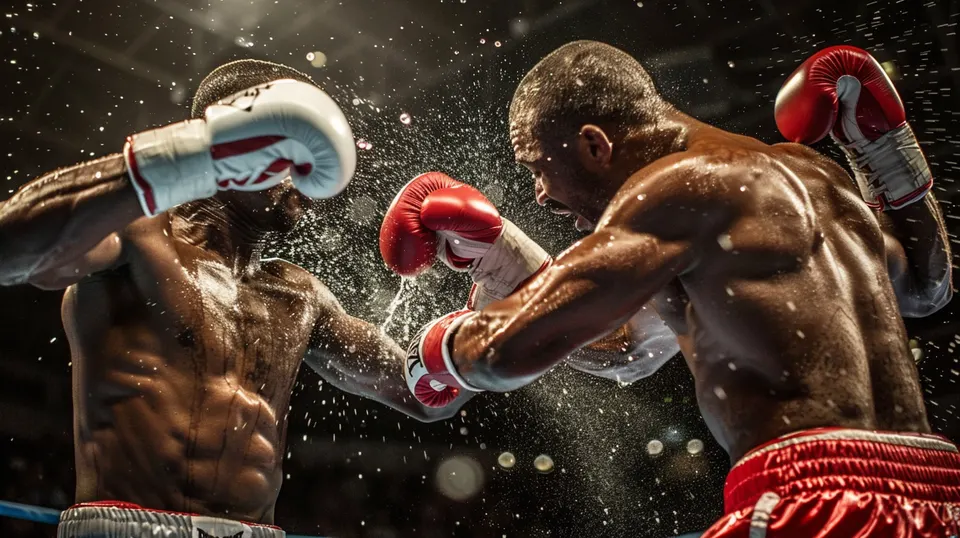
In a way, that remains both the simplest and the most accurate definition to this day. Attack and defense, technique and strength, speed and agility… and not just a brawl, right?
Figg founded the first academy, where he also taught swordsmanship and fighting with the quarterstaff. He proclaimed himself the first boxing champion back in the good old year of 1719, long before even the United States came into the world.
Super Featherweight
The modern era hadn't yet arrived, and here was the first champion already. In a way, this brings us to the present day, when sport has turned into a vast universe, almost a world of its own. We follow champions in so many different competitions, while in the world of combat sports the ruler remains one and irreplaceable.
The history of boxing plods on through its first appearance at the modern Olympics and the inevitable split between amateurs and professionals. Amateur boxing became an Olympic sport in which fighters wear protective headgear, usually fight three rounds of only three minutes each, and technique outranks power…
On the other side stands the professional game, with its bloodthirsty rules and gladiatorial character. Similar splits have appeared in quite a few other sports, and yet only here is the difference between “professionals” and “amateurs” so drastic. However absurd these two labels sound—Olympic boxers, after all, undoubtedly train professionally, and for them too this is the main chance to succeed.
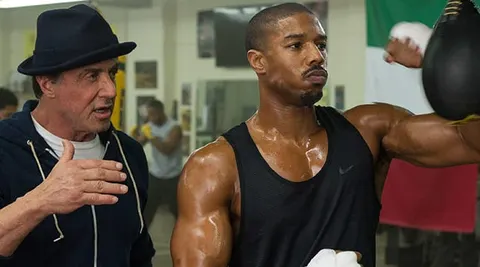
Million Dollar Baby
Many of the amateurs who do well enough move over to the “professionals.” And yet, if we tried to separate the two branches in more current terms, the first would certainly be closer to what we call “sport” in every other discipline. The “professionals,” meanwhile, are like nothing else—somewhere between showbiz stars and gladiators.
According to most people who understand the sport, how interesting, closely fought and technical a bout in the ring will be has nothing to do with the size of the athletes. At the same time, over the past century the undisputed superstars have been the heavyweight champions.
Boxers
And while the various associations and promoters divvy up their champions' belts and billions in prize money, stars keep being born and fierce rivalries keep forming. They keep their magic even after the rise of MMA, the no-holds-barred fights that finally created a platform for combat sports that somehow reaches beyond cultural limits and separate disciplines.
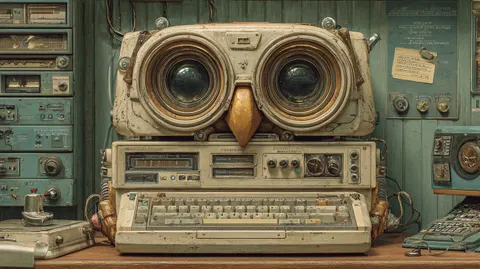
In chess, computers “beat” us long ago—won't they beat us in boxing too? The two sports that, in a way, complete each other's palette of competition in the intellectual and the physical world?
Even the greatest boxing champion couldn't handle 1,000 opponents, while a chess champion could (as long as the contest isn't boxing). And if we decided to build them, could future android robots be better boxers than the world champions? Absolutely, because our physical limits are a much “lower bar” for machines than our intellectual skills.
And to be a really good boxer, do you have to feel the pain too?
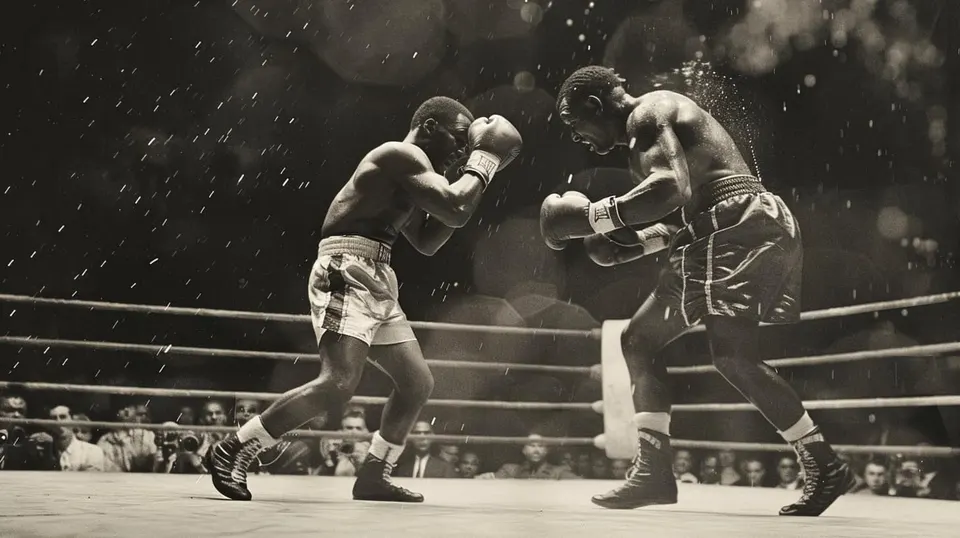
Punching with Pawns
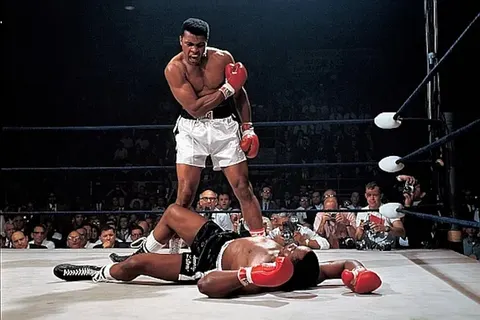
“Float like a butterfly, sting like a bee” was Muhammad Ali's motto, and he gave his autobiography that title too. A beautiful comparison, isn't it?
It's interesting how chess and boxing go hand in hand. You've probably come across the flashy competition called chessboxing, where competitors alternate between a round of uppercuts and a game of blitz. Now there's something that would give the algorithms a real headache.
But not the poet Ivan Landzhev, who gave an unforgettable interview to Digital Stories. He trained in both sports for many years and, as he writes on his blog, “the two arts have even more in common—control over time and rhythm, pulsations, pauses and the manipulation of distance, seizing the moment, precision. And above all—improvisation. According to the popular stereotype, boxers move and throw punches in rhythm. That is only partly true.
A sense of rhythm is undoubtedly extremely important, but a good boxer knows how to break and change his rhythm to surprise his opponent. Otherwise he is quickly figured out and can easily be caught and countered. In other words, fluidity in movement and decisions is of paramount importance. That is why we can speak of the most varied, vivid and recognizable styles in boxing, much like the styles in jazz. And none of the greats plays like another of the greats, despite the obvious lineage.”
Boxing as jazz—now there's a most curious comparison, isn't it? It turns out even Miles Davis loved to box.
Straight Left
The first boxing champion, James Figg, was succeeded by his pupil George Taylor; both relied in their fights on techniques well known from fencing. The third champion, Jack Broughton, took the title after a victory in 1738, and at one of his defenses four years later there was a ferocious 45-minute bout of “fencing with fists,” after which his opponent died.
Broughton decided it was time to write clearer rules about what happens in the ring. Roles were introduced: the referee, who watched for blows below the belt, the seconds; gloves appeared… even the ring itself.
Then came the next great champion, Daniel Mendoza, who added the skill of “working” your feet, managing the distance from your opponent, relying far more on defense at a time when the next hard blow to the head could turn out to be final…
Which brings us to the age of Zuckerberg and Musk, who were going to fight by MMA rules in the middle of the Colosseum, but, alas, something always got in the way. Weak promoters, a dispute over advertising… True, neither of them is any good at boxing—they're into Eastern martial arts, so popular in the Bulgarian IT sector too—but the idea isn't all that different. They have the will, but it never quite works out, like the debates before Bulgarian elections.
Boxing has produced remarkable stories and keeps doing so in the digital age. But where is the magic in never losing the urge to smash the face of the person across from you—only in a gentlemanly way?
It will be there as long as we humans are (even after Musk and Zuckerberg, I hope).
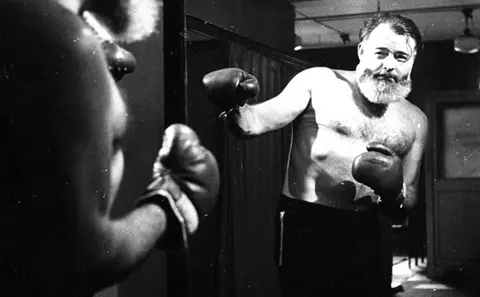
For Whom Hemingway Swings
Ernest Hemingway was always a kind of embodiment of his love for boxing and of a thoroughly “macho” view of the world. “My writing is nothing, my boxing is everything,” said one of the most celebrated authors of the twentieth century. When it came to him, though, our friend Jack Dempsey was once again as uncompromising as he had been with our first hero today—only verbally.
He met the writer when Hemingway was 25, in good shape and forever looking for someone to fight (he never managed to talk his colleagues Ezra Pound and Fitzgerald into it). Dempsey wouldn't agree either. “Because I could ‘read’ people. I had the feeling that Hemingway, who truly believed he could box, would come charging out of his corner like a madman. To stop him, I'd have had to hurt him, and I didn't want to. So I never boxed with him.”
“All the great poets should have been boxers,” said Muhammad Ali. “Take Keats and Shelley, for example. They were tremendous poets, but they died young. Because they didn't train.” In fact, Keats really was fond of the sport. So was Byron, who sparred on the morning of his mother's funeral, because “boxing is a balm for the spirit.”
But the former Cassius Clay was wrong about something else: long years of taking blows to the head can hardly be harmless, as was evident in his own case during his last decades.
The Gauntlet Thrown
The medical side of blows to the head is horrifying. It's no accident that boxing has been banned in many countries, and serious debates continue to this day, especially when it comes to young people. It isn't hard to imagine that punches to the head are not the most harmless encounter life can offer.
There have even been deaths, like that of 18-year-old Jeanette Zacarías Zapata, who died in 2021, days after a boxing match.
Perhaps even more frightening than the injuries, though, is the invisible damage. As neurologist Steven Laureys says, “our brain is sensitive and needs a lot of energy. It is supplied by four large arteries and a multitude of small blood vessels. As a result of many blows, 10 to 20 years later you end up with a brain that has shrunk, is diseased and demented.” In medicine the diagnosis is known as chronic traumatic encephalopathy, but it is also called “boxer's dementia.”
“Brain cells communicate with each other through a kind of bridge. When you take a heavy blow to the head, these are destroyed and communication is literally cut off. Shake them, and they simply break,” says Laureys. The insidious part is that these problems often stay hidden for a long time, until they are practically untreatable.
“I think future generations will look at boxing the way we look at the gladiators of Ancient Rome today,” says Laureys. “I ask myself how it is possible that we as a society allow young athletes to pound each other on the head and fall seriously ill.”
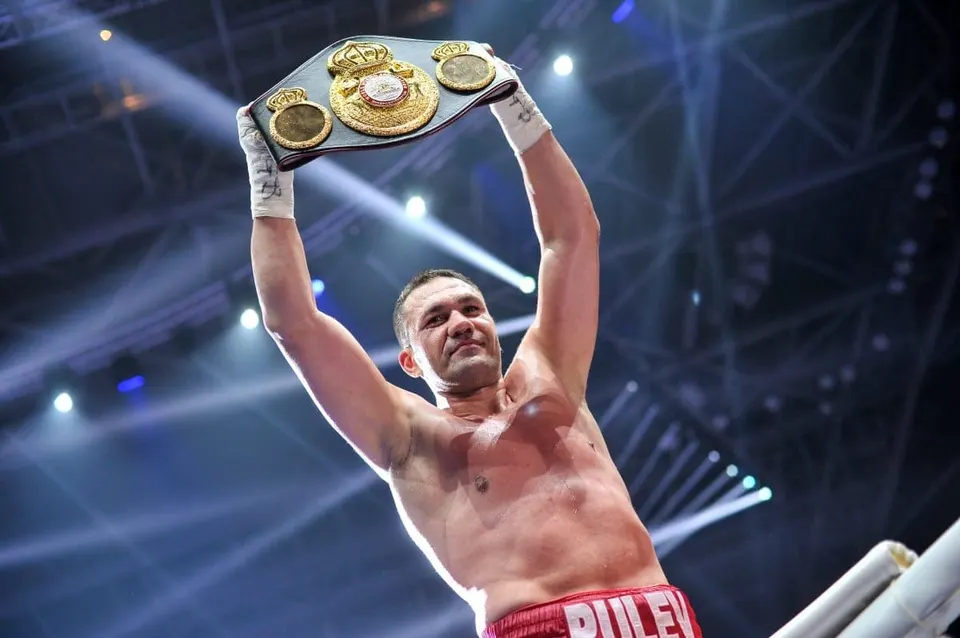
Fight or Flight!
And yet, anyone who decides to put on the gloves surely has the risks in mind, so to finish, here is something more positive.
Many studies show that this sport actually helps us develop our brains, instill discipline and technique. It is also invaluable in the fight against stress.
Boxing skills are often the only shot at truly serious success in life for many young people from the lower social classes—you can see it all over the world.
As the aforementioned Palmi Ranchev puts it, “this sport is always drama. A spectacle without a set script. Every harder punch or well-timed defense can send it off in an unexpected direction.”
After all these persuasive words, I find myself wondering… maybe I should do what Gallico did after all? Now where has Kubrat Pulev, Bulgaria's heavyweight star, been hiding lately…
This piece is part of the new issue of Dolce Far Niente magazine