You open the chat with the artificial intelligence, you try to explain what you want from it… and there it is, the result is astonishingly good! (Or maybe it isn't.)
Today we all do it. ChatGPT and its “colleagues” are changing the way we search for information online, the way we get to know the world, the way we try to handle our everyday tasks. (If that doesn't apply to you, believe me, it's time!)
Today we all chat with ChatGPT or Gemini, but… how could anyone possibly have imagined this phenomenon of ours back in the good old year of 1981?
The Missed Chance
Sometimes it is thought-provoking and fascinating to peek into the past and see how subjects that seem possible to us only today are in fact much older, and how the people before us were stirred by them and offered important points of view. There are quite a few such Digital Stories—for instance, about Dobri Zhotev's Kibernet, about an artificial intelligence poet from 1967, or about Todor Zhivkov, Bulgaria's longtime communist leader, who said that “with programs and more programs we must infect the young generation.”
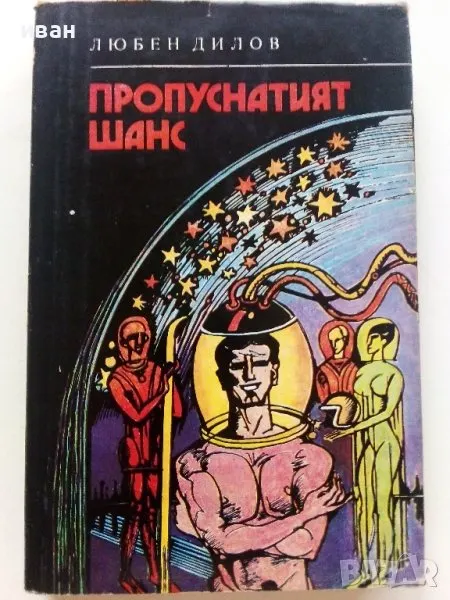
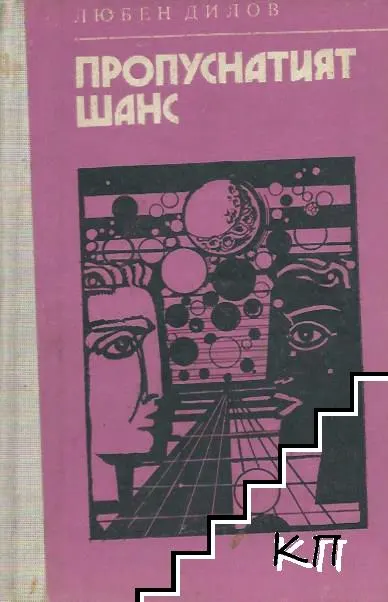
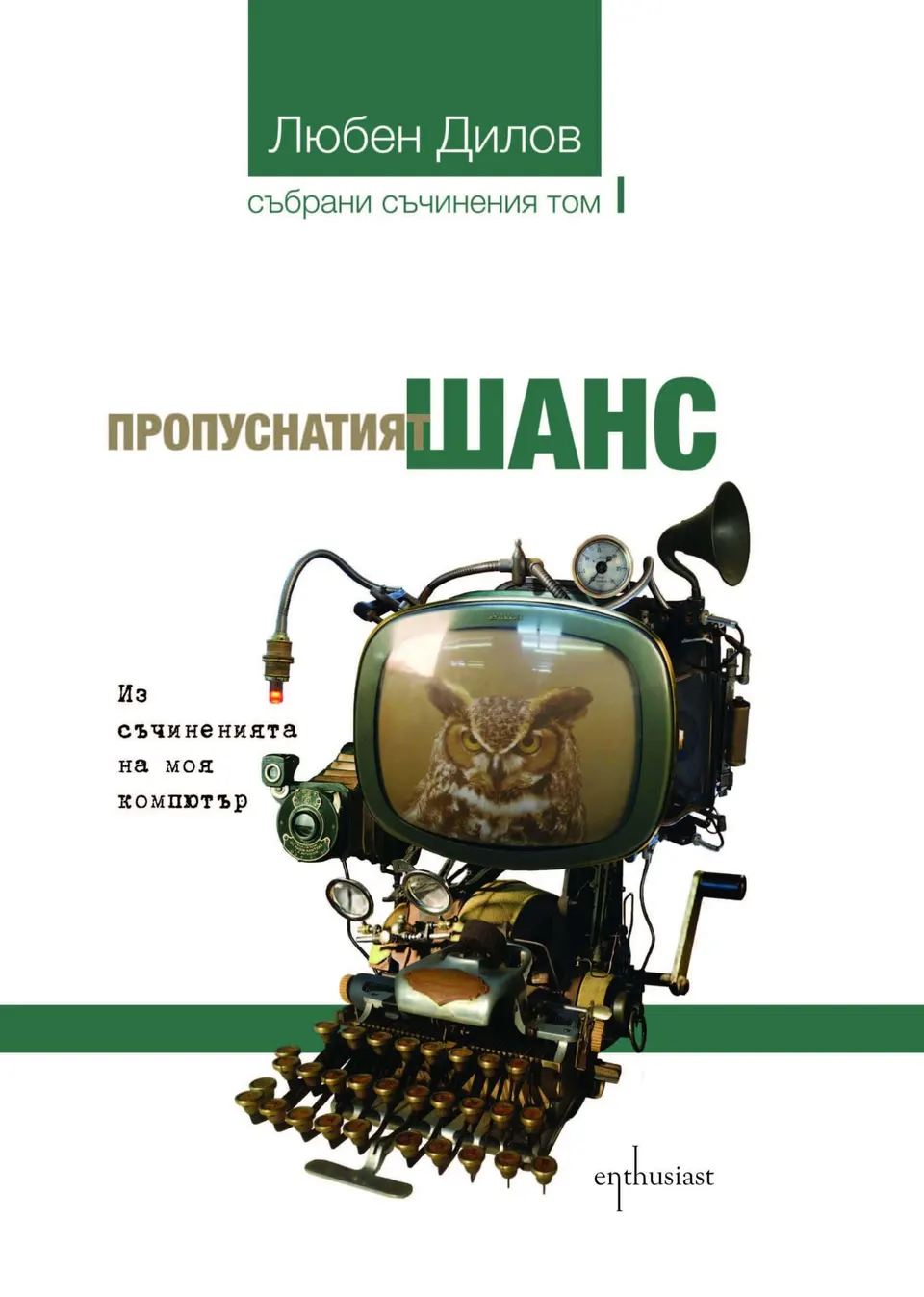
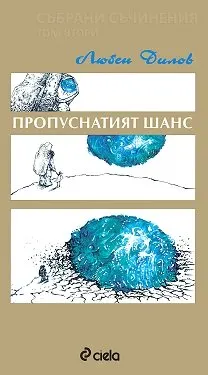
Is AI the great chance of our day? Will we seize it, or let it slip? Propusnatiyat shans (The Missed Chance) is one of Lyuben Dilov's lesser-known books. Here one of Bulgaria's most popular science fiction writers, also known as the author of the Fourth Law of Robotics, isn't even a writer. At least according to the plot. Instead of writing, he orders a series of stories in various genres from his new computer, which in turn creates them in his name and in his style…
Sound familiar, by any chance?
The Computerized Scheherazade
“A computerized Scheherazade tries to please a capricious creative mind by copying its own style of thinking and expression. In its indifferent attempt to be a creator, the computer spews out story after story,” reads the back cover.
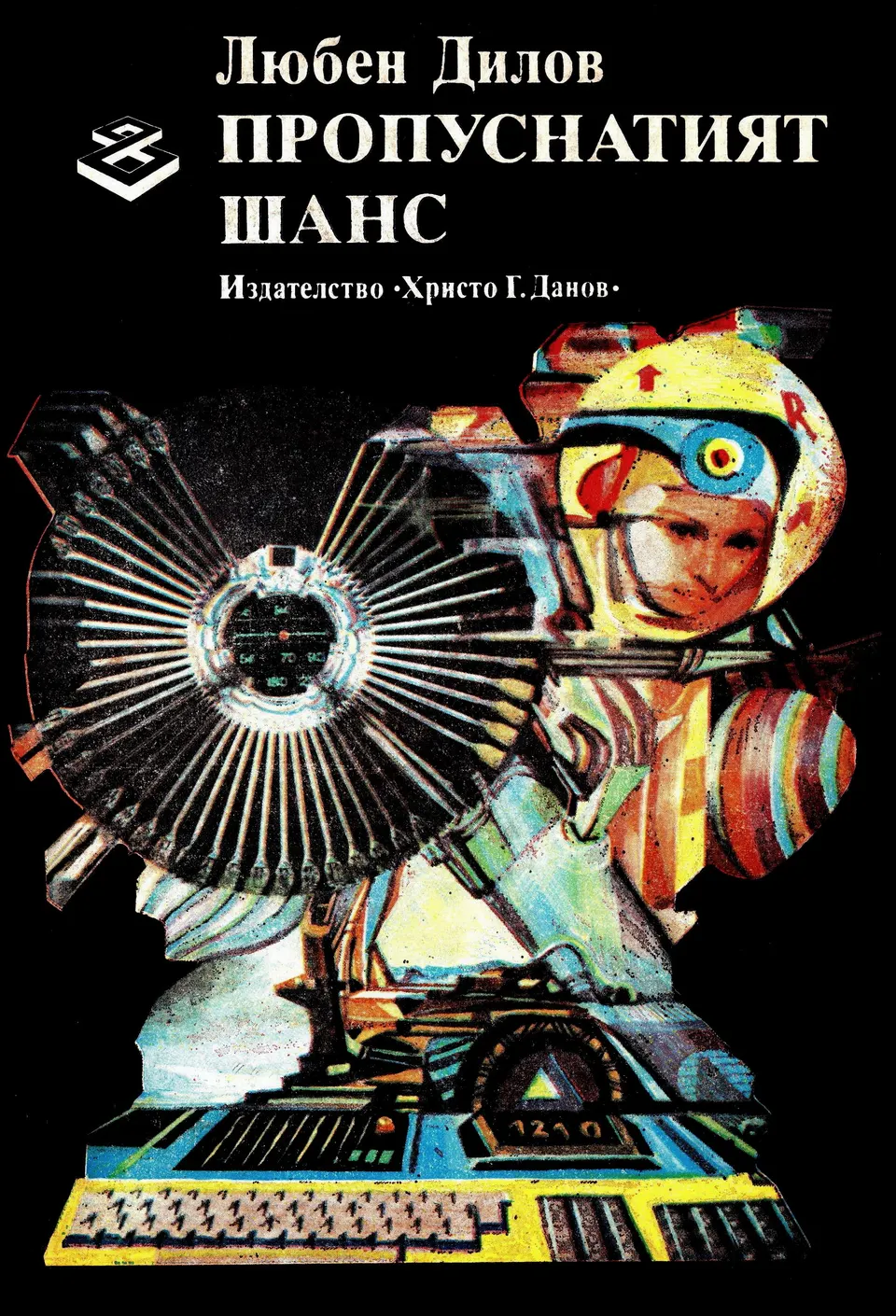
“On the computers of previous generations, tasks were entered on the keyboard of the video terminal—the new computer talks. So my hands have almost nothing to do, and yet they are used to stepping in here and there, correcting the text that lingers for a while on the screen before it heads off to the printing device.
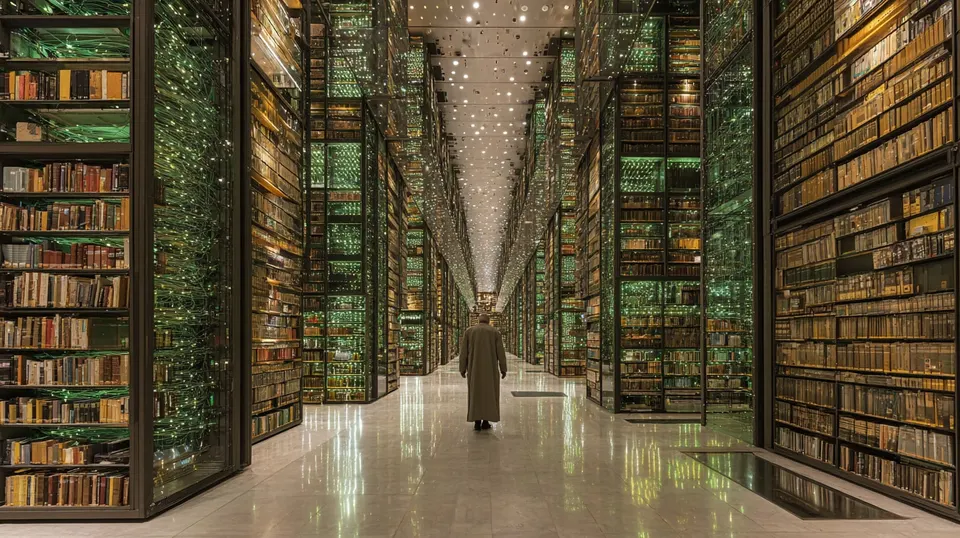
According to the claims in the brochure, it is connected directly to the Central Information Bank, to the National Library, and through them to the main scientific repositories of the world. In this way it also frees your brain from the burden of the knowledge a writer needs—the computer knows everything for you.”
It knows everything for you… Oh, there's no way to put it more precisely, even today, when this claim so often turns out to be true. For knowledge and for skills alike. And what does the writer do with his hands, freed from the need to write? He reads the instructions on how to use the smart computer…
“Again according to the brochure, the game automaton that does the actual composing supposedly held the whole of world literature in its memory unit. It served as a point of comparison and correction, so that in practice it could not repeat a single situation, that is, compose anything unoriginal. I very much doubt this, and it smells of advertising, but it doesn't trouble me, because I see things rather differently. True originality does not lie in the uniqueness of a plot or a situation—the question is what you will express through them.
There is hardly anything more banal than the love triangle in Anna Karenina, and yet to this day we revere it as one of the greatest novels in the world.”
And what about today, in times when AI writes poetry, for example, better than a huge share of the people who consider themselves poets? (The opinion isn't mine, but that of the juries of two of the most prestigious poetry competitions.)
Creativity Is Creativity
The stories themselves, “written” by the computer, are definitely interesting and worth reading, but… who is going to read content generated by an algorithm?!
Today we all do it every day. We just don't always realize it. Because we are already in a world where generated text cannot be told apart from text written by a human. What's more, few of today's popular science fiction writers peer into these colossal subjects. That is exactly why it becomes even more intriguing to see how Lyuben Dilov imagined them 45 years ago:
“In fact—I have realized it by now—what bothers me most is that I will have to talk to it. True, people today are used to talking to computers: through them they order goods from the shop to be delivered home, or book plane and theater tickets. But there they talk about simple things, while here I will probably have to put into words even the inexpressible—creativity is creativity, however advanced the technology. That must be why my hands tremble and are so agitated, as if they want to say: ‘And what are we going to do? Throughout the whole history of humankind we have taken part in the creation of every art, and now suddenly—you're free, we don't need you…’”
What will we do in times when technology reaches not for the dull, routine, repetitive work but exactly the opposite—temptingly offers that, after our memory, we entrust it with our creativity too?
What will we do in times when even children's drawings turn out to be indistinguishable from generated images?
What will we do in times when you're more likely to get it wrong than right when telling a human voice from a generated sound?
We still don't know what we'll do; we aren't even talking in order to look for the answers.
But those times are here.
A Hare Out of a Blackthorn
“Today's society, it said in its appeal to us, does not treat talent as something irrational, the way it once did, when people resigned themselves to its inexplicability and expressed this, for example, with the proverb ‘You never know which blackthorn the hare will jump out of,’ meaning talent. Now society insists on always knowing exactly which blackthorn which hare will jump out of. What's more, it strives to make a hare jump out of every blackthorn…
A footnote explained what a ‘blackthorn’ was, because with today's radically altered nature the plant is no longer found. It was a low shrub that grew in very poor soil, with sharp thorns, spines and small blue-black berries, astringent to the taste, which caused constipation when eaten.”
Well, here the science fiction writer missed the mark: the blackthorns are still around, though I do have certain doubts about how many of today's children would recognize them. And also about whether there is any particular reason for them to recognize blackthorns specifically. Forgive the digression—the hare really is more important than the bushes in this metaphor.
How and why can we be sure today that the new, different, original idea won't come from artificial intelligence more often than from our own?
And what about personalized content, in which every fan of Lyuben Dilov could have their own personal version of each of his next stories, just as he imagined it, with the help of the enormous computer that frees his hands?
At Home over a Glass of Absinthe
“‘The brochure praises you,’ I say a little more firmly, ‘for composing only original things. I'm very curious what you'll come up with if, say, everything that has been sought so far in other crime stories is already known from the very start. Let's assume the criminal is known, even his name and where he is, let's assume the victim is known too, and the motives for the crime, when and with what it was committed—in short, everything is known. Can you compose something criminal then?’
I'm aware this is pure needling. That overly mild preachiness of his a moment ago irritated me, but then again I am supposed to be testing his abilities—with banal orders I won't find out whether he really is more capable than my previous computer.
‘I cannot answer in advance until the composing automaton has received all the conditions. Please submit them in accordance with the manual,’ the computer replies, and I find it very hard to picture a pretty secretary with such owlish eyes.”
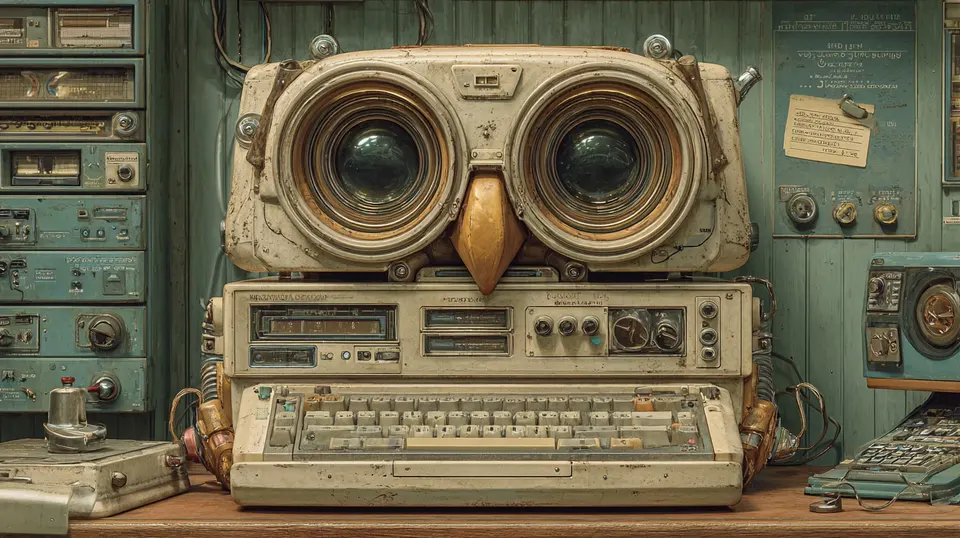
The 1980s ChatGPT has owlish eyes. Is it because it's showing off its intellect, or because it's trying to imitate wisdom? Or is it because we catch a glimpse here of the author's not-so-positive attitude toward it—the author who, even as a character in the book, “needles” it?
Tell Me a Fairy Tale
“Good and evil, I say sadly to the computer, or rather to myself, they keep fighting, keep defeating each other, keep chopping off each other's heads, and new ones keep growing back, and it seems it will go on like that for ever and ever. In fairy tales! Because in life it isn't quite like that, my dear fellow or my dear girl—what am I supposed to call you, after all? In this strange fairy tale called life, this good and this evil live together quite amicably, or to put it more philosophically: in a compromise that is sometimes reasonable and sometimes not so reasonable. And if someone set out to write a fairy tale about life, something rather different would probably come of it.”
And isn't it truly wonderful that today, even if you can't play an instrument or sing, with the help of AI there's now a way to make music? To tell a fairy tale made especially for your grandchildren? Even if building fantastical plots is a drastically weaker area for you than knowing football scores…
What kind of fairy tale will the retro algorithm with the owlish eyes write? Will the “author” be pleased? (I confess that in cases like this I get more and more confused about where to put the quotation marks.)
“I read it twice. It is a fairy tale all right, following all the rules of a fairy tale—though soaked in quite a bit of bitterness. Could they have palmed off a misanthropic computer on me? No, that's impossible—nobody would create a computer that hates people! It is merely a reasonable skeptic and by no means shuts the door on hope: there, it states clearly and definitely that always and everywhere three new brothers will be born to set out against the monsters.”
Well Done, Computer
And well done, author. I'd like to share the optimistic view that nobody would ever create a misanthropic computer. The experience of recent decades certainly gives plenty of food for thought in the opposite direction.
“‘Well done, computer,’ I repeat to him. ‘I'm sure we'll work well together. The important thing is to figure out what you do best. I'm not tired, and I hope you're even less so—let's carry on with the exercises, shall we! What tempts me most is to try genres I've never dared to touch. I see you have a special theme key, “historical plots,” and that sets me thinking. Why don't you have special keys for the others? I'd like to believe this one simply serves to connect you to the historical archives, or wherever is needed, so you can get the relevant references and dates. Otherwise it would be absurd. Because… what really sets a historical novel apart from a science fiction one, for example? Perhaps only that science fiction lies less.’”
Does it always lie less? Or could the reason be that “who controls the past controls the future”…?
“‘It's easy for you—you compose whatever takes your fancy, and you've got an excuse too: you're a machine, but does anyone ask me? You probably have no idea what completely different eyes would stare at me if I dared to show them the thing I tore up! Come on, that's enough for today! Rest and, as they say in human language, get some sense into your head! Meanwhile I'll pop over to the café to hear how my colleagues are getting on with their new computers. And no more of that sort of thing, understood, right!’ Not once did it respond, nor did it defend itself in any way. Had its designers not given it that right, or was it so full of itself that it followed the age-old rule of the wise not to argue with a fool?”
Experience Does Not Lessen Our Foolishness
Being polite is far from just an imaginary message from kindergarten that's hard to translate into our relationship with artificial intelligence. Or at least it shouldn't be, if we allow for the idea that the scenario from The Terminator or Roko's basilisk is possible…
“Experience increases our wisdom but doesn't reduce our follies. Henry Shaw (1818–1885)
‘Hmm,’ I said to the computer, which was gaping at me in fresh expectation, ‘you've really made an effort for your technician, no doubt about it! You've even given him an epigraph, and I didn't even know you could handle quotations! Where on earth did you dig up this Henry Shaw—I've never heard of him! Experience increases our wisdom but doesn't reduce our follies—fine, as long as you mean human behavior in love, fine! But if you're hinting at my experience with you so far…’”
And here are the hallucinations, something that would have been so hard to foresee in times when “artificial intelligence” was just a wishful label, devoid of content, which even scientists shied away from. Who are you, Henry Shaw?
The Dog Drags a Computer
“But I think about the time that created you. Does it really need you, or is it simply that same time about which my friend, the poet Marko Ganchev, wrote his sad insight:
Till yesterday it was “the dog drags off…,”
but now the world is changing, though.
Tomorrow it will be otherwise:
the dog will drag off computers.
I'll be frank. I've already called the complaints department, and tomorrow they'll come to take you away…”
Everything in its own time. And yet, when time outpaces even our boldest expectations, it is time to try to slow it down a little, in search of salvation and explanation.
Over Mastika with a Strugatsky Brother
“‘An idea is an essential condition for any work of art,’ the computer replies, unexpectedly long-winded.
‘Please adhere to the instructions for formulating the task.’ I burst out laughing:
‘You're right, machine! A human being really isn't a work of art; if anything, he's anti-art. By the way, something like an idea had popped up a moment ago—that's where this conversation started, isn't it. What will you do if they give you to another author, while you carry me inside you, as you claim? Look, I've filed a complaint, they'll come and replace you with another computer. Isn't that an idea? No, not yet.’
‘It's more the age-old problem of personal identity,’ I correct myself, but by association a memory of a remark bubbles up like a gas bubble from the depths of my brain. The summer before last, at a lunch, I was drinking ice-cold mastika, the Bulgarian anise spirit, with my guests from Moscow, Arkady Strugatsky and Karl Levitin. We felt cozy and cheerful in the cool, half-empty restaurant and had no wish at all to part, while my working hours were ticking away relentlessly.
I had, of course, a perfectly good excuse: none other than the world-famous science fiction writer Strugatsky was Bulgaria's guest, but I had at least to let the editorial office know so they wouldn't wait for me. I set off for the telephone, and then the undying science fiction writer in Arkady Natanovich tossed out behind my back:
‘Hey, Lyuben, just imagine that when you call the office now, the person who answers is… Lyuben Dilov!’ All three of us laughed, but while I was dialing my own number—it was a party line, it served the office too, so our secretary always picked up first—I asked myself: ‘What if I really hear my own voice on the other end?’”
Hearing My Own Voice
What if you really… hear your own voice? What if you read a text that is so good, indistinguishable from your style, from your skills? I have asked quite a few writers who have been guests on this site, and the answers are colorful, varied, unexpected. Will they keep writing?
Often they aren't particularly optimistic. So it is here, too.
“I unplugged the computer from the mains as well, so that it wouldn't take it into its head, as before, to start working on its own. I stood there as if over a coffin until its eyes lost their treacherously innocent color and turned into ordinary glass, then I left my study. And I didn't return until they had taken it away for good.”
In the novel, the ending isn't a happy one. But in the real world… I still think we have a chance at one. If we dare, and manage, not to stop peering into the future. Just as Lyuben Dilov did in The Missed Chance.