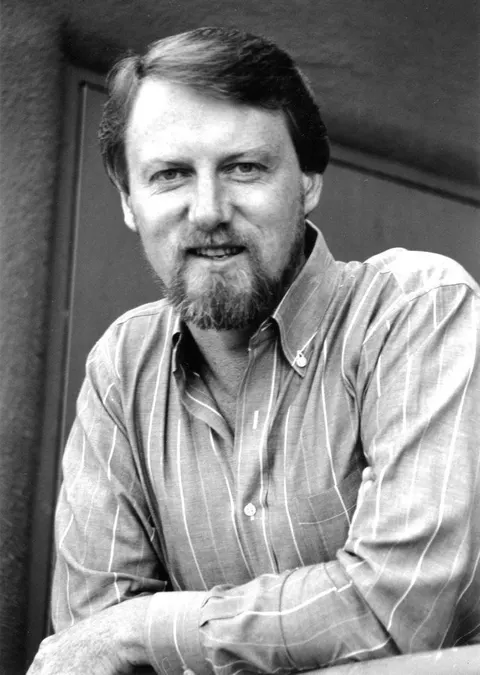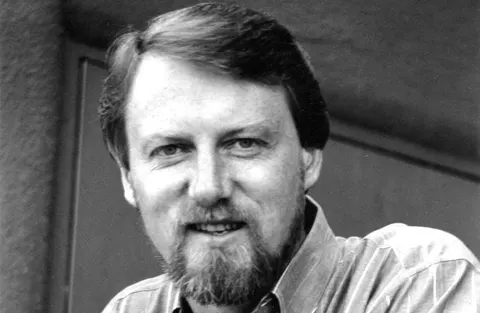
He created the first operating system for personal computers. And, according to legend, he let slip the golden contract with IBM that could have put him at the top of the software world—the place Bill Gates and Microsoft won instead. Because he wanted to go flying in his plane rather than show up for a meeting.
And although that legend isn't true, he is without a doubt a legend from the dawn of the computer age. He died at just 52 after a drunken brawl, in circumstances that remain unclear to this day. But he left his mark on computer history not so much through that incredible shot at enormous wealth in the early years of computing. Rather through his forward-looking ideas, which we use every single day. And through the missed chance to become the better archetype of the creators from the dawn of the digital age…
“It was not a happy moment when I realized that computers were being built to make money, not to make minds,” says Gary Kildall…
A Viking in Bill Gates's Court
His name is wrapped in legends, and there's certainly a reason for that. He is one of the pioneers of the modern computer world, and even the most serious authorities admit that he had the chance to become the man who would take the lead, who would grab the baton at the dawn of the computer era. Only he lacked the commercial instinct and the absence of scruples of the man he claimed had robbed him. Good (and by now truly) old Bill Gates.
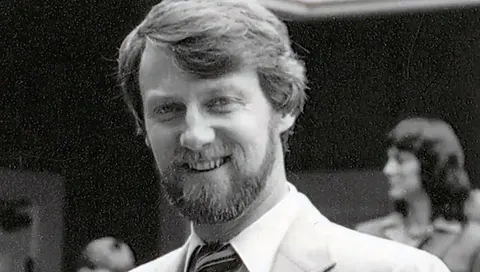
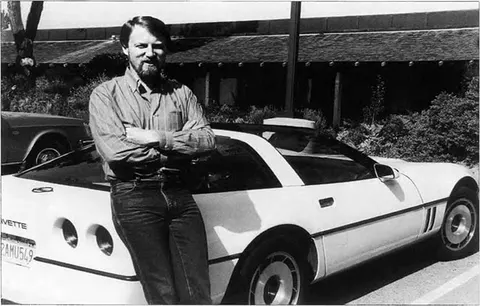
Gary's father was a ship's captain of Norwegian descent, and his mother had Swedish roots. Born in 1942, he went to a high school that taught maritime navigation. Like most computer pioneers, though, he was hopeless at school; he had more fun building his own cars in a makeshift garage. Still, he figured he needed a more serious profession to make a living, so he enrolled at the University of Washington in his hometown of Seattle, planning to become a math teacher one day.
Good Morning, Vietnam!
That's where he first ran into computers—at the time, huge room-sized machines that processed data from punch cards. They were the first thing that truly captivated him. Gary decided to specialize in the field, graduated with honors and devoted himself to the software profession, which back then… practically didn't exist. He even planned a doctorate in computer science.
Meanwhile, though, the Vietnam War began, and more and more young men were receiving a far-from-welcome letter in the mail telling them to report to the draft board. That happened to Gary Kildall too, but instead of ending up at the front, he got an even bigger chance to work in the field that had won him over. The draft service took note of what he'd learned at the maritime high school and the university and steered him toward a career as a naval officer.
He was then sent to teach computer science at the Naval Postgraduate School in Monterey, California. When his service ended, he left the school and went to work for Intel. He had been impressed by what the first microprocessors made possible, so he headed for the company that pioneered them.
Space Jam
What makes our hero truly remarkable is that he was the first to write software for microprocessors, and then went on to create the pioneering operating system for them. And the foundations he laid are used in practically every computer built from the dawn of the information age to the present day.
At Intel, his first task was to create a language for the pioneering microprocessors. PL/M (Programming Language for Microcomputers), the language Kildall created, would stay in use for decades.
At first his job was writing programs for the Intel 4004 processors. His employers were more than pleased and discussed the future of the next generation—the 8008 and the 8080—with him. And he offered them something unexpected. Instead of controlling the chips with the familiar rows of zeros and ones, why not use a higher-level computer language, closer to human languages, which would then be turned into digital code? That's how PL/M was born. The concept would, to a great extent, give rise to the following generations of programming languages, all the way down to the tools every programmer uses today.
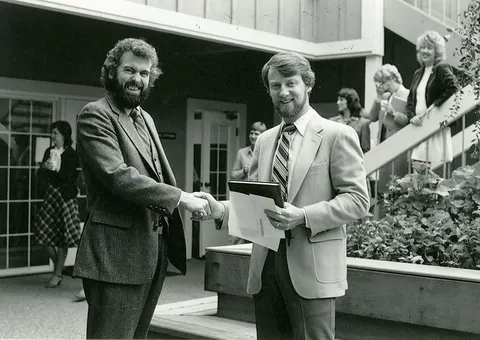
City Lights
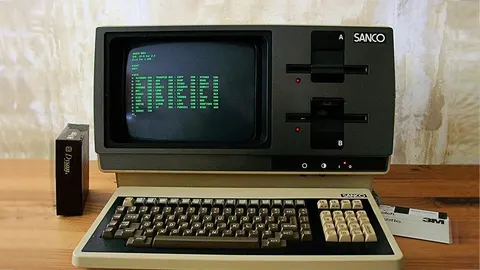
Next came the CP/M program (Control Program/Monitor). It made it possible to read and store information on 8-inch floppy disks. It was also the first full-fledged operating system designed for microprocessors. A seemingly small step, but one that ended the era of punch cards and made computers far more usable.
Even so, Intel decided not to put the system on the mass market. Disappointed, and feeling he had already done what he'd been hired to do, Kildall decided to start his own firm. Working out of their Victorian house, he and his wife Dorothy founded, almost as a joke, one of the first software companies, with the rather ambitious name Intergalactic Digital Research. What that ambitious word, which sent the company's field of activity beyond the Earth, was doing in the name, I never managed to find out. In any case, the first word was soon dropped and the company became simply Digital Research.
During this period Gary rewrote CP/M so it could run on different types of microprocessors, not necessarily those made by his former employer. And so something was born that all of us have heard of by now—the Basic Input/Output System, or simply BIOS. The foundation every personal computer rests on today, before the actual operating system is layered on top.
Star Wars
The solution quickly became a standard, the main operating system of almost every personal computer in use at the time. The venture also turned out to be lucrative: in 1978 the company was making $100,000 a month, and its revenue over the following five years reached $44.6 million, an almost unbelievable sum by the standards of the day. This was, after all, long before computers became a mass product.
The former navy man, the would-be math teacher and ship's navigator, suddenly found himself quite rich.
And along with the luxury came the problems. Cracks began to appear between Gary and his wife.
That was exactly when the famous episode that turned into a legend took place.
In just three years the computer market had exploded to a size of $1 billion, and IBM, the reigning lord of technology at the time, decided to step into this hitherto exotic field.
So the intergalactic company and a far less known competitor at the time called Microsoft became locked in a battle over who would supply the operating system for IBM's future generation of computers. The rivals had no way of knowing it then, but this decision would settle the winner once and for all and bring them, over the following decades, not millions but billions of dollars and incredible influence.
The Godfather
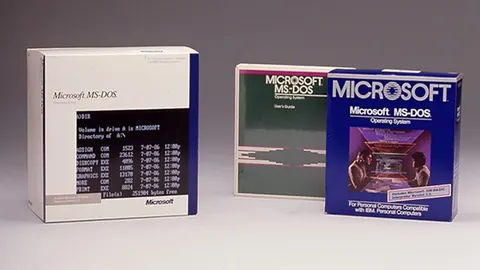
Against Gary Kildall's offer, the competitor put forward its own operating system, which was also based on his CP/M. It was first called QDOS, and later caught on under the names PC-DOS and MS-DOS, which are still familiar to any somewhat “experienced” computer user. So it turned out that Kildall had to compete against a version of his own system that Bill Gates and his team had simply added to. The problem was that in his early years he had made quite a few mistakes in protecting his copyright over CP/M.
Kildall himself said he didn't want to sue his rival, because “in those days everybody copied from everybody.”
Still, it's naive to believe that a company as huge as IBM was then would make such a key decision—the choice of an operating system—on the basis of a single missed meeting. Even today it's unclear what tipped the scales at that decisive moment for the computer world, but it's generally believed that Gates and company did better in the negotiations and offered a better price.
There are many versions, each of them has found its way into reputable media and sources, and it's hard to say which is true. According to another one, for instance, Kildall did meet with IBM and left the meeting believing he had signed a mutually beneficial deal.
Only then the computers went on sale, and buyers could choose one of the two operating systems. Digital Research's product cost $240, against $40 for PC-DOS… And that was the end of the race.
One Flew Over the Cuckoo's Nest
A curious detail in the story, which came out much later, is that at the time of the negotiations Microsoft didn't even have an operating system, but was bluffing that it did. Only after signing the contract did Paul Allen buy a cheap product called QDOS—unambiguously named the Quick and Dirty Operating System—which the team hastily adapted to the needs of the contract. And it really was a direct descendant of Kildall's work.
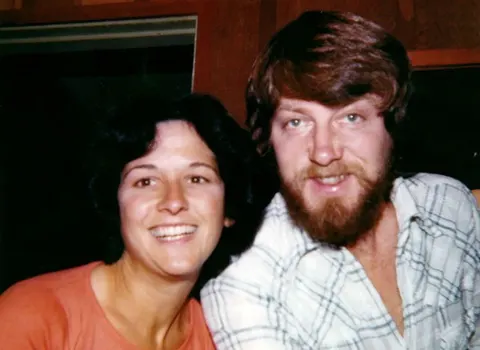
Here's yet another version of what happened: Kildall and Microsoft were actually working together, and Bill Gates sent his partner a secret message that IBM was coming to negotiate, which Kildall failed to decode. When the company's people arrived, only Dorothy was there, and she refused to sign an agreement without her husband. In this version Gary is angry at his partner Bill for deciding to take the deal on his own and hunt for a quick fix by buying the “dirty” operating system.
And one last version: Dorothy backed out on her own and refused to sign a nondisclosure agreement with IBM at the start of the talks, because she wanted to discuss it first with her husband, who was out of town on business.
The Matrix
Let's add one more amusing legend. A few years ago a $200,000 reward was announced for anyone who could find a secret command Kildall had planted in MS-DOS that could prove the truth about the first operating system's author's copyright over what Microsoft was selling. The prize was offered in 2012 by legal consultant Bob Zeidman and, alas, nobody won it.
Either way, whichever of these stories is true, the conclusion is that Gary didn't manage it and missed his chance, mainly because he chose not to use the aggressive market tactics of the computer firms of the day. And that doomed him to lose at the key stage of the race.
Kildall sensed he had lost an important battle, but still believed the war could be turned around. Over the following years he created new operating systems with capabilities that Microsoft, by now dominant, underestimated. They never became particularly popular, though.
His second company, KnowledgeSet, worked on the first consumer applications stored on CD. We're talking about the very earliest computer encyclopedia.
The former navy man even developed innovative systems for networking computers and for wireless communications. But a moment came when he was deeply disillusioned and seemed to give up the fight. Still, he managed to sell his galactic company in 1991 for $120 million.

The Great Dictator
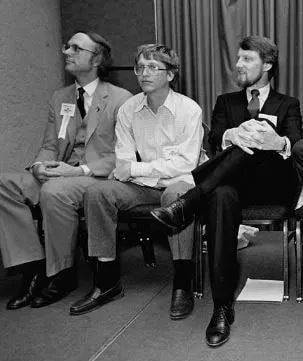
His path crossed Bill Gates's many times. At a tech conference Gary said that operating systems were a huge market with room for many companies, to which today's lord of the chips replied: “No! There will only ever be one company there.”
After his death, Bill Gates said that he was “one of the original pioneers of the PC revolution. A very creative computer scientist who did excellent work. Although we were competitors, I always had tremendous respect for his contributions. His untimely death is very unfortunate and his work will be missed.”
“He is divisive. He is manipulative. He has taken much from me and the industry,” Gary, for his part, wrote about Bill in his memoirs.
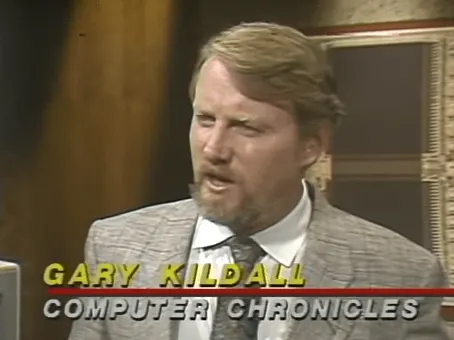
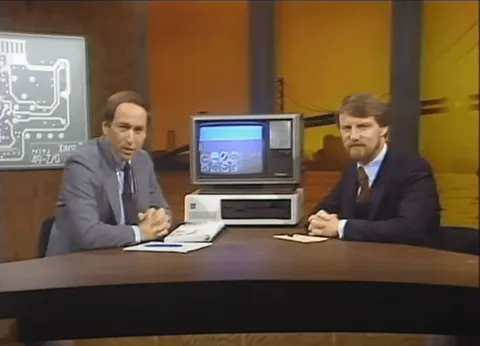
Our hero was by no means the typical computer nerd: from 1985 he hosted the TV show Computer Chronicles, which became quite popular. He left it before 1991.
Wild Wild West
Almost imperceptibly, every time he appeared in public, the first topic was the fight over the lost IBM deal, which didn't please him one bit. He tried to move past it and look for other directions.
Throughout his life Kildall never turned his back on profit, but it wasn't what drove him at all costs. And by all appearances, he fell victim precisely to his idealism, in a time and a field where the rules had not yet been set and the law of the jungle reigned.
In 1993 he went home to write a kind of autobiography. Computer Connections was meant to tell the story of the early computer industry. By then he had withdrawn quite a bit from the world, was drinking heavily and was clearly disappointed by his failure and by the direction computer technology had taken.
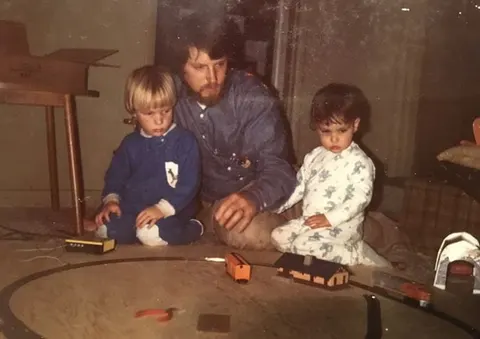
He had divorced his wife in 1983. He had two children, Scott and Kristin, who in 2016 would publish the first chapters of that autobiography.
Gary handed out the manuscript to friends and acquaintances, planning to publish the book the following year. But that never happened.
(His memoirs can be downloaded here.)
The Good, the Bad and the Ugly
July 13, 1994. The New York Times publishes the news of the death of Gary Kildall, one of the pioneers of the computer world. The programmer died in a hospital in Monterey, California, at just 52. An autopsy could not determine the exact cause of death, the report says.
According to the most popular version, he walked into a biker bar wearing a jacket of the wrong brand. Sharp words were exchanged, a fight quickly followed, at some point he fell and hit his head. An ambulance came, he was saved at the hospital, but soon afterward he died of a subsequent heart attack.
Of course, that's more than enough to unleash a whole palette of speculation—from premeditated murder to a drunken brawl. What exactly happened is genuinely hard to say.
Whatever the truth, all the stories paint the last years of a disillusioned, desperate man who decided on his own to give up the fight. And the ending is simply the finale he had expected.
Once Upon a Time in the West
In 2014 Gary posthumously received part of the recognition he deserved. The IEEE, the Institute of Electrical and Electronics Engineers, the renowned organization that has every right to hand out this kind of verdict, recognized him as the first creator of an operating system.
In his memoirs he is sincerely outraged that computers were rapidly turning mainly into a tool for profit. That their elegance was not appreciated enough, nor the possibility for them to work well so they could truly help humanity. “It was not a happy moment when I realized that computers were being built to make money, not to make minds,” Gary writes.
Would the idealist have been the more likable version of Bill Gates? We can only imagine; there are no “ifs” in history, but there's always room for reflection. Either way, the Viking is worth remembering, one of the people who paved the way for today's digital world.
Black Knight
Here's part of the foreword to the memoirs, written by his children Scott and Kristin, which says it all.
“Our father was one of the founders of the personal computer industry, though you've probably never heard his name. And those who have will remember that he missed the chance to be in Bill Gates's place because he went flying in his plane instead of meeting with IBM. Unfortunately, this story paints Gary as a ‘could have been,’ overlooking his enormous contribution, his forgotten role as the inventor of key technologies that define how computing works today.
But Gary saw computers as tools for learning, not as machines for profit. His career followed different definitions of success, where innovation meant sharing ideas, letting enthusiasm guide your work, and making computer code accessible to everyone. His ethic in the 1970s lives on in today's open-source community.
Our father always found a balance. You were just as likely to see him working late into the night as getting up at the crack of dawn to take us waterskiing or making R2-D2 robot costumes for our whole class. As children we didn't see him as the software genius he was, but as a devoted father who tried to help us unlock our creative potential. Whether he was teaching us to draw cartoon characters, playing guitar to put us to sleep, or helping us shoot home movies.”
“It's so much fun to sit at the terminal and let the code just flow,” says Gary. “It sounds strange, but that's how my brain works. Once it gets going, there's nothing more I have to think about…”