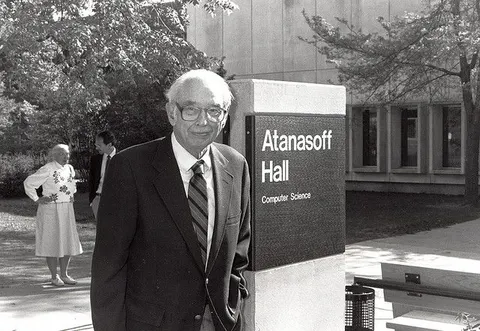
“The father of the computer was Bulgarian.” Some claims we accept as axioms and repeat over and over, often without realizing what stands behind them. Was he really Bulgarian? What exactly did John Atanasoff, part of a brilliant generation of scientists, create, and was his contribution truly decisive? Do we have reason to be proud of him, or is this just another of the historical clichés that surround us on every side?
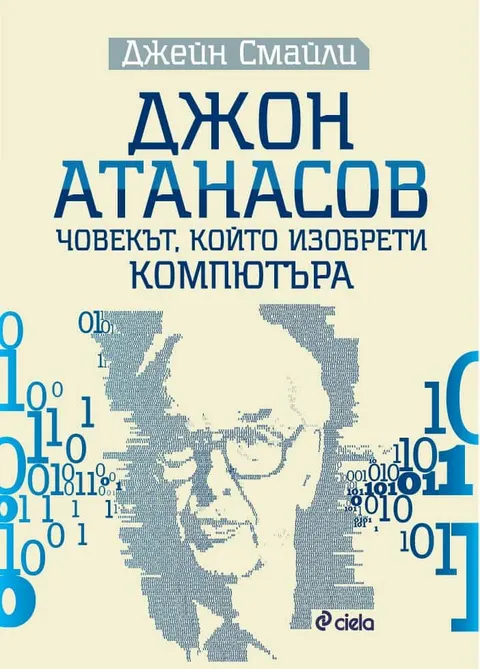
All the important answers are in a book recently published in Bulgarian, The Man Who Invented the Computer. Its author, Jane Smiley, is a Pulitzer Prize winner. Starting from Iowa, the place where Atanasoff made his great breakthrough, she follows the inventor’s path. She tells the story of the decades in the middle of the last century when a number of remarkable scientists, step by step, fulfilled humanity’s age-old dream of a machine that could help us with countless tasks.
With his discovery, Atanasoff opened the door to today’s digital world.
What do you know about him? Here are eight curious details from the book, gathering some of the most important highlights of this story.
1. Is God Bulgarian?
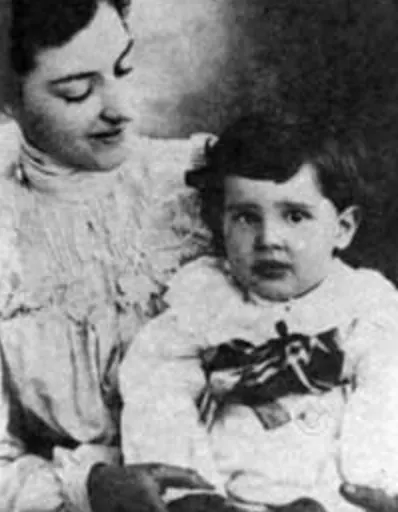
…or at least his father was, to twist the old Bulgarian saying that God is Bulgarian. Even if we set aside the fact that, in his homeland, the father certainly did not see the best side of life. Today John Atanasoff’s name is carried by an asteroid, a peak in Antarctica and a street in Krastova Vada, a neighborhood of the capital, Sofia. But what is his connection to our country? Here is what Jane Smiley tells us.
“John Vincent Atanasoff’s father, Ivan, was born in 1876, at the height of a period of growing political upheaval. His parents lived in the Bulgarian village of Boyadzhik. The revolutionary movement in Bulgaria gathered strength in the 1870s, reaching its climax in the April Uprising of 1876, the great revolt against Ottoman rule.
The uprising was crushed with mass reprisals by the Ottoman authorities. Ivan’s parents, Atanas and Yana, were forced to flee the village. Atanas carried the baby Ivan in his arms. In the skirmish that broke out, Yana lost consciousness and Atanas was shot in the back. Atanas was killed, and
the bullet that pierced the father’s chest came out and grazed the baby’s head. Against all odds, Ivan and Yana survived.
Later Yana married a local stockbreeder, who managed to provide for little Ivan’s education, while her brother made contact with American missionaries, who helped him travel to America. When the uncle briefly returned to Bulgaria in the late 1880s, young Ivan, by then thirteen, decided to go with him to America. Yana raised the money for the journey by selling a piece of land inherited from Atanas. On Ellis Island, Ivan Atanasov’s name was changed to John.”
2. Cross-Stitch
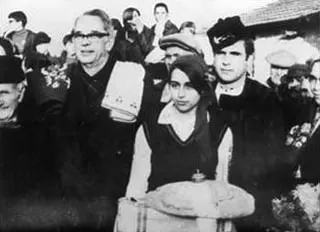
There is no doubt that the inventor John Vincent Atanasoff, named after his father, had a special feeling for his father’s homeland. He came to Bulgaria in 1970 and 1985, already a universally recognized authority, and visited his father’s native village, Boyadzhik. The first asteroid discovered by the national observatory at Rozhen was also named after Atanasoff.
The inventor… certainly turned out to be an unconventional personality. Let us begin far from the spotlight of his great success, with some of his unusual hobbies. As a boy he loved knitting and sewed his own clothes. Later he supervised the construction of his own house and built its electrical and plumbing systems himself.
“John loved to make things and to show off his skills—in sixth grade, because some of the older girls who had already finished elementary school gathered at the back of the classroom to crochet, he learned to crochet like them. He kept it up at school—no longer bothered by the teasing, even spurred on by it—proud of his work and boasting of his skill, until the teacher banned crocheting. Soon he learned to sew as well. In fact, John Vincent Atanasoff seemed to see in every new idea or object a chance to explore and master everything the world around him had to offer.”
3. One Winter Day on the Highway
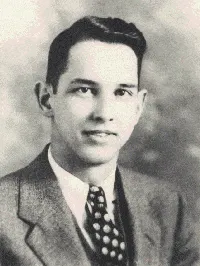
Did you know that the idea for his great discovery, the one for which we have all heard his name and call him (not without reason) “the father of the computer,” came to him… in a bar?
“On that December evening in 1937, Atanasoff jumped into his new Ford, and he later recalled: ‘I was in a terrible state of mind, because it was impossible to find a solution. I was simply worn out to the utmost degree.’ But he enjoyed his new car. He relished its speed and handling. It calmed him, and he felt a kind of suspension of time. ‘When I finally calmed down, I was crossing the Mississippi River, 304 kilometers from my workplace.’ The next thought that struck him was typical of his practical, straightforward nature: ‘Now you’ll have to give up this damn nonsense.’
At that moment he saw the sign of a roadhouse. He went inside, sat down and ordered a bourbon and soda. Music drifted from the radio behind the bar. Almost as soon as the waitress brought him his drink,
the essence of the computer appeared in his mind in its logical entirety, and he began to see both its component parts and the way they could be connected.
He jotted notes on a napkin, but later he didn’t need them, because he had pictured and thought through his machine so thoroughly that he easily remembered what he had come up with. He stayed in the bar for several hours, working through each of his concepts, but concentrating above all on how the memory would work and how the electronic on-off process would calculate.”
4. Death Is a Lonely Business
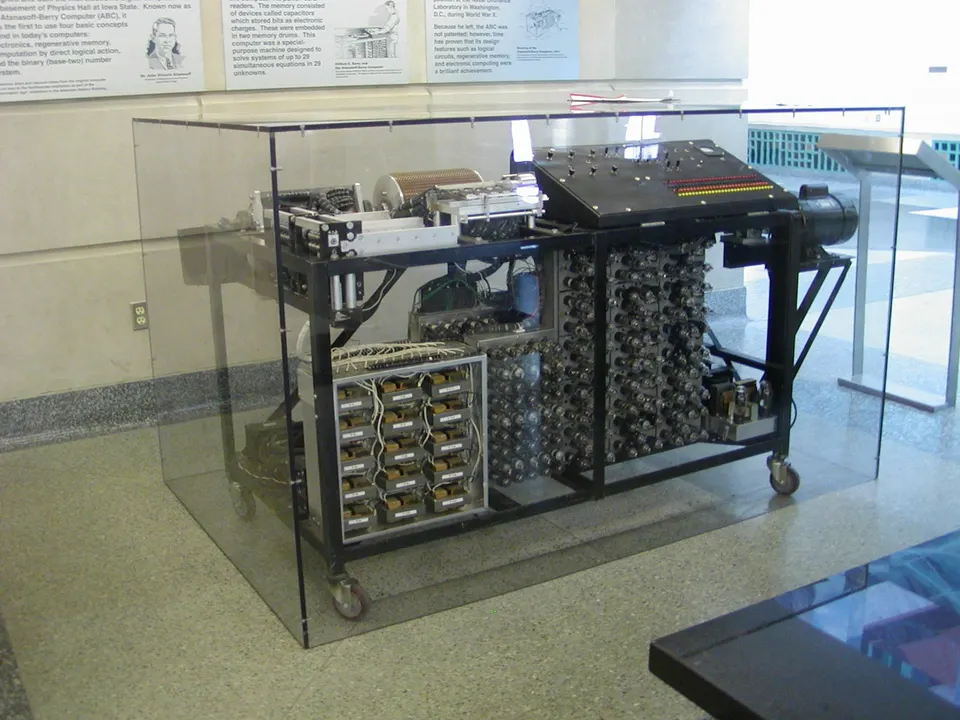
Then he had the patience and the luck to turn his idea into a prototype that actually worked. His work won him the trust of Iowa State, which brought him a modest budget as well as the chance to hire an assistant. Atanasoff chose the young Clifford Berry, and over the following years the two of them built the prototype of the ABC, the Atanasoff–Berry Computer. The machine converted decimal numbers into binary and performed arithmetic operations, which it stored in its memory.
What followed was a cavalcade of new great steps before we arrived at today’s sophisticated devices. And yet, as even the book’s title suggests, one man took the most important step of all.
For many years the issue was fiercely disputed. Meanwhile, World War II had begun and ended, and Atanasoff spent a long time working on military technology. Afterward he built a successful consulting business, and the story of how he created the grandfather of today’s computers stayed in his past.
Until it resurfaced, most unexpectedly. The recognition that Atanasoff and Berry were the pioneers of the field came as the result of a sweeping commercial lawsuit. When it began, Clifford Berry had departed this world while still young. And it was precisely this that drove Atanasoff to take an active part in the search for the truth…
“To the end of her life, Berry’s wife believed that he had been murdered. Others shared her conviction. Kirwan Cox, the Canadian film producer who researched Atanasoff and Berry and conducted numerous interviews, maintains that whether or not Berry was murdered, the undeniable result of his death was its enormous impact on Atanasoff. Before Berry’s death, he had not wanted to discuss the ABC, because he was too upset by the destruction of the prototype. But he believed that Berry had been murdered and that he would not have lost his life had he not been hired to work on the machine. Berry’s death changed his attitude toward the patent litigation, and he became very energetic in the fight to resolve the patent conflict.”
5. Lawsuits and Papers
Around the time our two heroes were developing their famous prototype, they had a visit from another of the great scientists of that generation, John Mauchly. Before long he created his own version, and in the years that followed companies began developing the next steps, some of them protected by patents.
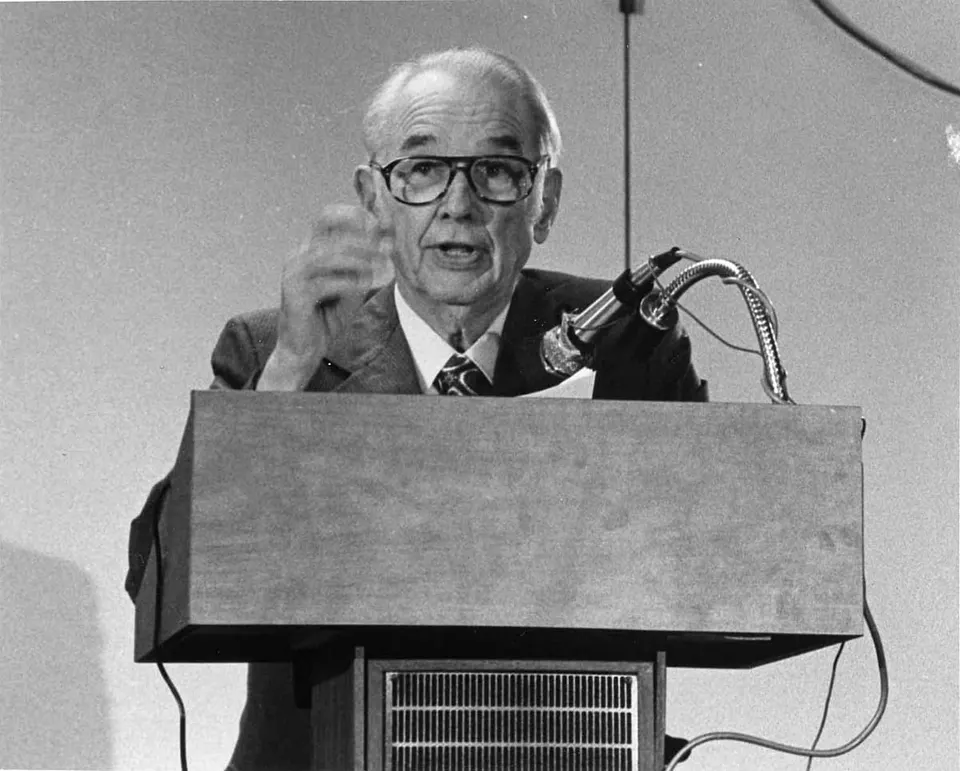
It was just such a commercial dispute that suddenly proved important and revealed the truth unequivocally. The question at its heart was mainly this: was the Atanasoff–Berry prototype working when Mauchly visited them, or not? If it was, it would have been the first computer, and Mauchly had simply copied it. Gradually things fell into place, the evidence came to light, and in 1973 the court handed down the ruling that definitively established that the ABC had performed accurate calculations and was the first prototype of what would become today’s computer.
But as the researcher Prof. Vladimir Getov notes, “the Watergate scandal broke on the same date the federal court’s ruling was published. That robbed John Atanasoff of the front-page columns of the morning papers, and with them the first minutes of well-deserved fame.”
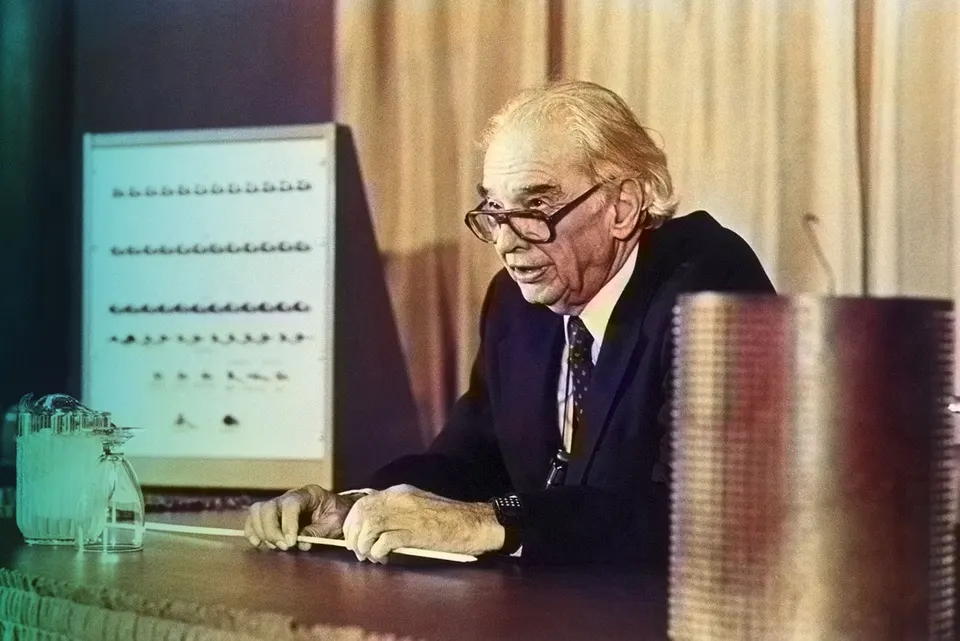
“Over time, during the twentieth century, Atanasoff received growing recognition for inventing the computer (although he is left out of the Massachusetts Institute of Technology’s website). In 1974 he was honored by the state of Iowa, and in 1989 Arthur Burks and Alice Rowe Burks, who had worked on the ENIAC, published his detailed biography.
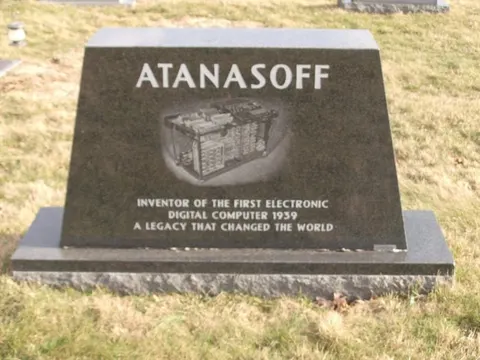
In 1990 Atanasoff was invited to the White House, and George Bush presented him with the 1990 National Medal of Technology ‘for his invention of the electronic digital computer and for contributions toward the development of a technically trained U.S. work force.’ In the 1980s he was nominated three times for the Nobel Prize in Physics, but because his paper—a 35-page description of the ABC—and his other articles on the theoretical and technical aspects of the ABC had never been published, he did not meet the requirements. Atanasoff died on June 15, 1995.”
6. A Sin Confessed
How did this belated recognition change his life? And what kind of person was the father of the computer? As gentle and likable as his photographs might suggest? Not exactly. Apparently, from a certain point on, his Bulgarian genes began speaking up more often.
“When Judge Larson delivered his ruling, Atanasoff was exactly 70 years old. He was still extremely active on his farm in Maryland and busy with his wife, Alice, his three children and his grandchildren. Just how busy becomes clear from a letter written by Atanasoff’s mother, Iva (by then nearly a hundred), after she moved to the farm in the mid-1980s: ‘Vincent… wants me to walk every day to the gate, 780 meters away, even when it’s below freezing outside. I have a bell that rings every hour so that I’ll get up and walk around.’ Iva came to enjoy her outings in the cold, although one day, when snow was drifting, she persuaded Alice to intercede for her with her son.
As for Atanasoff himself, she wrote: ‘He spends a quarter of his time lecturing me on the enormous need to eat less, drink more and walk more. The other three quarters… he spends in his workshop. All we hear is creaking and squeaking. I asked him what he was making, and he told me: a boat. I assumed it was a small pleasure boat, but I wondered, because he has no interest in fishing. But he told me it would be as big as a house.’
“Retirement mellowed Atanasoff very little, and he remained active and challenging toward those around him. One reporter described him as ‘creative and cantankerous,’ and his daughter Joanne believed that ‘his favorite pastime was conflict’… ‘He liked to test people, and he loved drawing his friends and family into intense discussions or arguments as a way of assessing their mental abilities… he kept track of his grandchildren’s schoolwork, and when we visited he set aside time to quiz us on the material.’”
7. On the Letters
It turns out that in his final years one of the inventor’s great passions was linguistics. Coincidence or not, today it is precisely through large language models—the meeting point of technology and words—that we are seeing progress in artificial intelligence, the great topic of our day.
“Atanasoff’s true passion at the end of his life was language and alphabets. He considered the Bulgarian version of the Cyrillic alphabet—with thirty-two letters until 1945, and thirty after that—superior to the English alphabet, and when interested groups asked him to speak about the invention of the computer, he would try to steer the conversation toward the benefits of reinventing the alphabet. In 1985 he told a Bulgarian newspaper: ‘I hear them, I hear the voices and the hearts of the people who pronounce them… I want every letter, every symbol to carry more meanings, to keep the alphabet at full strength.’”
8. Dream On
“In many respects John Vincent Atanasoff was a lucky man. He lived to see recognition for his hard work and his enterprising mind. Throughout his long life he tried many things, and thanks to his energy, his organizational skills and his persistence, he achieved everything he attempted. Atanasoff would probably have said that he had managed something very rare. Namely, to do what he wanted, the way he wanted, and to discover that the way he had wanted to do it really was the best,” writes Jane Smiley.
And truly… a person is only as big as their dreams. In technological times we can dream more and more, and achieve what until recently seemed unreal. But do we?
It is worth pausing to reflect on the lesson from the story of John Atanasoff, “the father of the computer”…