What do Harry Potter and Bill Gates have in common? The glasses, you'll say, the magic maybe. Harry has not yet been accused of a global conspiracy, or of wanting to microchip us all with vaccines, but it's not too late for him to catch up.
Bill Gates as a young man. It could be the start of a good joke or of a fairy tale (though a beautiful princess somehow wouldn't suit him). This is something else—the subject of the recently released book Source Code, published almost simultaneously in Bulgarian and English. In his first autobiography, Mr. Gates goes back to his early years to tell us astonishing and unexpected episodes that marked the beginning of the computer era. And, we can say without the slightest exaggeration, the steps that over the past decades changed the life of every person on this planet.
Write, Bill, Write!
Can you picture the founder of Microsoft as a thief of time? How did climbing high mountain peaks shape his biggest successes in the software world? Why was the dream of beating his grandmother at cards among the main ideas that turned him into the richest man on the planet?
Hardly anyone would accuse Bill Gates of having the skills of a brilliant novelist, yet the stories told by one of the most important people of our time (like him or not) are certainly impressive. I chose eight of them to tell you; you'll find many more fascinating facts in the book itself.
This is the first autobiography of the man who was for years the richest on the planet and who in 2025 reaches the venerable age of 75. And that, as he himself will tell us in a moment, is the reason he decided to tell us about his past.
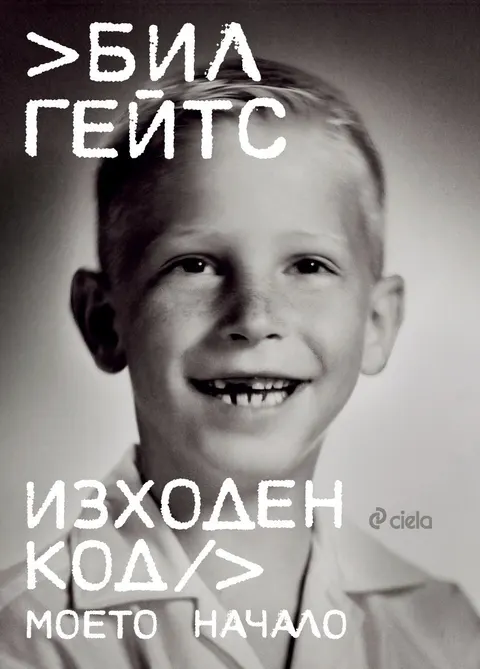
Although the book is quite hefty and detailed, it is only the beginning, covering Bill's stories from the first 23 years of his life. For the rest, he promises two more volumes—devoted to the real expansion and the times when Microsoft became a dominant force. Later there will be talk of his current ventures too, of his famous philanthropy and his views on the future.
So, it's as if we're in the pensioners' club of a small Bulgarian town long emptied of its bustle. A grandfather, grown wise with the years, has sat down with his grandchild over a glass of water and a spoonful of bialo sladko, the sugary white fondant Bulgarians traditionally offer guests, and begins to tell his story.
He goes back to those distant times when the foundations of Silicon Valley were being poured…
1. “The world, in general, can be understood”
We begin with a telling story, which I'll share with you in a somewhat longer quote. Because it is definitely worth it—to make us think, and to remind us of our own grandmothers. And to convince us once again that any task can become a challenge. Even one that develops in us skills and abilities we never suspected, that makes us set ourselves high goals. And so… here is how the good young Bill tells us about his grandmother and the hard-fought card battles with her, which later became the example that would lead him forward:
“There would be wealth, rivalries, and constant worries about staying at the forefront of the technological revolution. But before all that there was only a deck of cards and a single goal—to beat my grandmother.
The whole time I watched her closely. In computer science there is the concept of a ‘finite-state machine,’ a mathematical model that receives input and, based on a set of additional conditions, takes the optimal action. Gami was a true finite-state machine at games—her mental algorithm methodically processed the probabilities and the branching options for making a decision.
We played and played, and I lost and lost. But I watched and improved. Gami kept gently encouraging me the whole time. ‘Think smart, Trey. Think smart,’ she would tell me as I weighed my next move. The implication was that if I focused and used my brain properly, I could hit on the right card to play. I could win.
And one day I did. There were no fanfares, no prizes or applause. I don't even remember exactly what we were playing the day I won more games than she did. But I know my grandmother was pleased. I'm sure she smiled at me in acknowledgment of my growth. Eventually, after about five years, I began to win regularly. By then I was almost a teenager and competitive by nature. I enjoyed the mental struggle and the deep sense of satisfaction that came with mastering new skills. Playing cards taught me that however complex and impenetrable a subject may seem, you can often figure it out. The world, in general, can be understood.”
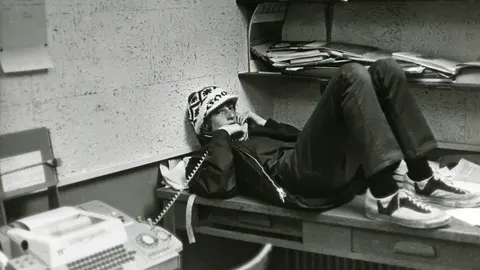
2. Billy the Kid
Yes, even Bill was once a boy who learned so much about life from playing cards with his grandmother. The tech world reminds us that it is entirely possible for a person of the most unremarkable social background, who landed in the right place at the right time and was stubborn enough not to give up, to work wonders.
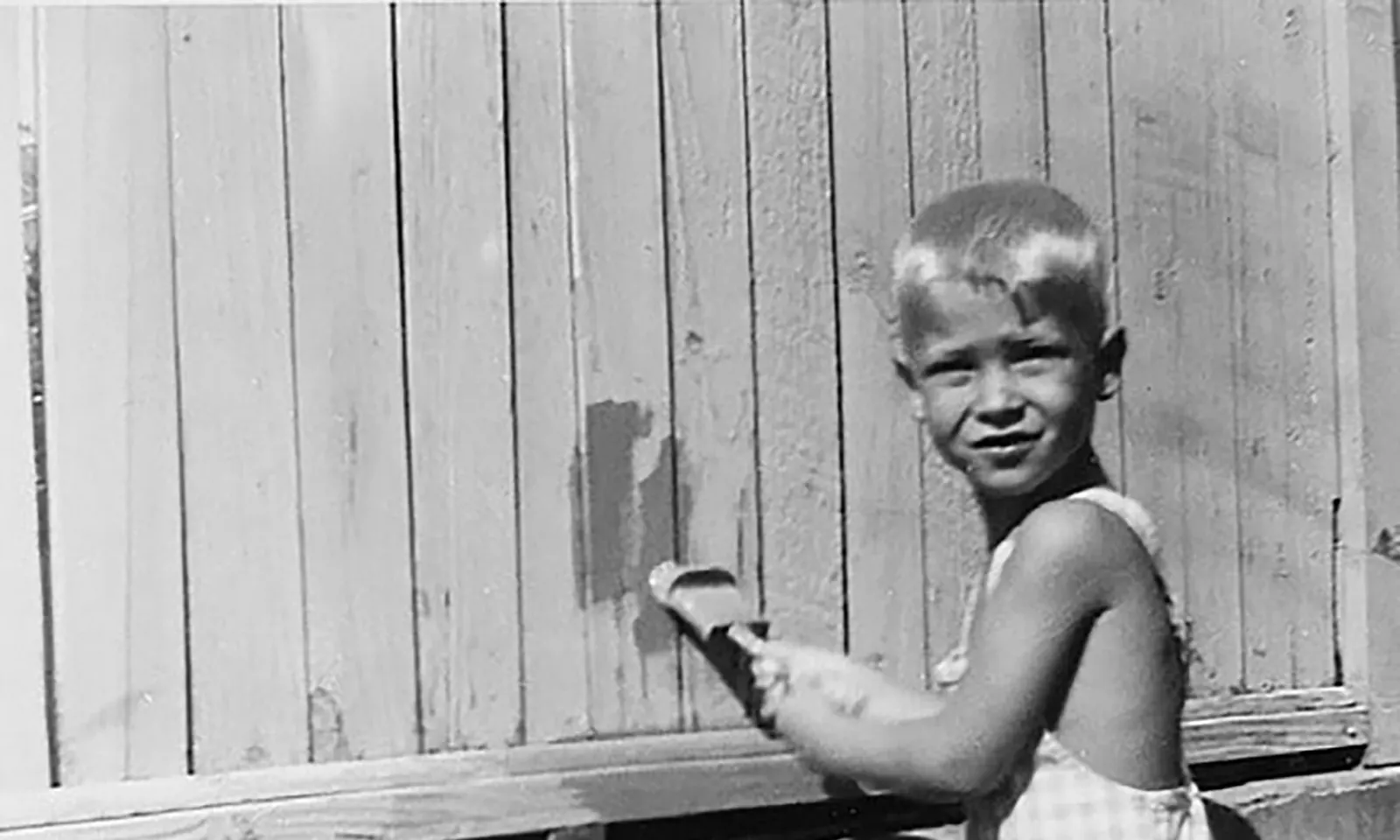
A perfectly ordinary kid, just like the one we see on the cover. Or, as Bill himself describes it (I allow myself to call him by his first name; after all, we're colleagues—programmers):
“I was born on October 28, 1955, the second of three children in the family. Kristi, born in early 1954, was twenty-one months older, and Libby didn't appear on the scene until a decade later. As a baby I was called Happy Boy, because I always had a wide smile on my face. Not that I didn't cry, but the joy I felt apparently outweighed the other emotions.”

3. Read, Bill, Read!
You have probably noticed that “bill” in English has quite a few meanings, and one of them is the account you pay at the end. Well, as a kid he certainly couldn't account for what he wanted to do. What to take up, which way to go. Contrary to the stereotype, as a boy he was drawn mainly to two things—books and mountains.
It's worth pondering that the technologies he and his colleagues paved the way for, the digital revolution that came with the help of his developments, have certainly distanced us as human beings from both.
“Books were the only thing my parents never hesitated to spend money on. One of our greatest treasures was the complete 1962 edition of the World Book Encyclopedia. I was amazed at how much information was packed into the twenty red-and-blue volumes, with their glossy pages and bright illustrations. Especially interesting were the transparent plastic diagrams of bones, muscles, and organs that layered one over another to form a whole human body. That encyclopedia was for me a door to nature, geography, science, politics, and almost every other field of knowledge.
By the time I turned nine, I had read almost all the volumes, from A to Z. On top of that, every January the encyclopedia's Yearbook arrived in the mail like a belated Christmas present—a twelve-month helping of history in the making, which I devoured greedily.”
Of course, stereotypes don't help here. I once ran a similar experiment myself: I invited 15 Bulgarian IT leaders to tell me their favorite books, and the results were more than remarkable.
Well, for today's hero this is nothing new. Every year he publishes a list of reads he recommends. I wonder when this will become a tradition in Bulgaria too?
What's more, books are what made him dream. And search for the path to success.
“Together we read the biographies of famous figures, of leaders like Franklin Roosevelt and Douglas MacArthur, and picked their lives apart. We analyzed the paths that led them to success with the same teenage fervor with which our peers deciphered the lyrics of Lucy in the Sky with Diamonds. How did a person get into West Point and, over time, become a great commander? We compared General MacArthur, groomed from an early age to pursue a military career, with General Patton, who seemed born to be a brilliant leader. To gain historical perspective, we leafed through books about Napoleon, captivated by his genius and his terrible flaws.”
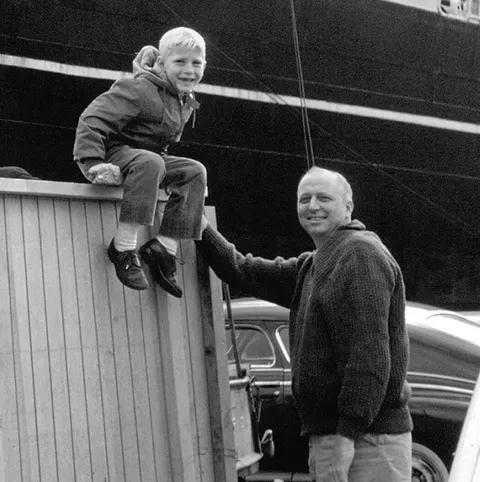
4. An Inseparable Class
What ultimately won Bill Gates his fame (and his money) is that, together with his team, he managed to create the first software for the first personal computer. These were no longer the enormous machines that filled entire rooms and were available only to scientific laboratories, but a new generation of technology ready to enter every home.
None of this would have happened the same way had Bill not befriended “the right people.” We go back to the 1970s, when the future richest man on the planet meets Paul Allen. He and the Microsoft co-founder would be bound by such a long, deep, and complicated relationship. But it all begins with a classic childhood encounter:
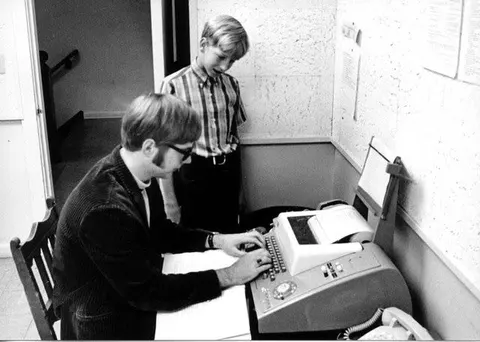
“A boy named Paul Allen immediately sensed my attitude and made excellent use of it. The first lines addressed to me by the person with whom I would later found Microsoft were along the lines of: ‘Bill, if you think you're so smart, tell me how to do such-and-such.’ The Lakeside computer room had opened just weeks earlier, and we were all jostling for a spot in front of the machine. Without any instructions, apart from the scant guidance of our teachers, we struggled to figure out how to write our first programs. Paul was fifteen, two years older than me, but considered himself far more mature.”
As our hero himself admits in the book, he would later force his friend and partner Paul Allen to give up more and more of his shares in the company that would become a global hegemon. But before we get there, the wild young years have to pass. Bill's best friend was named Kent Evans; gradually, with Paul and one more kid, they became an inseparable quartet, until… they fell out in a particularly ugly way.
Here we come to a human tragedy from which Bill would learn a great deal. Years later he would talk with Kent's family, and together they would discuss whether the whole history of personal computer software might have unfolded differently had this not happened. Kent, Bill's best friend, died after an accident while rock climbing.
“Dan told me bluntly that there had been an accident during the climb. Kent had fallen, and a helicopter rescue team had taken him to the hospital. I expected to hear when I could visit him. ‘I'm sorry, Bill, they couldn't help him. Kent died last night.’”
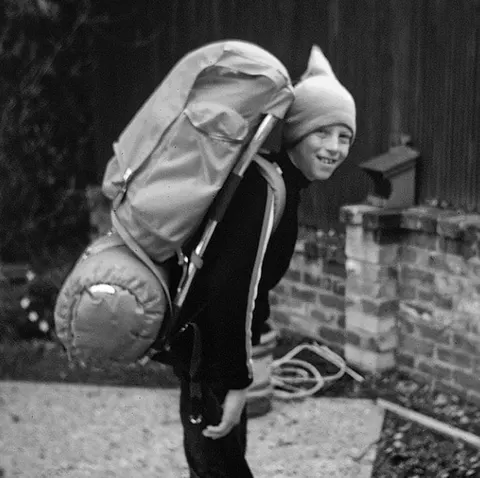
5. How the Silicon Was Tempered
Having lost his best friend, as Bill himself tells us, he kept moving forward. At the same time, his relationship with future Microsoft co-founder Paul Allen deepened. By then Bill had just been admitted to Harvard, where he ran into the typical challenges of youth. He is even quite candid about them:
“It all started with Scotch—cheap Scotch that Paul brought and got me drunk on for the first time, so that I threw up and fell asleep in the Lakeside teachers' lounge. That episode was followed a few days later by a demonstration of how to smoke a joint. And then, of course, he declared that I couldn't really call myself experienced if I hadn't tried LSD. I refused.”
Bill and Paul's first encounter with alcohol (and more) remains tersely recounted, unlike their encounter with computers. At first, as a school project, he got the chance to work with the most advanced technology and to get to know the BASIC programming language. He and Paul often talked about it and reached a conclusion that sounds especially relevant today:
“Again and again our evening conversations with Paul came back to software. Software was different. There were no cables, no factories. Writing software required only brainpower and time, and the experience we had accumulated made us unique. This was the field where we had an advantage. We could even rank among the leaders. But first we needed a computer.”
6. Blessed Years, When Microsoft Was Young
Unexpectedly, it appears—the first prototype. The two come across an ad that impresses them:
“The era of a computer in every home had arrived? Was that really so? For the price of $397 for the Altair 8800, you got the unassembled version—a kit of hundreds of separate parts. Once you had finished all the screwing and soldering, you could only hope the machine would work.”
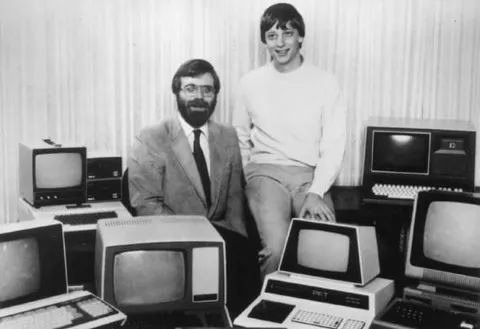
The two decided to seize the moment. Here we reach their big breakthrough. Thanks to Bill's access to Harvard's computers, they managed to develop pilot software, which, however… they were not at all sure would run on the strange, unassembled machine that would become the ancestor of the personal computer. They contacted its manufacturers, and the next day Paul flew to their office. (This story is closely tied to the legendary figure of Gary Kildall, “the better Bill Gates”, whom the “original” never mentions in his memoir.)
But the story unfolds like a movie. Paul was already on the plane to present the software, written mainly by Bill, when it occurred to him that perhaps they weren't ready to show it to their future partners.
“And indeed, we had missed something. On the plane Paul realized that we hadn't written a small part of the program called a bootloader, which was responsible for loading it and launching it from the computer. He took out his notepad and began feverishly writing the missing lines.
The next day at MITS the machine was set up with 6K of memory and a paper tape reader. Paul entered his bootloader, which took a while, because every byte had to be keyed in by hand using the eight switches. Then he started the reader. Loading our BASIC program took about seven minutes. Finally the tape reached its end, the program started and… nothing happened. It didn't work. They tried again, and this time the terminal displayed:
MEMORY SIZE?
Paul typed in a few BASIC commands to demonstrate our magnum opus.
PRINT 2+2
4
OK
With that, the first software written for the first personal computer came to life.”
7. Billy Idol
Can you imagine? 2 + 2 = 4, and entrepreneurs rejoicing like little children…
Bill would soon abandon further steps in his education in favor of a small company that still needed a name, and they would settle on Microsoft, a name worthy of colorful anecdotes. As mentioned, the giant's rise remains the subject of Mr. Gates's next book. Before we part, though, I'd like to pass on two more brief strokes from his story told over bialo sladko.
The first concerns a corner of nature where even today he finds refuge from the technological madness. Remember that we began with the instructive story about his grandmother Gami and the cards? She comes up again now:
“My mother and grandmother always wanted us to have a place on Hood Canal where we could all gather once my sisters and I grew up and had families of our own.
Gami died in 1987, before they could carry out their plan. On the day of her memorial service, my parents, Libby, Kristi, and I went out to look at a plot of land my grandmother had found for us. I bought the property, and over the following years we built several houses there. This family nest, which my mother named Gateaway, served as my refuge in the good and bad moments—mostly good—of Microsoft's early years. I made a habit of setting aside a week of personal time on Hood Canal, which I called ‘Think Week.’
Once or twice a year I would drive or hire a seaplane to go and spend seven uninterrupted days buried in books, articles, and newspapers—a crash course in everything I thought I needed to learn.”
8. Kill Bill
So what cards was Bill Gates dealt to reach the position of richest man on the planet, to pave the way for the next generation of digital leaders who today dictate the most important steps concerning all our futures?
“I'm not prone to nostalgia, but there are days when I'd like to be thirteen again and make that bet with the world that if you just keep going, learn more, and understand better, you can make something truly new and useful.”
I couldn't find a clear-cut answer for myself—luck certainly has a worthy place in the recipe, but so does persistence. And stories like these come to remind us that we are all human, and that what unites us is greater than what technology teaches us divides us. And at certain moments even figures like Bill Gates can become likable. Relax, show what's inside, what warms the heart.
“For most of my life I have been focused on what lies ahead. Even today, most of the time I work on ideas for breakthroughs that may not happen for years, if at all. But as I get older, I find myself looking back more and more often. Piecing together memories helps me understand myself better. The funny thing about maturity is that if you set aside everything you've learned over the years, it turns out that much of you was there from the very beginning. In many ways I'm still eight, sitting at the table in Gami's dining room as she deals the cards. I feel the same sense of anticipation—a child who is alert and wants to make sense of everything.”
I know it's a heavy cliché, but I agree: it's worth keeping the child inside us alive. And giving it more chances to shine, especially in the chaotic world we live in.
Don't believe me? Ask Bill Gates the next time you run into him…