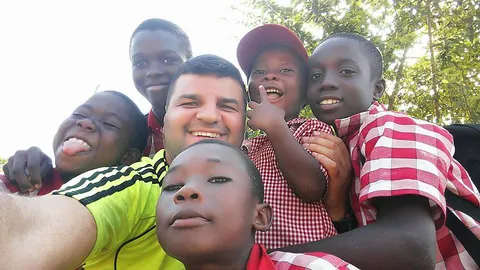
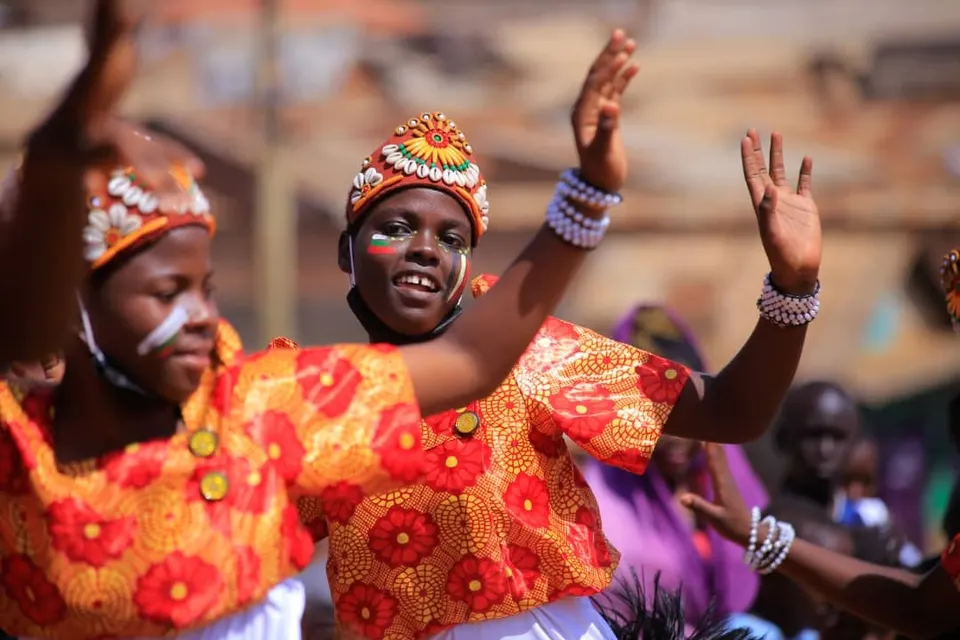
You have seen them online or on television, and they are unbelievably moving. Focused on the song, serious, artistic, whether they are singing “My Country, My Bulgaria” or dancing the Danube horo, a fast Bulgarian folk circle dance. It is a peculiar sight, because they look nothing like the traditional performers of these songs. They are simply… Ugandan kids. And the bridge between cultures is thrilling.
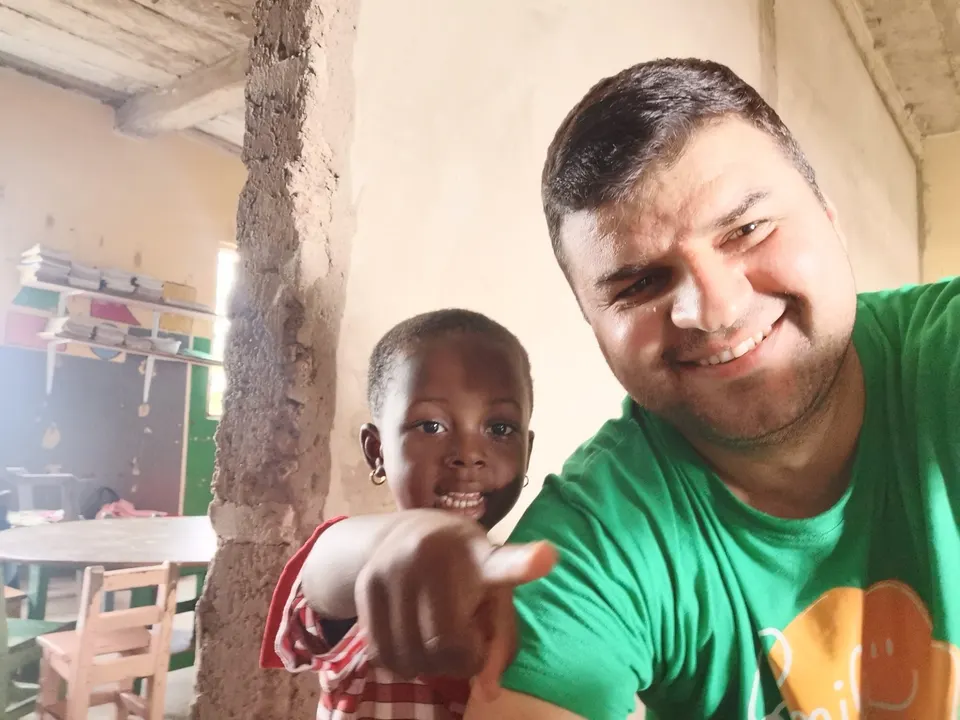
This bridge has a name: Daniel Delibashev, a big, warmly smiling man from the Rhodopes, the mountains of southern Bulgaria, born in the village of Tsrancha, who has one child in Bulgaria and… more than 150 of his own children in Uganda. He makes sure they have something to eat, that they can study, that they get their chance. The story is as moving as the videos of the kids presenting Bulgarian culture with such precision, care and emotion. As a thank-you to the big Uncle Dan from Bulgaria and to everyone who has helped them. In a pure and beautiful cause, the kind we so rarely come across.
Gavroche's Little Brothers
Once upon a time we were lectured about the starving Somali children and how unseemly it was to frown at our slice of bread with butter and honey while they had nothing to eat. These days that argument seems to have vanished from the parents' arsenal in the battle of the chia-seed soup against picky eaters. Yet little has changed when it comes to inequality. Even today Africa has an enormous number of children who go hungry, who are forced into prostitution. From an early age they face the ugliest sides of life, the ones that here, however much we complain, we have forgotten even exist.
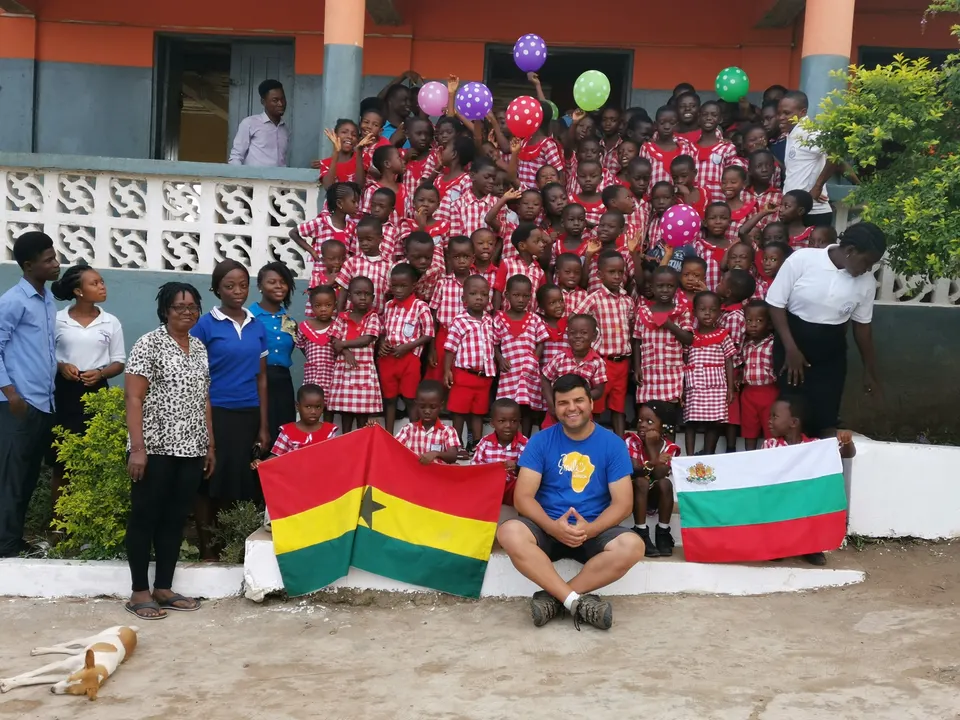
- Daniel Delibashev is closing in on 40. He has spent his whole life in banking, including in some rather senior positions, and he has a son he had early enough that the young man is already setting off on his own path. He decides the moment has come to fulfill a long-held dream. He leaves for Ghana to volunteer at an orphanage. Yes, he knows he could be useful to children back home too, but he also knows there are parts of the world where many, many kids are left without a childhood, and that is where his heart pulls him.
Even so, he finds it hard to imagine exactly what he will see. He sets off on his first trip thinking he will help with computers and televisions, only to discover that the kids need far more basic things.
You, All Cast in Malice
And how does Uganda come into it? This story belongs among the Digital ones not only because of the videos that went viral. It all begins when Daniel receives a message on Facebook that touches him. An unknown boy writes that he is in a camp in Uganda where more than 50 children have not eaten for two or three days and need urgent help. “I wasn't at all sure it wasn't a scam. But I preferred to send a small sum to give myself some peace of mind. If these children really had nothing to eat, I wanted to know I had done something. I've done it many times; you often prefer to buy yourself peace of mind, even if you're being lied to,” Daniel says.
And since he is still in Africa anyway, he decides on the spot to go to Uganda and see whether the situation really is that dramatic.
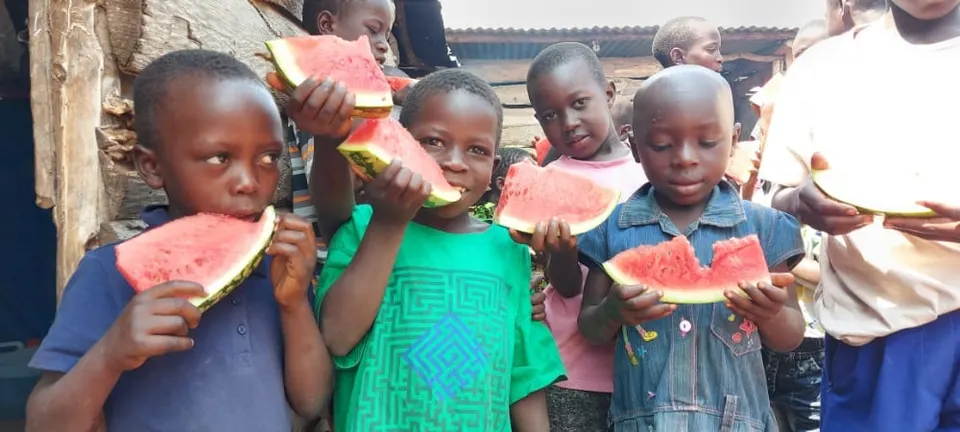
It all turns out to be the plain truth. More than 50 children at the orphanage have nothing to eat, even though it takes only 1 lev (about $0.60) a day for each of them so that they don't go hungry.
That Every Violet Evening
You See the Poor Children
Daniel is shocked, but also driven. He returns to Bulgaria and within days creates Smile for Africa—a foundation meant to attract more attention and humanity and to raise money, so that the children he has seen, the ones who pierced his heart, never go hungry again.
Very quickly he also builds a website for the venture. The technical side is taken on by a familiar hero of an earlier Digital Story—Radi from Barutin. The young programmer pours effort and heart into building the site, which still helps promote the work of Smile for Africa today.
From that moment on, Daniel has only one goal. To raise money and make sure it is spent as wisely as possible on the ground, so that more Ugandan kids get at least the most basic foundations in life.
The Undeserved Insult
On the Exhausted Faces
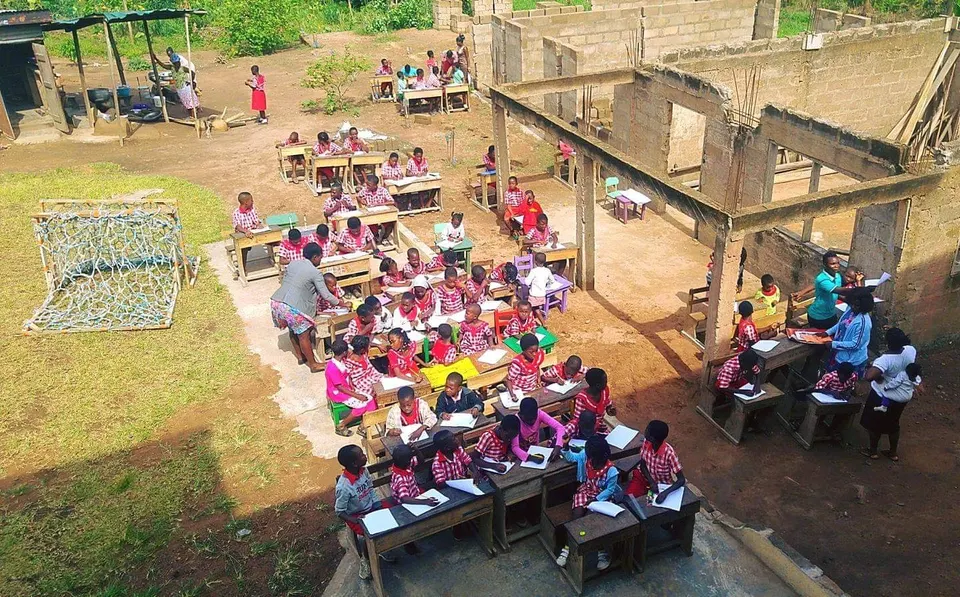
For the past two years Daniel has alternated months in Uganda and in Bulgaria. Raising money and then spending it wisely. In this short time he has already managed to build a kindergarten and a school. Sadly, they cannot yet run at full steam, because faraway Uganda is going through the same thing as everywhere else on our cramped little globe. The coronavirus measures are seriously limiting his projects. Still, his main goal has been achieved—he has secured a steady supply of food for the kids at the orphanage near the Ugandan capital, Kampala. And the places of learning are just waiting for the restrictions to fall so they can welcome the children.
What is the big Uncle Dan from the Rhodopes proudest of? “People usually take pride in the most significant thing. But I'm made happier by the small things, the ones you contribute to every day. Knowing, for instance, that hundreds of children got food today, have a roof over their heads, have access to education. Those basic things we're used to getting and never think about. I don't need anything else. If you know you've left something that will be there for generations, even after you're gone, it gives you the feeling that you've done your job in this world, at least in part,” says the founder of Smile for Africa.
Fate Deceived Them Early
He still has plenty of plans ahead. The next big goal is to build dormitories for more than 100 orphans who live in very harsh conditions. For them to get a home, food and care, and on top of that, the chance of a better future. So that one day, when they have families of their own, they can take care of them.
Daniel draws up his plans according to where he is most useful. If the foundation has no money, he is in Bulgaria, promoting its work and presenting it at meetings with people who can help. And once the money for the next step is raised, he travels with it to the site, so he can watch closely that it is spent in the best possible way.
And There They Are, Standing on the Corner
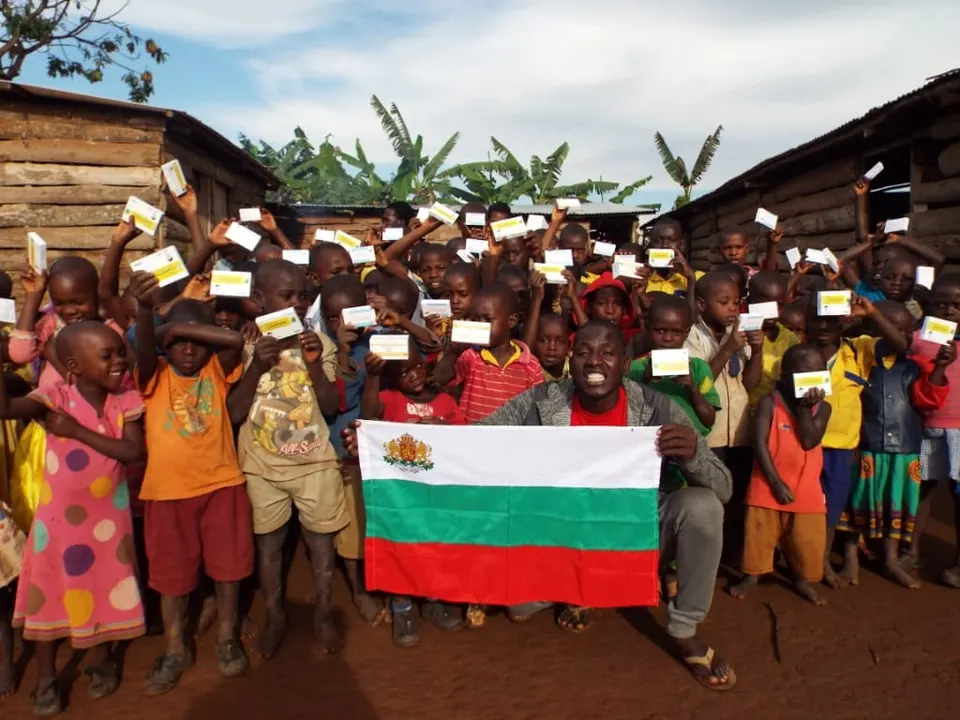
Smile for Africa became truly popular thanks to the clips in which the Ugandan kids get a taste of Bulgarian culture. Daniel admits he didn't expect it; otherwise he would have started showing the videos much earlier. Yes, he sometimes dislikes how the focus shifts. But it is a rather good way for the cause to reach more people, so they respond, pitch in as they can and support it.
For a long time Daniel tried to raise money by telling various people and companies about the children's problems and about the cause itself. But the meeting of civilizations turned out to be a far more persuasive argument.
Perhaps what makes the clips so moving is how naturally and emotionally the kids from such a distant culture manage to touch ours and recreate it. You can tell at first glance that they are not simply performing something they've learned by heart.
What Do You Give Them From Your Splendor
And it all began by chance. Daniel had the idea of showing his new little friends in Uganda more of Bulgarian culture, but they beat him to it. One of the groups decided to surprise him on his arrival by learning a Bulgarian horo from a clip on the internet. Uncle Dan, as the Ugandan kids call him, was genuinely impressed. He soon filmed the performance and posted it online to show his friends.
The reaction was an avalanche. Bulgarians were deeply moved by the video. And the Ugandan kids were eager to keep going—because they understood it was helping them, because they had grown curious, and because song and dance are in their blood.
In a single afternoon they learned the Danube horo. For Bulgaria's Got Talent they prepared not just a moving vocal performance but an entire show set to the classic verses of “When Two Walk Together.”
You, So Generous to Some
Maybe you think the kids don't know what they are singing about, don't understand the words and the lyrics? Not at all. “I always explain the song to them, line by line. First I play it so they can hear how it sounds and whether they like it. And when they say, ‘Okay, let's sing it,’ I translate and explain what it was written for. For ‘When Two Walk Together’ I tell them about the singer, about the film. Sometimes I explain it five or ten times to the children and the teachers. I translate, I tell them what's being sung, what the lyrics are, what they mean.”
“These children aren't there just to dance,” Uncle Dan adds. “This is their way of thanking the Bulgarians who have helped them. Thanks to their donations they have food and shelter, and they go to school.”
And so, somehow, the circle closes: the man from the Rhodopes carries his native places far away while fulfilling a dream as big as his heart—to help the kids of Africa, so distant from us in every sense.
Cruel Since Early Youth
Although his initial impulse to help with technology training crashed against brutal reality, he hasn't given up on working in that direction too.
Very few of the children have access to computers; most of those Daniel helps don't even have electricity at home.
Back in Ghana, he gave a laptop to the older kids. It turned out that from their very first school years they learn what a computer is and how to use it. What programs there are, what the main keys are for. And yet not only had they never touched a computer, they had never believed it could happen to them.
“It was unforgettable to see someone who had been learning about computers for years type their own name on a keyboard for the first time at 15 and stare at how it looked with an enchanted face…”
Before Your Gleaming Shop Windows
At the orphanage in Ghana the children get up at 4 a.m., and half an hour later they are already at work.
In the parts of Africa where Daniel has been, many families have five or six children. Often one of them is set apart to prostitute themselves and help feed the family that way. Many girls start giving birth at 13 or 14.
He has also been to mines where kids join the work before they turn seven or eight. They break rocks for a daily wage that doesn't even cover basic food.
Sadly ironic against the backdrop of a navel-gazing Western world. One that, for all its technology, is busier looking for the right pronouns for every gender and the correct neutral terms for different races. While it isn't particularly moved that the world still has extreme poverty and misery, straight out of Smirnenski—Hristo Smirnenski, the 1920s Bulgarian poet of the city's poor, whose “Gavroche's Little Brothers” lends these headings their lines.
And How Much Grief in Feverish Eyes,
How Much Sorrow Can Be Read!
I was curious to read more about Uganda and stumbled upon the official website of President Yoweri Museveni. A pleasant, “kindly” old uncle who is proud that since 1986, when he came to power, he has increased the highways from 1,000 to 5,500 kilometers! Literacy in (only) 35 years has risen from 43 percent to 75 percent! You know how things work in those parts of the world…
I found myself thinking about Bulgaria in the same context.
And I don't know about you, but I am more and more convinced that the problem is apparently not so much the leaders, whose calling is to try to be liked. Perhaps more often it lies in the people behind them—in us. Yes, we create our leaders ourselves. But is it right not to help them? And should we let them put kilometers before human destinies?
But Once Again They Leave in Rags
What do the children in Uganda need? “In most cases they have nothing, so they need everything,” Daniel says flatly. “Many of them have one pair of shoes, one set of clothes. Some have never seen a toothbrush. Others have never slept in a bed.”
We are used to thinking things aren't going well here. And that is true: for far too long now we have remained the run-down periphery of a supposedly mighty conglomerate of states.
But as the writer Georgi Bardarov says, a territory like ours cannot remain uninhabited. While many families still consider it a natural step to send their children to the West, the paradigm is changing very quickly.
The kids around Daniel, for example, ask about Bulgaria; they know our country is very beautiful. An eight-year-old boy at the orphanage in Ghana even offered to hide in his suitcase to get to Bulgaria.
With Countless Longed-For Things…
“This has made me happy for a long time—not buying things for myself, but doing it for others,” Daniel says. “I'd rather give a gift and see someone else's joy. But my encounter with Africa changed me even more. I used to not care what anything cost at a restaurant or a hotel, how expensive clothes were. If I liked something, I bought it. Now I know that material things give us only temporary pleasure. You buy a piece of clothing, you wear it, and it stops impressing you.
You eat some dish, very tasty, and you forget about it. Pleasures stay in the past. After a few days you have to look for something new, and then something new again. With material things you have to keep feeding yourself to keep the pleasure coming. That doesn't buy us long-term happiness. Whereas if you feed a child, it makes you happy not for a day or a week—it stays inside you forever. To remind you that you've done something meaningful.”
O Noisy and Dissolute City
And although he has seen some very hard sights in Africa, for Daniel that isn't the biggest culture shock. That moment comes after he returns home.
“Coming face to face with the conditions, the life, the people there for the first time hits you like a steam locomotive, especially the more sensitive among us. But the big shock comes afterward; I've heard it from many other people too,” he says.
“Yes, we see the misery, it horrifies us, we think we could never live in such conditions. But they are used to it there. The bigger shock is when we come back to Bulgaria. The collision with people, with the material world. The first few times it was very hard for me to go to the store and fill my basket with food. To walk into a restaurant or a bar, even to have a coffee and a water for 5 leva (about $3). Because I knew those 5 leva could feed five children for a day.”
And Your Electric Globes
Shine So Festively in Vain
Let me try to put it another way. As a rule, we prefer to ignore the idea that a great many people are suffering and that we could help them. Things change when we see it with our own eyes.
“Personal experience is far more powerful; it reaches deep inside,” Uncle Dan agrees. “You simply can't close your eyes, turn the other way and carry on as before. You can't help but start appreciating everything you have, once you've seen people without a home, electricity, water, clothes, food.”
“That's when you start wondering whether the material things you buy really make you happy,” Daniel sums up. “Or whether you actually need very little to be content, to have reasons to smile sincerely.” Like the children in Uganda, who smile thanks to the beautiful efforts of the big Uncle Dan…