Oh, what an interesting breakfast… Snap!
Tsk, tsk, tsk, look how that SUV slammed into the pole… Snap!
First day at the seaside, second minute… Snap! No, no, it's blurry, once more… Snap! Snap! Snap!
Actually, there is no “snap” if you've muted the sound—the camera shutter is a thing of the past. But who has time for settings, or for following the rule of thirds? At most a quick filter, to make it colorful, and the photo flies off into the endlessly scrolling feed to rack up likes, sweet and sour comments, and flirtations.
Shedding Responsibility
Then they fly off, trapped in our own filter bubble and that of our friends. We can't stop for a moment to realize that we have landed in the age of the image. But let Facebook and Instagram “go down” for a few minutes, and suddenly it's as if millions have been deprived of their senses.
In a time when anyone can shoot video with the same ease, photography reigns more regally than ever, gradually throwing down the gauntlet to our centuries-old culture of the written word. And yet, “All photographs are accurate. None of them is the truth,” says Richard Avedon.
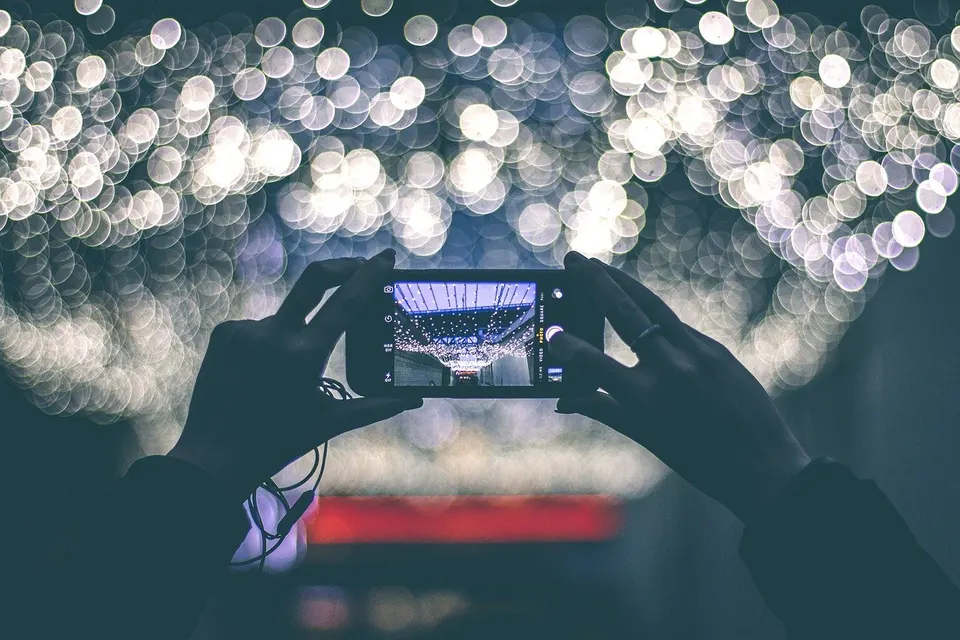
Snap by Snap, a Flood
1.43 trillion photos were taken in 2020, and more than 4 billion were shared on social networks. Had they been taken in the old days, the film for those 4 billion frames would have stretched to the Moon and back 142 times.
And if at home we can't resist photographing breakfast and the cute face the kid just made, what about the moment we find ourselves in front of the Eiffel Tower? The clicking turns into machine-gun fire. We shoot to remember; we shoot, like the pioneers of this art, to capture the moment and press it, dried, into the herbarium of social media. But in doing so we don't help it endure—quite the opposite. Here are some of the faces of the cultural phenomenon that the rise of digital photography has brought us to.
Do You Remember, Do You Remember the Quiet Yard
Long before we came to live under the law of “pics or it didn't happen,” Émile Zola wrote in 1901: “In my view, you cannot claim to have really seen something until you have photographed it.”
Oliver Wendell Holmes called photography “a mirror with a memory” in 1859.
The “photo-taking impairment effect” was described in a scientific study in 2014, and in 2018 the idea was confirmed and expanded by a new team of researchers. In short: people remember less about the objects they photograph than about those they simply observe. The illusion of remembering through photographing can overshadow other forms of perception. When we look at the world through a lens or a screen, we shut out the rest of the big picture and our other senses.
“When you take a photo, you subconsciously decide there's no need to try to remember. The camera will preserve everything important for you,” says one of the study's authors, Jennifer Soares. “Just like after you photograph your parking spot number, you simply don't bother remembering it.” Or the way no one knows phone numbers by heart anymore, having delegated that job to the little computer in their pocket. Makes sense, right?
The Impairment Effect
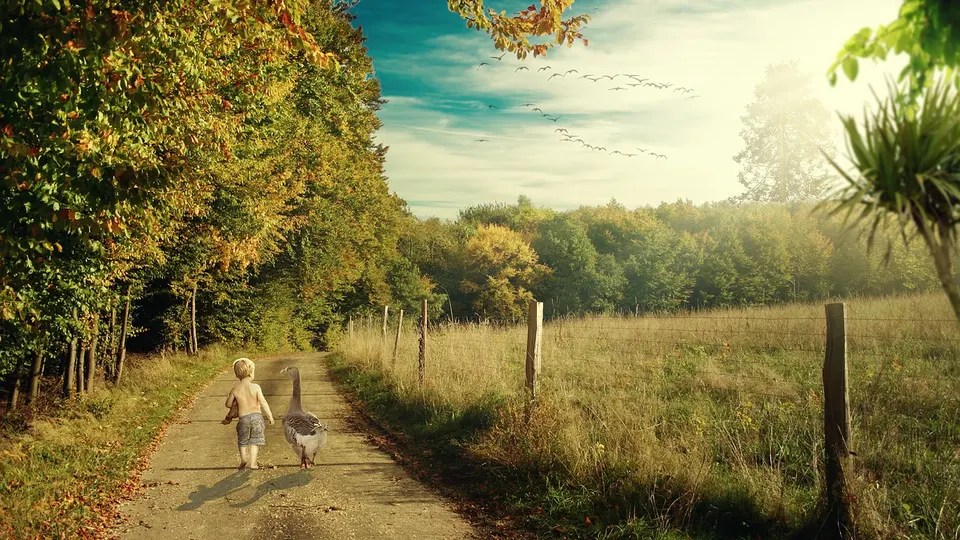
In the first experiment, in 2014, participants were taken on a tour of a famous gallery: half of them were only to look at the paintings, while the rest were to photograph them. Afterward they took a test checking what they remembered. The difference turned out to be drastic.
A curious detail: when people photographed a small detail of a given work, their impressions were much less affected. According to the researchers, this is a sign that looking more closely, a particular way of seeing, and spending more time could limit the “photo-taking impairment effect.”
In the second study, carried out a year ago, 42 people looked at paintings for 15 seconds each. Again, one group was asked simply to observe, and another to take out their smartphones and get to work. A third group had to take photos and then delete them a few seconds later.
The study unequivocally confirmed the main finding—the second group remembered the paintings significantly worse. But the interesting addition was that the people in the third group, with their vanishing photos, did almost as well as the observers.
Oh, Do You Remember, Madam
Let's make one important clarification: creating photographs that are works of art will always require a set of knowledge, skills and talents. No matter how much more the technology gives us, only the person behind it can create beauty. We're talking about other kinds of photos here.
“It's not what you look at that matters, it's what you see,” says Henry David Thoreau.
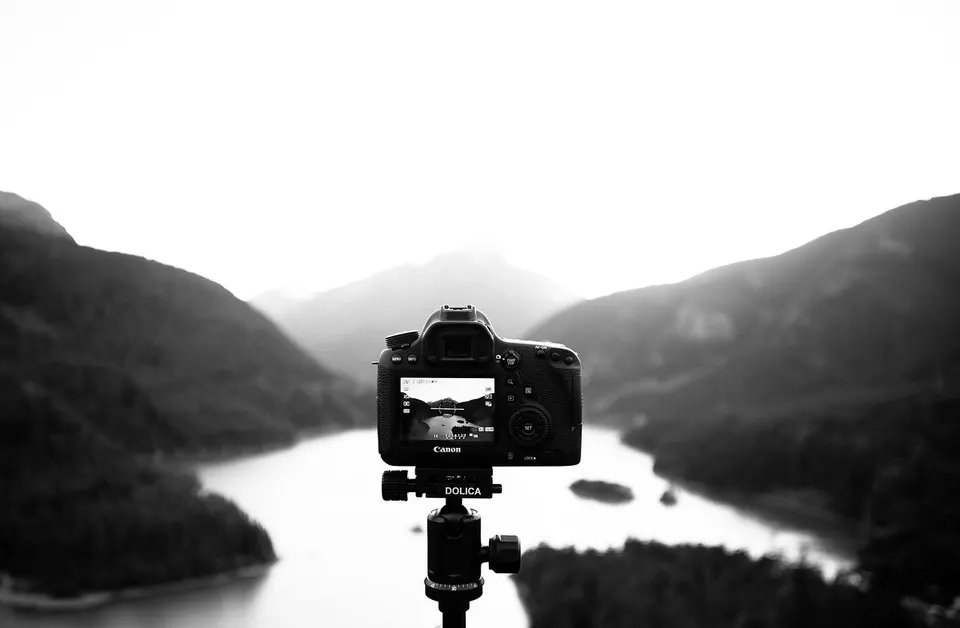
This story, of course, doesn't begin with Instagram. In 1900 the Kodak Brownie hit the market—the first camera ready to serve amateurs, with the promise “You press the button, we do the rest.” Film photography peaked in 1999, when around 80 billion photos were taken.
When Nicéphore Niépce made the first photographs at the beginning of the 19th century, the exposure took between 6 and 10 hours (just imagine how Instagram enthusiasts would feel holding a pout for that long). Then Louis Daguerre stepped in with his daguerreotype, which sped up the process considerably. Technologies came and went; in just a century the time needed for a single photo shrank 10,000 times, until we reach our own day, when photos practically require no time at all. They are instantly ready to fly online.
You remember those thickly bound cardboard albums at your grandmother's, with rice paper between the pages, from which whole bygone lives peeked out—from their first moment to their last. Photos that truly carried the moment within them.
Today it's different. First of all, we create them to speak here and now. Our memories are now “remembered” in the instant. We spend more time than ever looking through the camera's eye, and even more aimlessly gawking at other people's photos, peering into the memories of those close to us and those not so close.
Photo Lotto
You snap, you share and you move on… Photos become something so ephemeral, so fleeting, that they turn into tiny links in an endless scroll.
You may remember Snapchat—a few years ago the app with the ghost logo became a hit by letting you send friends photos that disappeared 10 seconds after they were received. Almost as quickly, it vanished as a mass trend in our part of the world, but it left a mark. One of its obvious heirs is Facebook Stories, which stay visible to your friends for 24 hours and are shown to them for just a few seconds.
Nathan Jurgenson is a sociologist and one of the best-known people behind the aforementioned Snapchat. He is also the author of the book The Social Photo: On Photography and Social Media. In his view, it is precisely ephemeral photography that is the cultural counterweight to the superabundance of images. And the quickly disappearing frame provokes memory, because it welcomes the possibility of forgetting.
Everyone to Japan!
“Why do I photograph my coffee cup? Simply because there's someone to look at it; the reason isn't that my phone is more advanced, focuses fast, has 3 cameras and a 16-megapixel sensor,” he says. “The reason we now take so many photos and talk through them, the reason photography has become so important—socially and personally—is that social networks provide an audience.
We don't stop to think about why we take so many pictures, or why we share them—this is what I call social photography,” says Jurgenson. “A huge share of photos are not taken by people for whom this is a profession, but by people who want to speak through images. What makes such a photo successful is not the beauty or the skill embodied in it, but precisely its social aspect.”
That is why Jurgenson distinguishes these photos from all others and introduces the term “social photography,” completely different from its former meaning and tied, of course, to the omnipresent networks in which we are all entangled.
In his words, it “tries to capture the moment, to capture what is going on between the ears of the person who took the picture.” And these pictures make us smile or bring a tear to our eye. We comment on them, discuss them, and then they disappear, just like our memory of them. You post a story on Instagram, and 24 hours later it has sunk. In this way, photography becomes something more precious and sets off on its own, different path.
The subjects and scope of social photography are rather narrow. They focus on luxurious experiences, happy emotions, outward beauty. Very rarely does anyone photograph unattractive or elderly people, except when the emotion sought is pity.
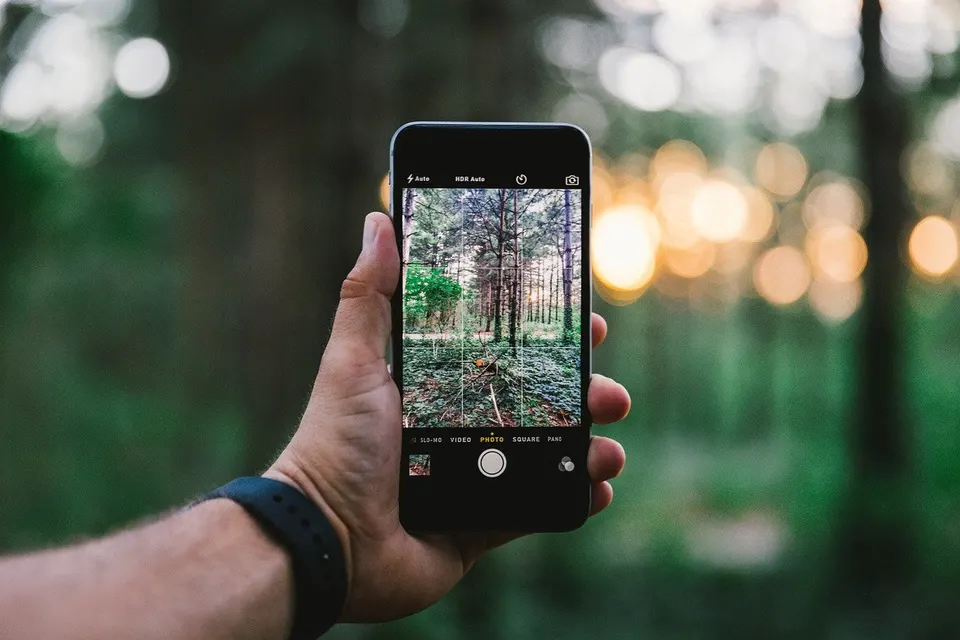
Photo Shootout
Every journalist has heard the sinister question, “Do we have a good photo of the crash?” Taking a successful social photo requires no knowledge of photography. Very often it's a matter of luck… or of its evil twin. On September 18, 2014, during a flight from Long Beach to Austin, Texas, one of the plane's engines failed, the cabin filled with smoke, things looked critical—and one of the passengers, Scott Welch, took a grinning selfie.
Fortunately, everything ended well, and the photo Scott shared quickly spread online. It sparked such heated debate that a few days later The New York Times published a detailed piece raising a serious question: is taking a selfie, or photographing an event, really always the most important thing?
In recent years you have surely had many occasions to think about this, and in some form the question has always faced professional journalists—is it more important to help, or to capture the event?
But Not Oblivion
We all live for the moments that are remembered. I doubt that for you it's the hour with a vacuum cleaner in hand, the routine lunch with colleagues, or hanging from a strap on a bus stuck in traffic. It's exactly the opposite moments we want to preserve. And almost always we do it by means of photography—how much less often would it occur to you to record sound, or to shoot video?
But gigabytes and terabytes of digital memories don't help us remember more—on the contrary, they devalue what we have lived through. The proof? When did you last look through all the photos you took back in “distant” 2019?
“Technology and nostalgia have become co-dependent: new technology and advanced marketing stimulate ersatz nostalgia—for things you never knew you had lost—and anticipatory nostalgia—for the present that flees with the speed of a click,” sums up the writer Svetlana Boym.
When they were scarce, photographs could age like wine, accumulating value and patina. Now that they are abundant, that's no longer the case.
Seize the Moment
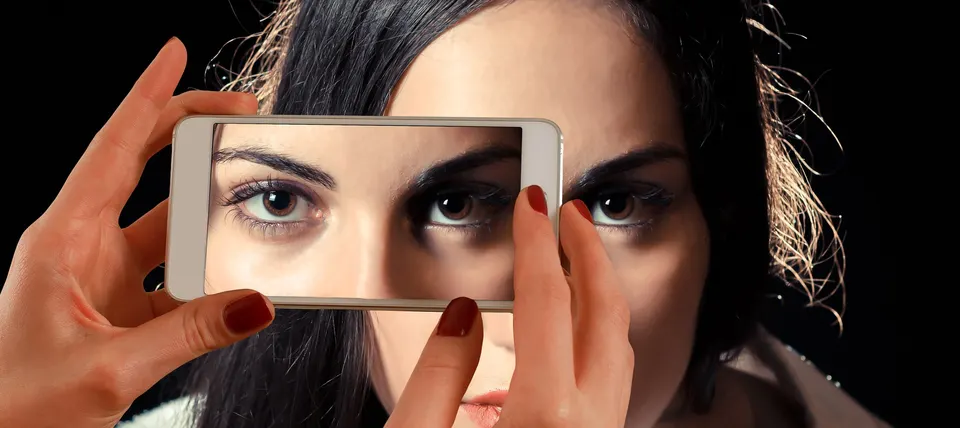
And yet, ever since this art was born, the aim has always been for there to be more and more photos. For them to be faster and easier to take, more accessible. Today every “snap,” financially speaking, costs nothing, compared with the 50 or so stotinki (about 30 cents) it cost when you shot on film.
An interesting phenomenon, according to Jurgenson, is the fashion for artificially aging Instagram photos with filters. Adding warm colors, desaturating, artificial glow, signs of wear, a matte-border effect… Consciously or not, one of the reasons, in his view, is to simulate the times when photos were something rarer and more precious.
You've probably noticed how, after you upload a photo, Facebook starts suggesting you tag the faces of certain friends… and in recent years it has become astonishingly good at its suggestions. The more photos you upload, the more its algorithm knows about you and the more accurately it will recognize your next photos… which is quite convenient, but also carries risks that are worth discussing in more detail some day.
Negatives Don't Burn
Examining phenomena such as the selfie, self-destructing photos and food photography, Jurgenson shows that social platforms have drastically changed the world, our worldview and our understanding of our place in it. There has always been a difference between experience for its own sake and experience for the sake of documenting it, and social networks merge the two.
According to Jurgenson, it is temporary photos that bring things back to the beginning—because knowing that in seconds the photo will disappear forever makes you value it again, try to remember it, invest it with more emotional value.
“Every photo is made of time,” the sociologist says, “just as much as it is made of light. A sliver of the present frozen at shutter speed, locked within a certain frame. Photography has always also been a way to cheat death, or at least to declare one's illusion of immortality through a lasting visual testimony.”
Social networks are fertile ground for photos, because photos live by being shared. The so-called Zuckerberg's Law—each year every one of us shares twice as much information online as the year before—is clear proof of this. Overdocumentation is a self-defense mechanism for generating as much information as possible about yourself and your experience, and at some point it leads to inner chaos.
Memento Mori
And so… Snap! The fact that we carry a small world in our pocket, a gift from technology, doesn't mean we should forget the other one. At least until Facebook learns how to do it, we won't smell the scent of the blossoming linden tree by looking at its photo. Nor will the fact that we, along with a hundred million other people, snapped the Mona Lisa up close help us appreciate the painting.
Photography is a great art, an achievement of science and technology, a wonderful hobby… But when documenting everyday life turns into a manic photo cannonade, maybe something is wrong. Life is for photographing, but also for living.
To close, I give the floor to Susan Sontag, one of the best-known theorists of photography, writing in 1973. “Ours is a nostalgic time, and photographs actively promote nostalgia. Photography is an elegiac art, a twilight art. Most subjects photographed are, just by virtue of being photographed, touched with pathos. An ugly or grotesque subject may be moving because it has been dignified by the attention of the photographer.
A beautiful subject can be the object of rueful feelings, because it has aged or decayed or no longer exists. All photographs are memento mori. To take a photograph is to participate in another person's (or thing's) mortality, vulnerability, mutability.
Precisely by slicing out this moment and freezing it, all photographs testify to time's relentless melt…”
Published: dir.bg, July 10, 2019
Last updated: June 21, 2021
Sources:
The Social Photo: On Photography and Social Media by Nathan Jurgenson
On Photography, Susan Sontag, Iztok-Zapad publishing house
https://medium.com/s/futurehuman/modern-photography-is-changing-how-we-remember-our-lives-4b59adab4a2e
https://www.ft.com/content/e37d5d0d-0b76-474d-b385-962b12adc8e1
https://www.nytimes.com/2014/09/28/fashion/a-defining-question-in-an-iphone-age-live-for-the-moment-or-record-it.html
https://the.me/how-technology-changed-photography/
https://www.nytimes.com/2017/09/27/technology/personaltech/how-technology-has-changed-news-photography-over-40-years.html
https://www.bbc.com/news/magazine-16483509
https://thenewinquiry.com/pics-and-it-didnt-happen/
https://fstoppers.com/originals/mystery-photo-taking-impairment-effect-254085