“We’ve Forgotten That the Baby Knows How to Be Born”
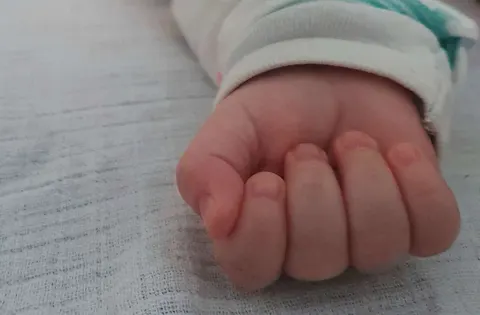
How has technology changed pregnancy and childbirth? What has it made easier, and how, paradoxically, has it created problems elsewhere in the way we come into the world? Evgenia Markova got in touch with me because of the Digital Children series and suggested we talk about this side of the relationship between technology and parenthood. She lives in Germany, and although she spent many years working in marketing and software development, today she works mainly as a doula. Especially popular in the West, this is the calling of women who are not medical professionals but who help expectant mothers with information, advice, and practical and emotional support. When can overtrusting technology become a problem in pregnancy and childbirth? Why is it worth returning to tradition in some respects and listening more to our bodies, not only to medical readings or other people’s advice? It is time for an important conversation, one that I believe can offer many useful ideas to people who are just preparing to become parents.
 02
“I Want to Live in a World Rich in Meaningful Conversations, Inspiring Stories and Responsible Journalism”
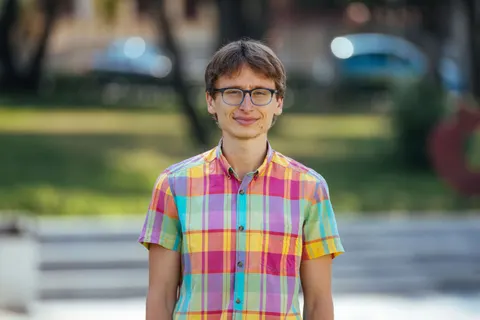
“We forget because we cannot keep up with processing all the information that reaches us and making connections between events, and this makes us very easy to manipulate.” Daniel Penev, a journalist, translator of nonfiction and author of books about the people changing Bulgaria, talks about the stories worth telling today. And about why, in a world of daily divisions, it matters more than ever that we keep talking to each other.
 03
Going “Out of Range”
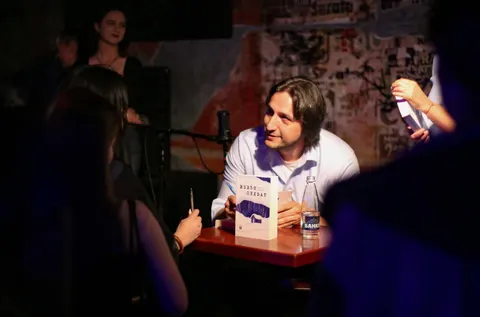
When did you last spend an entire day away from social media? Switch off your phones—we’re going “Out of Range.” Out of range not only of mobile internet but of technology as a whole, which has taken over so much of our lives. To look for where the human being has been hiding behind it all. That is the title of Evgeni Cherepov’s new novel, which makes us think precisely about the need for digital hygiene. About slow conversation, about deep stories and themes that cannot be told in TikTok format. Today’s guest has worked as a security guard and studied civil engineering before finding his calling as a teacher of Bulgarian language and literature. After long wanderings, he has returned to teach in his hometown of Stara Zagora. When does technology become too much for us, and why is it important to think about it? How do we learn to tear ourselves away from the feed and find a balance? “People have always needed pauses… Just like that, to stop for a moment, to take a step off the highway of their supposedly purposeful lives.”
 04
“Information Was Freedom. Now It Is an Instrument of Slavery”
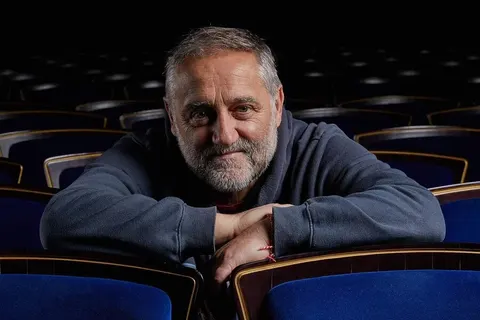
Today’s guest will never have artificial intelligence for competition, because he is not only a virtuoso of words but a mind so unconventional that it cannot be imitated. Alexander Sekulov, a playwright, poet, prose writer, journalist and founder of two music clubs in Plovdiv, talks about words as weapons, revolutions in digital times, spiritual laziness, intelligent humor and information emissions.
 05
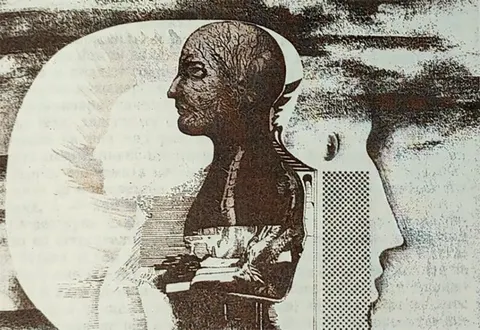
“The Computer Will Be Like Bread!” How Bulgarian Sci-Fi Writers Saw the 21st Century
What will the future look like? What would life in the 21st century be, seen through the telescope of Bulgarian journalists and science fiction writers of the 1980s? Ahead lie five brilliant insights, five dashed hopes and five… particularly interesting and important reasons to stop and think.
 06
“People Everywhere Are Gripped by a Sense of Disintegration”
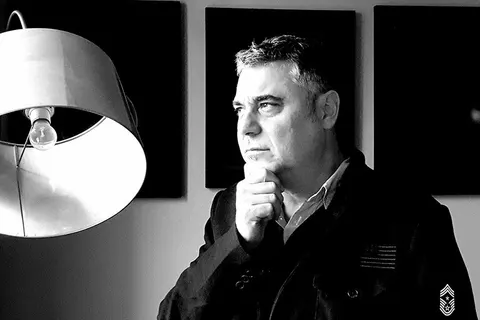
Alek Popov needs no introduction for anyone even remotely interested in literature. Mission London, Sestri Palaveevi… (The Palaveev Sisters…) and, at least for me, his finest novel, The Black Box. I would also recommend the collection Novi i izbrani razkazi (New and Selected Stories). But we have no time for literature right now; we are going to talk about life. And about technology. About the hygiene we need when consuming and sharing content. About the fault lines of today and our chances of talking normally about the important things again. About sex with robots. About deconstructed clichés and the sense of disintegration that is also driving us away from literature. “We live in a civilization that encourages banality in all its forms. Social media, PR and advertising generate clichés nonstop. Political language is woven mostly from clichés, and so is bureaucratic jargon. It isn’t just a matter of daily life—fast or slow—but rather of a particular ‘mental laziness’ that makes us mindlessly repeat ready-made formulas for success, for happiness, for love. Looking happy seems to have become more important than being happy. Few are those who catch themselves and say: hang on a minute, what is all this nonsense!?”
 07
Digital Minimalism: How to Break Free from Information Addiction
Imperceptibly, gradually and seemingly irreversibly, we have become dependent on technology. Or more precisely, on the information it floods us with, much of which we don't need and which is toxic and draining. The system known as “digital minimalism” offers a way to rein in this creeping dependence. But is it the universal solution?
 08
TL;DR
TL;DR: Nobody has time to read long, complex texts anymore. Or do they? Do we need them to keep our brains from “blowing up” and to stay human?