What will the future look like?
What would life in the 21st century be, seen through the telescope of Bulgarian journalists and science fiction writers of the 1980s? There is plenty to surprise us. Ahead lie five brilliant insights, five dashed hopes and five… particularly interesting and important reasons to stop and think.
“The new generations of machines and programs are closing in on the long-dreamed-of artificial intelligence. Naturally, we do not yet know to what extent human thinking and machine thinking overlap, but what matters is not how computers think, but the very fact that they can imitate mental activity.”
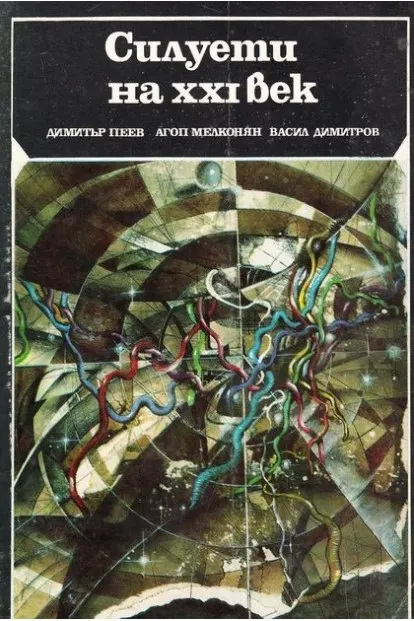
No, these are not the words of yet another user enchanted by ChatGPT. They come from the collection Silueti na XXI vek (Silhouettes of the 21st Century). The book came out in 1986, and its authors were Dimitar Peev, Agop Melkonyan and Vasil Dimitrov. Their names are familiar to every curious Bulgarian reader over forty, and to every connoisseur of Bulgarian science fiction.
On the eve of the New Year, it is more than interesting to dig into their insights. With our eyes on the future, let us wonder… what is really coming our way?
1. As Many Artificial Brains as Natural Ones
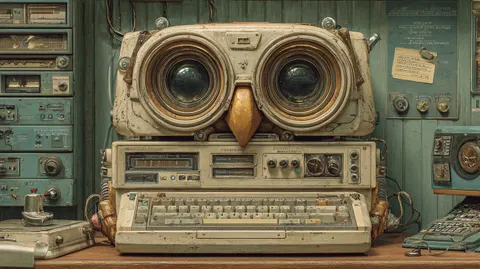
“In the 21st century, we will devote the greatest part of our free time to the computer. Its low price, ease of use and versatility make it not only accessible to all, but more than necessary. At this pace of development, by the beginning of the second millennium there will be as many artificial brains as natural ones.
The ways to use it are simply countless! The computer will be a household butler, a cooking adviser, a teacher for the children, a telephone directory and every other kind of directory, a librarian, a calculator, a consultant on work matters, a home translator and who knows what else. Even today, children in the developed countries spend several hours a day in useful communion with the know-it-all called the personal computer. For them, who will live in the 21st century, the computer will be as necessary as bread.”
And so we begin with the five undeniable insights among the authors’ expectations. The collection describes its genre as “essays on the future, science, technology, the Earth, outer space, man, society and culture,” and it gathers short texts by the three authors that sum up what they expected from the 21st century.
And here we are, about to close its first quarter. And the computer really is… as necessary as bread; on this one, the forecast proved shrewd. What will the next one be?
2. The Fiddler Agronomist
“An essential feature of people’s working lives at the end of the 21st century is that they will change their ‘professions’ many times over. We put this word in quotation marks because by then it will have a new ring to it: not one of duty, but rather of pleasure, of inner need. Today an agronomist is an agronomist (normally for life), and a violinist is a violinist. A hundred years from now, a person will change occupations (each time after brief retraining), will be an agronomist, a factory worker, a space pilot, a livestock specialist, a metallurgist and a designer, all the while remaining a musician and, let us say, a painter. Only in this way will ‘labor turn into song,’ and the worker into a well-rounded, harmoniously developed personality.”
I have already written about what Western and Soviet science fiction writers expected today to look like—here, and specifically in the field of information technology—here. The next digital story, coming right after the New Year, will be the view of futurologist Assoc. Prof. Mariana Todorova on what the future truly holds for us.
The fact is that today technology is turning the professions of the future into an enigma, changing the way we learn, and raising important questions that the quote above captures among the silhouettes with more than a little precision. Well, with the slight caveat that not all of us are space pilots, but… we will get to that topic too.
3. Every Forecast Is Inaccurate
“In recent decades, human life has changed radically, beyond recognition. Some even question humanity’s ability to adapt to these shockingly rapid changes. And so we all ask ourselves: where is our civilization headed? Will it not run out of breath from its own desire for progress? Will it be able to make sense of its own claims to a reasonable and prosperous life? And most important: does knowledge not carry within itself the seed of destruction, of doom?
Every forecast is inaccurate. And the more distant it is, the more inaccurate it becomes. We, the authors, understand this perfectly well. As people of the 20th century, we carry the limited notions of our time. That is why, besides scientifically grounded forecasts, the essays also contain intuitively sensed predictions and, of course, fragments of our dreams. We see nothing wrong in this. In our vision, the 21st century will be a grand, majestic hymn to the victories of reason, so it cannot fail to hold at least a tiny bit of our dreams.”
Yes, as you leaf through the pages, it is easy to be amused by the unrealistic expectations—turning the Earth into a garden, conquering space, the development of humans as a biological species. Technologies like cold fusion… Still, it is hard not to appreciate the dreams as well.
It is important to say a few words about the people behind these forecasts. I knew them myself when I was a kid; the lead author used to fold paper airplanes for me in the newsroom of the popular science newspaper Orbita, a symbol of its era in its own way.
All three authors were longtime journalists at that paper, where most of the collected essays were first published.
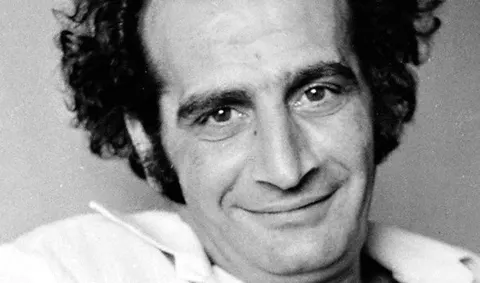
Agop Melkonyan (1949–2006) was a well-known science fiction writer, translator and journalist. An engineer by training, he spent many years writing about the technologies that change us. He wrote novels, novellas, short stories, plays and screenplays.
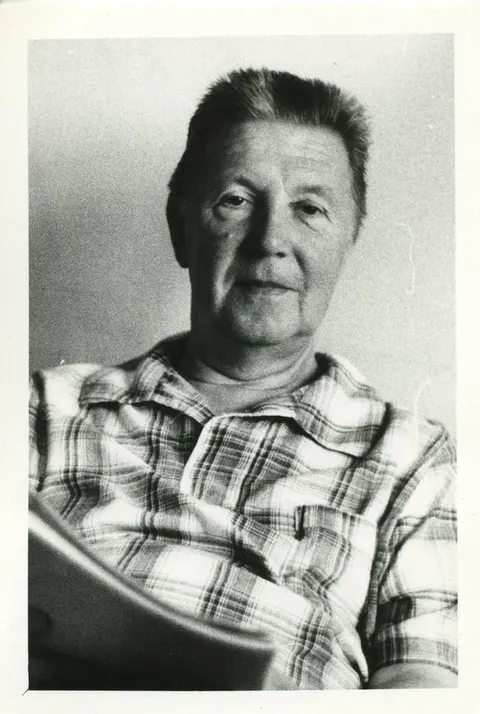
Dimitar Peev (1919–1996) was a science fiction writer, a journalist and… a doctor of criminal law. The founder and first editor-in-chief of the legendary magazine Kosmos, he headed the popular science newspaper Orbita for many years.
The third co-author, Vasil Dimitrov (b. 1944), was their colleague, a journalist, and the book’s editor was my teacher in journalism, the “father” of Inspector Strezov, Dr. Svetoslav Slavchev, who will get a digital story of his own.
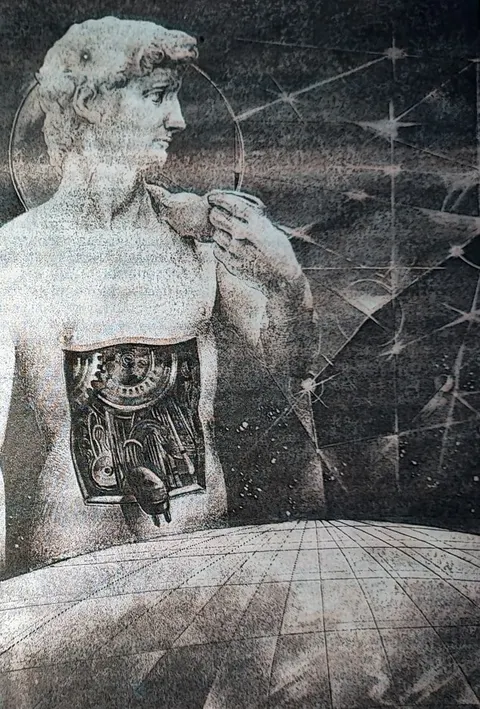
4. Supermodel: An Electronic Oracle
“The mathematical modeling of biological processes will in all likelihood lead to the creation of forecasting equipment whose capabilities can be compared to a kind of electronic oracle. Let us imagine that a patient’s data are entered into a computer that models his physiological processes down to the smallest detail in real time.
The possibilities of mathematical modeling are enormous. It will make it possible to test structures that have been designed but not yet built, whose realization as a prototype is too expensive and whose proper functioning is of particular importance. Such devices will include, for example, industrial reactors for controlled thermonuclear fusion or certain types of spacecraft. One cannot say that mathematical modeling is underestimated today, but its truly widespread use in almost all areas of science, technology and other fields will become a reality only in the 21st century.”
And so we have reached the epicenter of today’s big topics, His Majesty Artificial Intelligence. After all, machine learning, deep neural networks and the much-talked-about large language models are precisely the next stages in the development of mathematical modeling.
Yes, you could rightly point out again that we use them neither for thermonuclear reactors nor for space stations. But, paradoxically or not, it is a billionaire who came from the world of information technology that the United States owes its return to space.
So the world of information technology turns out to have been hit rather squarely by the pens of the three authors. And before we get to the predictions that proved too optimistic, let us credit one more of their insights—about the way we communicate today.
5. Home… Office?!
“Some fifty years ago, messages were mostly in written form. In fifty years, or even less, they will be audiovisual. We have no reason whatsoever to doubt this. The videophone will connect us acoustically and visually with friends and loved ones. Add to that the laser gramophone, color music, three-dimensional television, the visual image synthesizer, perfect home sound systems—how could anyone possibly be bored?”
Communicating online?! Yes, there was no way they could have guessed filter bubbles or the hate, but it seems we can see life today here, in the world of Skype and Facebook…
“Electronic computing technology, among other things, also provides the possibility of performing certain tasks remotely. Clearly, for the draftsman of the future it will make no difference where he works—in the drafting room or at home. The same can be said for the engineer, the architect and anyone else whose functions can be performed remotely. Not to mention writers, journalists and other creative people. A person working from home has a number of advantages. Above all, he becomes his own direct boss, and this is of great importance for the creative process. He becomes, to a certain extent, master of his own time, and this is a stimulus for very high levels of creative activity.”
I don’t know about the draftsman, but as both a journalist and a programmer I can say firsthand that the “home office” turned out to be a blessing. And one of the most unexpected consequences of COVID…
But speaking of COVID… the authors clearly had a soft spot for positive forecasts, and no pandemic of the kind appears anywhere in the 21st century as they saw it. Which brings us to five of the directions in their musings that, at least for now, look light-years away from reality…
1. Pencho, Don’t Write
“The unlimited growth of general knowledge means an unlimited growth in the knowledge of each individual scientist. How is the poor brain to cope? Statistics show that to keep up with the news in his field, a physicist must read at least six hours a day. So when is he supposed to work and make discoveries?
Forecasts indicate that the information explosion is a temporary phenomenon that will gradually be brought under control by the beginning of the 21st century. The number of publications will be reined in and will become commensurate with the number of new findings. If articles are reviewed more strictly, if public appearance ceases to be a measure of prestige or a condition for administrative advancement, publications will decline on their own.”
The information explosion is a temporary phenomenon. If only, but… at least for now, it shows no sign of being one. We don’t even have to remember things ourselves anymore; we delegate that too to the machines. We are sunk in an ocean of information, drowning in it, and it is changing us both as a society and as a species. Perhaps a happy ending still lies in the foreseeable future? And, at least in my view, it runs through the next forms of media…
2. Thermonuclear Sahara
“The first and most vital task of our descendants in the 21st century in improving the Earth will undoubtedly be the elimination of dead territories, of deserts, and especially of those areas where the sun shines generously and all that remains to turn them into gardens is to add water. And the most grandiose task our grandchildren will have to take on is the Sahara Desert. Imagine 70 countries the size of our homeland, but entirely made of dead sand and stone, among which barely three million people eke out a miserable existence. And now let us peek into the 21st century and imagine that same territory entirely covered with lush vegetation, with forests and pastures, with blooming gardens, where at least a billion people can live freely.”
We are doing such a fine job of improving the Earth that 40 years later we have had two nuclear disasters, we still threaten one another with atomic weapons, we argue over monuments, we split into good guys and bad guys… Meanwhile, the global South is still mired in the same poverty, hunger stalks many places on the planet, wars break out, people kill each other…
And the Sahara stays unimproved, with no “blooming gardens.” Maybe technological evolution simply makes us think of ourselves as something more than mortal beings? Maybe the writers of that era were prone to unfounded optimism? Or maybe the sands are there waiting for the return of a little curly-haired blond boy who will remind us that we can and must be better…
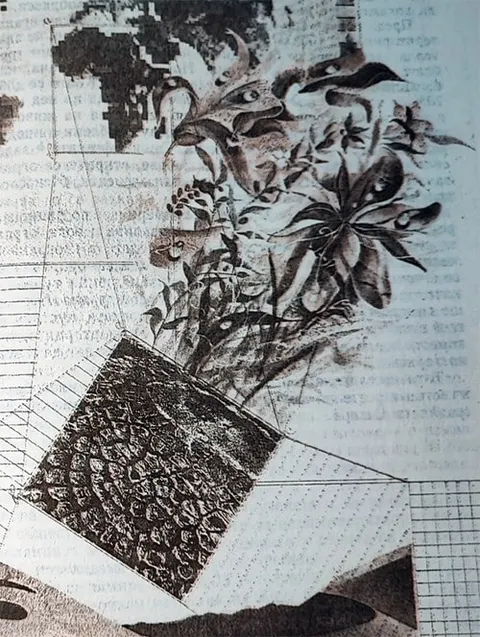
3. The Moon Is a Harsh Mistress
“In the 21st century, the Moon will become the main (if not the only) base of astronomy. With the supergiant telescopes to be built there, it will be possible to observe across all ranges of the electromagnetic spectrum, to study primary cosmic rays and neutrino fluxes. This will enrich our knowledge of the stars and of the galaxy, and we will try to observe its hypothetical boundaries.
Based on the fantastic successes of Soviet and American spaceflight over the past 20 to 30 years, and especially if reason prevails and the two superpowers agree to limit their military spending and join forces to conquer space, we can be in no doubt that this program will not only be carried out but may be considerably expanded: to settle even the most distant regions of the Solar System, and to make it common practice for ‘private individuals’ to travel into outer space and to Lunograd, and even to Mars.”
How do you like Lunograd? For my part, what strikes me as especially perceptive here is the aside—“if reason prevails…” Science fiction writers are evidently inclined to overestimate this reason. How would they have reacted if someone had told them that no human foot has set down on our natural satellite for 50 years now? And that national space programs are ever more divided, ever more lacking in ambition and long-term vision. Of course, we are learning more and more about the universe, thanks in part to technology… But the human side remains mostly in the sometimes crazy dreams of today’s “visionaries.”
4. Current and Wire
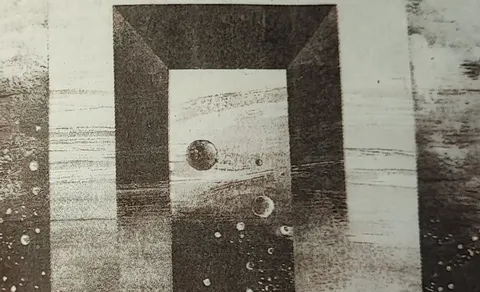
“The general line of the 21st century in the field of energy will undoubtedly be the gradual reduction in the use of chemical fuels (gas, oil, coal) until their complete exclusion from the energy balance. Not only do they pollute nature, but they are also the most valuable raw material for synthetic chemistry.
The most promising ‘fuel’ of the future is probably the controlled thermonuclear reaction—the synthesis of helium from deuterium (heavy hydrogen). In the first decades, semi-industrial installations will start operating, and by 2020 the first thermonuclear power plants will come online.
Another path that may be taken is the compact, high-capacity battery. It is hard to imagine a better engine than the electric one—silent, safe, harmless, the simplest to build and control. Going by current standards, it will be enough for a charged battery providing a 1,000 km range to weigh no more than 30–50 kg. Add to this the huge advantage that it can be charged ‘at home.’”
Are we sure Musk never read the Orbita newspaper? Yes, thanks in large part to Tesla, electric cars are already here and will clearly change the way we get around more and more (especially with the development of autonomous cars). Interestingly, even their technical specs are not that far from the prediction (except, of course, for the weight of the battery).
As for the rest, about the polluting chemical fuels… despite some timid steps, the goal of doing without them remains far too vague and distant.
5. Across the Endless Expanses
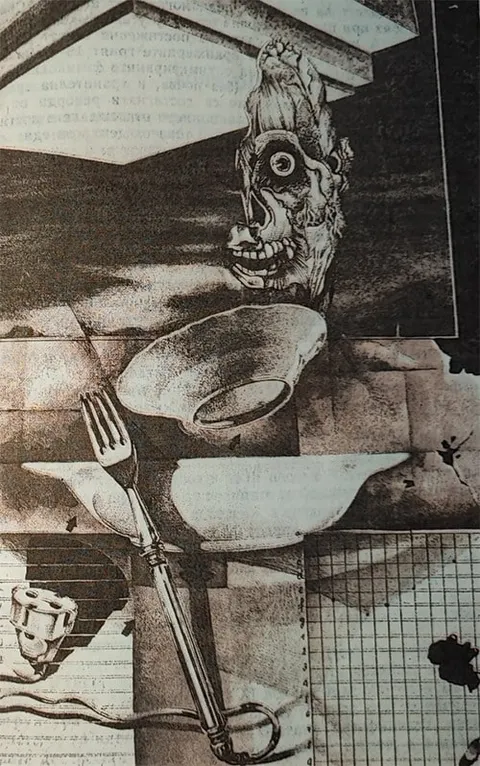
“It can be expected that in the next decade (before the end of our century) the first cosmonauts will set foot on the Marxian surface, and in the 21st century a permanent settlement with a research station will be founded there. Then the question will be settled once and for all whether specific microorganisms exist on Mars, and what the prospects are of using their genetic basis, or of combining them with terrestrial microorganisms, to create new active microcultures that would have a noticeable effect on the climate and living conditions on Mars.”
Sorry for steering you toward space again, but that really is where the gap between expectation and reality is most glaring. (I wonder whether it’s by chance that they write about the “Marxian” surface?!)
From here we move on to five big themes and questions from the book that are well worth asking ourselves today, now that we are nearly a quarter of the way through the much-vaunted 21st century.
1. Free Time Is a Blessing
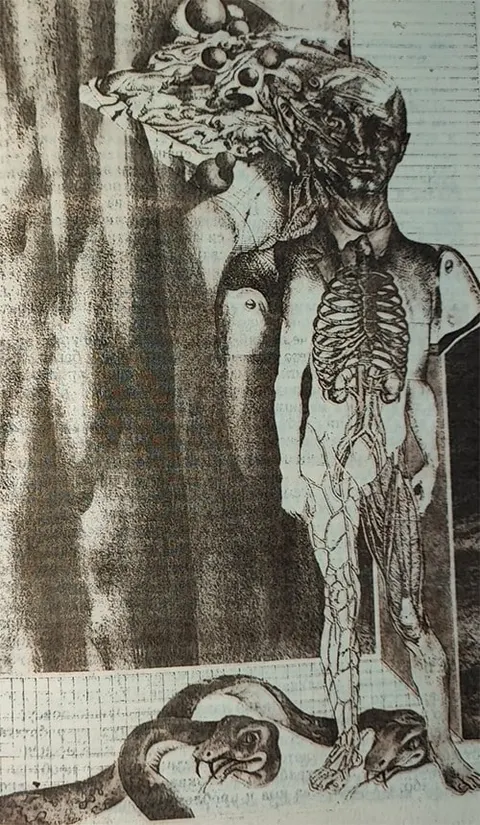
“According to studies by Western sociologists, almost 70 percent of young people spend their time after the end of the workday exclusively on pleasures—aimlessly wandering around tables with a glass in hand, wearily hopping about on the dance floor. The consequences are obvious: idleness breeds crime, from drug addiction to serious punishable offenses. And more: vagrancy, sexual licentiousness, hooliganism, ultra-left and ultra-right extremism.
Man’s old dream—to sweat less for his daily bread—turned out in fact to be a double-edged sword. The person freed from labor embraced the idea of dolce far niente, and then encroached on the freedom of others. A huge part of the workforce had to reorient itself toward the service sector (bartenders, disc jockeys and so on), immorality was spontaneously born (sex shops, familyless free-love communities), and ‘covert suicides’ rose (opiates, alcoholism, serious venereal diseases).
It became more than clear: free time is a blessing only if it is given meaning.”
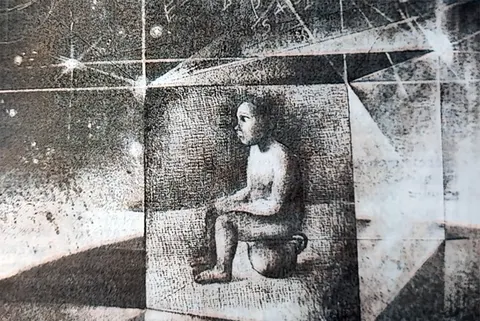
And indeed! With the arrival of ever newer technologies, we have more and more free time, which definitely “is a blessing only if it is given meaning.” Do we give it meaning? Will we learn to “laze around” creatively and fully? How will we answer our natural instinct to trust unconditionally everything that makes life easier? And how will the structure of society change when it no longer needs quite so much labor?
2. Sense and Sensibility
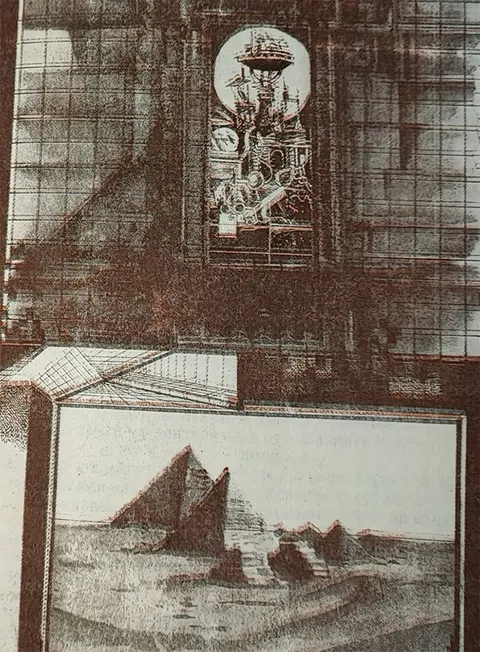
“However staggering the achievements of the human mind, today they do not arouse much enthusiasm. Why? Simply because it turned out that in many of its manifestations the noosphere is directed against the biosphere and is destroying it. The facts are so numerous and so categorical that there is hardly any need to list them. The trouble lies not only in polluted waters, felled forests or extinct animal species. What is more frightening is that through its deeds reason threatens its own existence, because the noosphere is inside the biosphere and cannot survive without it.”
What are the causes of the ecological crisis? The American scientist B. Commoner lists most of them: the rapid growth of the population, the overproduction of luxury goods (that is, goods not vital to life), the innate aggressiveness of the human race, bad upbringing, new technologies, the pursuit of profit, the bureaucratic organization of society, militarization, and even… the Christian religion, according to which nature is man’s servant. We can agree with some of these, with others only partially. What is sadder is that the overall conclusion is irrefutable.”
It is so intuitive to seek symbiosis with nature, isn’t it? And yet technology often takes us further away from it. And makes us neglect the big problems we are creating on this small planet, our only possible home for now…
3. So Long, Humans!
“And now, at the dawn of the scientific and technological revolution, we are witnessing the birth of a new sphere, the information sphere, or in short, the infosphere, and its offspring, which we could call machina sapiens if it did not already have an established name—the computer.
The invention of the computer is not the creation of yet another machine. It is a cosmic phenomenon, a cosmic miracle, equivalent to the emergence of life in the universe. And someday it may happen that we humans perish, while computers go on existing without us, independently, as the only representatives of reason in the Galaxy.
What today’s computer is—large or small, meant for games or for research, serving production or everyday life—we are gradually beginning to learn. I hope that soon we will grow as used to it as we are used to the telephone, the television and… why not, our pet dog.
Gradually, the ‘miracle machine’ is becoming a necessity for every factory. This is how humanity will enter the 21st century, which will undoubtedly be the century of computerization.”
We managed one part beautifully—accepting the computer as a friend, as… our pet dog. But are we not on the way to creating something bigger and more frightening? Something that may not only imitate us and overtake us in its development, but also deem us unnecessary? And remain as the only representative of reason in the galaxy…
And speaking of the galaxy, have you noticed that in recent years, with the new “big threat”—artificial general intelligence—we have somehow forgotten about the aliens?
4. Electronic Art
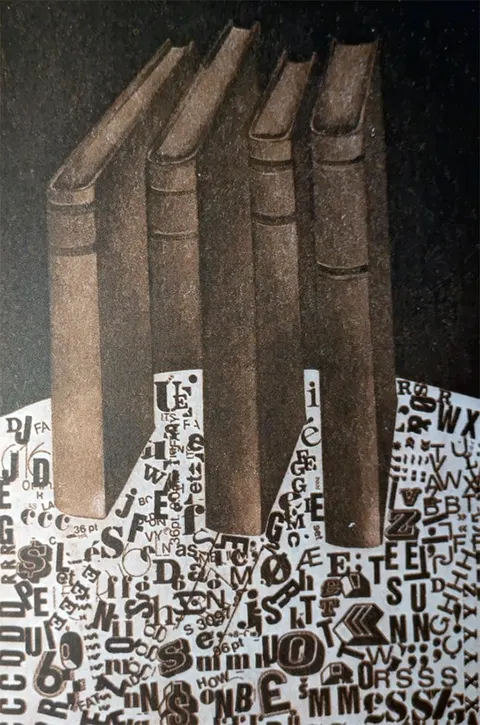
“The next stage will be tied to the efforts of ‘electronic art’ to find new means of expression. In all likelihood, new arts firmly bound to computers will emerge. It is difficult now to predict exactly which ones, just as a century ago it was difficult to foresee the advent of cinema. If we take science fiction’s advice, these will probably be arts directly linked to the brain’s imaginative thinking, that is, they will not pass through the filter of the senses.
Probably at the beginning of the next century, visual image synthesizers will be created. The question that provokes the most debate, of course, is: will the computer become a creator? The answer logically requires a second question: what is a creator? If a translator is a creator, why shouldn’t a translator computer be a creator? If arranging musical works is creative work, why shouldn’t computers in the same profession be creators?
We can, of course, say that the computer is not a creator because its activity is unconscious. There is solid logic in this counterargument. Fine, but many creators keep stressing that they, too, work under the influence of unconscious creative impulses. And again a counterargument: a person does not understand how he creates, but he understands that he creates and takes pleasure in his work. Agreed—the computer is not a creator. But it is not a creator today; what about tomorrow?”
And “today” we are still wondering whether it is a creator. The insight about a computer generating images strikes me as brilliant; even two or three years ago it did not seem real, and today it is an undeniable revolution in the way we perceive images.
Meanwhile, we are still looking for the answers: will the computer become a creator? And if so, what is left for us to do…
5. The Sound and the Fury
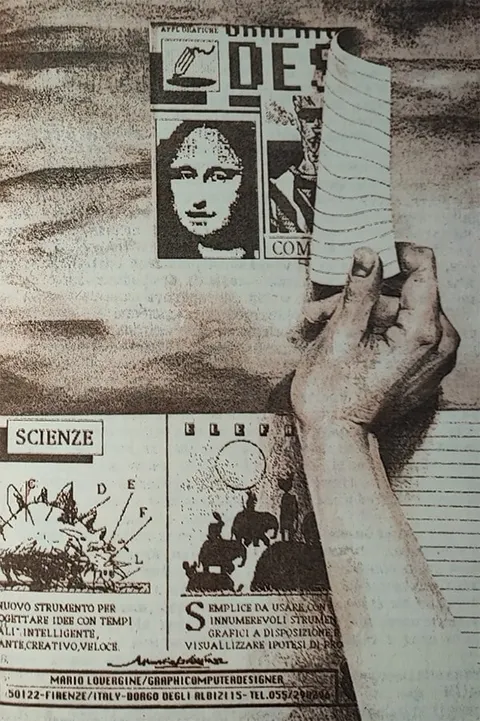
“In the West, forecasting is usually called ‘futurology,’ and its predictions are usually gloomy, pessimistic, often heralding ruin and doom. We are resolute opponents of such dark views and despair. Our social optimism tells us that reasonable man will find within himself the resolve to overcome every kind of upheaval, crisis and misfortune. Otherwise, our whole history, our millennia of progress, would lose its meaning.
In fact, the gravest crisis is the crisis of the last decade of the 20th century—the risk of self-destruction. All our aspirations for the third millennium can become reality only if we overcome the nuclear threat and the nightmare of star wars. A heavy shadow lies over humanity, but we are deeply convinced that this time, too, Homo sapiens will find the way to salvation.”
Well, of course, the criticism of “evil” Western futurology is understandable here. Unfounded optimism can be a vice too. But what is even more important is that our main reasons for reflection as human beings have not changed one iota.
The end of history was supposed to arrive, wars were supposed to be far behind us, Western-style democratic societies were supposed to reign everywhere… It didn’t turn out that way; great challenges still lie ahead.
Before we part, with no need for any commentary, I leave you with the writers’ farewell words on what the big question of the 21st century is.
“Our imaginary stroll through the 21st century is over. We hope you enjoyed it. Perhaps you managed to glimpse a world you will soon see up close. You will live in this world, you will work in it—wonderful, isn’t it? We, your fathers, envy you.
And there will be a 21st century, and there will be the centuries after it, and humanity will reach its starry triumph only if it finds the little key that opens the little door to goodness. And that little key is called PEACE.”