Robots vs. Silodeys: The Story of Bulgaria's First Science Fiction Writer
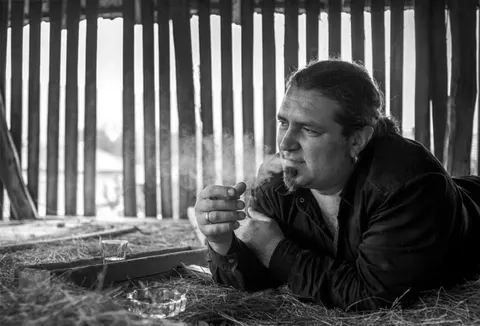
In 1930, Georgi Iliev wrote the first Bulgarian science fiction novel. Instead of “robot,” he proposed the poetic word “silodey.” His life story is worthy of a film, though today his name is almost forgotten…
 02
“There Are Saints on Facebook, Too”
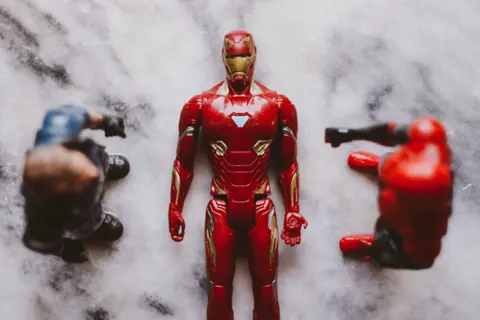
Where do the paths of religion and artificial intelligence cross? And those of God and social media? Father Nikolay Georgiev is just the right person, with a worldview broad enough to offer a meaningful perspective on the subject. Will robots have a soul? Where do faith and technology meet? What moral categories should we build into artificial intelligence?
 03
“We Bulgarians Have the Mindset to Be Successful Entrepreneurs”
Boris Paskalev is an entrepreneur with impressive experience in the startup world. He recently became a strategic advisor to INSAIT, Sofia's Institute for Computer Science, Artificial Intelligence and Technology, one more guarantee that we can expect ever more remarkable news from there. A former youth national basketball player, he went on to study at MIT, then helped found DeepCode, a pioneering AI coding startup acquired by Snyk in 2020. We talk about his path through Silicon Valley, the AI revolution, the coming revolution in robotics, and how Bulgaria can have more successful startups.
 04
2022, Seen from Sixty Years Ago: What Did the Science Fiction Writers Get Right?
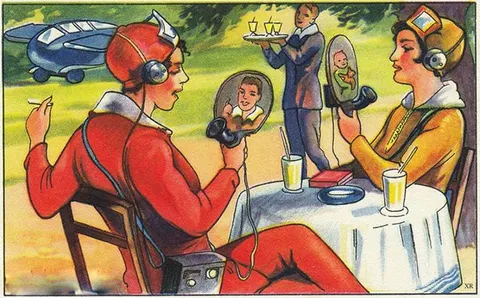
In the 1960s Isaac Asimov wrote a remarkable essay containing some astonishingly perceptive predictions. Around the same time, the first issue of the magazine Kosmos ran a similar piece collecting the ideas of Soviet science fiction writers on the subject. What did the writers get right, and where did their expectations fall flat?
 05
“I Imagine the Future as a Battle for the Invisible”
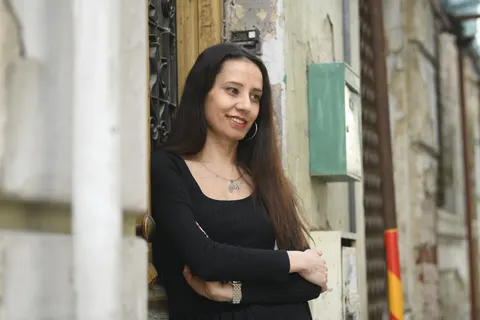
“For now, artificial intelligence strikes us as funny. It looks like a funhouse mirror, or a little dimwit we guide along, one who makes us feel knowledgeable and more human than ever. But this is changing literally by the day, and soon it will become a realistic and credible reflection of us. I think about that moment—perhaps then we will manage to see ourselves through its eyes, to grasp which parts of us are clear even to an artificial creature, what remains out of its reach, and what is most precious. To me, those are the places it cannot peer into. I imagine the future as a battle for the invisible; that will be the most important resource. What artificial intelligence cannot register is the most precious thing in us.” Pochti vsichko e nared (Almost Everything Is Fine) is the title of poet Violeta Kuneva’s debut collection, and it captures with such precision how the world feels to us today. But how did it come to this, that we can no longer tell the poet from the algorithm? What do we lose if that is so? Is the problem that, en masse, we have lost our yardstick for art, for metaphor, for layered, living texts that are human by definition, as poems are? Will poetry come to an end, or… is it precisely poetry that can save us from ourselves?
 06
32 Digital Stories Between Two Covers: What Lies Ahead?
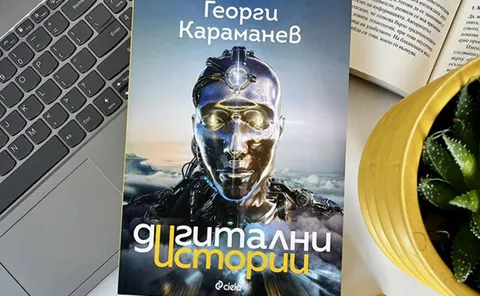
The book Digital Stories brings together 8 big questions of our time and 32 stories in search of the answers. You may have read some of them on this site, and here you will find them updated and enriched; others were written especially for the book. Perhaps you have already drawn back the curtain of the cover? Then I would be absolutely delighted to read your thoughts here. If not, here is what awaits you behind it!
 07
Tang Ping: Lying Down in Order to Stand Up
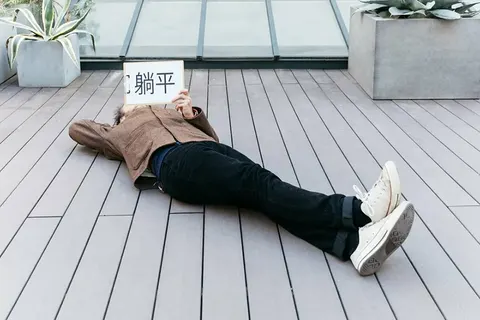
Several generations of Chinese grew up with the “ideal” of “9-9-6”: you work without a break from 9 a.m. to 9 p.m., six days a week. It is the only way to survive the fierce competition and keep climbing the ladder. But the end of endless grinding may be in sight. “Tang ping” and “bai lan” are the two names of a movement gaining strength among young Chinese: lie down and think about life; relax instead of throwing all your strength into meaningless toil. Are the beatniks of our time coming from China? Will people in the East learn to idle? When can laziness become a constructive force? And shouldn't we all follow their example and prepare for our own future this way? The Chinese are learning to be lazy, and so inspiringly that you want to grab the quilt at once… Let's lie down!
 08
“Laugh, ’Cause the Universe Is Endless, but Life Ain’t”
This piece was the April Fools’ greeting from Digital Stories, an unconventional interview with a beloved, out-of-the-box writer, and today it reads very differently and is even more worth reading: Stoyan Nikolov (Torlaka) passed away just days ago, at only 42, leaving behind distinctive, meaningful books that will be read for a long time, and three boys who will grow up as brave and defiant as he was, and as his Northwest is. “Laugh, ’cause the universe is endless, but life ain’t. It’s just energy, changin’ from one form to another in this endless universe; long as you’re in this here shell of yours, enjoy it. After that, who knows.”