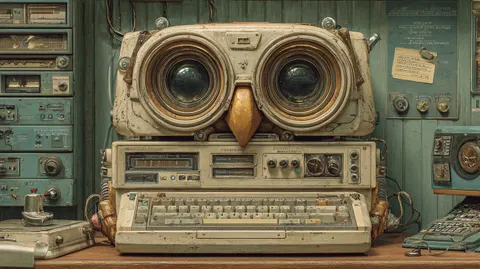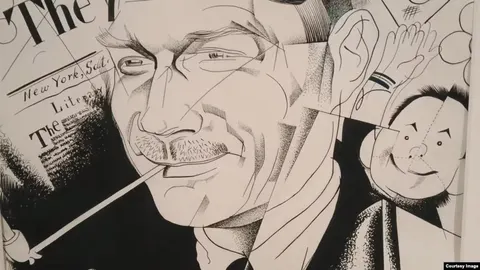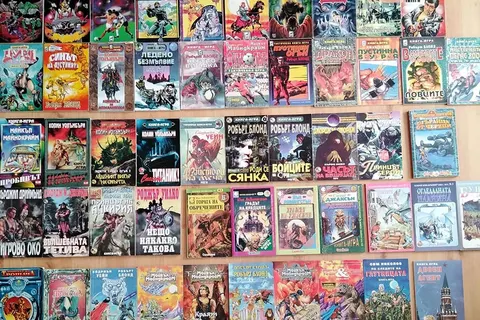
They are robots, we expect miracles from them, and little by little more and more of those miracles come true. They are called “robots” in every major language in the world, English among them. But the root is obviously Slavic. Where does the word come from? Could the wheel of history have turned in a completely different way, so that today the world would call its artificial creations by the word coined by the father of Bulgarian science fiction? It is time for an older, and yet, in our digital world, a remarkably timely Digital Story.
Yes, the word really does come from the Slavic root that also gave Bulgarian “rabota” and “rabotya,” work and to work. It is one of the few words in our everyday vocabulary whose creator is known: the famous Czech writer and playwright Karel Čapek.
And yet… he is not the one who invented it.
A Strange Line of Work
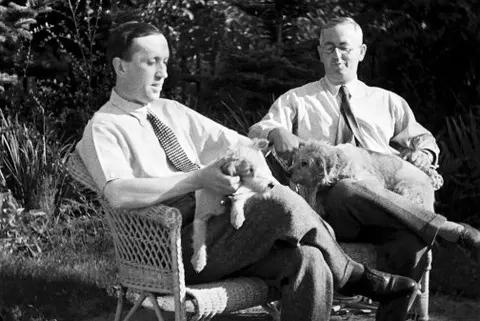
A hundred and one years ago, in 1921, Čapek was working on the play that would later be called R.U.R. (Rossum's Universal Robots) and that within two years would become a hit around the world, translated into 35 languages.
It tells the story of a factory that produces “artificial people.” Which means that the robots in the play are closer to what we now call an “android,” a humanlike robot. But the story behind words often gets lost in the details and turns against its own ideas.
So, at the time, as Čapek himself recounted, he called them “labors.” The origin is the same: the Latin word labor, “toil, work,” which passed into English as labour. And where liberta ends up in this sense is a curious nuance too.
So, “labors.” But something grated on Čapek. What do you do when you have a doubt like that? You talk it over with the people closest to you. The idea of turning the labor into a robot came from Karel Čapek's older brother, Josef. And that is where the journey began for the robots that would conquer our present day.
Quiet, the Robot Is Working!
“Robotic processes.” Automation… In the younger Čapek's play, the robots are not made of metal but of processed tissue and organs. They are capable of thought and feel obliged to serve humanity. Is it right to exploit such beings, and what will follow? That is the central question the play asks.
No, this is not Frankenstein. Culture welcomed the new mechanized figures very quickly. Only some 20 years after the word was invented, Asimov would write the Three Laws of Robotics. And today anyone understands the word “robot,” unlike “metaphor” or “quintessence.”
Which brings us to the nuances. Josef Čapek's happy suggestion turned into a hugely successful marketing move, as we would say today. But in Czech, robota means not just work but “forced, exhausting, slave labor.” That makes the word especially fitting for the plot of R.U.R., but it also leaves plenty of room to ponder what we really expect from robots.
RobotЪ.bg
Could they have been called by a word that is also Slavic in origin, but Bulgarian? A little harder to pronounce, perhaps, but more beautiful, more poetic, more melodious. Силодеи, silodei (roughly “force-doers”).
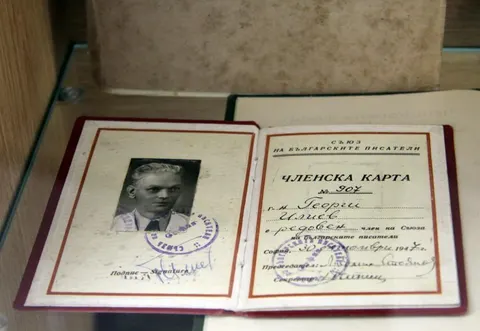
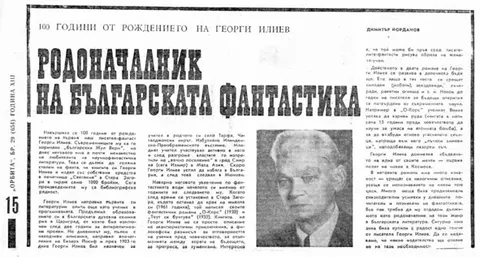
Georgi Iliev is the forerunner of Bulgarian science fiction, and today there is little to be found about him online. In 1930 he published his first novel, O-Kors, which is also considered the first in the history of Bulgarian science fiction. Only a few years later came the works of Svetoslav Minkov, whom we are used to calling “the father of Bulgarian fantasy fiction.” And Yan Bibiyan na Lunata (Yan Bibiyan on the Moon), the first children's science fiction novel, by Elin Pelin, one of Bulgaria's best-loved classic writers.
Three years later came Teut se buntuva (Teut Rebels). It tells the story of the planet Teut, which has stopped spinning, so that one half of it burns in heat and drought while darkness and frost rule the other. Teut is home to the silodeys, mechanical beings capable of miracles that go beyond what humans can do…
Could we be calling robots silodeys today?
Work, Work…
Iliev's life is fascinating in its own right, with action, drama and twists of fate.
Although R.U.R. was quickly translated into many languages, it seems that by 1933 Bulgarian was still not among them. Had Georgi Iliev read Čapek's words, and is that where he got the idea for the silodeys? Yes, he had probably read them, since he was educated in Germany and followed the latest trends in literature closely. But are robots relatives of his silodeys? Hardly—they are simply too different.
Few people today remember the writer Georgi Iliev, who died exactly half a century ago. A single low-quality photo of him wanders around the internet. And a handful of articles that tell his interesting story.
Servant of God
He was born on June 25, 1881, in Turkey, in the village of Tarfa in the Çatalca region. His father was a charcoal burner, and one of his grandfathers was a priest. While still very young he left his family to attend middle school in Istanbul. The future engineer also turned toward religion, studying for two years at the theological seminary in Constantinople.
History is silent as to why, but he was expelled, went back to his native village and became a teacher. At the time, the Bulgarians in the region had not lost hope of becoming part of Bulgaria, and Iliev joined the struggle. On a mission entrusted to him personally by Exarch Joseph, the head of the Bulgarian Orthodox Church, he tracked the movements of Turkish military units in the area during the Ilinden-Preobrazhenie Uprising, the 1903 Bulgarian revolt against Ottoman rule.
The Sad Melodies of the Merry Slave
The Turks caught him twice, and in the end sent him into lifelong exile in Asia Minor, to the city of Izmir, known then as Smyrna. That is where the pen name came from under which, years later, Iliev would sign his poetry collection Goresti (Sorrows): Georgi Smirnov. His other pen name is connected with this too: Sklavus Kaltans, Latin for “merry slave.” Under that name he published his other collection, Tazhni napevi (Sad Melodies), in which he writes about his experiences in exile.
Two years later, the future writer managed to escape to Bulgaria. He settled in Stara Zagora, where he had relatives, and finished high school. Then he won a scholarship and went to Munich to study civil engineering.
In his adult life he combined construction and writing: for many years he was a civil engineer in Stara Zagora and editor of the local newspaper Grebets (The Rower). He published in almost all the fashionable magazines of his day—poetry, prose, criticism. He was also drawn to Symbolism.
Iliev fought at the front in the First World War. After 1944 he took part in building the Koprinka dam (then called Georgi Dimitrov). He was also a polyglot; it is said that shortly before he died he had taken up learning Chinese. He died on June 18, 1961, a week before his 80th birthday.
A Peculiar Fantastic Charm
And yet it seems it was in science fiction that he truly found himself. Teut Rebels, where the silodeys appear, received an award from the Ministry of Education. It was reissued in 1983, edited by Ognyan Saparev, and although its print run was 25,000 copies (against 1,000 for the first edition), it is hard to find today.
Even if they are presented a little naively, the book highlights ideas and technologies that top our agenda today.
“The future achievements of technology, the peculiar climate, customs, beliefs, the cultural style of the planet, a particular mysticism, an entirely new system of concepts and symbols, so remote and different from the one we use—all this gives the novel a peculiar fantastic charm,” Pavel Telcharov wrote in 1934 in the newspaper Literaturen glas (Literary Voice).
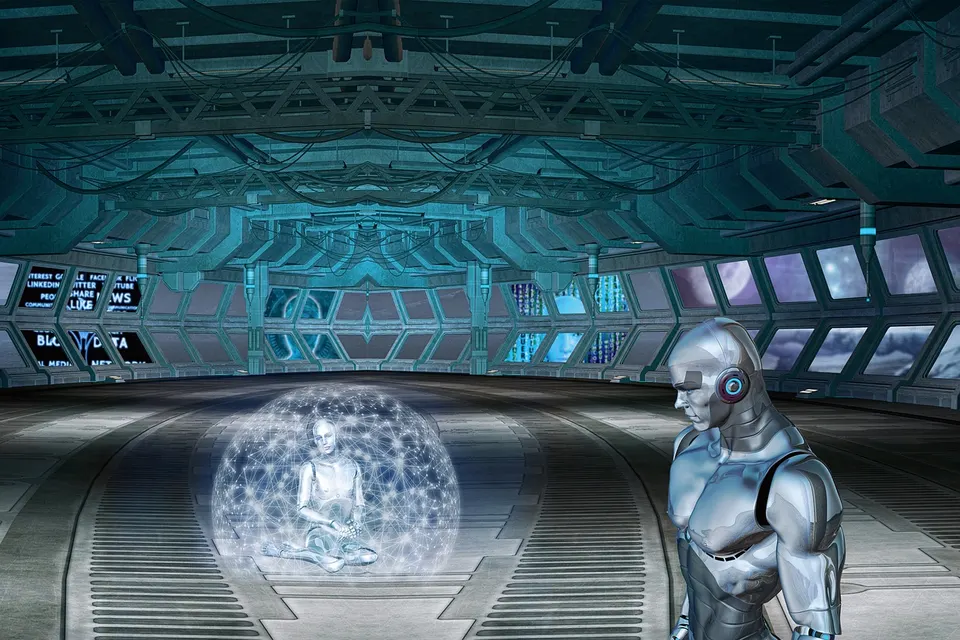
The silodey, unlike Čapek's robot, is a metal man who can be controlled remotely through written records, rays that carry instructions, or talking images. In other words, we can easily find in him today's wireless communications, optical networks, holograms. The novel also describes telekinesis and telepathy. Rays are used to put people to sleep, to dull pain and to calm crowds.
May the Force Be… -dey
In both his novels, Georgi Iliev tries to offer Bulgarian words for everything that does not yet have a good native equivalent. These were dynamic times—not as dynamic as ours, but the technological revolution had already brought quite a few foreign words into Bulgarian that could have been avoided. Nobody bothers with that today, and it is almost impossible anyway, especially when the conversation is about information technology.
Iliev calls a cipher “числоред,” chislored (number-row), and a parachute “падобран,” padobran (fall-guard). A clock is “времемер,” vrememer (time-measure), though now and then the author forgets this idea and alternates between the two words.
His language is deliberately and purposefully archaic, which may be what kept the novel from gaining real popularity and winning over the critics.
His training as a civil engineer helps Iliev's books count as science fiction: the technological details are precise and well thought out. The style and narration may not be quite as polished and captivating, but it is telling that Iliev's historical role and his work were championed by the well-known critic Ivan Sarandev.
Under the Shroud of Eternal Darkness
The silodeys run on electricity, and their steel bodies are full of cables. A numerical code is engraved on the hand of the silodey Rosan, a guard at the Hotantsa prison. Silodeys are often used as soldiers. This same Rosan tortures the hero, Kantemir, with hallucinogens.
The novel is not long at all—176 and 188 pages in its two editions, respectively, with only four chapters. But they are enough to shape the story of a classic love triangle (with no silodeys involved) and to save the planet from cataclysm.
“Seven lands burn in solar fires, while seven others remain frozen and covered with the shroud of eternal darkness… And now our planet is a plundered and ruined city through which its own inhabitants roam like homeless dogs.”
That is how Georgi Iliev's style sounds.
“Optimistic planetary-social catastrophism” is how Prof. Ognyan Saparev defines the genre.
“True grief shook his soul, but when the pain for the dead had passed, he felt a warm delight at his success: had he not managed to split the atom? Or at least had he not stirred up turmoil in this tiny particle of the Universe? Was not the day near when he would be able to unfold the strange treasure-house of a tiny speck of dust, so as to give humankind the energy hidden there?”
The Silodey and the Future
Today it is not even clear where Bulgaria's first science fiction writer is buried. Two years ago, several media outlets reported that his remains may have been dumped into an unmarked pit when an older cemetery was demolished. The story was told by the journalist Yovka Nikolova, who at the beginning of the 21st century was researching where the bones of the people of Stara Zagora killed when the city was burned in 1877 had been buried. Purely by chance, in a pit covered with concrete slabs, she saw a small sack of bones and an aluminum tag reading “Georgi Iliev.” She contacted the municipality to arrange a dignified burial for our first science fiction writer, but nobody showed any interest.
Of course, the name is common enough, and it may be a mistake. And surely, for anyone who has written even a single line meant to be shown to the world, what matters is that the words survive. Will there be someone to carry on the interesting story of the silodeys?
Online, like Pippi Longstocking, you will find everything as thing-finders. Thousands of photos of one and the same Botoxed smile, if that is what you are looking for, and reading that will tell you a meaningful story and enrich you. Just don't expect that everything really is there. Many interesting people and events are not, and never will be, appreciated by the filter bubble, by the interest of the moment. And yet they are interesting Digital Stories, and someday someone will be found to tell them. Even if by then the internet is gone.