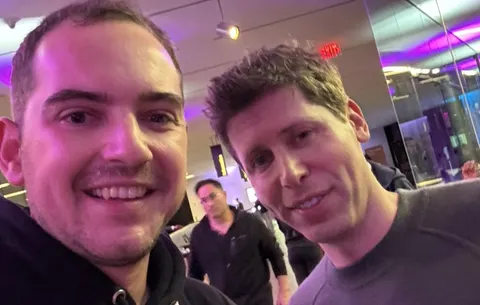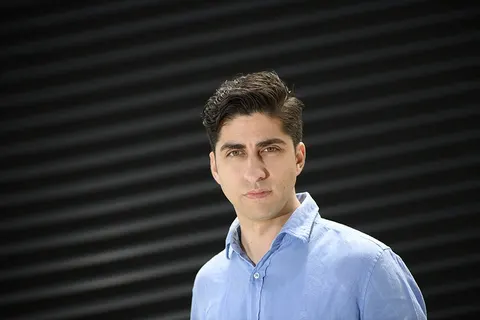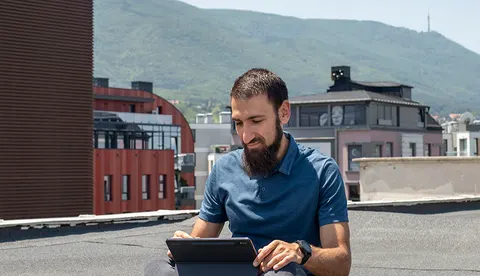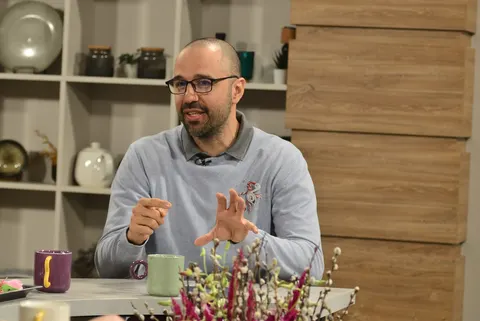
Boris Paskalev is an entrepreneur with impressive experience in the startup world. He recently became a strategic advisor to INSAIT, the Institute for Computer Science, Artificial Intelligence and Technology in Sofia, one more guarantee that we can expect ever more remarkable news from there.
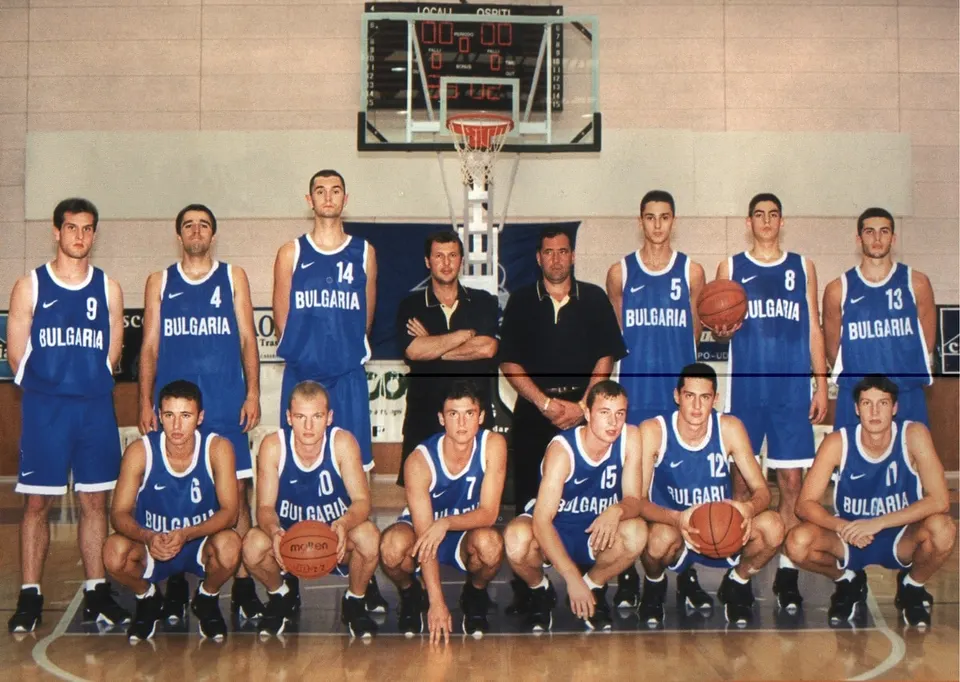
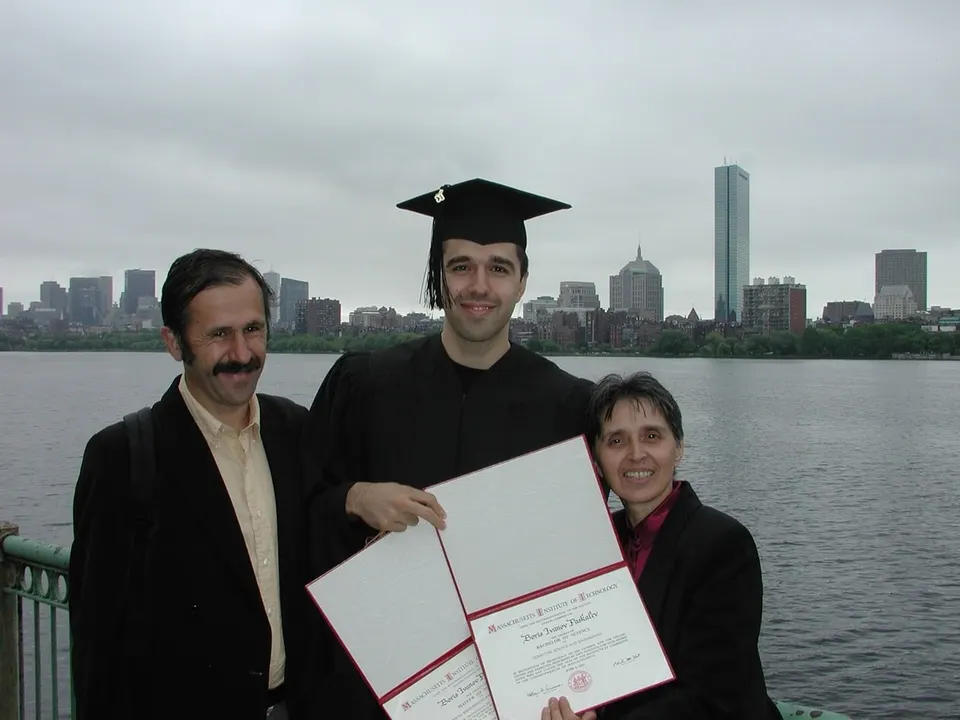
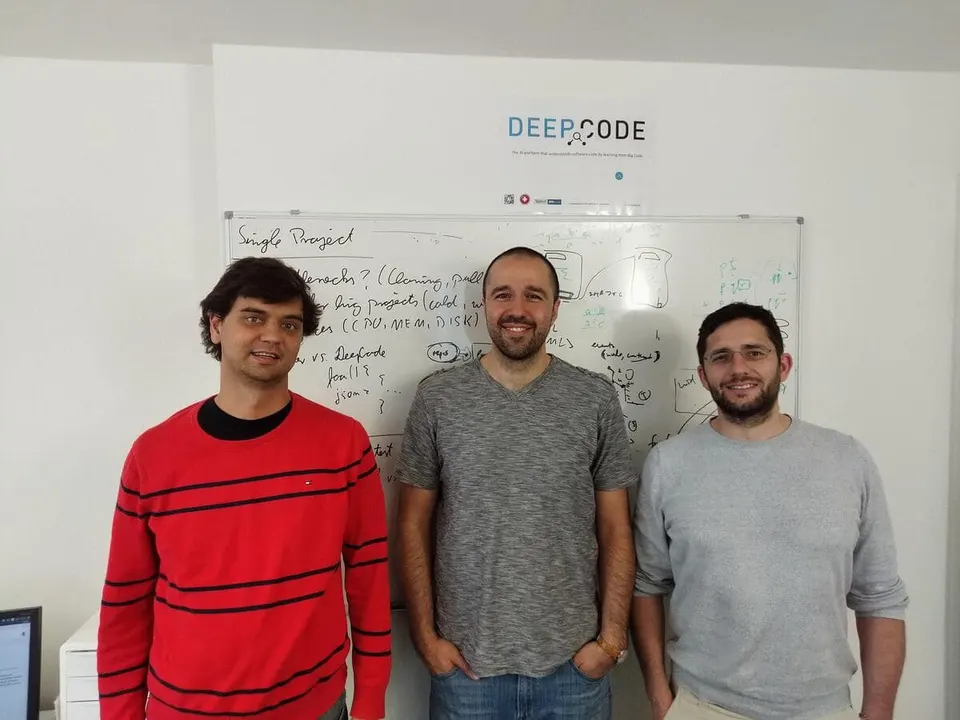
Once a youth national basketball player, today's guest went off to study not just anywhere, but at MIT. He earned a master's degree with honors and began his career as a programmer more than 20 years ago. Later he shifted toward management and entrepreneurship. Which brings us to the moment when he teamed up with two other heroes of Digital Stories—Prof. Martin Vechev and Dr. Veselin Raychev—in the startup DeepCode. He was the CEO of one of the pioneering projects for writing code with artificial intelligence, which in 2020 was acquired by the multibillion-dollar company Snyk.
We'll talk about his successful journey through the heart of Silicon Valley. About the AI revolution that has already begun, which in his view is bigger even than the discovery of electricity. About another revolution on the horizon—the one in robotics. About how Bulgaria can have more successful startups that will help our ecosystem and our country grow.
What big news should we expect next from INSAIT?
– How did you end up at MIT? And at the beginning of the century, no less, when far fewer Bulgarians had the chance to study in the US…
– My brother and my cousin had already left for the US, and they encouraged me to apply. They helped me prepare by convincing me to take part in programming competitions and to develop my skills in a variety of directions related to information technology. Also to build my own projects—something that wasn't an obvious requirement back then.
And one more thing—MIT was the only university that offered full financial aid through scholarships and loans. All the other technical universities offered only scholarships, which weren't enough to cover all the costs.
– What did programming look like as a profession at the beginning of the century?
– Very different from today. It was a cool profession that quickly became the talk of the town during the first “dot-com boom.” Back then the requirements for getting started were more fundamental than they are today: you had to dig deep into mathematics, logic, database architecture and so on.
Specific programming skills came second, and it was expected that a programmer could learn a new language whenever necessary.
I've always been impatient and focused on getting things done rather than on doing them perfectly. That made me a good fit for startups that want to create value and solve problems while keeping the processes running smoothly. I think that with the modern tools of the software industry, my style may be quite applicable today.
– Especially with the help of AI tools… You started your career as a programmer, but then moved into management and entrepreneurship. How did that change come about? When can a programmer turn into a successful entrepreneur?
– When the programmer realizes that managers aren't just dead weight… or at least not all of them. I'm joking. But back then it really did seem to me that managers were often useless, that with all their talk they only slowed down the development process.
To get rid of that inefficiency, I decided to try managing the projects I was working on myself. Over time I became convinced that I could help teams be more productive and put more passion into their work by sincerely sharing the business priorities and constraints with them. By getting into the decision-making process, its logic, and why those decisions had been reached. Once we set out on this path of curiosity, together we learned to reach the highest levels of business decisions and those related to customers. It is precisely
solving these problems with the help of a motivated team that is the essence of entrepreneurship.
– And it's precisely this skill that brought you back to Bulgaria as part of the INSAIT team. What are the steps toward having more successful startups?
– People are the key component!
With basic qualities like persistence, determination and the right education, backed by a growing ecosystem. I believe Bulgarians have the mindset needed to be successful entrepreneurs.
“Ecosystem” is a somewhat overloaded term that's easy to abuse. In my view, though, there are four key elements that still need deliberate improvement:
- People who have founded, worked at and exited startups and can serve as role models and mentors for the next generation of entrepreneurs.
- Educational and research institutions led by top experts, focused on real world-class problems and equipped with the right technological resources. INSAIT is still at an early stage of its development, but many other educational and research institutions can contribute to this as well.
- Policies that encourage entrepreneurship through tax breaks, grants and a simpler process for starting a business.
- Access to capital: enough funding opportunities, including through angel investors, venture capital firms, government subsidies and crowdfunding platforms.
– Clearly there's a lot of work to be done on each of these points… Do you think there's a chance that Bulgaria will have more software product companies than companies that simply supply specialists?
– Yes, it's possible, but
such a transition will take at least a generation, and only if it becomes a national goal.
– What are INSAIT's next big steps in this direction?
– It's important that we keep growing, that we provide more and more opportunities for deep tech research, for education, and for helping startups grow and collaborate. INSAIT is also a unique opportunity to attract more political commitment and public attention.
– Is there a software field or technology in which Bulgarians stand out for their skills?
– I can't generalize; in my view nationality, Bulgarian or any other, isn't the deciding factor in what someone is good at. The only country where I can say there is measurably distinctive technological know-how is Israel, with cybersecurity.
I would say that Bulgaria has a strong tradition in teaching the fundamental sciences—mathematics, physics—especially at a few incredible schools.
The problem, however, begins after high school: in recent years many of the most talented students have chosen to continue their studies outside Bulgaria.
There are quite a few Bulgarian ventures I follow with particular interest; lately among them are Team-GPT and LatticeFlow.
– Petar Tsankov has been my guest, with many fascinating details about LatticeFlow's work. While we're on the subject of startups… do you believe that, as Sam Altman says, the moment is coming when unicorns can be created by a single person?
– If we look far enough into the future, plain inflation will turn every startup into a unicorn… But more seriously. Sam Altman is talking about a time when every role in a company can be fully replaced by AI agents. I doubt I'll live to see that, because in the foreseeable future there will be new roles needed for a startup to succeed.
– Why does it seem we still haven't discovered all the uses of large language models in everyday life and business?
– The technology has only been available since 2023; it's been popular for a little over a year.
As Yuval Noah Harari says, artificial intelligence is still at the amoeba stage.
We have yet to see how far it will go and how economically applicable it is; right now things are moving at breakneck speed. The good news and the bad news at the same time is that evolution is now measured in months, not centuries. In my view, we still haven't seen human intelligence engage on a large scale with new ideas about how to use the artificial kind in different industries and in every aspect of our daily lives.
– Which are the most exciting and important applications you're looking forward to?
– One of them is the removal of language barriers. Specifically, the need for people to spend years of their lives learning new languages just so they can work and communicate with others. This trend started a long time ago, but now we're already seeing real-time translation from any language into another, both written and spoken.
Another trend, in my view, is personal assistants: they will become hyper-personalized, and we'll be able to trust them the way we trust ourselves. They could take over a large share of the everyday tasks we find boring. At the same time, they'll be our thinking partners, with access to enormous amounts of data and computing power. In this way
they will help us invent, create and validate new, even bigger and bolder ideas.
– I often write about both of these directions too—about translation and about assistants. I'm convinced we have technologies we still need to talk about a great deal, so that they help us move forward. But how do we convince the majority of people, who still don't believe we're living through an AI revolution?
– Change is hard for all of us, especially when things develop so drastically in such a short time. But it's a natural process. Seventy percent of people are always the ones who need more time to embrace change.
Personally, I see no reason to force anyone; in the end everyone will encounter the effects of the AI revolution and will follow the people who appreciated them first.
– That, however, brings risks too. For example, those who appreciate them first are always mostly tech people, and I think specialists from every field should take part in such important topics. Here we are, once again on the verge of handing a powerful technology to one or a few big players who will set the rules. Are we doomed from now on to bow to OpenAI's dominance?
– No, in my opinion we're not. There are many other foundation models, and
innovation in this field is only just beginning to explode.
The pioneers in almost every industry rarely manage to keep their lead for long, because they struggle to adapt to and/or adopt deep technological innovations quickly.
– How much better can AI technologies get? Are we close to the limits of large language models?
– I believe we're far from the peak. Harari's words, which I mentioned, apply in my view to large language models like GPT as well. Fine-tuning the models and providing highly specialized context will produce models that will amaze us for generations.
– People in which professions can feel secure about their jobs over the next five years?
– I think there are quite a few, but the most obvious are those involving physical labor and innovation that relies on human intuition. You'll find them in construction, agriculture, sports, medicine.
We mustn't forget about robotics, though.
I believe we haven't yet seen the revolution in that field, and breakthroughs comparable to those in the world of artificial intelligence are on the way there.
Robotics has been a subject of scientific interest for decades, but its progress has been held back by technological limitations that are gradually falling away.
– You also have a professional interest in applying artificial intelligence to medicine. Why does the expected big news there seem to be so slow in coming?
– Current legislation in the healthcare sector is extremely inefficient, overregulated, and takes a one-size-fits-all approach. It's far too restrictive to stimulate rapid, meaningful progress. I hope some countries will seize the opportunity to combine AI and innovative legislation with investment in order to lead the new generation of medical discoveries, which could reach patients in record time. But I'm certain of this:
when that happens, we may unlock new records in longevity and solve many of the social challenges related to an aging population, elder care and retirement.
– What will the medicine of the future look like?
– Much better than today, I hope, with a focus not on treating the main symptoms but on the causes and on preventive medicine. The insurance system will also have to evolve drastically in that direction. Here too, unfortunately, development is heavily constrained by regulation.
– What do you dream of?
– Of a society in which all people are good. Of a world in which we don't waste human potential on lies and disinformation. Where there's no room for people who follow their egocentrism and their sick dreams at the expense of others…
– Quite poetically put, especially for someone with more than 20 years of experience in the world of technology… It's no accident that I, too, keep thinking we need to bring these two directions together. Thank you for this conversation!