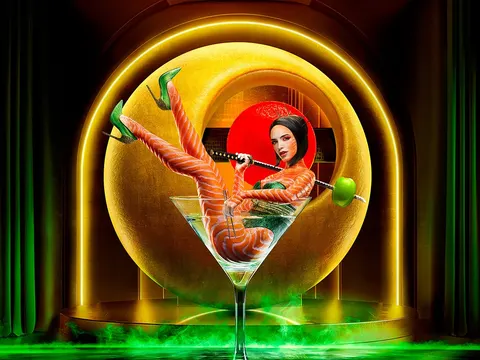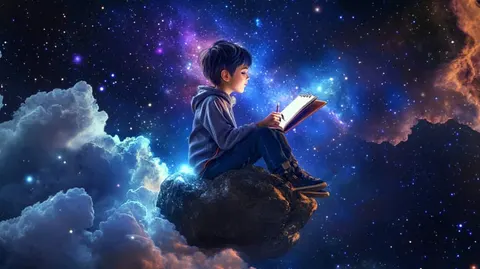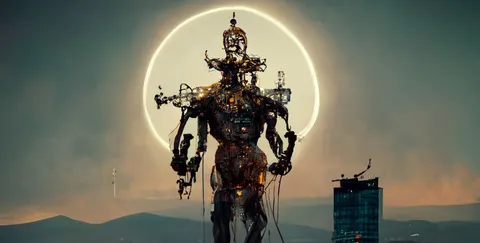
You are about to witness an incredible meeting between two remarkable photographers. One is called Ivaylo Petrov, and the other… is an artificial intelligence. How could the two of them possibly work together?
A few days ago I introduced you to DALL·E—the algorithm that shows impressive results in generating images from a short description. Progress in this field over the past few months has been considerable, and it is turning heads. For now, though, none of the projects in this area offer open access for us to experiment with; there are long waiting lists. This gives skeptics grounds to claim that the algorithms are nowhere near as impressive as they seem, because we are only shown hand-picked images.
But they really are already exactly as astonishingly good at their job as they seem.
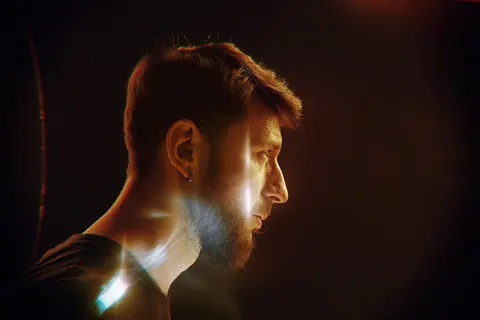
Ivaylo Petrov is a photographer and digital artist with more than 15 years of experience. He has had three solo exhibitions, and his list of projects in portrait and advertising photography and 3D visualization is impressive. Just as impressive is his thoughtful approach to his work, which he writes about on his blog.
“I want to create worlds that couldn’t exist, but exist in my thoughts nonetheless,” he says.
And as luck would have it, for the past two weeks Ivaylo has been among the first people with the chance to test these much-talked-about algorithms. The project in question is Midjourney, the creation of a small, independent group of AI specialists.
How does the algorithm hold up under his professional and impartial eye? Are we ready for the AI breakthroughs that are already happening? Is this accomplished photographer afraid that algorithms may soon replace him?
– I happened to come across the “photos” the artificial intelligence generated from your ideas on Facebook. How did you get into this?
– I follow what’s happening in this field from a distance, but I had never really dug into it. In my head, the time when artificial intelligence would be able to create images always seemed far away.
In this profession
we work with a high level of abstraction, of metaphor, if you like, with conveying feelings and emotions.
So I wouldn’t have expected that software like this could exist here and now, in 2022. And it turned out I was very wrong.
I don’t follow Facebook much, but I happened to see that a friend of mine had written something on the subject, I got curious and started digging. It turned out to be software that had started becoming very popular literally a month earlier. It’s still in closed beta, but gradually more people are getting access. I was lucky enough to find an invitation.
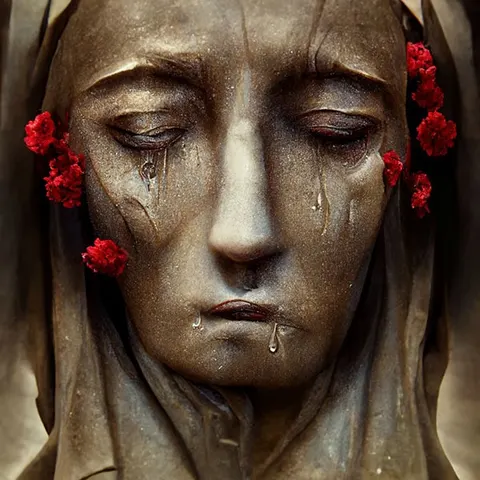
– What impresses you most?
– My point of view is that of someone who makes pictures, not of someone who knows a lot about programming.
With this artificial intelligence you can visualize ideas and concepts extremely quickly, based purely on a text description and interpretation. In work like ours that is anything but easy. After all,
art photography is exactly this: thoughts flow through my head, I manage to organize them into words, and then I translate them into images.
Today the shooting itself is a small part of creating images; there’s a lot of 3D graphics and post-production. This AI manages to produce visualizations in an unprecedented way—it eliminates the layer of technical knowledge that used to be required.
Here the program is an interpreter of the text it is fed. Sometimes, building on your idea and your description, it heads off in a direction you didn’t expect and would never have thought of. Then you can dig into its suggestions, enrich them, add a nuance of your own. It’s an entirely new concept, for a completely different creative approach.
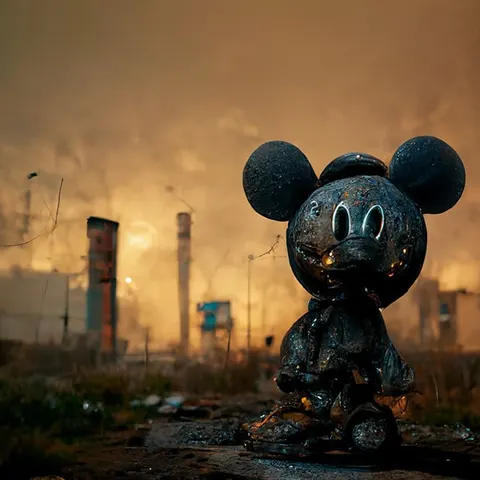
– So, in a way, you see this technology as the next natural step in the evolution of photography?
– Exactly. This technology is still at an early stage of development. But what shocks me is that it will remove yet another threshold of technical knowledge that used to be necessary for anyone to create an idea and convey it as an image.
If you look back through history, we have always been heading this way—in photography the trend is toward simplification, and that’s true of many other areas of life too. Who were the early photographers? Physicists and chemists who saw photography not as an artistic medium but rather as a technological innovation. To create images, they had to prepare very seriously.
Whereas now, with digitization and all the other processes of the last century, photography has become so democratic that absolutely anyone can grab their little mobile phone and instantly take a shot that’s “good enough.”
And this is the next step in that direction. Not even a step—a genuine revolution!
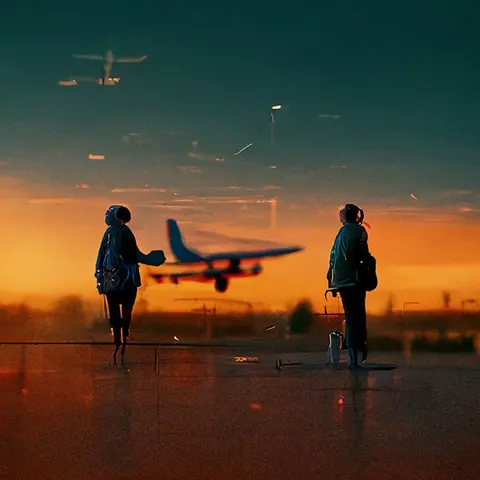
– From your professional point of view, how good exactly is this technology at the moment?
– Of course, it isn’t ready for strictly professional use. There are technological limitations, mostly to do with computing power. Midjourney in particular has a limit of about 2 megapixels on the output file. That will naturally change very quickly and dramatically; that’s the path every technology takes.
I did an experiment with a friend who plays “heavy” music and asked me to suggest a look for the cover of one of his projects. I decided to try it with the help of the artificial intelligence. He described what he was after: a feeling of the end of the world; a ship at the end of its life, left behind; an apocalyptic sky, darkness, depression… And a lonely figure absorbing that mood.
I passed on the description in detail, and the AI absolutely, 100 percent, gave me dozens of variations of such a scene, each of them good enough. As an experiment, I sent him seven or eight of the images and asked whether he liked any of them. He replied: “Duuude, they all work for me!” And I did that in 15 minutes.
Then we upscaled the image and prepared a finished design, but at that point it no longer held up technically. The ship had quite a few problems in the details that had to be fixed in post-production.
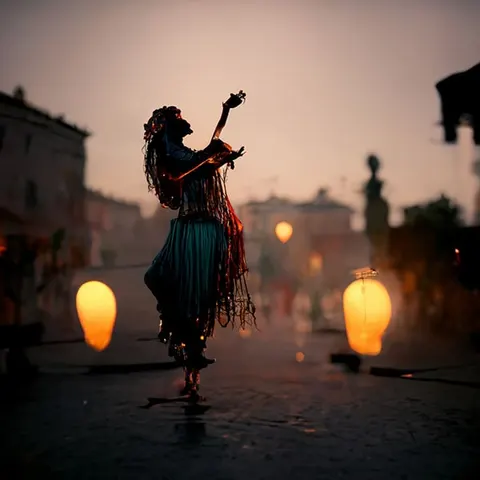
– Why are most of the AI-generated pictures you show so dark?
– The truth is that I’m the one to blame here, because that’s what I feed it. It really does visualize what you tell it. But a friend of mine also pointed out that AI-generated images in general tend to be like this. Most likely the reason is that
the neural network in question was trained on photos, paintings and posters from popular Western aesthetics. And those are always a bit edgier, darker, more confrontational.
So the AI is influenced right from the training process. But that doesn’t mean it can only create things like that. If you want something different, you have to tell it explicitly, very clearly, and be more detailed. I’ve done experiments like that too, and it really works.
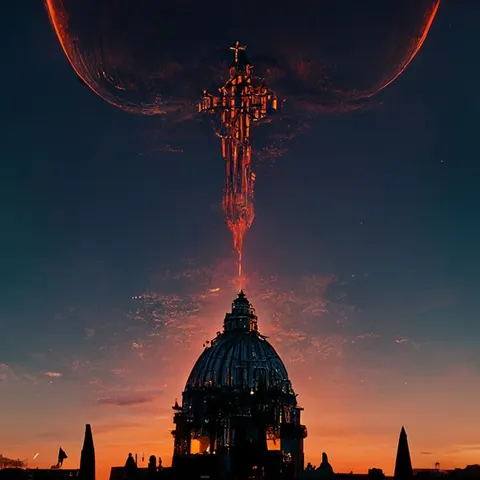
– Does what you see make you afraid in any way that humans could become redundant in this whole creative process?
– This technology is definitely a revolutionary stage. But for now, I think we can see it more as an additional tool to incorporate into our work and our creative process. The author hasn’t been displaced in any way yet, and I don’t think that will happen soon.
At the same time, I notice something that I think is generally part of human nature, beyond artificial intelligence.
We tend to greatly overestimate the short-term effect of changes in our lives and greatly underestimate the long-term one.
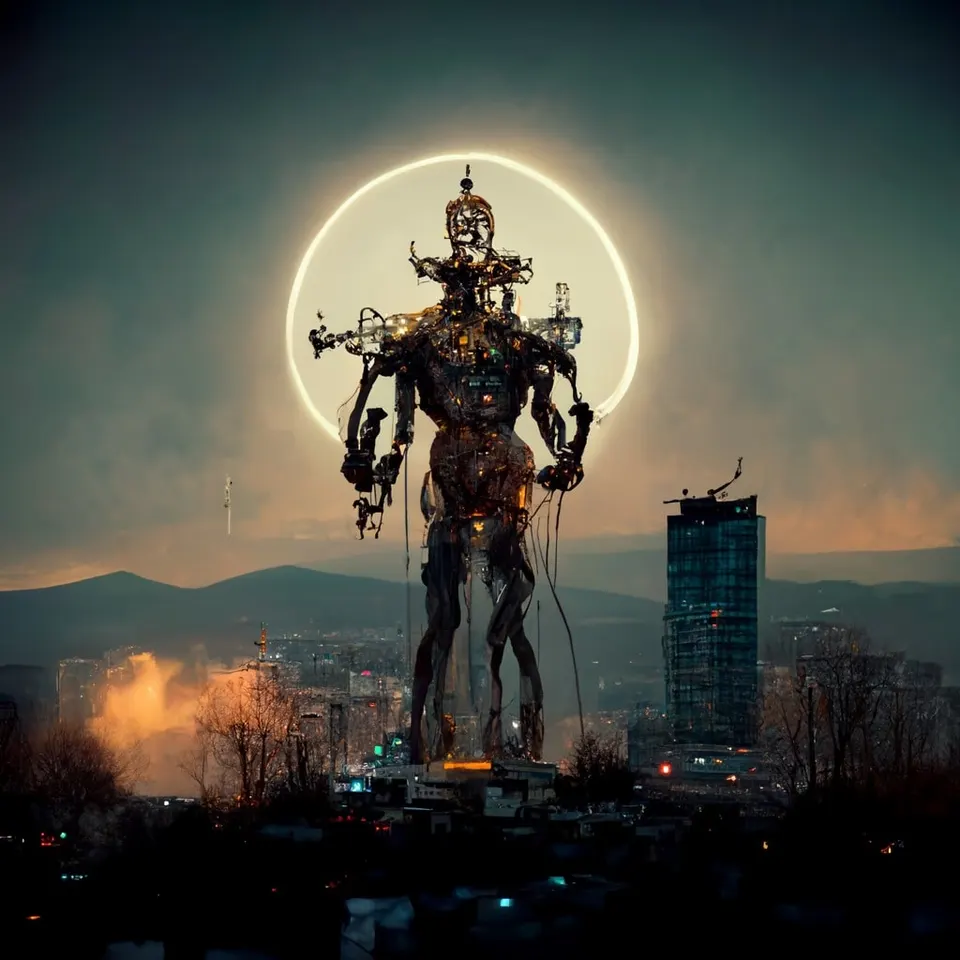
I post my experiments with the algorithm on social media without editing them in any way. And I see that people sometimes react with prejudice. They are literally frightened by the short-term potential applications of the technology. I don’t think those are particularly scary, unlike the long-term ones. I think we are getting ever closer to the so-called singularity.
Everything is changing so fast, so intensely, that at some point we simply can’t predict what exactly comes next and where it will lead us.
I feel uncertain, more than anything, about where we’re heading, and if we can accept uncertainty as a kind of fear, then yes, I really am afraid.
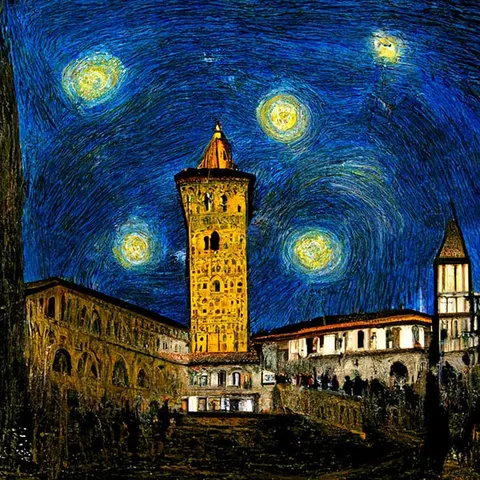
– That’s true. The singularity seems like some unbelievable future, but you quickly lose your footing once you see algorithms like this one, which you imagined would arrive many years from now. And yet I sense enthusiasm in you too.
– Exactly. I’ve always taken that approach in life—I want to learn something new, try it out and use it to enrich the way I work. Always with the ideal goal of achieving something I couldn’t do before but that seemed important for me to “say.” That’s why I decided to explore what exactly the algorithm can do. It had been a long time since I’d touched something truly new. After years of creating pictures, at some point you learn the process well enough. And this is an entirely different logic.
The algorithm builds on words, descriptions, concepts that you feed it, and interprets them. More or less, that’s the same thing I do.
Lately I’ve been talking to a lot of people about this, and some of them are frankly scared; the knee-jerk reaction is “this is too weird for me.” I understand them perfectly. My enthusiasm comes from encountering something new. The feeling is very strange. I can’t say I have a very clear definition of what exactly is happening; rather, I’m
trying to get used to the thought of it and place it in some kind of context.
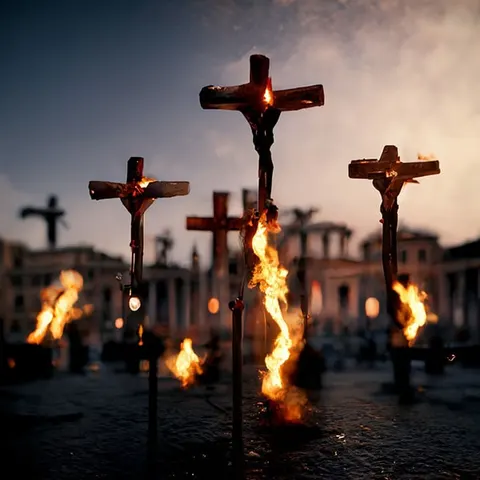
– Will algorithms like this change our attitude to reality, the way Photoshop once did?
– Photoshop is a good example. It came into widespread use in photography between 2003 and 2005, just as I was taking my first steps in the field. Older photographers were drastically negative about it, and over time it proved to be an invaluable tool, as long as you know how to use it competently. Today it’s an indispensable step in creating images, a huge, integral part of the process. Practically all photographers use it if they want extra creative freedom after they’ve taken the shot.
I believe AI will revolutionize the process in some way too. Because once this software advances, I think
we’ll start assuming by default that the images we see were made with its involvement.
Saying that something was generated by AI won’t sound shocking, the way it does today.
I think this will change the work of an awful lot of people across all kinds of industries, some of them drastically. And considerably sooner than I expected until recently. But that’s natural evolution!
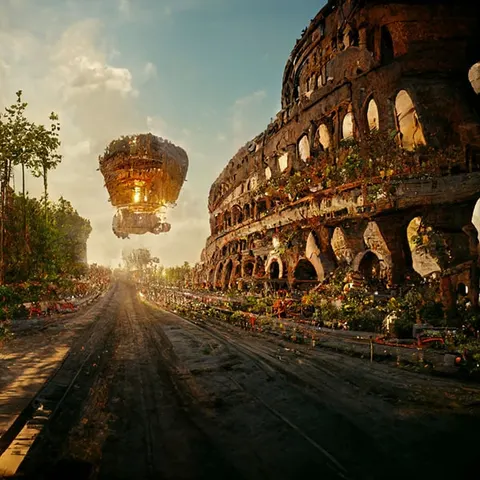
– Do you think there will still be room for truth in this setup?
– Truth has always been an extremely subjective category. I constantly try to seek it out in one form or another, and I see that today it’s even harder. When you log in to a social network, an awful lot depends on what you’ve liked before and what they know about you in general, what caught your eye on other sites, whom you’ve been in touch with. All so the algorithm can determine what you want to see.
So if a person lets their mind be curated by these algorithms, the truth for them becomes fundamentally different from the truth for everyone else.
I think we really do live in a post-truth society, and
the best an individual can do is to know who they are and where they stand.
To hold on to that and make their decisions based on it… at least as far as they can.
Because if you look at what’s happening around the world…
truth is becoming such a fragile, even abstract, notion that this is exactly what frightens me. Even more than AI.
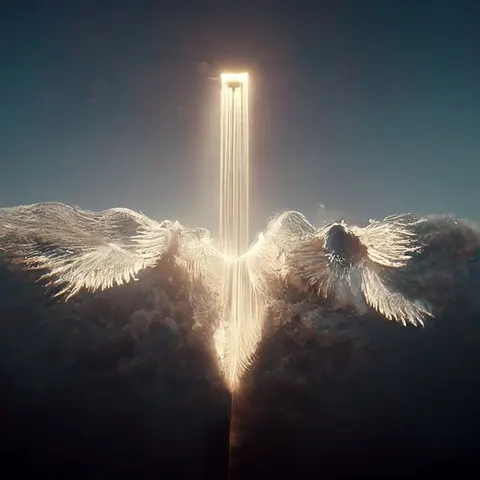
– The filter bubble and the way data shape the truth for each of us are topics I often write about in Digital Stories. And ultimately these problems arise precisely because of the development of artificial intelligence and the fact that we don’t weigh the long-term effects.
– It is a product of human thought. Just today a friend wrote to me that he doesn’t even consider this intelligence—and he’s a programmer who works with software like this and understands the technical details, unlike me.
Where exactly do we draw the line of intelligence? I honestly don’t know. But for now, AI can’t do anything on its own. It builds on purely human ideas, images and interpretations that it has been trained to recognize. And based on computing power
it can generate other ideas in other directions, which, however, etymologically and by definition stem from human consciousness.
As our computing power as a civilization grows, that will probably change. And I don’t know where it will go.
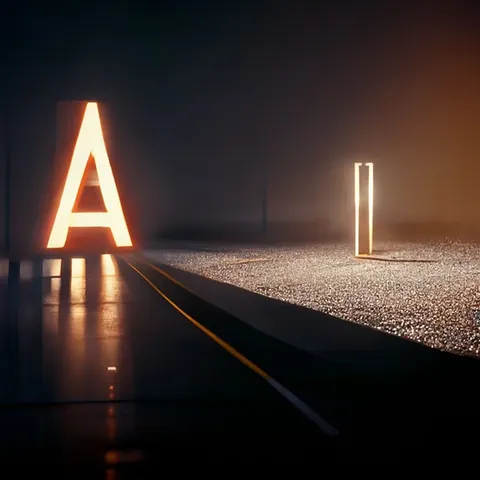
– While we wait for this singularity, what do you think is most important to teach artificial intelligence? Feelings, emotions, empathy?
– That’s very hard for me to answer. I think we humans have an awful lot to learn on these subjects. At least I say so about myself all the time. It would be cynical of me to comment on them with regard to something that is still a prospect for the future, given that I’m still learning them myself. Sorry I didn’t answer your question…