Is there a recipe for success in life? And what is success anyway? Does it meet happiness, or collide with it? What do people who have achieved remarkable results have in common? And are they happy?
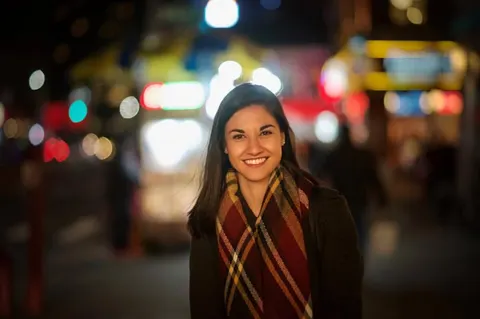
Polina Marinova Pompliano has devoted herself to the mission of finding these important answers. At the same time, she offers a very powerful example of what the journalism of the future might look like.
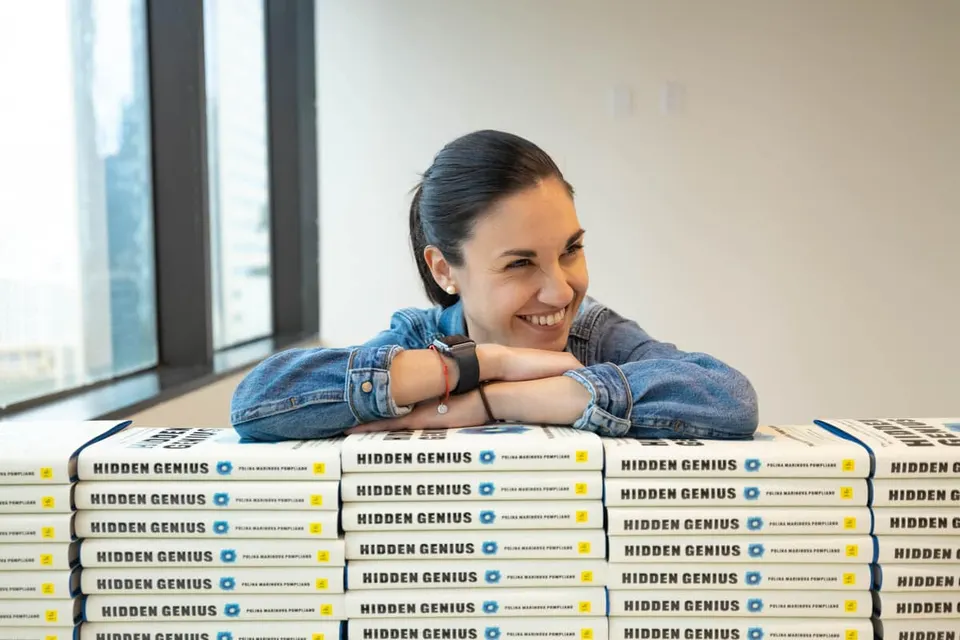
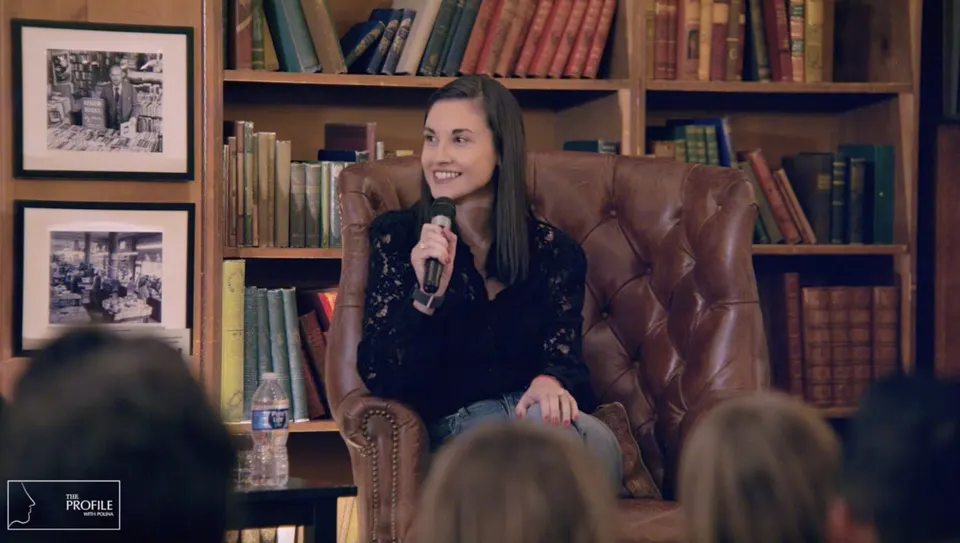
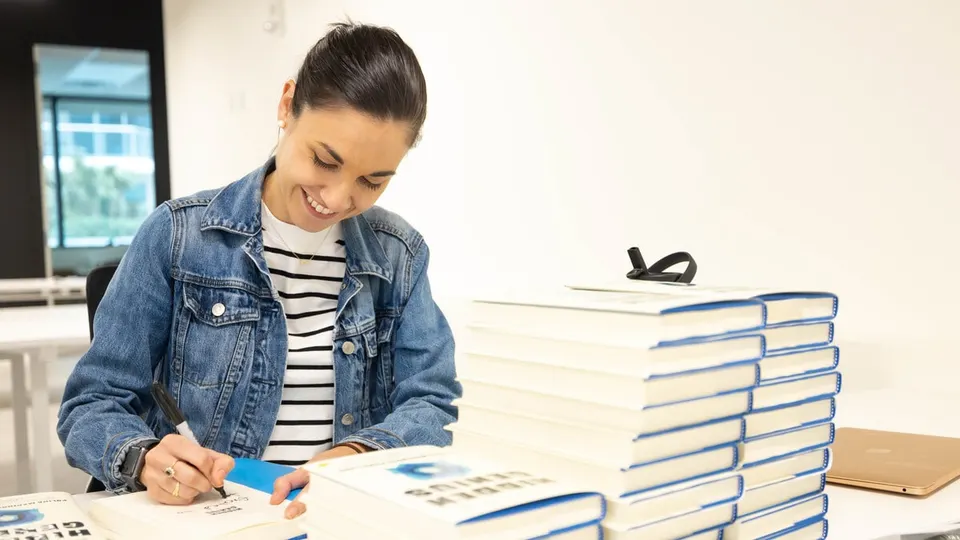
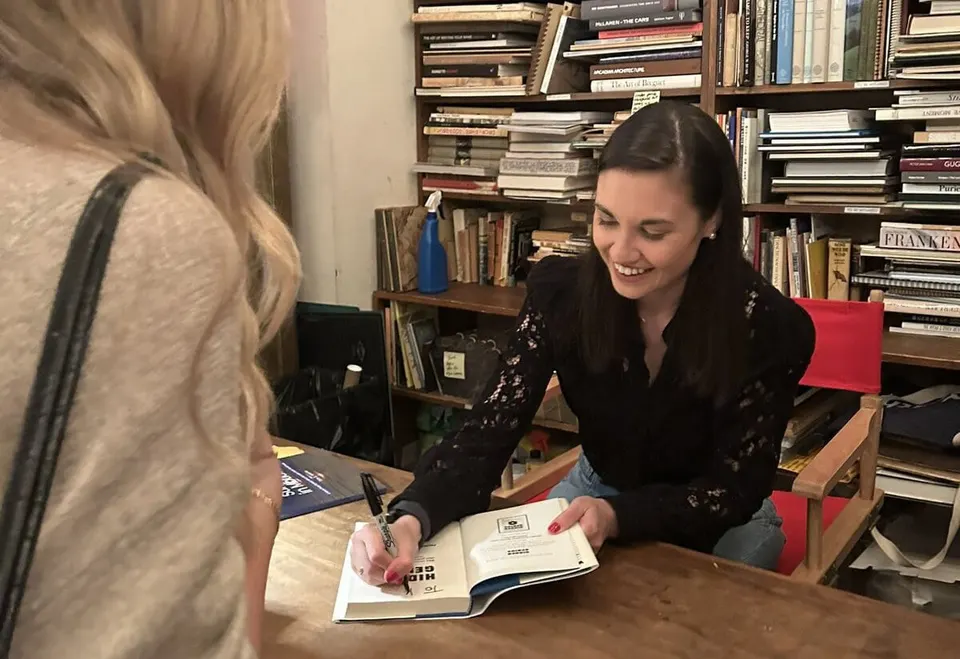
She has lived in the United States since childhood, and there she made her great dream of becoming a journalist come true—her career took her through CNN and Fortune, until she decided it was time for the next step. So she created her own media outlet—the newsletter The Profile, where she tells the stories of the most successful people in the world, now has more than 100,000 subscribers. She distilled its essence into her first book, Hidden Genius, translated into 12 languages, Bulgarian among them, thanks to Daniel Penev.
We will talk about where success and happiness meet, about money and luck, with the author who has spoken with people like Dwayne “The Rock” Johnson, Melinda Gates and Richard Branson. About the future of media and the way we get our information. About the imperfections that create art and the eternal power of stories, which keep making us human…
– Let’s start with the stereotypes… Are rich people happy?
– I believe money only amplifies what you already were—the good and the bad. I’ll never forget reading in a biography of Elon Musk how he complained that although he was now a billionaire, he was very lonely. And the author makes the interesting observation that it’s lonely at the top… but not for everyone. Only for those who were lonely at the bottom, too.
In my view, the happiest people are those who have achieved something that personally fulfills them.
It might be moving to a new country, starting a family or starting a business. That fulfillment is completely different for everyone, which is why no one can tell you what you need to do to be happy. Only you know that.
For me, happiness and success are one and the same—a winding road full of obstacles you have to overcome. In the end, it’s the hero’s journey that turns into a life well lived.
– How do you choose the people whose stories you tell?
– I always ask myself: “Can I learn something from this person’s life story?” In most cases the answer is yes. I believe we can learn from someone else’s successes, mistakes and failures. The stories that draw me in the most are the ones about hardship, courage and persistence—the paths that are thorny and winding. That’s exactly where the most valuable lessons are hidden.
– Are there people from the tech world you admire? Tell me an interesting story about a not-so-famous tech hero….
– Few people have heard of Martine Rothblatt. In the ’90s she was known as a brilliant entrepreneur. She came up with an idea that at first glance seemed impossible—to create a global satellite radio. Well, she pulled it off; you may have heard of the revolutionary company SiriusXM Satellite Radio. Rothblatt led it to a successful IPO in 1993 and left soon afterward.
And then came one of the most important moments of her life. Rothblatt, who was born male and had been called Martin, confessed to her spouse and children that she had always felt her soul was female but had been afraid to express it. She and her wife have been married for more than 40 years.
Right then, though, tragedy struck. The family noticed that her daughter Jenesis was struggling to climb stairs, and she was diagnosed with a rare disease called pulmonary arterial hypertension. The family was told it was fatal.
So Rothblatt, also known as “the perpetual inventor,” decided she would find a cure for her daughter. While Jenesis was in the hospital, she went to the hospital library and read everything she could find about pulmonary arterial hypertension. She went from high school biology textbooks to university medical texts and scientific journals. “Eventually I learned enough to think it was possible that somebody could find a cure for this disease,” she says.
As a result, she founded United Therapeutics—a cutting-edge biotech company developing technologies to extend the lives of patients with severe lung diseases. That company really did create the drug that saved her daughter’s life, and the lives of many other people suffering from pulmonary hypertension.
Today Rothblatt is working on
technology that would copy the contents of our brains and preserve them forever.
She calls it a “mindfile,” a collection of a person’s behaviors, personality traits, memories, feelings, beliefs, attitudes and values.
– Will she succeed on this path, too? I’ve written about the idea of copying brains here on Digital Stories as well. But to return to success—talent, hard work, persistence, the right approach, luck—which are its essential ingredients?
– It takes many ingredients, but the most important is that these are people who know how to reinvent themselves.
Most of the “successful” people we know didn’t become that way on their first try. It usually happens with their second or third venture. There’s no stronger sense of confidence than the one that comes after you’ve proven you can build something again, regardless of the circumstances.
Take Taylor Swift, for example. She’s a global pop star, but she started out in country. Eight years later she successfully crossed over to pop with her album 1989. Then she played with an electro-pop sound on two studio albums, Reputation and Lover. And lately she’s been experimenting with folk and alternative rock.
Unlike many stars who succeed in a single genre, she embraces creative risk and reinvents herself at every stage of her career. Some may see reinvention as calculation, but Swift considers it progress.
– Let’s move on to writing, which is a weakness for both of us. Now that algorithms can write so well… what’s the point of us writing?
– I don’t think artificial intelligence will ever replace writers… at least not the good ones. ChatGPT is perfect at grammar; it achieves ideal sentence structure and consistency. And that’s exactly the problem.
Whether we realize it or not, we connect with other people’s imperfections.
We like imperfect people, imperfect art, imperfect writing.
As Rick Rubin writes in his book The Creative Act: A Way of Being: “Flaws are human, and the attraction of art is the humanity held in it. If we were machine-like, the art wouldn’t resonate. It would be soulless. With life comes pain, insecurity, and fear. We are all different, and we are all imperfect, and the imperfections are what make each of us and our work interesting.”
Do I think ChatGPT can be used to complement human writing? Yes. But will it displace all writers? Absolutely not. The beauty of any creative endeavor lies in its messiness, in its flaws. And above all—in its humanity.

– You and I both started out in journalism, and in a sense we’ve both left it and yet kept going down the same road, just in a different way. What is the most valuable thing journalism gave you?
– The greatest gift is that it allowed me to turn my curiosity into a career. As a reporter, I suddenly had the chance to ask all kinds of questions in search of the truth.
It also taught me to write with nuance and context. And that matters, because
it’s the small, seemingly ordinary details that make stories captivating.
It taught me that the world isn’t black and white, and that my job is to capture the little details that humanize a subject.
– The detail… that’s another thing we’ll struggle to explain to algorithms. What turns an ordinary trifle into a symbol that gives the whole story its meaning. In that sense, one of the points on the path of successful people, according to you, is choosing what you read. I couldn’t agree more (here I explain why). Why did you put it on the list?
– Elon Musk says he takes careful care of his “mental software.” In his view, there’s a difference between the “hardware”—our innate intelligence and natural talents—and the “software”—our belief systems and mental models.
“The ‘hardware’ is like a ball of clay we’re given at birth, and the software is what determines what it will become.” In other words,
the software in our brains is the most important product we own,
because we can optimize it by regularly consuming quality information.
In a world that bombards us with clickbait and articles written solely to sell and advertise, it’s up to us to become more mindful and deliberate about what we read and “feed” into our brains. In the end, the information you consume every day will shape the way you think and see the world.
As Haruki Murakami says: “If you only read the books that everyone else is reading, you can only think what everyone else is thinking.”
– Can there be objectivity in journalism?
– These days a popular argument goes that no one is objective, so it’s impossible to write an objective article. But I’d like to add one small nuance.
Much of what is written today isn’t journalism.
It’s simply personal opinion disguised as journalism.
While it’s true that no journalist can be completely objective, the key lies in intention. If you start covering a story with an opinion already formed, it won’t be valuable to readers, because you’ll impose your own point of view regardless of the facts.
Instead, I always strive for objectivity—gathering the facts, interviewing dozens of people, including different perspectives, asking questions and following the story wherever it leads, even if it doesn’t match what I originally thought.
– Then again, sometimes subjectivity can add value, too. What are the biggest mistakes the media made that cost them people’s attention?
– I think they lost many of their popular journalists when they went through tougher economic times. After that, they
allowed opinions to dominate the news flow without labeling them as such.
Many of the big media outlets became mouthpieces for particular political candidates and didn’t uphold the journalistic standards of doing real, quality investigations.
There were so many missteps… but journalism isn’t dead. It’s just that the media giants are falling apart. I’m optimistic that smaller outlets will emerge and prove that journalism is alive and well.
– I completely share your view. I’d add that it’s time to acknowledge the end of the media as we know them, and the moment when they need to return, fit for the world we live in. What do you think the journalism of the future will look like?
– I think people trust authors more than faceless institutions. And that the journalism of the future will be far more fragmented than what we’re used to. There will be many independent journalists who have built their own smaller projects. We’ll be more likely to subscribe to what individual people create than to faceless media companies.
– That’s exactly what I meant by subjectivity and the return of the author… Your personal media outlet, The Profile, is more than successful. My own modest personal outlet gives meaning to my days. But isn’t it harder when we journalists have to save ourselves one by one?
– Over the past few years we’ve witnessed the rise of the independent writer. We saw the media splinter, and now we’ll see a new consolidation—this time of person-centered media companies.
Let me give you an example from the United States. When Bari Weiss left The New York Times, she was writing articles for a newsletter she ran on her own. Then she started hiring other journalists under the umbrella of her company, The Free Press. Now people can subscribe to the newsletter, but also to its various voices. And you can clearly see that the individual writer is valued more than the organization. More people will know who Bari Weiss is than what The Free Press is.
– What advice would you give to young people today who dream of working in journalism?
– Act with logic, not emotion. Journalism has an extremely important place in society, but it’s not for people who take offense easily. You need to be able to stay calm in tense moments. To ask questions that might make someone uncomfortable. And to be ready to change your mind when the facts speak.

– Do you miss anything about Bulgaria? What are your favorite places and experiences here?
– Apart from my parents, my whole family is still in Bulgaria. I was born in Sofia, but I have incredible memories of time spent with my grandparents in Petrich and Blagoevgrad, in the country’s southwest. An amazing place—I’m very grateful I spent the first 8 years of my life there.
Now we try to come every year with my children. One of the experiences I’ll never forget is my first walk around Sofia with my daughter, whose name is Sofia.
Bulgaria is a wonderful country with wonderful people, and I’m very proud to be Bulgarian.