Robonomics is coming at full force, and those who adapt in time will gain the most from it. Progress in artificial intelligence, robotics and other fields of technology is slowly but irreversibly changing our lives, something we often talk about on Digital Stories.
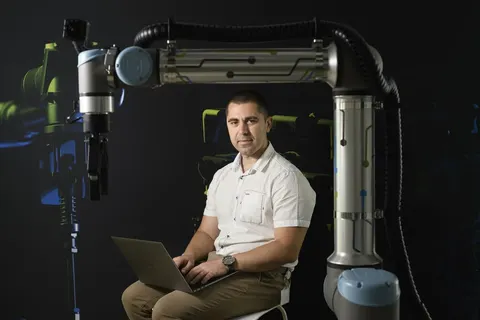
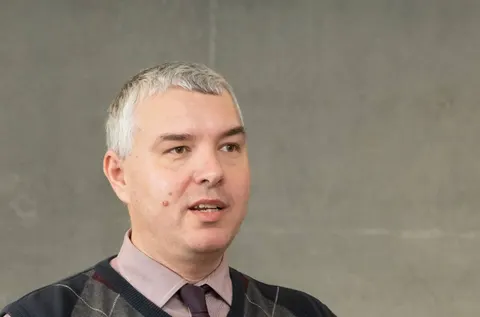
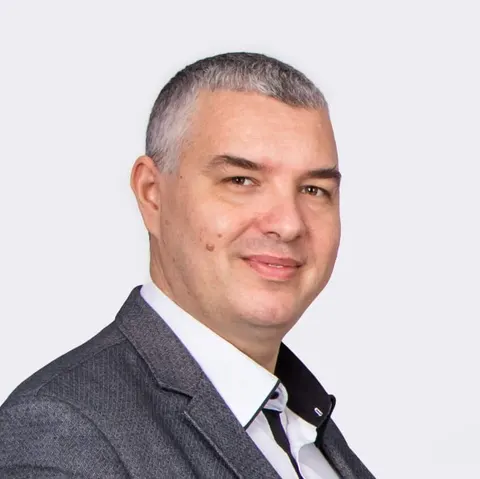
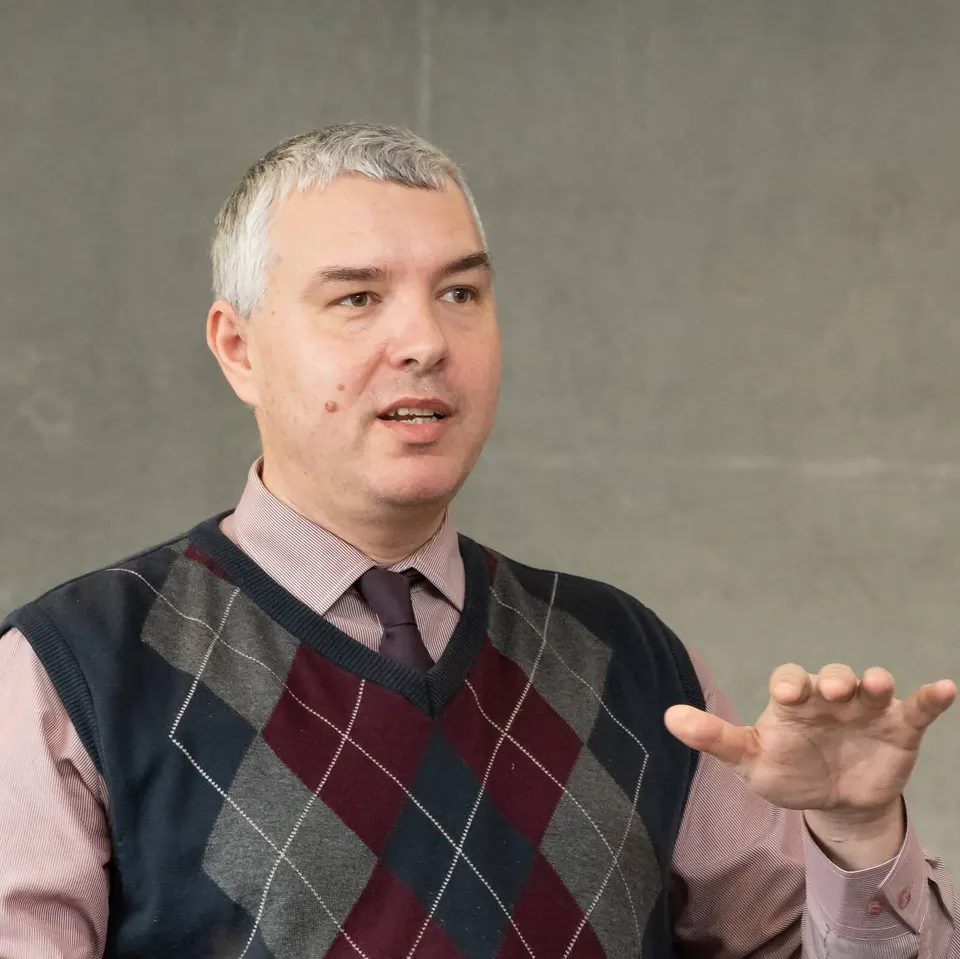
Prof. Stanislav Ivanov is among the scientists doing fascinating research in precisely this direction. Although he has taught tourism for many years, he has gradually turned his attention to the economic changes that technology is bringing. He is editor-in-chief of two academic journals and the founder of the Zangador research institute, which bears the nickname of his notorious grandfather.
We will talk about the coming robonomics, about the exciting future and the big questions it puts before us. About how we Bulgarians are ready to hand robots the same rights and duties we associate with slavery. About the inevitable introduction of an unconditional basic income and the unexpected changes on the horizon. Let us take a peek into the future together!
– How did you get from tourism to robonomics and AI research? Aren't those rather distant fields?
– Before I started at the Varna University of Management, I worked at a travel agency and was responsible for developing its booking system. From 2001 to 2005 I was doing exactly that: putting digital technologies into practice in tourism. Later, through academia, I focused on the economic and marketing aspects.
About 10 years ago I saw that technology had reached a high level of development and could automate the processes in tourism to a large extent. At the same time, those processes were badly lagging behind. So I began doing research in that direction.
Reading the academic literature, I became convinced that automation would change the world substantially. That the current fourth industrial revolution is entirely different from everything before it. The steam engine, the internal combustion engine, computers—
there has always been a need for a human to operate them, and now we have reached the point where technology can make decisions on its own.
This is a fundamental change, and it intrigued me even more to see how far things could go.
– Where do you imagine automation and robotization entering tourism in the coming years?
– It all depends on economic factors. Even now, almost every activity in tourism can be automated. Starting from the moment a tourist gets inspired about where to travel, through the booking process, pricing and so on. Work in the restaurant, the hotel, the travel agency, even tour guiding can be 100 percent automated.
But will it actually happen in practice? The fact that something is technically possible does not mean engineers will really be able to meet expectations. The second factor is the client's budget, in this case the tourism company. A tour guide's work can be automated with a voice assistant, but is the museum willing to pay for such technology?
The third factor is customers. Are they willing to pay for an automated, robotized service? I have done several studies, and they all show that
when tourists are served by technology—whether a chatbot or a robot—rather than directly by a person, they expect a discount.
We found that whatever the service, tourists expect a discount of between 8 and 10 percent. Because of all this, how far automation goes depends on the balance between revenues and costs. That balance will show whether a given service is worth automating.
Which in turn suggests that the services requiring the most labor will be automated first.
– Clearly people's fear and skepticism are an important factor. I see it in the huge number of comments on our pieces about how technology is destroying us, how artificial intelligence and robots are enslaving us… And maybe that is exactly what slows things down. Supermarkets have self-checkouts now, but few people use them, mostly younger ones.
– Absolutely! In the early 1990s, when the first ATMs appeared, people withdrew their entire salaries en masse because they were afraid the machine would keep their money. True, fees were very high back then, and you couldn't pay by card everywhere. But today it's no problem, and everyone pays by card whenever they can.
People get used to things. People grow up. But there is always a transition period when a given technology needs very strong support.
The question that arises here is the degree of automation. In tourism, for example, everything can be done. For now the hardest tasks are those involving manual labor—making the bed, cleaning the room. The problem there is the design of the hotel room, which is made to be serviced by people. The bed is designed in such a way that a robot simply cannot put the sheets on. And these tasks won't be automated any time soon, because that would require a complete redesign of the hotel room. Once again economic logic leads—the hotels are already built, and it would be a serious expense.
– Isn't it paradoxical? Machines are replacing us in many of the tasks we used to consider intellectual. Yet the work of a chambermaid—supposedly not so complex, prestigious or well paid—turns out to be beyond them…
– That is the so-called Moravec's paradox—things that are hard for humans are easy for technology, and vice versa.
We have two kinds of activities, cognitive and physical. Cognitive ones, such as writing a text or making a video, are complex for us humans. But for artificial intelligence they are relatively easy, because it doesn't need to receive information from the physical world; it simply works with what it has been given. It has data and processes it with algorithms to produce a final result.
Physical activities, however, are much more complex. Take a robot delivering room service in a hotel—it has to know where it is, communicate with the elevator, understand that it has arrived so it can get out. When there's an obstacle in its way, it has to change its trajectory. By default, physical tasks are much harder for machines than cognitive ones. For a machine, writing an advertisement is far easier than changing the sheets.
A few months ago I published an article with a co-author from Portugal.
We created a marketing strategy for a 5-star hotel in Lisbon using nothing but ChatGPT.
Everything was perfectly adequate, relevant and highly professional. The article is freely available here.
– I had a similar experiment—ChatGPT generated an influencer for me and she reached 85,000 people, and nobody wrote that something was off. If these are the trends, what skills make sense to develop now?
– People who have no desire to develop will certainly be replaced by automation. That is absolutely certain.
What we have to do is develop all kinds of skills, including technical ones, but above all social skills and the skills to use artificial intelligence. It isn't ChatGPT that will replace marketing managers, but the people who use it. Artificial intelligence simply helps them be much more effective and make faster decisions.
Or it offers unconventional ideas. That's mostly what I use ChatGPT for. The texts it generates don't meet the quality I need, but when I ask for 10 ideas about something, 7 are ones I've already seen, 2 are irrelevant, but one remains that wouldn't have occurred to me and is worth developing.
It is important for universities and secondary schools to start teaching how to use artificial intelligence as soon as possible.
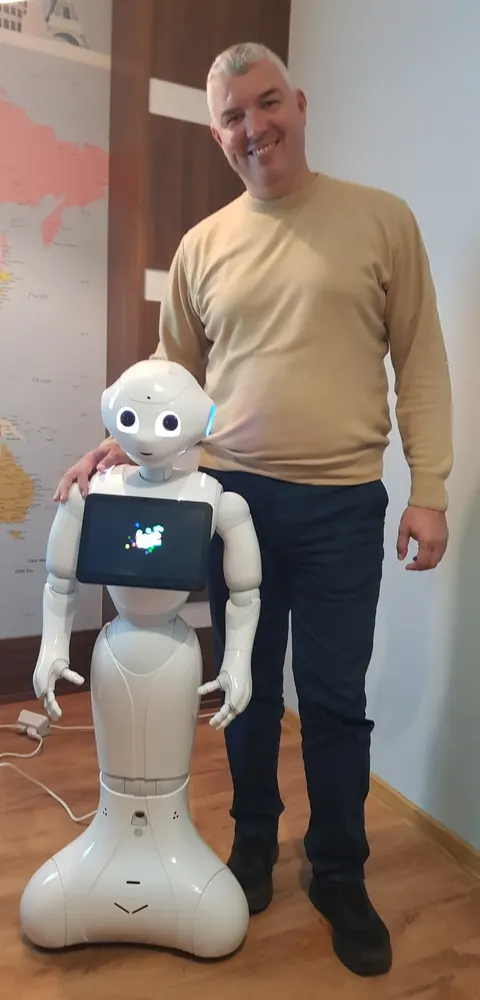
Four years ago at our university we introduced a course called Technologies in Hospitality and Tourism. All sorts of things are taught, including artificial intelligence. We also bought a robot so that students could interact with it.
The effect is striking! Students who were more skeptical of technology became more open to it once they started using a chatbot or a robot, while those who were overly optimistic became a bit more conservative—in other words, the two extremes converge. This should be introduced across the education system.
In the end, tourism is hospitality. And if we hand over to robots and artificial intelligence some of the tasks that waste our time, we'll be able to give tourists more attention. In the long run it will turn out that
technology not only fails to replace people in tourism but, on the contrary, helps the industry return to its roots.
– And not only in tourism; I think these trends are similar in almost every sector. But many people say: it's been a year and a half since ChatGPT appeared, and there's still no field where productivity has changed dramatically. Do we need time, or is there a chance the predictions of big changes won't come true?
– It takes time.
People tend to overestimate the changes that happen in the short term and underestimate the long-term ones.
Changes come exponentially—up close they look small, but over time they add up.
In my view, ChatGPT has already revolutionized certain activities, education for example.
Over the past two academic years, higher education worldwide has faced a serious problem. Universities were forced either to ban artificial intelligence or to adapt somehow. At the Varna University of Management, where I was then vice-rector for research, we ran an experiment. We allowed students in two courses to use ChatGPT. At the end I compared the grades with those from the previous year, May 2022, and the difference was just 2 percent! This year I checked again, and the grades were similar to last year's. That is,
ChatGPT did not lead to a dramatic rise in grades, but it forced universities to change their assignments.
For example, ChatGPT will easily write a 500-word essay on what the consequences of using artificial intelligence in tourism would be. But what stops us from generating such a text and having students analyze it, judge whether it's relevant, and so develop their critical thinking?
Translations have become much better, chatbots now hold far more human conversations, which increases user satisfaction. Publishing has been revolutionized too—whether we're talking about fiction or academic literature, many people have started using it to write texts for them.
Of course, this has many negative consequences as well. For instance, I noticed that Google Scholar was indexing publications under my name that I never wrote. Simply put,
some “authors” have used ChatGPT to generate references for them to include in their publications.
I expect call centers to suffer significantly, especially once companies start training their own models and fine-tuning them to their specific needs.
– One of the big concerns is that it is becoming ever harder to tell what's created from what's generated. I suppose that's also why you did a study on what rights and duties we would give robots, is that right?
– So much has been written on the subject, but almost all of it is philosophical, legal and above all conceptual. In other words, empirical evidence is lacking. My idea was to see to what extent one of David Gunkel's main conceptual frameworks—whether robots “can and should” have rights—holds up.
There were 215 respondents. For the first time, we looked not only at the rights but also at the duties of robots, because we believe that just as people have rights and duties, so should robots.
According to the results, Bulgarians believe robots should respect human rights even when those are directed against the robots themselves. The two duties—to obey all laws and to protect human rights—received the strongest support.
As for rights: to be maintained and not to be abused.
If we look at what the rights of slaves used to be, it would be exactly the same!
They must follow the rules, and their owner must take care of them. They have no right to vote, to go on strike, to own property, to apply for positions, to receive a salary.
Our other finding is that Bulgarians make no distinction between whether robots “can” or “should” have a particular right. For them the two concepts are the same.
We looked at three groups of respondents—lawyers, people from IT and everyone else. In practice there was no difference in the answers of the three groups!
– This association of machines with slaves is very strong, but out of so many guests on Digital Stories, I had only heard it from a priest until now…
– The article that is about to be published is called exactly that: “Robots Should Be Slaves: Bulgarians’ Perceptions of the Possible Rights of Robots.”
They have a duty to follow the rules, to be maintained, fed, and at the same time they have no right to strike, to reproduce… In other words, they are slaves and nothing else, exactly as it was in the Roman Empire. But do robots want this, if the verb “want” even applies to them?
I asked ChatGPT to write the lyrics of a song about robot rights, and the Suno platform generated the music for it. The finished song, generated entirely by artificial intelligence, can be heard here.
– We keep talking about humanoid robots, but they still seem far off. Do you think it's realistic that we'll see them one day?
– Oh, yes! It's absolutely realistic. But I think too much emphasis is being placed on humanoid robots right now. The whole revolution in robonomics is being achieved by non-humanoid robots and AI agents.
An agent doesn't need to be embedded in a robot, in some physical body.
On the other hand, the humanoid form is the least suitable one for a robot. It's ideal for a single purpose—communication.
A humanoid robot can't carry a tray, can't serve, because its hands can't hold a tray. It makes no sense. Better to make a minibar on wheels that rolls around like R2-D2. That is, give it a more functional design.
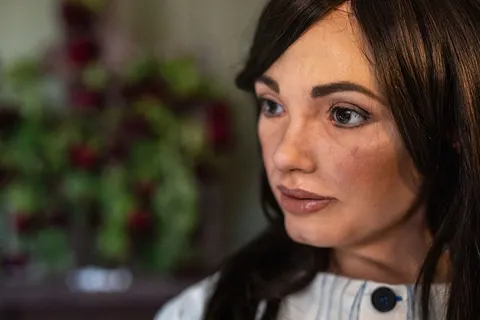
A humanoid design makes sense at a hotel reception desk or an airport, providing information. Or for a sex robot. If one of those didn't have a humanoid design, it would become a kind of pathology…
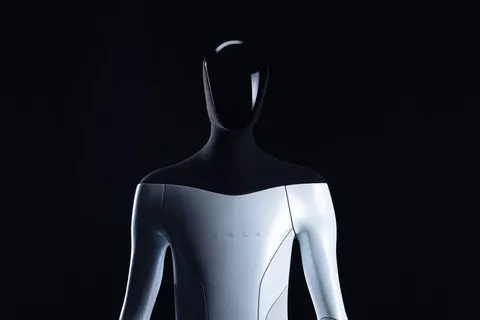
– Even if it looks human, there still seems to be an element of pathology, at least for now… But Elon Musk says Optimus will become a bigger project than Tesla precisely because it's a humanoid robot.
– If he sells 10 million robots, it will certainly be bigger than Tesla. But it makes no sense. For me, from an economic point of view, building a humanoid robot that walks on legs, has hands with five fingers and looks like a human is an absolute waste of money, time and effort.
There should be some of those too. But it's like making a car that uses legs instead of wheels.
It's much better to produce robots with a functional design that helps them perform different tasks effectively and efficiently.
– If our predictions are right, many more human occupations will be automated within a few years. New professions are emerging, but there are far fewer of them, and people become much more efficient at every task… Do we have any option other than some kind of unconditional basic income?
– An unconditional basic income won't be introduced in the next 10 to 15 years, but I firmly believe it will happen by the end of the century. Because
the effects of automation keep accelerating. But there will be quite a few upheavals before we get there.
The countries with the greatest need for automation are those with the most serious demographic crisis. There, automation will make up for the shortage of people.
On the other hand, there are countries with growing populations. That's where the problem will be. Shrinking job numbers there will lead to huge waves of migration. What Europe saw in 2015 will be nothing by comparison. And
when you add the factor of climate migrants, the situation in the coming decades will be very, very serious.
There will be many obstacles to introducing an unconditional basic income. But it is certainly one of the good solutions.
– And we really won't work…?
– I don't think everyone will be unemployed. Rather, we'll reach a situation where 60 to 70 percent, even 80 percent of people won't work and will receive some form of unconditional basic income. The other 20 to 40 percent will work but will earn, say, 10 times the basic income.
Right now, in any country, if you offered people an amount roughly equal to the average income without working, but also without the right to vote, I'm convinced at least 50 percent would probably agree.
But if you hand out money every month that the economy hasn't earned, should that income be tied to real production? In principle, yes, but perhaps at some point simpler controls will emerge. For example, you get 300 euros that you have to spend within a month. That's one way inflation could be kept in check.
And here the next problem arises. When more than half the population receives a basic income, populist parties will win elections very easily. They'll simply promise 500 euros. The next ones will promise 1,000…
Perhaps the right to vote should be tied to the right to receive an unconditional basic income. And what about children? They cost money too; it could lead to a demographic explosion—you have children so you can collect the money.
An unconditional basic income is certainly the future,
but the right mechanism has to be created, one that doesn't lead to bankrupt states or the rise of populists.
The entire economic system will be transformed. Just imagine—you have an autonomous car that schedules its own next inspection. And pays for it itself from your digital wallet. Whether the car does it or you do, from an accounting point of view there's no difference. So who is the customer then—you or your autonomous car? And the next step—everything as a service?
– Yes, with developments like that, owning your own car becomes almost unnecessary. An interesting future awaits us; I'd be glad to continue this conversation someday!