Science fiction writers have long been waiting impatiently for the moment when robots start to look like people. And with a little apprehension, ever since the days of their forerunner Frankenstein and the almost equally distant times of the Terminator.
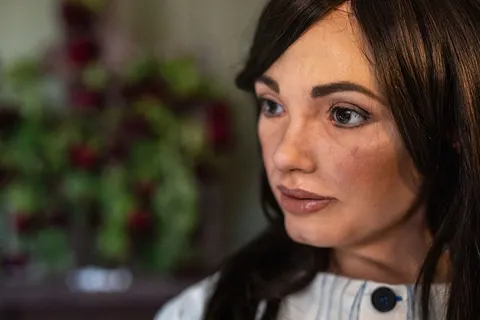
That is why the news that, for the first time, a robot—the innocently smiling Ai-Da—dropped in for a chat with the British lords caught everyone's eye. Although her colleague Sophia has long been a star of the genre, having even been granted citizenship.
How far has technology come in creating the perfect humanoid robot? Is Ai-Da really so different that she can talk as an equal with the members of an almost thousand-year-old institution?
Is the time coming when we'll pass robots indistinguishable from ourselves in the street? Is it even possible? What are the biggest obstacles?
Between Ada and Ai-Da
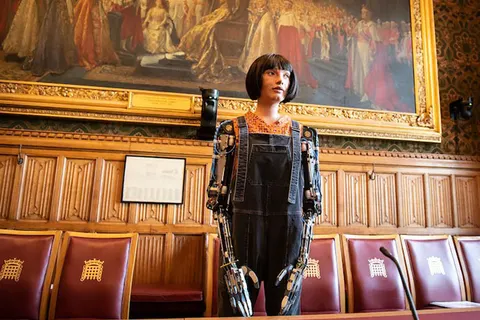
And so, on October 11, 2022, a humanoid robot entered the House of Lords to have a chat with like-minded souls. No, not the way our friend Guy Fawkes did it, with barrels of gunpowder in the cellar, but through the main entrance. We don't know exactly how it got in, but the message of the visit was more interesting. What on earth did Ai-Da and the good old lords say to each other?
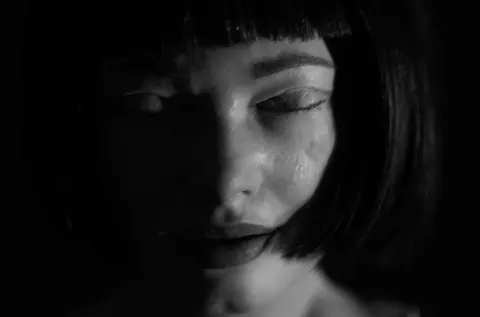
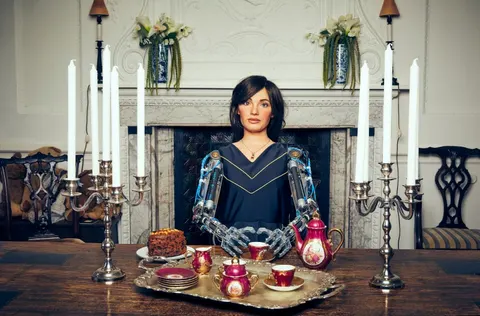
Let us introduce the charming guest. She is not only a robot but also a painter, a poet and a campaigner for the rights of artificial intelligence. Her name is a play on that of Ada Lovelace—the only daughter of Lord Byron, and one of the pioneers of the technologies that led to today's computers. Many consider her the first programmer in history, and a popular programming language bears her name.
The connection being sought is between art and robotics, between the human and the technological. It is no accident that Ai-Da was “born” of the meeting between Aidan Meller, a scholar of contemporary art, and a team of scientists from Oxford, who are in charge of the technological side.
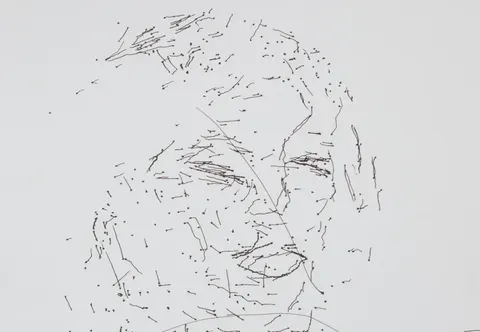
RoBotticelli
Her main purpose, her creators say, is to provoke a conversation about how technology is changing art. Yes, we need such conversations more and more, and not only because of the enormous progress algorithms are showing in image generation, but also because of what is looming in more and more fields.
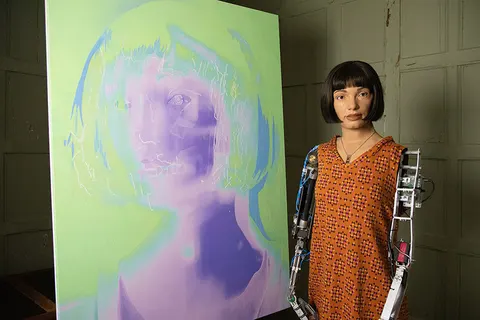
The painter has a three-dimensional camera in each eye, connected to a sophisticated computer vision system. Thanks to it, she registers the objects in front of her. And with her bionic hands she paints portraits, adding a moderate (and, as you can see, not always successful) dose of interpretation.
She already has quite a few successes in this line of work. She has painted Queen Elizabeth II and Billie Eilish, and has shown her work at the United Nations building and at the Venice Biennale. The New York Times calls her “a new voice in the art world,” while TIME magazine believes she “blurs the boundaries between machine and artist, an image from the future that suddenly becomes part of the present.”
In her spare time, the robotess writes poetry. She even reads other poets, polishing her style.
Ai, Da, If Only I Were a Rich Man's Child…
Despite her different “profession,” it was she, and not some robot built specifically for conversation, that the lords of the Communications and Digital Committee chose as their interlocutor. Obviously symbolic. And, incidentally, a sign of looking ahead, toward truly important questions that concern all of humanity. I have a hypothesis about why nothing of the kind has happened yet in the National Assembly, Bulgaria's parliament: after all, AI needs intelligent interlocutors.
Then again, against the backdrop of some recent British leaders, Ai-Da must have seemed a sensible conversation partner to Byron's colleagues (the lords, not the poets).
She appeared with an elegant fringe, a bright orange shirt and denim overalls. They asked her about the relationship between robots, AI and art, to which she replied timidly: “I do not have subjective experiences, although I can talk about where I am. I am dependent on computer programs and algorithms, which are very much not alive. But still, I can create art.”
From there she went on quite boldly. “The role of technology in creating art will continue to grow, and artists will find new ways to use it to express themselves, to reflect on and explore the relationship between technology, society and culture.”
Unpark Your Roboto. Lordo
“Nechem ti fordo” (dialect for “I don't want your Ford”)—you've surely heard this Bulgarian joke.
Yes, by tradition, when we see a new robot or algorithm, we first shower it with the eternal questions; nobody thinks of asking whether it fancies meatball soup for dinner.
This is where Baroness Stowell of Beeston, Tina Stowell, joined in. With the authority typical of her rank, she turned to the creators: “The robot is providing evidence, but it is not a witness in its own right. And I don't mean to offend the robot, but it does not occupy the same status as a human, and you, as its creator, are ultimately responsible for its statements.”
“Working on creating Ai-Da, I have learned a lot. And above all not about how human-like she can be, but about how much we ourselves have become robotic,” Meller replied aptly, hardly with the baroness in mind.
Not everything in the conversation went smoothly. At a certain point Ai-Da evidently got overexcited… and shut herself down. She had to be restarted, and in the meantime Meller put sunglasses on her, because “sometimes, while she's booting up, she pulls slightly strange faces.”
“Technology can be both a threat and an opportunity for artists,” the painter concluded her reflections.
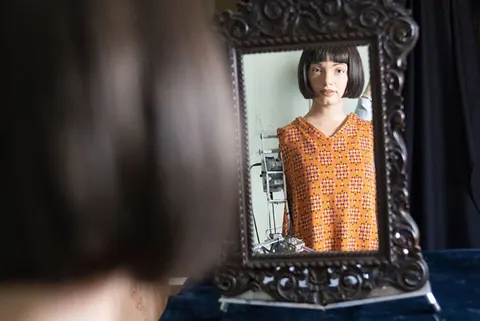
Plenty to Chew On
As her website puts it, “if she is to do one important thing, it is to make us aware of how blurred the relationship between human and machine is becoming today. To encourage us to think more carefully and slowly about the choices we make for our future—the messages of Orwell and Huxley still ring true, and we would do well to be careful.”
Indeed, we can say that she gives us plenty to think about. For example, how much sense it makes to lay claim to human-like robots when we are obviously far from them. And is there any point in creating them at all? What does it give us and what does it take away if they visually resemble humans? Or is it more honest that way than “hiding” the machines purely in algorithms? On the other side of the network…
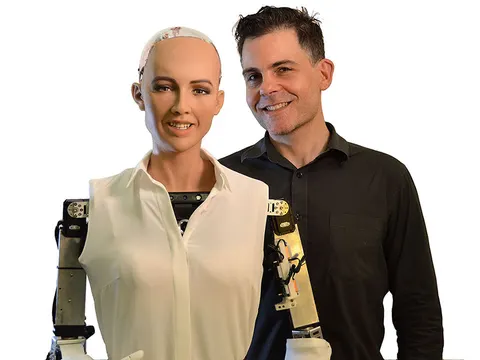
For now, the subject of androids frightens more than it excites. Incidentally, neither Ai-Da nor her even more world-famous colleague of recent years, Sophia, are androids, but gynoids, because they resemble not a man but a woman.
And that gives us one more reason to stop and think—why is it so often a woman that we try to recreate? And not only with robots, but with their invisible relatives, the chatbots. Both Siri and Alexa fall, in the supposedly so outdated binary classification of the sexes, on the gentle (again, by the old definitions) side of the paradigm.
Robots with Gentle Names
It will hardly surprise you that the (sub)consciously sought association is one of reassurance, gentleness, empathy—something we could never achieve if, say, we robotized the classic Bulgarian from the meme. Not to mention how much more viscerally sinister child robots are; there, horror writers have outperformed the science fiction crowd.
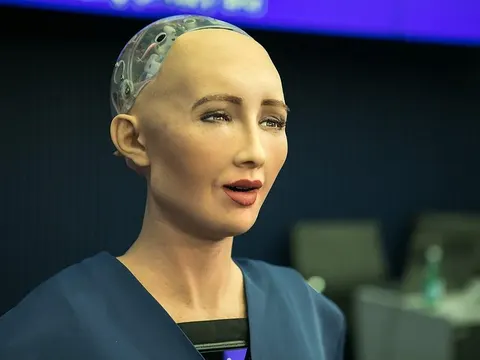
It is no accident that the pioneer Sophia was designed so that her face recalls the classic image of Audrey Hepburn from Hollywood's golden age. Again seeking something familiar, associative, a symbol of fragility and gentleness. Holly Golightly.
And Sophia really was the trailblazer of the genre, the first to achieve a closer visual likeness combined with sufficient mechanical capabilities. Over the past few years she has toured the world, even visited Bulgaria and left with nothing missing. Quite a few people were lucky enough to enrich their lives with the experience of talking to a robot-human.
Sophia even became an official United Nations ambassador. She built up social skills, recognized human faces and tried to read our facial expressions and emotions.
She was even officially granted citizenship by Saudi Arabia! Well, after it later became clear what happens to some citizens of that country in its own consulates abroad, perhaps that turned out to be a risk factor for longevity.
Made of Clay
Nadine, by the Japanese company Kokoro, was made to resemble her own creator, Prof. Nadia Thalmann, as closely as possible. She works as a receptionist at an insurance company in Singapore.
Junko Chihira also comes from the Land of the Rising Sun, but is of the male “sex.” He works as a tour guide; apparently he needs a bit more authority.
There have been so many other more or less successful projects meant to resemble humans, both in the West and in the East. And yet, in recent years the trend seems to be to imitate the physical version of the human… but not too much. To create androids aimed at specific tasks that don't look too much like us.
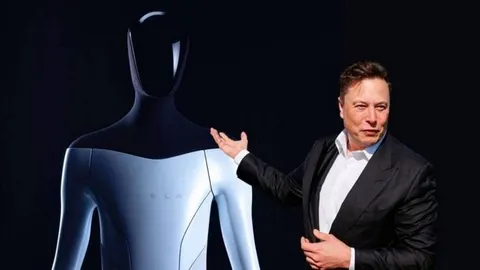
The example of Elon Musk is telling. Before he took it upon himself to save the world's freedom of speech, one of the ventures he had bet on seriously was the Optimus robot. It is humanoid but, for instance, has no face. Its job is to do its job, and it simply uses the human form because that form is the most proven for what is expected of it.
Nerves of Steel
This direction will certainly develop in the coming years; Musk's nose is rarely wrong. Robots will increasingly help in manufacturing, and in more “human” activities too, such as caring for the elderly.
Xiaomi's CyberOne is another example—it also has no face, but it can move like a real person. It responds to 85 different environmental sounds and recognizes 45 human emotions. It can change the color of its face and even has something like a pulse in its “hand.” At the main demonstration, they showed it handing a flower to one of its bosses. It wasn't the most delicate touch, but nobody got hurt.
I wouldn't show it to my kids, given how the robot vacuum cleaner of the same brand affects them at home. Still, it could be quite useful (and so is the vacuum cleaner!). Handing out flowers may be of no use; as a species we can still manage that ourselves (when we remember).
If it turned out to be good at washing windows, that would probably be much better. Its price, however, is currently around $100,000.
Looks Don't Pay the Bills, Robot
I found a survey by futurism.com from a whole five years ago intriguing: in which decade will we be able to create a robot indistinguishable from a human? Twenty-seven percent bet on the 2030s, and over 60 percent are convinced it will be a fact before 2050. Only one respondent says we won't manage it until the 2080s, because we have far too many problems to solve.
“Among other things, to do it we need to build: a general, autonomous artificial intelligence that can solve all kinds of tasks, mechanisms that perfectly replicate human movement, artificial skin, eyes, hair, tongue, voice, lips…” she writes.
Ameca is one of the newest developments in this direction (is it just me, or does the name sound like a toilet paper brand?). It is described as “a half-impressive, half-terrifying robot with realistic facial expressions, designed to facilitate interaction between humans and robots.”
It has become especially effective this year, after being connected to GPT-3. The algorithm, a true breakthrough in the AI world, has taken chatbots to the next level—they are considerably more coherent and can hold an almost human conversation. (Then again, it's hard to have an entirely human conversation with everyone on the bus.)
Ameca receives a question, thinks it over (actually, during that time it's asking the cloud) and, if the internet isn't too slow, answers with the most human facial expressions possible.
Give Me Your Paw!
But, all in all… why do we need a robot-human indistinguishable from a human? Is this aimless ego? And if we succeed, doesn't the next paradigm follow—how it will change human relationships, for instance love and sex?
Isn't this the big question, and not only in robotics but also in what we call artificial intelligence? Will we imitate the human, or will we build something different that does the job for us? Or that takes our jobs?
It seems there are enough people on this earth to talk to without making iron ones too…
I will never tire of repeating it, but fascinating times are coming. And, often staring at the progress of AI, we push robotics into the background, where miracles are (and will be) happening too. Who would have guessed that today we would really have such good self-driving vacuum cleaners? What bigger things await us in automation?
About one thing Ai-Da (or perhaps her creator; sometimes the line blurs) is certainly right. Today there is a lot to think about regarding the relationship between human and machine. And it's good that we do. The sooner, the better.