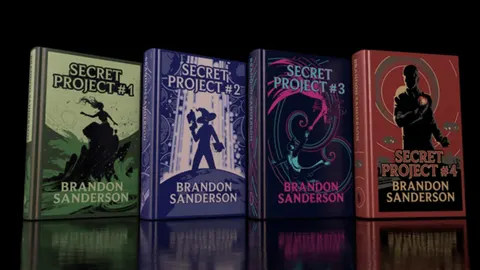
What do you think the most successful Kickstarter project in history is? A new kind of washing machine? A super app? A build-it-yourself bicycle? Nothing of the sort! The answer is a book. Or, to be precise: four books that one author will finish and publish in just a year.
Brandon Sanderson is reserved, pleasantly round, the very picture of a nerd. At the same time he is a bright example showing that literature still stirs young people deeply. That it is conquering new territory, even though the computer mouse was supposed to eat the book. The fantasy writer went looking for an unconventional solution and managed to draw all eyes… and all the money. $41,754,153, part of which he then handed out to other literary projects raising funds on Kickstarter.
What does the magical story of a man who wrote tens of thousands of pages before publishers trusted him look like?
A Typing Machine
If you have even a slight weakness for this century's fantastic literature, a Sanderson book has surely crossed your path. He writes them at astonishing speed. And, given that speed, they are even more astonishing: precise, original, unbelievably vast. He proves that a great writer will find readers even in the most technological of times. And in this case—millions of dollars, too.
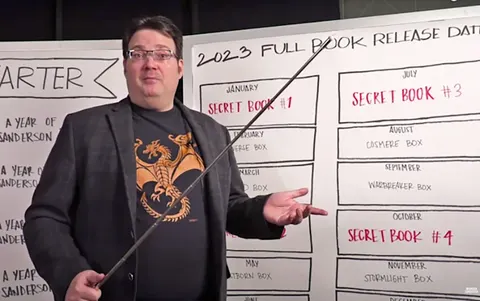
In March this year he surprised even his most devoted fans with an unexpected Kickstarter campaign. The largest crowdfunding platform for worthwhile ventures surely didn't expect all its records to be shattered after a video in which a writer says he has prepared four secret novels, which he will finish and publish over the next year if he manages to raise $1 million.
$1 million for four books? Well, that sum came in during the first twenty-four hours; by the end, the campaign had raised 41 times as much.
Four novels in a year? Yes—if George R. R. Martin is reading this, may he take note. For even the most ambitious writers we know, working that fast would sound insane. But not for Brandon Sanderson. If you happen to be among the people who contributed to the 41 million, you can rest easy. You'll get your novels, and they'll be worth it. Because this man is a (typing) machine!
The Ages Come and Pass
In times when we are always rushing somewhere and have no time to read, when we even forget how to read long texts, Sanderson gives us exactly the opposite. Huge doorstoppers that paint hyperrealistic, carefully thought-out worlds, inhabited by full-blooded characters, no less.
The writer was born in 1975 and, as a child, did not like reading at all. His love for literature, and for fantasy in particular, was awakened by a middle-school teacher who gave him some of the successful books of the day. The reserved boy turned into an avid reader, devouring fantastic worlds. For a long time, however, he stayed away from literature as a profession.
What's more, he enrolled to study industrial chemistry. Coming from a devout Mormon family, he interrupted his studies to spend two years in South Korea as a missionary. It was then that he decided to turn to literature. Because he felt that it was the thing he was missing—not chemistry, which he had thought would be his calling.
From then on, writing became an obsession. Many more years would pass—he would already be 30—before, after endless rejections, the publisher Tor finally showed interest in one of his novels.
Writing Doesn't Pay the Rent
Until he got there, he graduated from a creative writing program and… wrote and wrote. He had firmly set his course for the fantastic genre he adored, trying to recreate whatever won him over personally in books.
For several years Sanderson worked as a night clerk at a hotel. He chose the job deliberately, because it was the only one that let him write most of the time, and night was his strongest part of the day. Even today he says he writes mostly at night, goes to bed around 5 a.m. and sleeps until noon. Then he sits at his desk until 5 p.m., devotes the next few hours to his family, and gets back to work until he has met the goal he set for the day.
While waiting for a yes, he piled up no fewer than 13 novels! “Nobody wanted to read what I was writing. But when I tried to write what they wanted to read, it got even worse. It was stressful,” Sanderson recalls. “Part of you starts to wonder, after you've written a dozen novels and they've all been rejected, maybe this just isn't your thing? Everyone gets rejected, but not everyone finds the strength to keep going after many rejections.”
He decided he would rather pile up 100 novels in his drawer, if need be, because for him that would be a greater success than simply giving up.
Novel after novel… most of which would later become entirely different works whose foundations he laid back then. Sanderson often says he disagrees with claims that he writes extremely fast; rather, he was lucky to be stubborn in the years before his books were first published.
For Whom the Bell Tolls
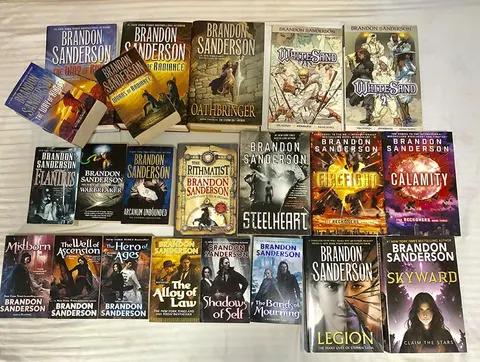
What could give you the strength to keep sending your manuscripts to publishers, stubbornly, year after year, only to have them sent back? That is certainly a question that haunts every artist. Be that as it may, Tor settled not on one of the novels he himself liked best, but on Elantris. His other ideas were for sprawling series; this one alone was a standalone.
Readers, however, gave it its due, so the publishers trusted him with the Mistborn trilogy as well, which revealed far more vividly Sanderson's incredible gift for painting worlds and characters.
And yet he might not have become such a recognizable name if, in 2007, another decision fateful for the writer had not been made.
Robert Jordan is the name of the protagonist of Hemingway's For Whom the Bell Tolls. But fans of the fantasy genre are more likely to recognize in that name the pen name of another of their favorite writers. Robert Jordan's The Wheel of Time was a series of 11 volumes, each about 1,000 pages long, which in its day was the genre's true blockbuster. In a sense it still is: last year saw the first season of a big-budget series based on it.
Alas, when the time came to write the planned final 12th volume, Robert Jordan passed away. And his widow decided that the Wheel should be completed not with one but with three more volumes—written by none other than the rising Brandon Sanderson.
100 Pages an Hour
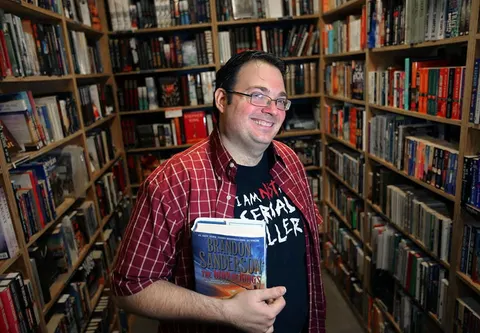
That was when his incredible speed first became apparent. He entered the world of someone else's idea, though he did draw on the original author's notes. Twenty-three years after it began, the series reached its end.
A huge risk—magically bringing two great writers together in one project. An adventure rarely seen in the history of world literature. And yet, at a pace of one 1,000-page volume a year, it turned out to be a risk that launched Sanderson high into the literary firmament.
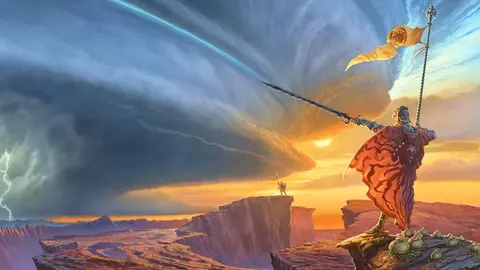
Then he picked up his incredible pace even further. He continued his old series and started new ones. The time came for The Way of Kings, one of those projects from the dawn of his career that had been biding its time. It became a true delight for fantasy lovers—with the promise of a 10-volume series of enormous doorstoppers, each over 1,000 pages!
The Cosmere
In my experience, at least, there is no other author from whom you eagerly await both wonderful classic science fiction and countless pure fantasy worlds. Endlessly different and thought through, at that. He alternates genres, continuing his well-known series and complementing them with completely different things—children's books, comics, crime novels. He says that changing projects often enough is his remedy for burnout.
And the next impressive decision in his books is one more sign of their incredible scale, something their first readers could never have suspected.
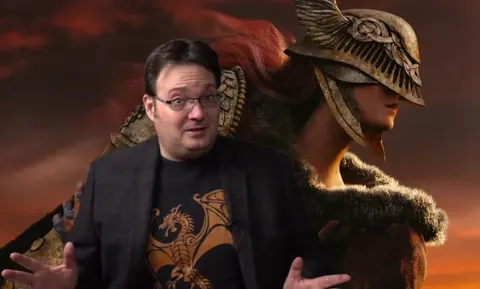
His series came one after another… until it became clear that most of the books he had written so far actually form one whole world. Together they tell a single, larger story about an alternate universe the author named the Cosmere, perhaps by association with the cosmos.
Today entire books are written about what exactly the Cosmere looks like. And Sanderson keeps completing the big picture while he goes on painting the smaller ones.
Which brings us to his incredibly successful Kickstarter campaign.
Write, Brandon, Write!
Our hero already held the record for the most-funded project on the platform—though specifically in publishing. In 2020 he announced that he wanted to raise $250,000 for a special, lovingly crafted leather-bound edition marking the 10th anniversary of The Way of Kings.
The sum was there 10 minutes after the campaign launched, and the project raised a total of $5.6 million.
And so, as a continuation both natural and somehow unconventional, came the climax. In March this year, in a video to his fans, Sanderson announced that he was nearly done with the four books we started with. Because of the pandemic he couldn't meet his readers, which otherwise took up about 100 days a year. He had decided to surprise his wife with more novels, and then… he thought he might as well give them to his readers too.
Two days later the campaign was already the most successful in the platform's history, overtaking the innovative Pebble watches, which had raised $20.3 million in a month. Then it broke the record by a huge margin.
A Round for the Whole Bar!
And finally, he showed some style. The writer announced that part of the money would go to every viable literary campaign running on the platform at the time. More than 300 projects received funds—including one parodying Sanderson himself with four novels by unknown authors. Even if it got only a dollar.
That's not surprising at all, because he puts a lot of energy into paying it forward. He began teaching at the creative writing program he had graduated from right after earning his degree. Even today his series of advice for aspiring writers, which have become cult classics, can be found online.
Sanderson hasn't stopped working with traditional publishers, because he doesn't want to risk his books disappearing from where many readers look for them. But he has also found an incredible way to reach young people.
Everyone who backed his campaign will receive the four novels in 2023, spaced a few months apart, in the format of their choice—on paper, or as a file for reading or listening. Those who gave more will also enjoy extra, carefully crafted marketing gifts. The writer promises not to fall behind on his plans for the next novels in his series, despite the extra work.

People and Fantasy, a World Like Any Other
Sanderson has about 30 employees at the company that manages his affairs. As is typical among Mormons, his family members work there too. He says he is grateful to the internet for the chance to connect with readers so successfully and directly. But also that this cannot be a solution for everyone, because it works only once a writer has achieved the harder initial popularity.
Today he is 46 and has published more than 50 novels. He is hard to compare with any other contemporary writer, especially once you add the variety of themes, plots and different series. And I haven't come across accusations that he uses ghostwriters, probably because his style is quite recognizable.
What matters most in his writing? Sanderson gave a very interesting answer to the Bulgarian fantasy portal ShadowDance on the eve of his only visit to Bulgaria so far, in 2017.
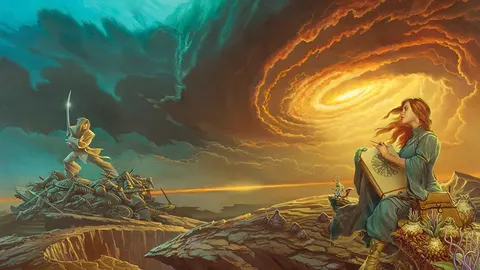
“Unlike most things, I create characters by instinct. For the other aspects of my writing I use outlines and methodologies and build things like an architect. But characters I create based on my intuition. I suppose that's because I love watching people. Most of my characters aren't based on a specific person. I think most writers share this trait—we love watching how people talk, think and function, and we try to get inside their heads through writing. So I just try different things with a character until I feel it's working.”
Gentle Knights
As you might guess, especially after the hugely successful fantasy TV series of the past decade, his other books have already caught the eye (and, gradually, the contracts) of some of the biggest names in the business. Sanderson is adamant that he will not interfere in any way in turning his novels into screenplays, unlike his colleague George R. R. Martin. Because what he understands is literature, and crossing over into another art form is like an athlete switching sports.
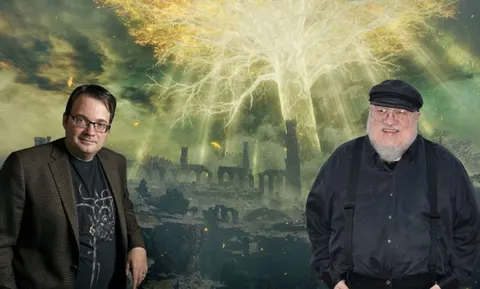
And since Martin has come up more than once, it's worth mentioning another curious fact showing that the two greatest fantasy masters of our time are quite different. In his early years, while looking for a publisher, Sanderson was advised several times to try writing more like his older colleague. To be a bit more “ferocious,” more distant from his characters. He decided, however, that he would create the kind of novels he himself would want to read as a fan of the genre.
The writer cares about aesthetics, but he also gives his publishers in different countries freedom. In Bulgaria, for instance, some of his series appear in leather covers like a medieval manuscript. Others in handmade wooden ones. And one of the Chinese covers is made of stained glass.
The Wizard Writer
By tradition, each of his novels ends with thanks to dozens of readers who were the first to lay hands on the work and give their notes. Because Sanderson loves to polish every step of his novels as well as he can. Without being aloof or vain in any way. Even if, as happens to everyone who writes, he can't always be critical of what he creates.
And the results speak for themselves. Do you still think young people don't read? That we won't learn to take in long texts again?
Now let's see who eats whom… hold on tight, little mouse! All it takes is more people with Sanderson's stubbornness, his unconventional thinking and his talent. Those three qualities together work wonders—magical and real, as if they had stepped out of his enchanted novels.