Dimitar Karanikolov is an architect who caught the photography bug almost by accident. He then became an undisputed master of the lens—his images have been shown by the world’s biggest media outlets, and he has won prestigious awards.
He is the author of the unusual book Istorii ot planetata Zemya (Stories from Planet Earth), a photo journal in which, over 208 pages, striking photographs are accompanied by stories in Bulgarian and English and by pieces from guest authors such as Georgi Milkov.
His favorite vantage point is high above. Why? That is what we are about to find out, along with who is the most fascinating character he has met on the road. Where did he feel in danger? What place (on Earth or not) does the architect-photographer dream of capturing through his lens? And why is it sometimes worth… losing your camera.
10 questions, 10 answers, 10 stories and 10 incredible photos. We fasten our seatbelts and set off on a thrilling journey to every corner of the planet…
1. Who is the most interesting person you have ever met? Someone worth writing a novel about…
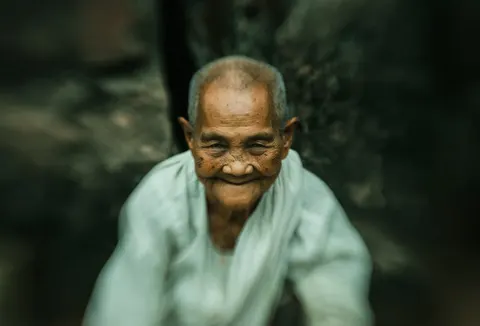
Here are a few who come to mind: a 102-year-old nun in Cambodia. A shaman-healer in Bali, an elderly Japanese man cycling around the world, Mulatu Astatke—the father of Ethiopian jazz, whom I had the good fortune to meet and photograph (though I’m sure more than one novel has already been written about him).
I tend to believe that almost every person, however ordinary they may seem at first glance, has something to teach us and hides interesting stories worth telling.
Each of us fights our own battles, worthy of respect; each of us is a micro-universe. I have struck up conversations with complete strangers, and almost every time I have been amazed by the depth of the connection and by what I learned in the space of even a short but sincere talk.
2. Where on your travels were you most afraid?
There have been tense moments here and there. A woman from the Surma tribe in the Omo Valley started shouting at us for no apparent reason. In an instant we were surrounded by dozens of locals armed with Kalashnikovs! It turned out that
she insisted we pay double for the portrait we had taken of her, because she was carrying a sleeping, hidden baby on her back.
That, of course, was no problem, but the situation escalated so fast that we had to leave the village in a headlong rush, together with our guards and interpreters.
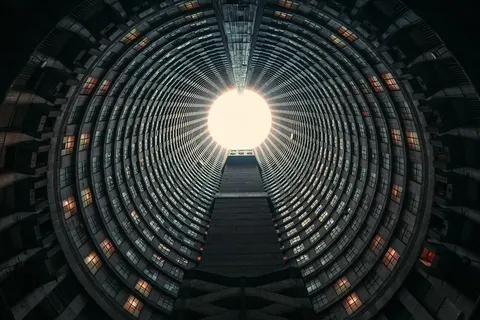
Another time, when we entered the neighborhood of Ponte Tower in Johannesburg, our taxi driver warned us that getting out of the car would be terribly stupid.
Not only did we get out, we spent several hours in one of the most dangerous buildings in the world (at least until a few years ago).
We decided to try to shoot it from the inside after arranging, through an online ad, to meet a stranger who lived in the building and promised to show us around. It turned out more than okay; the worst thing that happened to me was a heavy bag of garbage thrown from the 40th floor, which landed a yard away from me.
3. Is there a place you dream of reaching but haven’t had the chance?… Is it on Earth?
The Earth is as small and familiar as it is boundless.
I’m sure none of us has been even to all the villages between Plovdiv and Sofia, and there are more than 300 of them.
At some point I’d like to make it to Bora Bora, Hawaii and Patagonia, and to set foot on at least another 10 or 15 Greek islands.
4. Very quickly you went from amateur photographer to an author who wins international competitions, admirers, recognition. How did that happen? How do you explain your success?
I don’t think I’ve achieved any great success on the photography scene, and I’m not saying that out of false modesty. Photography is my hobby—I don’t shoot on commission. I choose to photograph only subjects that interest and excite me, and
when you do something for pleasure, I believe, it turns out a notch better than if it were part of your duties.
We live in a time when anyone with an Instagram account can declare themselves a photographer. There are hundreds of competitions—99 percent of them are outright pyramid schemes in which, if you invest enough time and money, you can fairly easily land one of the many awards and titles. I took part in a few and won prizes, after which I completely lost interest in that form of self-affirmation. Better to use my energy to create the images themselves than to promote them.
5. What is photography to you?
A visual means of expressing myself and telling the stories I come across along the way.
I see myself not as a photographer, but rather as an artist who uses the tools of photography.
The same principles of composition, color and light that apply in all the visual arts hold true for photography. If you can draw well, you’ll most likely make a decent photographer too.
6. Why is the view from above so important and interesting to you?
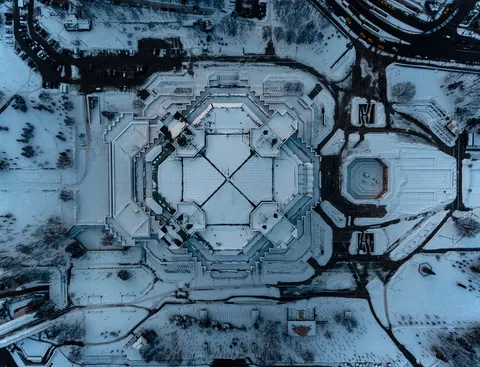
It’s architectural—everything looks like a floor plan.
It’s different—we see familiar objects and scenes from a completely different angle compared with the standard human perspective.
It allows compositions on a far grander scale than “ground-level” photography.
7. Which of your “professions”—photography or architecture—will be the first to fall “victim” to artificial intelligence?
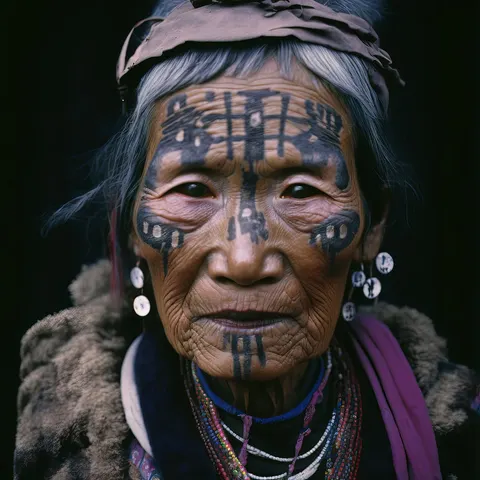
Both architecture and photography will be deeply affected by AI, but I don’t think the human factor will ever become completely redundant.
AI is here, and it is spreading exponentially into every sphere of our lives, whether we like it or not. We have to adapt to the new reality and learn to use the possibilities these technologies offer. And they are incredible!
My main work is in architectural visualization, and
we have already started losing real projects because our clients can generate the visuals we create with AI much faster, more easily and more cheaply.
I recently came across an interesting analogy between the invention of photography at the beginning of the 20th century and the arrival of AI.
Before 1900, realism reigned in the visual arts, but the moment photography became widely accessible, achieving realism stopped interesting artists, and that is exactly when new styles began to emerge—Expressionism, Surrealism, Cubism. Something similar will happen now:
the evolution of AI will lead to an evolution in the arts
—people will have to find new ways to create and express themselves in a manner that cannot be imitated or generated. What times we live in!
8. What will real photographs always have that algorithms will never be able to reproduce?
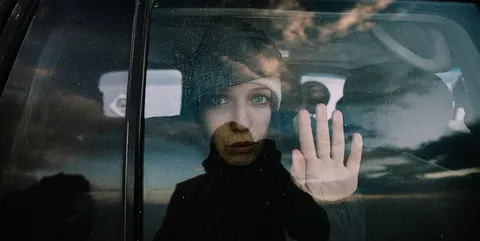
Taking a photograph is a very personal and emotional act, whose essence is the very moment you press the shutter. Everything that follows—selecting, retouching and presenting the images—is secondary.
When you take the shot, you are a witness to what is happening in front of the lens. You are part of it—there, in that scene, at that time.
A generated image, however visually perfect, could never have that kind of documentary value and charge.
9. What does technology give us, and what does it take away?
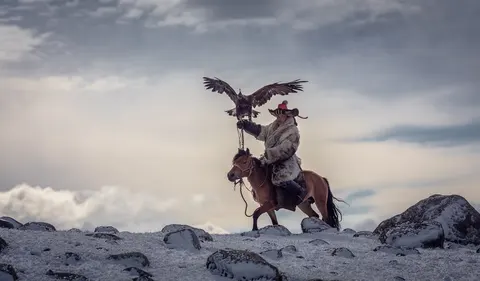
Here is one of the stories from my photo journal. I spent almost a month traveling around Peru. From the beaches of Lima to Cusco and, of course, up to the peaks of Machu Picchu. From the beautiful colonial city of Arequipa to the desert oasis of Ica. We flew in a six-seat plane to photograph the Nazca Lines from above. We sailed in the reed boats of the Uros people, who live on giant rafts—islands on Lake Titicaca.
I took more than 10,000 photos, but on the last day, before returning to Europe, my camera was stolen, along with all the backed-up images. I don’t regret the gear, but the fact that I lost every shot from that trip made me feel robbed of my memories of Peru. I realized that
in my drive to photograph everything I saw, I hadn’t left myself time to live the journey and enjoy it through my own eyes.
And once the pictures were gone, it was as if I had never been to Peru. Since then, wherever I travel, I always set aside time to see the places I’m in not only through the viewfinder, and to truly be there.
It has been shown that taking lots of photos impairs the brain’s ability to remember a given situation or scene. In a 2013 study, two groups visited a museum; one was allowed to photograph the exhibits, the other was not. The group that hadn’t used a phone or camera remembered, and could recall, many times more of what they had just seen.
10. You recently became a father. Where in the world can’t you wait to take your child?
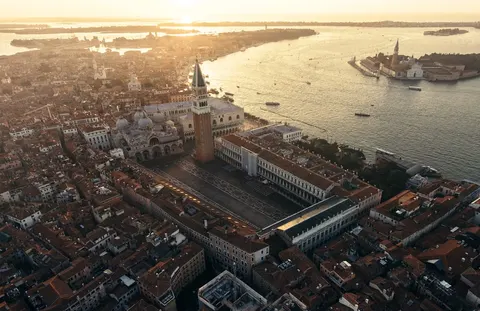
Oh, there are so many! But now that I think about it, they’re destinations tied more to incredible nature and history than to cities and modernity: Iceland, Namibia, Morocco, Venice, Indonesia.
You’ll find more Stories from Planet Earth here.