The book in which you are the hero!
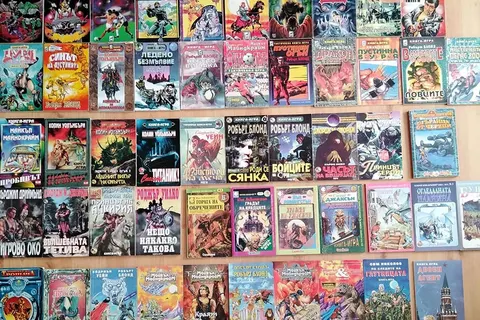
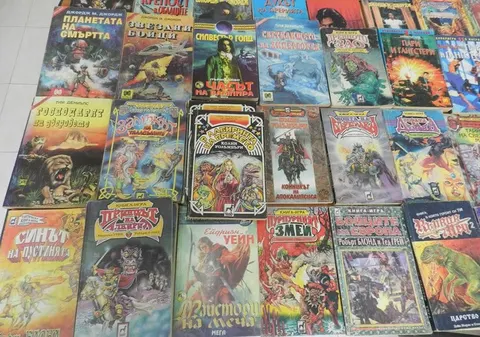
Only someone born in the 1980s will understand me. Sixth grade, 1997. A school friend and I had named Slaveykov Square, Sofia's open-air book market, “the holy place.” We waited impatiently for every day a new gamebook came out, so we could go to our very own stall among the many piled high with books and hand over our pocket money for the new edition. That same evening we would play through at least one of the storylines, and the next day we would discuss what we had read.
Gamebooks, on the scale they reached here, are a purely Bulgarian cultural phenomenon, and there is a lot to learn from them. They show how the wild early years of the “transition” from communism had not only mutri, the thick-necked gangsters of the era, but also a peculiar, meaningful literature that woke a love of books in an entire generation.
If this story is familiar to you, it is worth learning how it continues today. One of the beloved authors, a knight of the gamebook, is fighting to give the phenomenon a new life. And if you have never heard of it… then it is time, because this is something rarely talked about, and it was one of a kind.
Which do you choose?
If you are interested in the history of the genre in the 1990s, continue to episode 1. If you want to know what brought the “golden decade” of gamebooks to an end, go to episode 2. If you are excited about today's gamebooks, which are reviving interest in the genre, episode 3 is for you.
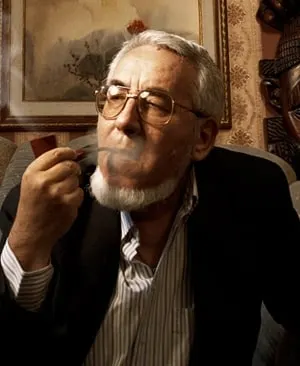
If you are curious who the six great authors of that period were and what they do today, just look at the photos and the texts under them.
If you wonder where the largest gamebook community… in the world is, you will find it here.
And if gamebooks are a trigger for incredible memories for you too, read on in order…
1. In the Labyrinth of Time
The story of the Buena Vista Social Club, only in reverse. Six remarkably good writers and innovators create their own genre, win the enormous attention of an entire generation of young people, and then each of them has to go his own way.
This incredible story came before the digital age, but it carries much of its character. Because gamebooks were a Bulgarian phenomenon that cannot be compared to anything else. It burst out in all its glory and then, just as suddenly, vanished. As if to show that literature has more forms than we know, that it can move generations in different ways when talent is set alight by magic.
Here is how this fairy tale begins, the one in which all of us born in the 1980s are the heroes.
Lyubomir Nikolov is known as the translator of Tolkien. In 1989 the science fiction writer came across an interesting book in French in an antiquarian bookshop. In it, the story was divided into episodes, and from them the reader chose how to continue the plot. The action had many variants that could be followed and interpreted. At the end of an episode you decided how to go on, and you read further based on your choice.
Tales from the Temple of Wonders
The early 1990s were exactly the time for experiments in every respect. Nikolov wrote a similar book of his own and called it V labirinta na vremeto (In the Labyrinth of Time). He sent it to the publisher he worked with, which supposedly approved it, but something broke down along the way. Nikolov, however, was full of inspiration and quickly wrote two more such books. Ognena pustinya (Fiery Desert) came out as the first Bulgarian gamebook, followed by the two others written earlier. And so… the goblins arrived.
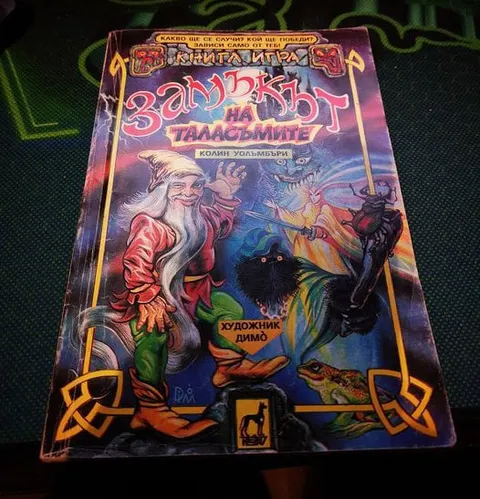
Yes, they are at the root of everything. Zamakat na talasamite (The Castle of the Goblins), a play on Clifford Simak's classic fantasy, was the first gamebook to catch people's eyes. So much so that the very same year Bulgarian National Television (BNT) launched a children's program of the same name that followed the plot.
The goblins took flight and there was no catching them. The book's success made publishers turn to the new genre, in which “you are the hero.”
What the media heroes of the 1990s looked like is another topic. But for us, the kids of the 1990s, the real heroes were exactly the ones in the gamebooks.
The Gods of Football
Several publishers quickly sensed the genre's success and set about looking for new authors. It turned out that gamebooks existed as a genre in English-language literature, but they had certainly not achieved much there. They were already in decline, and their themes turned out to be rather dated.
Publishers tried to release clumsily translated and pirated texts by foreign authors in Bulgarian, but… it didn't work. Unlike those who went looking for Bulgarian talent.
Colin Wollumbury, Virgil Dreamond, Robert Blond, Adrian Wayne, Michael Mindcrime, George M. George.
If you belong to the second group of readers, hearing about this phenomenon for the first time, I should explain that, strange as it may sound, these are the Bulgarian talents who left the big mark on gamebooks.
Lyubomir Nikolov published the first one under his own name, but, let me say it again, the 1990s were quite strange. Afterward the publishers told him that nobody would read an author with a Bulgarian name, and so Colin Wollumbury was born, an anagram of his real author's name. All the others went down the same road (except Sim Nikolov, but who he is I'll leave you to ask the old fans).
The publishers were looking for authors, but… there weren't any.
The Barbarian God
We move to the English Language High School in Veliko Tarnovo, where two kids, Bobby and Alex, only 15, were hooked by the first Bulgarian gamebook, which fell into their hands by chance. It wasn't even sold at the newsstands; you could only get it with a coupon from the newspaper Drugi svetove (Other Worlds). “We were stunned by what this thing was, and without knowing anything, on instinct, we cut out the coupon and sent it off,” one of those kids remembers today. He went home full of ideas and that same evening drew the map of Alkiria and the main story.
The next day he convinced his friend Bogdan to carry on together. They wrote and wrote, a whole 777 episodes, a lot even by the standards of the genre! They sent their manuscript to the two publishers that had brought out Wollumbury's books, the first gamebooks in the genre, and… almost immediately got a call saying they had been accepted! With the usual condition, of course, that they choose English pseudonyms, and so Robert Blond and Adrian Wayne were born, the Ilf and Petrov of gamebooks, after the famous Soviet duo of satirists.
Then almost two years passed, a long lull, before Varvarskiyat bog (The Barbarian God) finally came off the press… And it became the third Bulgarian gamebook to cause a real boom! The kids' work was published… in a total print run of more than 50,000! The first 10,000 sold within a single week!
Today it sounds utopian. But they were young, not used to haggling. Overjoyed with their success, they took money… just enough to buy a typewriter each, and kept writing and writing, immediately landing a contract for five more books.
Four of the six authors made their debut within a few years. A funny paradox emerged: everyone knew they were Bulgarians, readers knew them better than their own neighbors, yet the English names kept showing off on the covers.
The culmination was the founding of an entire publishing house for gamebooks, Mega. Monthly magazines began to appear, first Megaigri and then Megaigra, which gathered shorter texts by the acknowledged masters, organized contests, hunted for the answers to hidden puzzles and kept a constant connection with readers.
The genre piled up fans and more fans. The books covered every imaginable theme; at the height of the enthusiasm in 1994 came Bogovete na futbola (The Gods of Football), a game that captured the spirit of the time even more and holds the print-run record at over 50,000. Translated books came out too, and many authors tried their hand, but over the following years the six whose pseudonyms you saw pulled the whole genre forward, writing at a pace that even Victor Hugo would have envied.
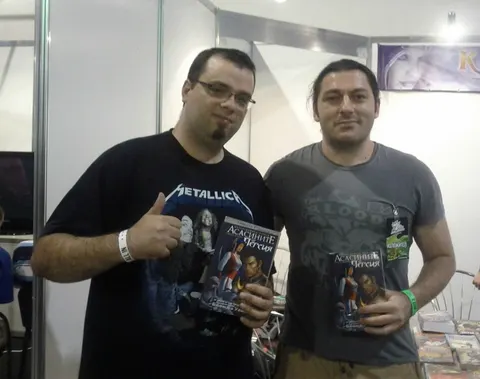
The Crimson Dragon
They created works that stood out for their style, their plots and their thoughtful structure. They had no editors or proofreaders, but they worked in times when that apparently didn't matter so much, because they were literate enough. Without a doubt, many of the gamebooks stand out for their polished style, well-conceived and gripping plots, and ideas that are original even as literature. The current also swept along some mediocre ventures, but those were more the exception and were quickly punished by readers with poor sales.
Some of the most talented illustrators in the country were drawn in by gamebooks too. Against the background of the first, utterly incompetently pirated Western covers, artists like Ivaylo Ivanchev joined in, an incredible and distinctive creator who, alas, now lives in Australia and draws storyboards for various productions. There were Dimitar Stoyanov (Dimo) and Evgeniy Yordanov, and there was Petar Stanimirov, a master of covers, who took the helm of the dedicated publishing house. Masters such as Nikifor Ruskov joined as well, misunderstood by some of the young, but a school of illustration in himself. All this came as a kind of continuity from another Bulgarian youth cultural phenomenon, only from the 1980s: the cult magazine Daga (Rainbow).
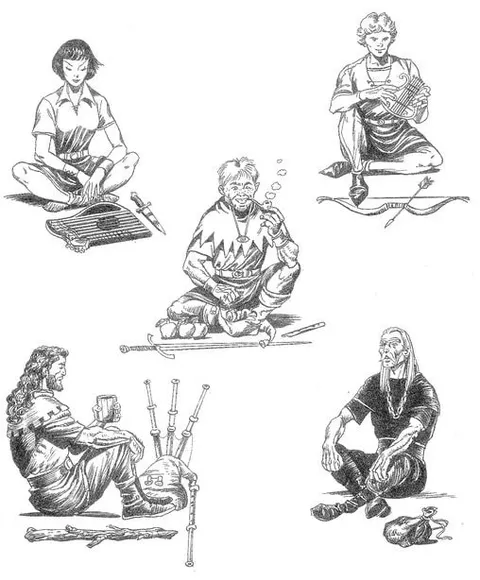
Fiery Desert
Each of the authors specialized in his own areas and developed the qualities of his books further, and long series were created. The areas and themes multiplied: gamebooks appeared about sports, westerns, horror, humor.
Gradually a whole subculture and community took shape, and readers literally flooded the publishers with sacks of letters and ideas. There was a stir when word got out that behind one of the pseudonyms hid… a woman! Another author announced he had discovered a remarkable new master of the genre, and then it turned out that… he was simply publishing under a new pseudonym. Dramas between the publishers began.
After the books came strategy games, series, magazines… and just when the genre seemed to be soaring and its fans were an entire generation, it became clear that the connection had been lost and everything was over. More unexpected than anything for all those waiting for the next edition the following week…
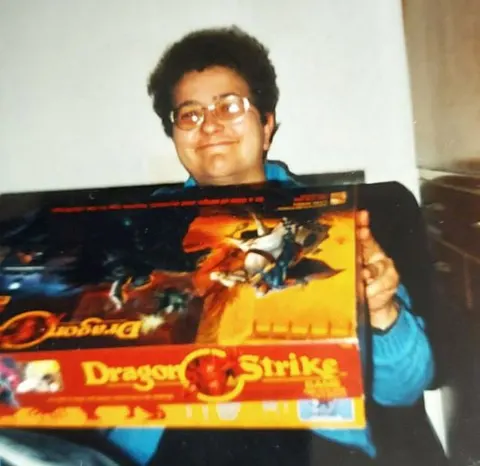
2. The River of No Return
Aleksandar Sultanov still introduces himself as Adrian Wayne; that is his name on Facebook too. Of the six unforgettable authors, he alone has spent the last 10 years actively trying to bring back the genre's glorious past and sketch its future. It was his Facebook group, “Gamebooks by Your Favorite Authors: New Titles, Interviews, Polls, Promotions!”, that made me recall this fascinating subject.
We talk on the phone, because in recent years he has been tormented by serious illnesses that keep him from developing the venture into which he puts effort and meaning. For the past two years he hasn't even been able to leave home, but he doesn't lose hope that he will soon have the strength to carry on. He says he doesn't even own a smartphone. But the moment he starts talking about the past, his voice comes alive.
“It's funny, but it's a fact. There are two things in which Bulgaria is the best in the world: yogurt and gamebooks, plus maybe rhythmic gymnastics,” Wayne smiles.
How does he think the initial boom came about? “On the one hand it was the right moment, the transition, the time when we had to catch up on everything. But that's not an answer in itself; the same conditions existed across Eastern Europe, yet nowhere else was there a phenomenon like this in the quantity and quality of gamebooks,” he adds.
“The genre started in England, but there they never saw them as books. From the very beginning they were single-player role-playing games, something very basic. For 40 years they've been stuck in one place and have made almost nothing of value. Whereas we accepted them as books from the very start and tried to write and publish them as books.”
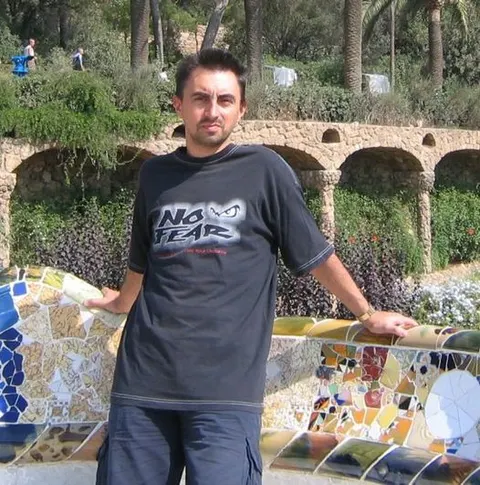
The End of the Corrida
Another explanation is the luck of having such a strong generation of authors emerge. Names like Bogdan Rusev, Elena Pavlova and Lyubomir Nikolov, according to Wayne, have no competition as genre authors of fantasy and science fiction in Bulgaria.
“A product this good would have succeeded anywhere in the world, but in this place and this time, Bulgaria in the 1990s, it succeeded even more, because it was the right moment and there was no competition. Our audience appreciated us.”
Wayne tells how he and Blond started writing almost as a joke at school and imperceptibly turned into best-selling authors. This happened at a time when there was no internet yet; otherwise they would surely have become very popular, outright influencers.
At Both Ends of the Rainbow
“Bogdan didn't believe in our success, but I was sure of it even before we sent the manuscript. Then The Barbarian God became the second most important book in this story, because it turned the whole genre around and saved it from an early death,” Wayne recalls.
The two wrote separately, although no one, then or now, can find any difference in style. “There's no way to tell who's Blond and who's Wayne. We thought and wrote the same way,” the writer remembers. Every Monday they divided up who would prepare which episodes; in the evenings they clattered away at home on the typewriters bought with their first fee, and the next day they read and discussed. Blond wrote a slightly larger share of the texts because he was faster, while most of the stories and concepts came from Wayne.
The two parted ways when they finished high school: Blond left to study in Sofia, while Wayne stayed in Veliko Tarnovo. As fate would have it, both studied English philology, but Wayne stayed in their hometown because… in Sofia he tried to get into opera singing and didn't make it.
For several years they wrote gamebooks on their own, then got back together in Sofia, before the notorious crash of the 1990s.
When the cart tips over, there are plenty of roads, as the Bulgarian saying goes. Still, Wayne's view, which I have heard from others on the list too, is that the cause was the publishers' decision to flood the market at the expense of quality. In my opinion, though, we shouldn't forget that despite the brilliant result, almost everyone involved in the phenomenon was learning on the go. The heads of the main publishing houses never turned out to be particularly successful businessmen, which is easy to explain. And the late 1990s were not easy times for any business.
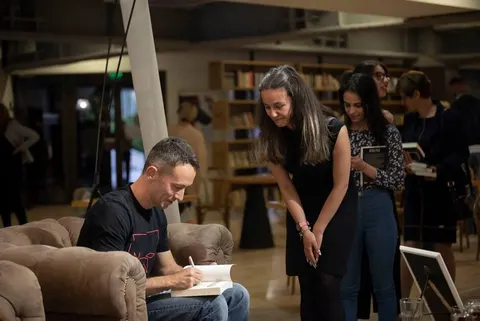
Money and Gangsters
Wayne adds that no one knew the real print runs except the publishers, who evidently weren't keen on paying for every reprint. “50,000 to 100,000 is the upper limit; most were between 20,000 and 30,000. The most printed are The Barbarian God and The Gods of Football. Nobody can know except the publishers themselves, and they keep quiet, so nobody can know exactly how much they made off us. We worked for a flat fee, which wasn't fair. I've calculated that half a percent of the cover price reached us, when the normal standard is about 15 percent!”
All this made them write fast, ever thinner and sloppier books. “They started putting out a book a week, and total garbage at that, magazines, strategy games, half-strategy games. It was a terrorist attack on the genre! As incredibly good as our authors were, some publishers were just as incredibly bad. The genre succeeded in spite of them and died only because of them. The publishers drove the audience away by force, and afterward there was no one to win it back,” says Wayne.
Dimitar Dafovski, known as Michael Mindcrime, holds the same view in this interview for Bulgarian National Radio. “We never had editors or game designers. When you have no editors and no critical thinking, at some point things turned into ‘publish, publish, publish.’ Far too many authors and publishers sprang up, and old books started being reissued. The oversaturation definitely killed the market.”
Wayne regrets that back then he was too young to keep fighting. “I'm an entrepreneur at heart, but I started much later; back then I was a kid. And that's exactly the huge tragedy: if I hadn't been so young in 1999, I would have carried on and the genre would never have died,” Wayne is convinced.
“Afterward only I carried on, because the others had to make a living by translating nonstop, which for me is an extremely bitter story. The best Bulgarian writers, instead of writing their own science fiction, had to waste their time on foreign Western works.”
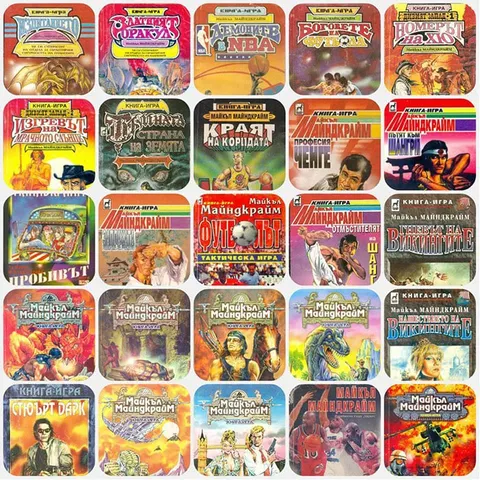
3. Rise of the Dark Sun
In the first years of the millennium so few new gamebooks came out that you could count them on your fingers, and all of them were written and published by Wayne. Over the years he didn't give up and was at the heart of the “New Wave” in gamebooks. Then, in 2011, together with fans of the genre, he created a dedicated website with its history and an active forum, of which, unfortunately, not much remains today. They published several books by the beloved authors and appeared at the traditional book fairs.
Gradually a second current emerged: fans of the genre trying their hand as new authors, again with the traditional English pseudonyms.
In 2015 Wayne opened a bookshop in the arcade on Slaveykov Square, which he calls the only one in the whole world specializing solely in gamebooks. All the old editions are sold there, and there are very serious plans for the future.
Interest in the Facebook group is high, and more and more of the other “old” authors join in with comments, memories and ideas. Former readers come too. As Wayne says, if you were born between 1980 and 1990, you have almost certainly read gamebooks; that goes for 90 percent of the boys and 70 percent of the girls. No more than 5 to 10 percent of the genre's fans were born earlier or later.
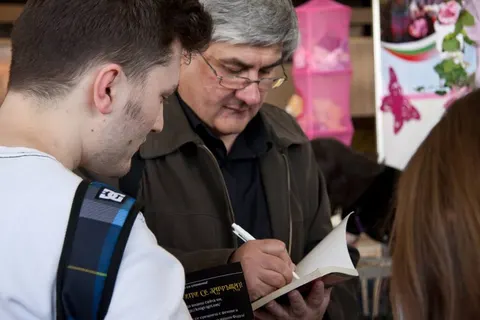
(Georgi Mindizov) impressed with his original ideas about how gamebooks could develop, his eye for innovation, his incredible productivity and his knowledge. He also turned out to be the most prolific of “the six,” with a full 37 titles, including 15 strategy games. After the “sunset,” alas, he too is far from writing. He worked in graphic and web design, and later, to this day, as a programmer.
The Castle of the Goblins
Wayne is confident that today's kids can appreciate it too. Over the past decade he has met many thousands of young people at various events and in the bookshop. “At first they don't know what a gamebook is, but once I explain it in a couple of words, the way I know from experience, their jaws literally drop and they say, ‘Hey, this is great,’ and they're ready to give it a try.”
The writer doesn't consider computer games real competition. “These are completely different arts, and computer games aren't even art. If a child can read with understanding, I'm sure a quality gamebook will appeal to him. Alas, I doubt that many of today's children can do that at all.”
“Once, we gamebook authors had between a quarter and half a million readers in Bulgaria. Where have they gone? I think most of them are still here and will be glad when new books by their favorite authors start coming out soon; we all want masterpieces from Colin, from Virg, from Blond and Wayne,” he concludes. “I believe a revival of the genre is on its way. Soon there will be a new website, new editions; more than 20 books are already ready for print. I'm as full of hope as ever!”
First up, very soon, are a new special edition of Colin's The Castle of the Goblins and Wayne's brand-new gamebook about Father Valens, Chisloto na zvyara (The Number of the Beast).
Gamebooks were also in the news this year, when Bogdan Rusev (Robert Blond) published his new novel Tronat na Alkiria (The Throne of Alkiria), a kind of sequel to the first pages he wrote together with Wayne.
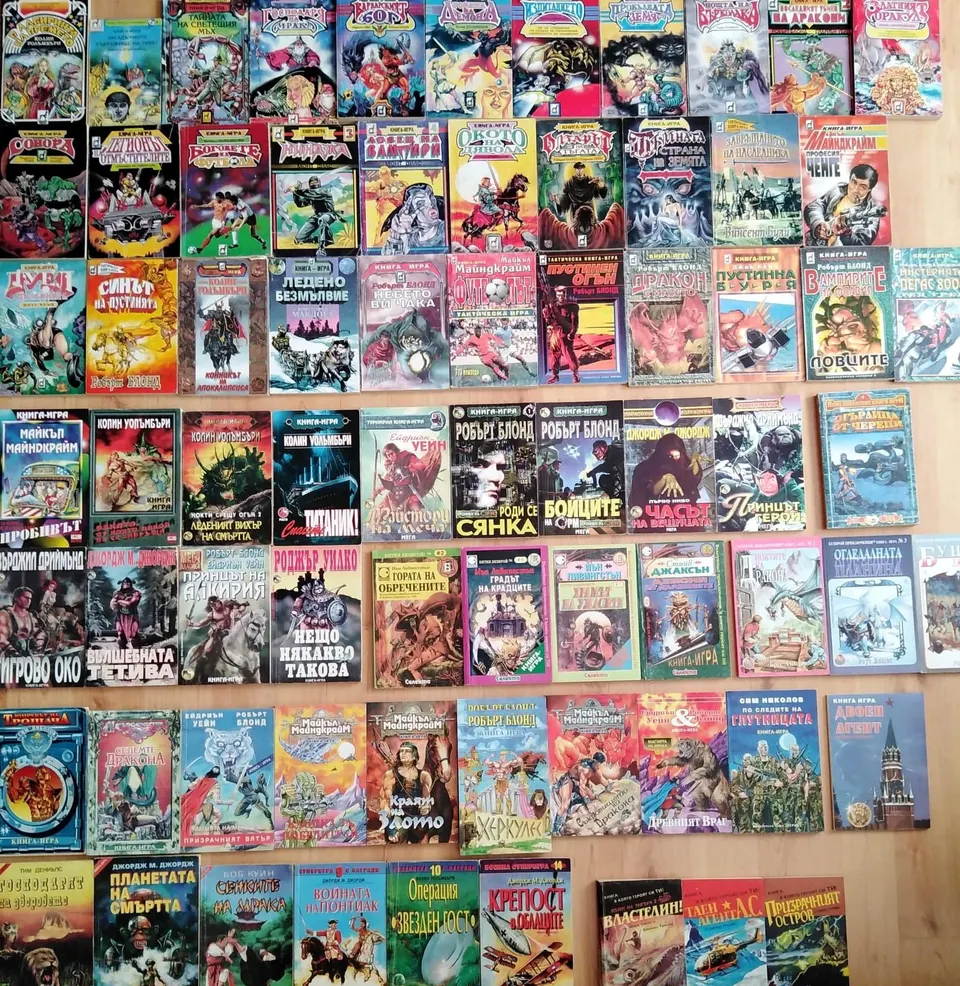
In just a few years, a full 300 books were created, of which I had collected more than 200, reading and rereading them.
The phenomenon will hardly ever be repeated, but it is good to know that such a beautiful and unique thing still lives on. That it can teach future young people to read as well, because the genre is a wonderful bridge between the not always appealing literature lessons at school and reading for pleasure and meaning.
And, as it's fashionable to say… in parting, I wish that someday someone waits for you the way I and so many other kids in the 1990s waited for the release of the next incredible gamebook…