Where is freedom today? Where it has always been: in ideals. And in the deeds of the ever fewer people for whom it remains a cause, not a hollow cliché.
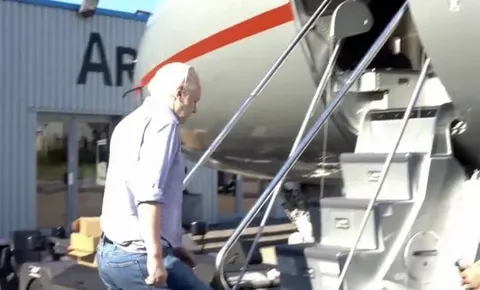
After a 14-year battle that at many moments looked doomed, Odysseus has finally returned to Ithaca. The private jet landed in the Australian capital, Canberra. Out stepped the white-haired, charismatic man known all over the world, and he waved to the journalists and well-wishers who had gathered. Then he embraced his two young children, whom he was seeing in freedom for the first time, far from the oppressive bars…
The heroes of the past fought for freedom. For the independence of their peoples, against slavery and injustice. And today's heroes, the ones future generations will honor? If there is a tomorrow, it will mean they have won, however unlikely that may seem.
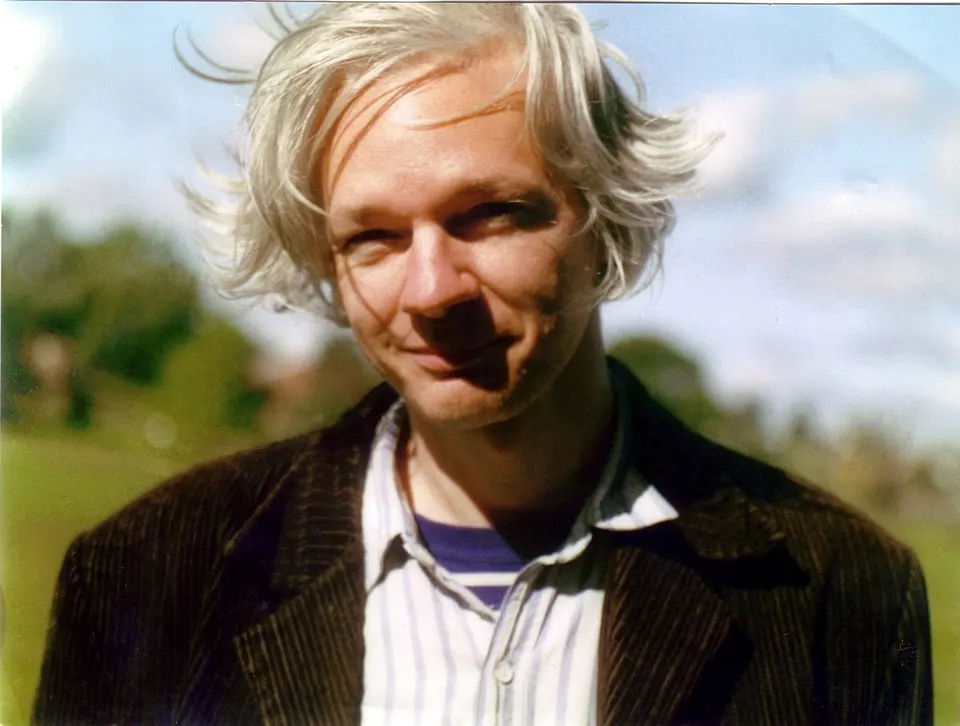
Today's heroes fight for freedom too. Alas, they are neither as many nor as well known. But if there is one whose battle for the truth has reached a great many people, it is without a doubt our hero today. Julian Assange has become a legend, a symbol. And his story is so thrilling and so full of twists that it is worth digging into. Along the way, we will let him speak through a few important quotes that, I hope, will make more people think about the truly important issues of our day. The very issues Digital Stories exists for…
Nothing to Lose but Their Chains
“Who am I? A freedom fighter deprived of all freedom. A fighter for free speech who has been denied all speech. A fighter for the truth who has become the target of a thousand lies.”
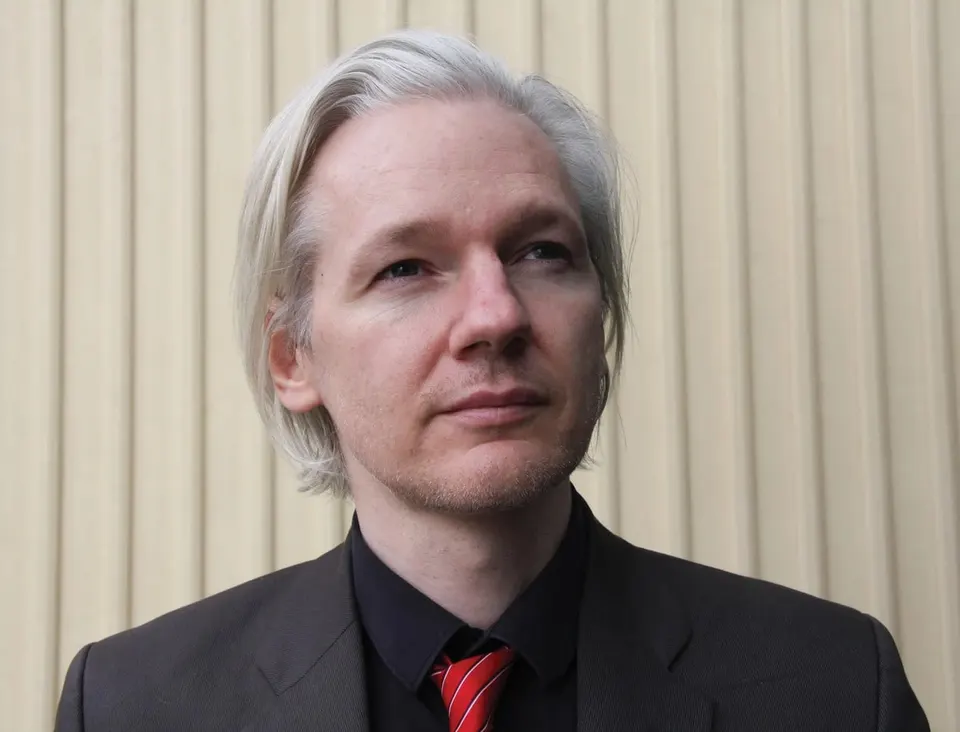
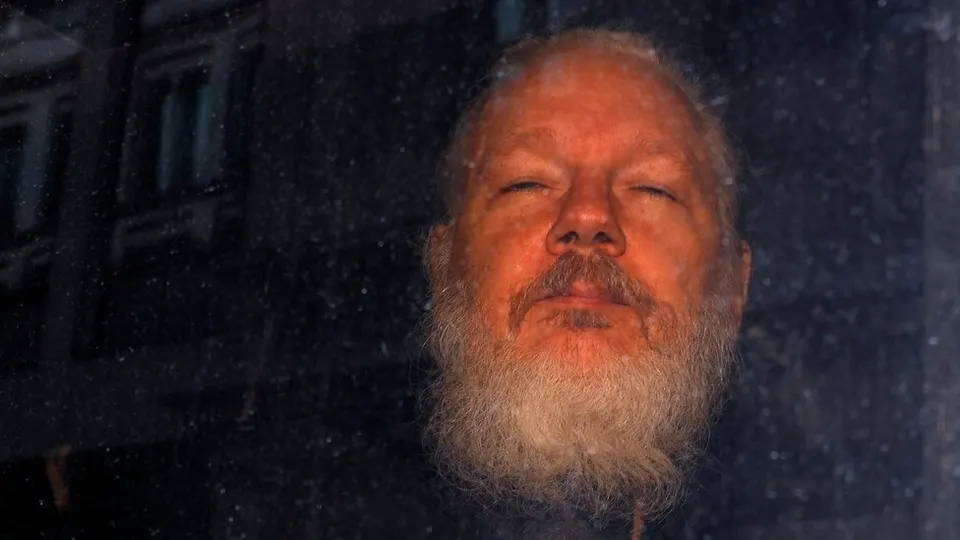
You cannot have missed the Australian with the hair gone white since youth and the somehow childlike gaze. A journalist, a programmer, a champion of the truth who managed to drag into the light some of the most closely guarded dirty secrets of the world's hegemon. And who then entered a legal battle that was all too likely to end in a 175-year prison sentence, precisely because he had done his duty. After 7 years in a cramped little room in the Ecuadorian embassy in London and another 5 in an even more cramped prison cell. After years of risking his life and liberty, Assange came home a winner.
His previous stop was a small courtroom on the small and faraway island of Saipan, where the local judge, representing the United States in the territory of the Northern Mariana Islands, approved the deal between Assange and the prosecution. He pleaded guilty and accepted a sentence of 5 years, which he had already served. “It appears you will be able to walk out of this courtroom a free man,” declared Judge Ramona Manglona, for whom this was the great chance of a lifetime to step into the spotlight.
My People????
“The internet, our greatest tool of emancipation, has been transformed into the most dangerous facilitator of totalitarianism we have ever seen.”
Unlike Assange. Used from childhood to fighting for what he believes in. Showing incredible resilience in his battle against the justice system, against the most powerful states, against absolutely everyone…
What might the price of this deal be?
Before we ponder that, let us go back quite a way, before the story of the documents, the embassy and the prison, which dragged on for an unusually long time by the standards of our age, when everything happens so fast…
Big brother
“The first thing to understand is that a person is either a participant in history or its victim. There is no other option.”
Julian's parents split up before he was even born. His mother, Ann Hawkins, was a visual artist; his father, John Shipton, a builder and anti-war activist.
When Julian was 8, his mother married the actor Brett Assange, owner of a small theater company… It was him the rebel would come to accept as his father, and his surname that he would make famous, even though Brett and his mother parted ways when our hero was only 9.
“Brett Assange was the male figure I related to, the good father. One of those cool people from the seventies who were into guitars and everything to do with the music scene. The name Assange is unusual; it comes from Mr. Sang, or ‘Ah Sang’ in Cantonese, because his great-great-grandfather was a Taiwanese pirate,” our hero recounts.
Defying all the stereotypes, his real father would return to his life later. Together with his half-brother, he would make a film called Ithaka, in the very hope of helping Julian one day win his battle with the justice system and come home… Of course, many of the details remain unknown; Julian keeps his private life far from the world, and piecing together the fragments of stories like his will certainly be a challenge for the future. If history survives as a discipline capable enough to record what happens in digital times…
Stranger in a Strange Land
“People often ask, ‘What should I do?’ The answer is not so difficult. Learn how the world works. Challenge the statements, actions and intentions of those who seek to control us behind the facades of democracy or monarchy. Unite around a common goal and a common principle to design, build, document, finance and defend. Learn. Challenge. Act. Now.”
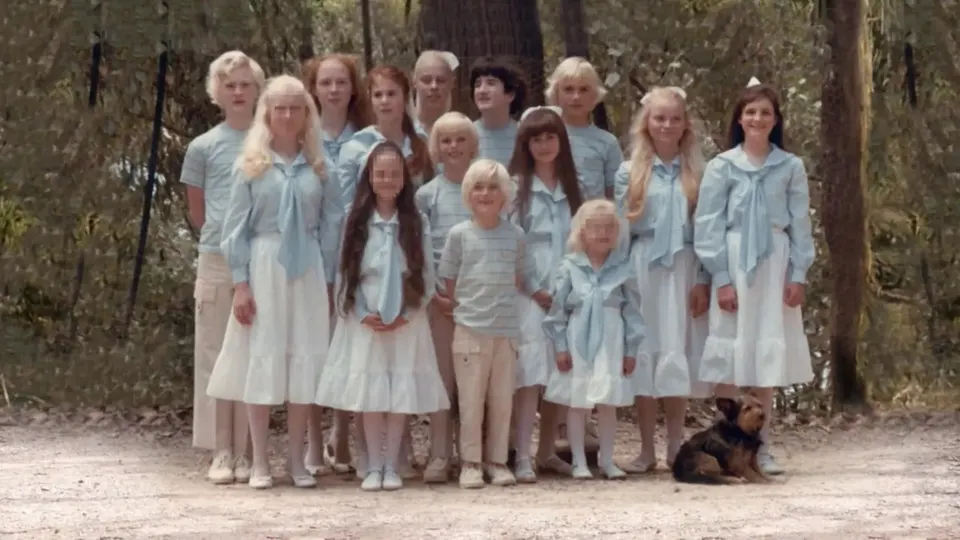
Shortly after her second divorce, his mother married Leif Meinel, a founder of The Family—a local sect, as Julian calls it. The marriage did not last long; she became pregnant, felt hunted and fled, beginning to roam Australia with her son, from state to state… “That's how we started moving. Nomadism suits some people, some situations. We just kept moving; my mother would get a job in a new town and we'd find a place to live there.”
Over the following years, by his own account, they would pass through more than 50 towns, and he would attend 37 schools.
From an early age he stood out as a skilled programmer. He wanted “to break down the barriers to knowledge.” At 8 he was interested in philosophy and mathematics, and by 11 he had already mastered the capabilities of one of the grandfathers of today's computers—the Commodore 64.
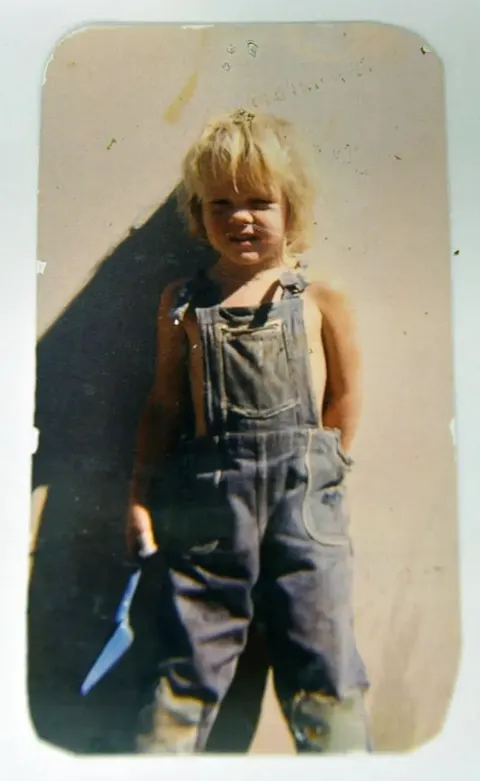
But his childhood was much more than that. In rural Australia, he says, he lived like Tom Sawyer—riding horses, exploring caves, fishing, diving, riding motorbikes.
In high school they called him “the Professor.” He liked to boast that at 15 he could “crack encryption systems used to stop people sharing software,” which would later help him with “systems used to hide information in government computers.”
The Monastery Is Too Narrow for My Soul
“The future of humanity is the struggle between humans who control machines and machines who control humans; between the democratization of communication and the usurpation of communication by artificial intelligence.”
Then, almost imperceptibly, he grew up and was ready to travel on his own. He slung his most important belongings over his shoulder and set out to discover the world, hippie-style, hitchhiking, sometimes without papers, under various made-up names. On and on he roamed, as if racking up the miles for the years he would have to spend in the little room at the embassy and in a cell in the high-security Belmarsh prison.
In all the commotion he had dropped out of high school; he was already 32 when he finished it and enrolled to study mathematics and physics at the University of Melbourne…
He did not graduate, because by then a chance to change the world had opened up before him.
Julian first stepped into the spotlight precisely as a hacker. At only 16 he was operating under the handle Mendax when he and two friends were put on trial for hacking. They mostly used social engineering; they did not abuse the information or profit from it, they only shared it, and that is what would save them. And although they hacked institutions such as the Pentagon, Citibank, Motorola, Panasonic, NASA and the U.S. Navy, they got away with it. They signed an agreement with the court, pleading guilty and receiving only a suspended sentence in return. Sounds like history repeating itself, doesn't it?
At the Tip of the Spear
“Real democracy is not the White House. Real democracy is not Canberra. Real democracy is the resistance of people armed with the truth against lies, from Tahrir to London. Every day ordinary people teach us that democracy is free speech and protest. Because once we, the people, stop speaking openly and stop resisting, once we turn our attention elsewhere or grow complacent, once we turn away from one another, we are no longer free.”
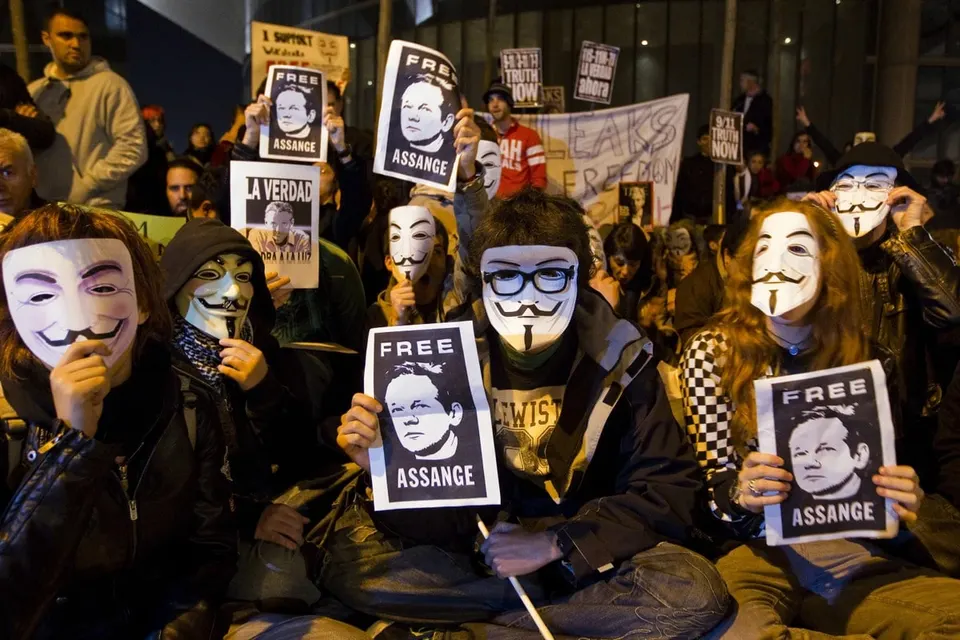
Next he took the lead in the cypherpunk movement. Behind the rather catchy name lies a community of people pursuing “privacy for the weak and transparency for the powerful,” who use “mathematics and programming to create a brake on government power.” The cypherpunks advocate the widespread use of cryptographic technologies as a way to protect basic human freedoms.
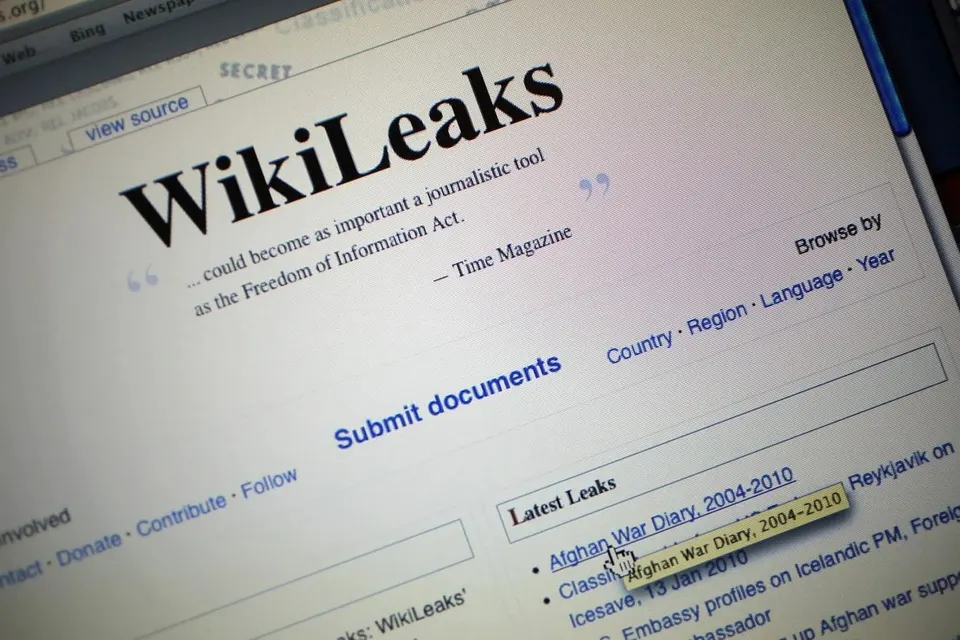
All of this soon came to life in WikiLeaks—the organization Julian and three like-minded people founded in 2006 with the idea of creating “the rebels' Library of Alexandria.” A rich collection of information that could not be found anywhere else, gathered in an easily searchable form so as to keep watch on how today's institutions do their jobs.
Although the first part of the word, “wiki,” is used for collections of information that anyone can add to, the idea here is different—a media outlet of sorts, able to meet the needs of a new age. The second part hints at this: “leaks,” from the English term for information escaping where it shouldn't.
According to Assange, WikiLeaks rests on the idea of “scientific journalism—that every piece of information should be cited precisely, with the original source. As much of the information as possible should be put in the public domain so people can examine it, just as in science, so you can check for yourself whether the conclusion follows from the experimental data.”
Publish or Perish
“I see that there is now a militarization of cyberspace, in the sense of a military occupation. When you communicate over the internet, when you communicate using mobile phones, which are now meshed with the internet, your communications are being intercepted by military intelligence organizations. It's like having a tank in your bedroom.”
During one interview Assange was asked to give a mathematical formula for WikiLeaks, and he wrote three words on a sheet of paper: “Publish or perish.”
In just a few years the modest venture turned into a phenomenon that bears no comparison with anything. The documents it revealed led to massive journalistic investigations and political upheavals. Even to wars, to the ending of wars, to changes of government in a number of countries. To date WikiLeaks has published more than 10 million documents, many of which, you can be sure, were not exactly welcome news to the governments of the world.
Including the government of today's global hegemon. It is no accident that in the years that followed, Assange and his associates were subjected to a sweeping, unprecedented campaign in which they were smeared, discredited and, worst of all, prosecuted, stubbornly and shamelessly, on a string of obviously fabricated charges, as well as on charges that were in fact examples of free speech in its purest form.
The Truth Shall Make You Free
“Everything else flows from the revealing of the truth. Our buildings can only be as tall as their bricks are strong. Our civilization can only be as strong as its ideas are true.”
“We created WikiLeaks to make capitalism freer and more ethical and to expose injustice, not to be neutral,” Assange also says. Publications from the platform have been cited in more than 28,000 academic papers and U.S. court decisions.
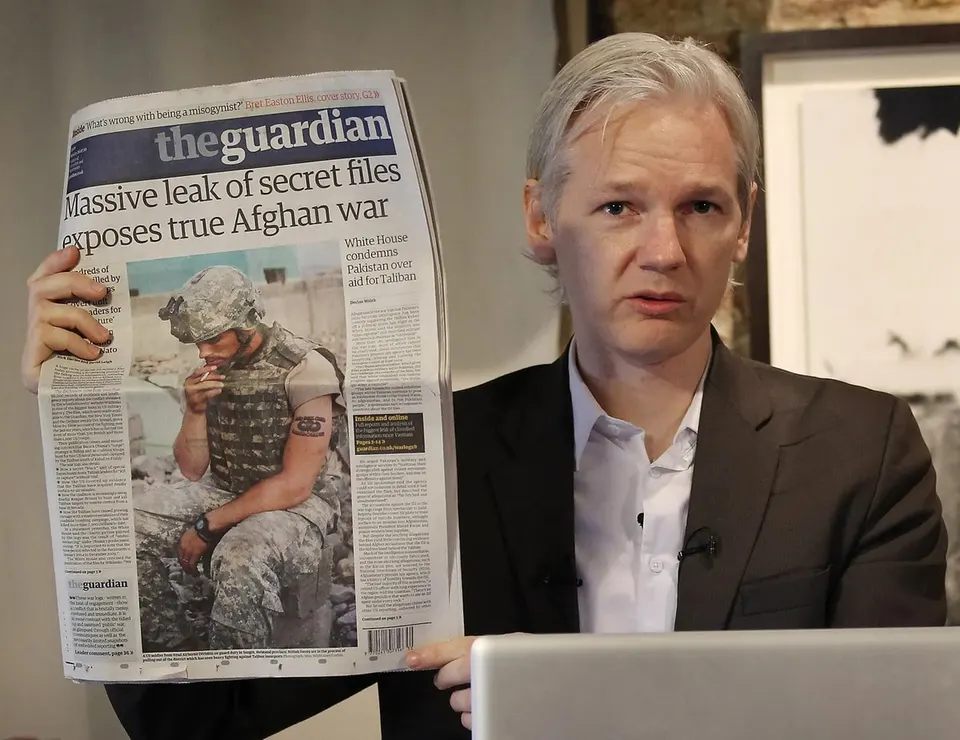
Among the most striking collections of information is the Afghan War Diary, containing 90,000 often harrowing reports on the deadly actions of the U.S. military. For the Iraq war, nearly 400,000 field reports were published, exposing war crimes and testifying to the enormous number of civilians killed.
It is no exaggeration to say that the two collections also led to the end of the hostilities and the gradual U.S. withdrawal under public pressure. And perhaps this is also why, in recent years, the global hegemon's policy has shifted toward not intervening directly in military conflicts. Alas, war crimes around the world have not ended, but if at least a few more conscientious journalists worked on the scale of our hero… that would be no utopia at all.
Under the name Cablegate, more than 250,000 U.S. diplomatic cables were published, sparking scandals in many parts of the world. The Guantánamo Files told of the inhuman torture inflicted on detainees, while the Spy Files revealed many cases of mass global surveillance, including of leading politicians. One of the latest major scandals was the publication of Hillary Clinton's emails, which to a large extent brought about the end of her political career and today's chaotic state of American politics.
With a Bare Knife in Hand
“Power is mostly the illusion of power. The Pentagon demanded that we destroy our publications. We kept publishing. Clinton denounced us and said we were an attack on the entire ‘international community.’ We kept publishing. They put me in prison and under house arrest. We kept publishing. We went head to head with the NSA, got Edward Snowden out of Hong Kong, won, and secured him asylum. Clinton tried to destroy us, but she herself was destroyed. Elephants, it seems, can be brought down with a piece of string. Or perhaps there are no elephants?”
Of course, because of this enormous list, Assange and his associates are often accused of collaborating with other states, Russia in particular, of political manipulation and who knows what else. For many years the Australian faced extradition to Sweden on charges of raping two of WikiLeaks' female associates. Later the testimony turned out to be rather dubious, as did the backgrounds of the accusers, and the case was dropped.
Because of the WikiLeaks revelations, one of its main “suppliers” of information, Bradley Manning, spent some time in an American prison before reaching a deal with the prosecution and walking free, by then with a different name and even gender—as Chelsea Manning. Edward Snowden, for his part, still lives in Moscow, fearing the consequences of having simply told and shown what the authorities in his own homeland were doing. Incidentally, Snowden calls Assange “one of the most far-sighted thinkers in technology, constantly ahead of the curve.”
Crocodile Dundee
“With digital archives, with these digital repositories of our intellectual history, control of the present makes possible an absolutely untraceable removal of the past. More than ever, the past can be made to disappear entirely, completely and irrevocably, without anyone noticing.”
Thanks to Assange, the now popular term whistleblower came into wide use—the person who blows the whistle. Who has the courage to say that the emperor has no clothes. Who has the integrity to expose the huge wrongdoings that go on in states, companies and society and remain hidden.
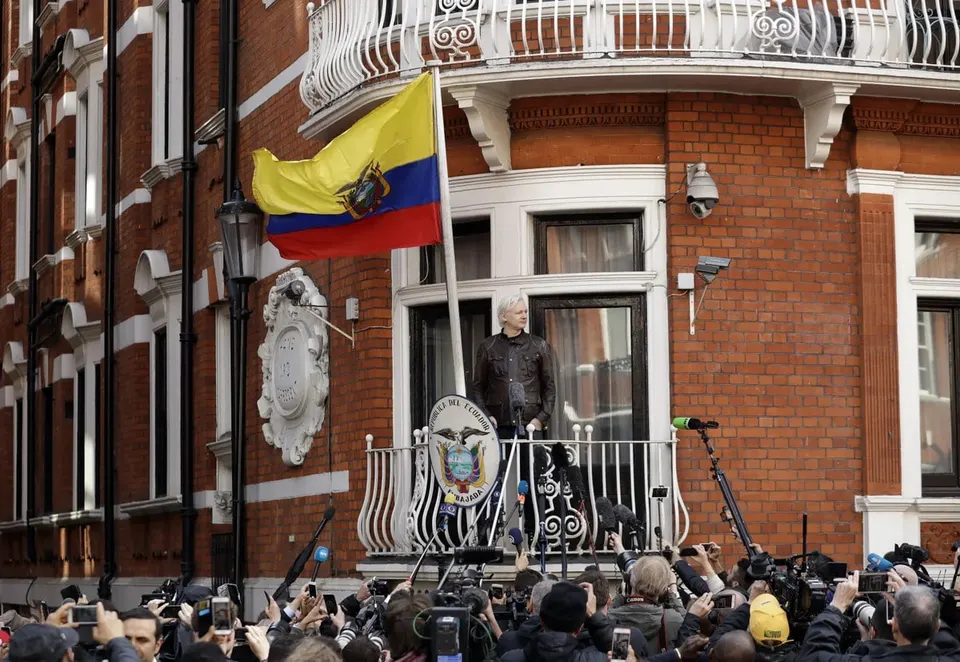
Though he was the symbol of the venture, Assange always said WikiLeaks was a team effort. And yet the logical thing happened: in June 2012, when he was about to be sent to prison and no longer had any chance of escaping the persecution, he found refuge in the Ecuadorian embassy in London. The then president of the small South American country, Rafael Correa, had the courage to shelter the rebel, granting him political asylum and later citizenship.
But if that sounds like salvation, it is only fair to say that the Ecuadorian embassy, which became a field of major political upheaval, turned out to be a 30-square-meter apartment in which Julian, used to roaming the world since childhood, was forced to spend 7 years with 5.5 square meters for his personal use. “My access to the outdoors, to sunlight, is forbidden by the British authorities,” Assange said. “As is the possibility of going to a hospital. I have managed to use the ground-floor balcony only three times, taking a certain risk, and I have not even been allowed outside to exercise. The Ecuadorian embassy, which honors me with its generosity and courage, which probably saved my life, is simply an apartment used by a dozen diplomats and staff who cannot abandon their mission.”
And yet things got even worse for him after the government in Ecuador changed and the new president, far more pro-American, slowly but surely saw to it that the guest was handed over to the British authorities.
The Truth and Nothing but the Truth
“The greater the power, the greater the need for transparency, because if power is abused, the result can be monstrous. On the other hand, when people have no power, we should not diminish their power further by making them even more transparent.”
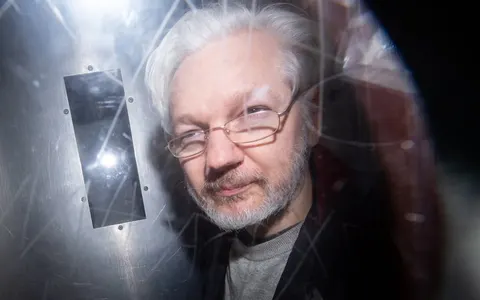
So Assange ended up in the special-regime Belmarsh prison in London for the next 5 years, during which long, epic legal battles were to decide his future.
There were many fears that he would not survive, even at the very highest level. Nils Melzer, the UN Special Rapporteur on Torture, visited Assange with two doctors and concluded that “Mr. Assange has been deliberately exposed, for a period of several years, to progressively severe forms of cruel, inhuman or degrading treatment or punishment, the cumulative effects of which can only be described as psychological torture.”
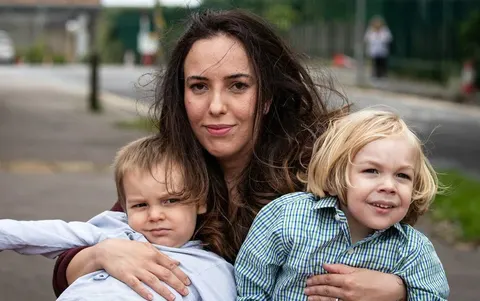
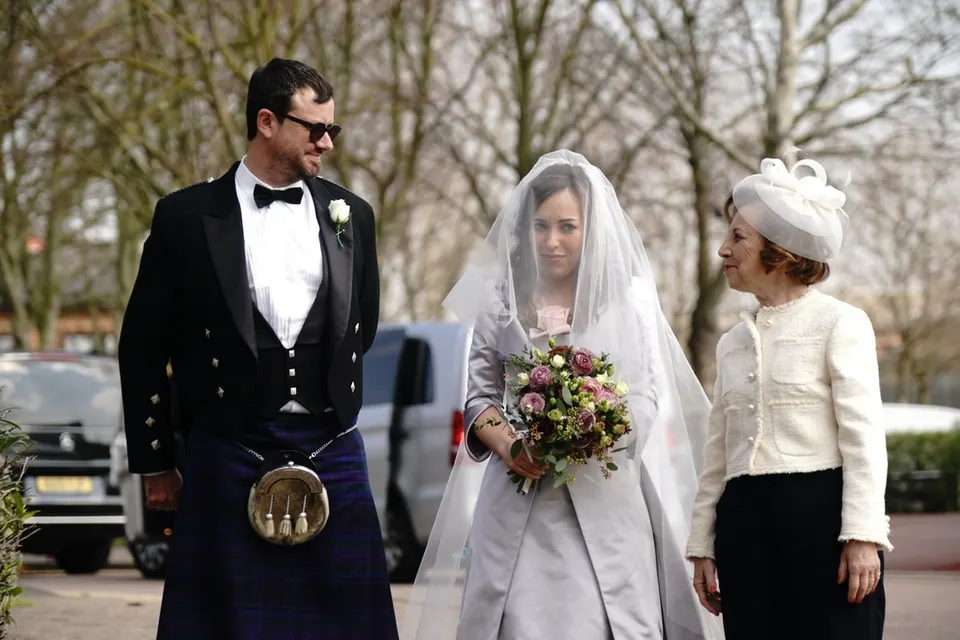
To round out the plot, we must not leave out that during this time Julian married his longtime partner Stella Moris, a French citizen and part of the legal team fighting for his release. The wedding took place before four witnesses, two of them the official witnesses and the other two minors. These were Julian and Stella's sons, Gabriel and Max, who are now 7 and 5. Evidently the cramped personal space of the Ecuadorian embassy was enough for more than just a love to be born…
Julian is believed to have another son who is considerably older. And according to rumor, he may have many other children too, but… the many rumors only go to show what a legend the Australian has become over the past decades.
Against a Sea of Troubles
“The merging of our societies with the internet and of the internet with our societies has enabled a truly astonishing horizontal transfer of information, in which we can learn from one another far more than we ever could. On the other hand, it has allowed state intelligence organizations and the contractors who work for them to collect more information. In a sense, it is the greatest theft of wealth that has ever taken place.”
Before we part, it is time for two curious touches. Assange appeared in the classic series The Simpsons in 2012, voicing… himself in the landmark 500th episode. His voice was recorded over the phone while he was shut away in the Ecuadorian embassy.
After that, a character inspired by Assange was included in an Asterix and Obelix comic. Confoundtheirpolitix, an “international news crier,” appeared in the 36th album of the series, with the blessing of the comic's legendary creators—the artist Albert Uderzo himself and the heirs of René Goscinny. Before publishing his Commentaries on the Gallic War, Julius Caesar decides to remove the chapter recounting the defeat he suffered at the hands of the Gauls. A scribe named Bigdata (the modern term for data) passes this censored chapter to Confoundtheirpolitix.
“It's better than a Nobel Prize. Far more people have received one than have become characters in Asterix,” Julian said with a smile. Clearly not without irony at the fact that the supposedly greatest prize for peace, for which he was nominated no fewer than 8 times, has often gone to open warmongers and people who unleashed bloody conflicts.
Freedom or Death
“If we can only live once, then let it be a daring adventure that draws on all our powers. Let it be with people like us, whose hearts and minds we can be proud of. Let our grandchildren delight to find the beginnings of our stories in their ears, and their endings all around them in their wandering eyes. The whole universe, or the structure that perceives it, is a worthy opponent, but try as I may, I cannot escape the sound of suffering. Perhaps as an old man I will find comfort wandering through some laboratory, talking softly with students on summer evenings, and will accept suffering with nonchalance. But not now. Men in their prime, if they have convictions, are obliged to act on them.”
And so came the long-awaited freedom, about which we have yet to learn more (or perhaps we never will). The day before, news broke that Julian had struck a deal with the U.S. government to plead guilty and receive a symbolic sentence for time already served, set against the 175 years in prison that had threatened him.
But what matters more is that Assange has at last embraced his kids in his native Australia. We are left to guess what he gave in exchange for the freedom he waited so long for.
And yet, after everything said so far, I personally cannot believe that he has given up and committed to stop publishing. I believe that, even as the years go by and the weariness piles up, there will be more WikiLeaks to come. That the battle for truth and freedom does not stop here.
It is a daily battle, relentless but essential. Each of us ought to fight it, even with ourselves. And may more people come to realize it…