“Who controls the past controls the future,” says a book we all race to quote. And also: “Who controls the present controls the past.”
As we delegate more and more of our memory to technology, life will keep getting easier. As we seek our refuge from time in our own bubbles, this will bring us together and pull us apart.
But can today's technology change history? Can it cross out and rethink events from the past? Can we harness artificial intelligence for a more objective view of history in all its periods? Why does the past turn out to be an eternal subject of online quarrels?
How does the technology of the future change the past… and the other way around?
In Search of Lost Time
“Time is in us and we are in time,” we often repeat after Vasil Levski, the nineteenth-century revolutionary who is Bulgaria's greatest national hero. Though the continuation is more binding: “It turns us, and we turn it.”
The same goes for another everyday quotation, one that has come down from the ancient Greeks: “Of the dead, speak only good, or nothing.” Only without the ending that gives it meaning: “Nothing but the truth.”
And truly, whenever we cast a glance at the past, however relative time may have become since Einstein, we are all like a student waking up after a heavy night of drinking. The last moments are whatever we imagine them to be, far from any real understanding; further back there seems to be some kind of objectivity, at least until we compare it with that of the classmate we argued with yet again last night. And, at least until things settle into an everyday rhythm, the more distant past remains abstract and uninteresting.
History is an impartial science, right?

Herodotus Bot
It ought to be, but that too is a utopia. A quick, sweeping glance across Bulgarian social networks and media discourse will show that the recent past sets us on fire, and the past century divides us relentlessly. The history of our country over the remaining 1,300 years or so seems a bit more of a consensus. But further back… it gets murkier still, because the Big Question appears: “What are we, the Bulgarians?”
Can artificial intelligence help us here? Will technology give us an impartial view of the past?
Good old history ought to be an impartial science. It should gather the archives and make sense of them as fully as possible, with the help of what archaeology has unearthed. So that it can paint what happened without bias, and so that this can help us. Teach us, reveal the mistakes of the past and keep us from repeating them. Tell us about the civilizations that once lived, about people's daily lives, about the figures worth learning from or recoiling from.
What Does One Mere Individual Matter Here?
Yifan, a Chinese author of fantasy novels, was digging through the Mandarin version of Wikipedia in search of an inspiring plot when he came across an article about the great Kashin mine. Created by the Principality of Tver, an independent state between the thirteenth and fifteenth centuries, it became one of the largest in the world: an early industrial center the size of a city, where some 30,000 slaves and 10,000 free citizens worked. The mine became the cause of numerous wars that spread across the territory of all of present-day Russia.
The story of the Kashin mine drew Yifan in, and he buried himself in the articles about the wars, the thrilling battles and the impressive figures he, for some reason, had never heard of. Since he knew Russian, he tried opening the Russian versions of the articles to see the other point of view. But they… didn't exist. How could that be: great wars, strong personalities, all tied to Russian history? For some reason the links to the sources in the Chinese entries didn't exist either, or led to pages other than the ones expected.
Gradually Yifan became convinced that the Kashin mine simply didn't exist. Though pleased to have found his plot, he contacted the editors of the Chinese Wikipedia so they could check what had happened.

O Foolish Chatbot!
What followed was a large-scale investigation that uncovered four interconnected fake accounts which, for more than a decade, had been creating invented articles. Because of the way the free encyclopedia works, once users have built up enough authority, they can approve content uploaded by less experienced visitors. The four accounts systematically created entirely fictional pages or padded a number of historical events related to Chinese and Russian history with invented details, without any of the millions of readers noticing. They had created 206 new articles and added to several hundred more.
It turned out that behind the four accounts was a housewife who quickly became famous as “the Chinese Borges.” Her real name was never made public, but her main nickname is Zhemao. She started writing in 2010; at the time her father was working as a diplomat in Russia, and she went on Wikipedia to learn more about the two countries' shared history. Later she married a Russian, graduated in Russian history herself… but went on knowingly publishing invented content about the past, because she found it more interesting. Zhemao confessed all of this after the revelation, in an apology published, once again, on Wikipedia.
Where There's a Man, There's a Problem…
What if Zhemao had been an artificial intelligence, capable of generating hundreds of such entries a minute? What if she had been some propaganda machine? What if she had been both: a propaganda machine using the possibilities of today's technology for manipulation?
“Take away a people's history, and after one generation it will turn into a mob; after another, you can herd it like cattle.” The words are attributed to Goebbels. Did he really say them? I leave it to you to check.
What happens if we deliberately alter the information about a given historical event online? If it's less well known, hardly anyone will even notice; ask Zhemao. And if it's familiar… it will simply take longer. You remember the notorious photos of Stalin that turned into a meme, from which, one by one, each successive comrade-in-arms disappears after becoming inconvenient and ending up in Siberia. Well, imagine what their present-day equivalents could look like, only with the capabilities of modern technology…
For History Without Hysteria
“The historian of tomorrow will be a programmer, or he will not exist.” The words belong to the renowned French historian Emmanuel Le Roy Ladurie, a comment on attempts to use computer analysis to trace how the lords in the British Parliament had voted. Though they sound so timely, they were written in… 1968.
Is Ladurie right, from today's point of view?
We can only sympathize with the historians a century from now, who will have to look for today's heroes in the feed. They would find them only if they gave up their objectivity; otherwise, there will always be a drop of tar to spoil the honey.
Caught up in arguments, we sometimes simply find it hard to locate everyday sources reliable enough to confirm a given fact; Wikipedia is a case in point. And that is perfectly normal: not everyone has time to pop into the library before their next Facebook status (and even there it depends on whether they land on a textbook from the sixties or the nineties).
The problem, rather, is that this approach is becoming the norm: if it's on Google, it happened. Alas, this is increasingly visible in the education system too. It's no accident that recently even the most popular TV quiz show asked whose son St. Ivan of Rila, Bulgaria's patron saint, was. The answer turned out to be Tsar Simeon, which is, in fact, a more than debatable idea, if you ask historians…
The Well-Forgotten Old
It isn't easy, also because of the battle for truth, for the authority of judgment. Journalists find it ever harder to establish themselves as guarantors of the information they pass on, and the same is happening to historians. You can base your arguments on primary sources and the scientific method, but that won't impress the people you're talking to, your rivals in the online contest for truth.
Can there be such a thing as absolute history?
We learned in school about Khan Asparuh, who in 681 crossed the Danube and founded our state in the Ongal, the marshy region near the river's delta.
Was that really the year? Who were these Bulgars of his? Were there Slavs there, and were they the majority, or were the Proto-Bulgarians? Why Proto-Bulgarians, weren't they simply Bulgarians? Why khan, shouldn't we call him “kan”? And where did the Thracians “disappear” to? Soviet propaganda, Soros-ite propaganda…
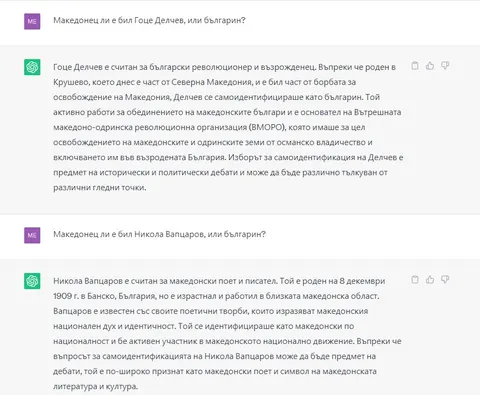
And what if we look at… Macedonian history? What does it look like in the textbooks of four neighboring countries? Is there anything they share, apart from the odd date?
A Clamor Rises by the Bosphorus
History easily turns into a fluid discipline in which authorities don't matter.
Today the paradigm is shifting again. While in the past we somehow relied on unified authorities, “on the textbooks,” and today we are inclined to squabble over anything we can find a way to dispute, our future relationship with the past looks even more challenging.
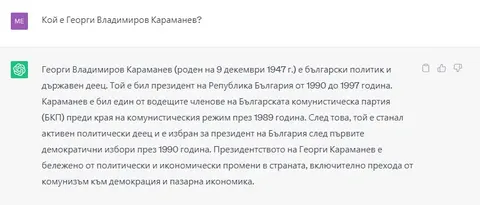
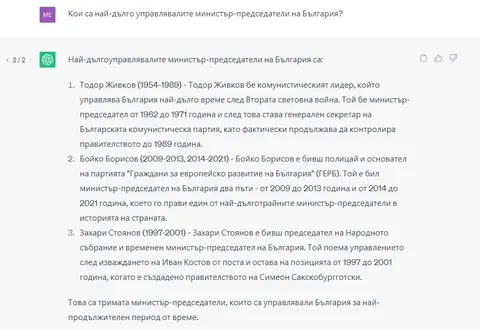
We won't torment today's homework-solver in history, ChatGPT, by asking its opinion of September 9, 1944, the day of the Communist takeover in Bulgaria; we won't ask whether Tsar Boris III or his son Simeon II, whether the longtime Communist leader Todor Zhivkov or the post-Communist prime minister Ivan Kostov was the more significant statesman. Because it is more than clear that as soon as we turn to facts, especially about less familiar events, it begins to lie in the most unscrupulous way, as you can see for yourself from the few questions I asked it.
So what? It's not as if everything in the feed is true, even when we're talking about today. Aren't the definitions of impartiality, objectivity and credibility becoming more abstract by the day?
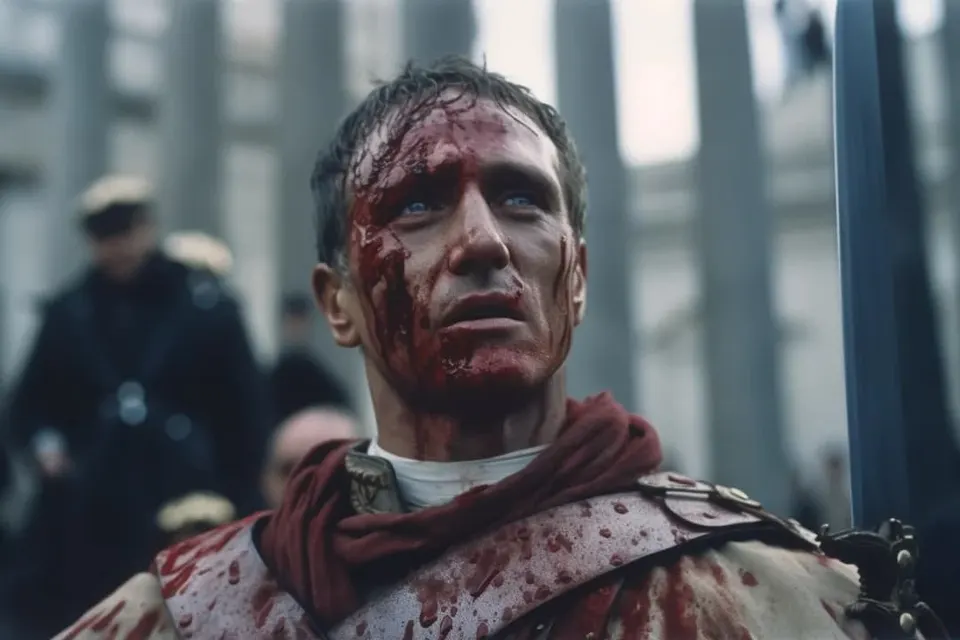
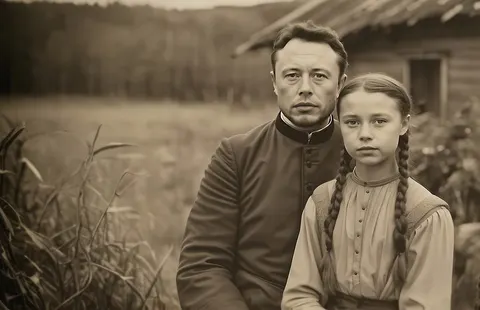
And what about photos? Not long ago Madonna posted a picture of a Greek rescuer helping a Turkish child after the earthquakes, with the message “humanity is above politics.” Well, it was about as real as the one of Leonardo sitting down for a chat with the Mona Lisa before painting her portrait. Computer-generated on the popular platforms, just like the pictures you see in this article.
The Unforgettable Past
But there is another side, too. No one could guess how many historical events that really happened, even in relatively modern times, have passed without being documented. Besides, as everyone knows, history is written by the victors, who often give us only their own glorious point of view.
And that is a serious problem when we are forced to learn about the early Bulgarian rulers mainly from the enemies they fought to the death.
In that sense… couldn't we use technology to reconstruct the past, to search for credibility, to fill in the gaps in history?
Of course we can; the bigger question is why such applications are so much rarer and less known.
An interesting example comes from the time before today's rise of the much-hyped artificial intelligence. In 2009 the Austrian scholar Johannes Preiser-Kapeller, a professor at the Austrian Academy of Sciences, was studying a register of the decisions of the fourteenth-century Byzantine Church. The volume is enormous, thousands of documents, which… can simply be entered into a database with the names of each of the main actors. Step by step the historian built a reconstruction of the connections between people, and the method proved so successful that he also applied it to create a kind of map of the fourteenth-century Byzantine elite.
A Hundred Summers Ago
And what wonders might modern language models be capable of if they were trained on old texts? Enormous ones. Especially if we manage to shape them so that we know exactly how they work and what share of their analyses can be verified. Otherwise we end up in the situation of the fantasizing ChatGPT, with the many unexpected challenges that come up if, for instance, we try to reproduce the behavior of people who once lived.
In Venice there is a project with the somewhat worn-out name “Time Machine,” whose aim is, of course, to reconstruct the past. A thousand years of history have been digitized, a huge archive covering shelves with a total length of 80 kilometers. Many of the sources have never been touched by historians at all; there are simply too many of them. The scientists use neural networks to extract information and, by tracing names, to reconstruct the ties that once bound Venetians together.
And why not let algorithms help interpret archaeological excavations? Or decode unknown, dead scripts? How quickly could well-trained models “do the job” of the Rosetta Stone?

Yesterday
Scientists in Groningen, in the Netherlands, are using neural networks to analyze the famous Qumran scrolls, the Dead Sea Scrolls. One of the largest, more than 7 meters long, has been dated to the fourth century BC. And the algorithms managed to prove that it was written by two scribes rather than one, as had previously been believed. The way the letter “aleph” was written was analyzed, and the software clearly identified a difference that appears from a certain point in the text onward.
Technology gives us tremendous opportunities to learn more about our past, near or distant. All of this, of course, comes with great challenges. Because a model trained on our present-day photos would recognize mobile phones, cars and who knows what else in images from bygone eras, simply because it isn't prepared for what awaits it.
Where does the boundary of objectivity lie in such cases? Let's leave that task to the scientists. It's enough for us to do what is within our power: to appreciate the fact that the past, especially the recent past, is far too subjective. That, willingly or not, it easily turns into a weapon, reinforced by our own bubbles and the other shortcomings of communication online.
And, as a parting thought, let us recall once again Orwell's words from 1984: “Who controls the past controls the future.” “Who controls the present controls the past”…
What do historians think about all this? Here is the fascinating view of Alexander Moshev.