Who could be the author of the idea in the headline, an idea that is, one way or another, rather fashionable in career choices today? “Programs, programs and more programs! With this let us infect the young generation…” Be patient: we'll save the answer for the finale.
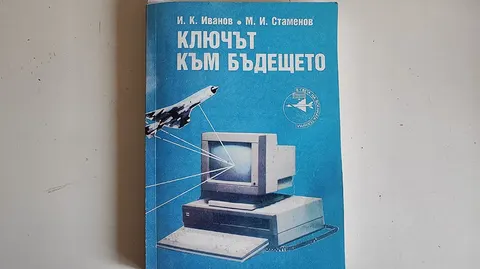
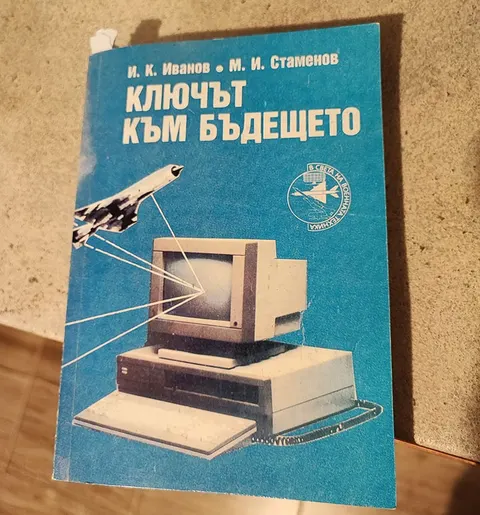
First, we'll peek into the future through the past… No, the Terminator isn't coming. We call technology “the key to the future,” and today we still accept this creed without a shadow of doubt. In this case, though, we're talking about a book of that name, The Key to the Future, written in 1988 by Ivan Ivanov and Metodi Stamenov. It gathers the visions of the computer world from that time.
In its 300 pages, the book makes no claim to be the most complete scientific study of its day. It only wants to show what steps computers had taken so far, what they were expected to bring us and where they were doomed to fail. Today we have accumulated far more experience, yet we keep asking exactly the same questions, which is why it's curious to compare our view with the one from the past.
Do the expectations match today's? What did the authors manage to guess right? What have we achieved in this time, and where have we failed? And are there moments when… we sound just as optimistically ignorant about what technology can do, even though 34 years have passed?
Here are 15 excerpts that offer plenty of food for thought!
1. The programmer as a wizard
“Programming is both a science and a profession. It is now in a period of self-definition and spreading to the masses. That is why analyzing the human factor in programming is a pressing question. As a profession, programming is probably the most difficult of all mass professions. The difficulty lies in the fact that the programmer must possess the mathematician's inclination toward abstraction and logical thinking, combined with an Edisonian talent for building everything out of zeros and ones.
He must combine the accuracy of an accountant with the insight of an intelligence officer, the imagination of a crime novelist with the sober practicality of an economist. After all, from the standpoint of his utmost rigor, the programmer resembles a wizard who, with intuition and imagination, creates working programs that are, moreover, astonishingly useful. At the same time, the programmer's profession is a prestigious one. To be a good programmer today is a privilege, just as being literate was in the Middle Ages. The programmer is a soldier of the modern scientific and technological revolution, and as such he must think in a revolutionary way.”
The authors are certainly quite enthusiastic about the programming profession… and in our time that enthusiasm is rather contagious, since in these parts it is one of the most sought-after professions. But even the most experienced software engineers today would hardly be quite so grandiloquent in their assessments…
2. They call it a dragon, they compare it to an avalanche
“The concept of the computer is often defined as the most powerful means of processing information. Humanity today lives in an ocean of information. They call it a dragon, they compare it to an avalanche. In our time, the concept of information has grown into the problem of information. And it has turned out to be a problem for all of science, one whose development is and will be the work of every branch of modern science.
At the same time, however, a special scientific discipline for information was needed. Then came the idea that, under certain conditions, the qualitative features of information could be disregarded and its quantity expressed numerically. The idea is relatively young (from 1948) and belongs to the communications engineer Claude Shannon. This marked the beginning of the modern mathematical discipline of information theory.”
We might have certain doubts about how well the communications engineer fared, given that today nobody has heard his name, even though information technology is a field where more and more specialists work. (Actually, it turns out he fared more than well. Claude Shannon is a founding figure in information theory and signal processing, and his digital story is more than interesting and deserves to be told — author's note.)
Something else is interesting, though. If in 1988 we already felt buried by an ocean of information compared to a dragon and an avalanche, what about today? And what about the future?
3. It sounds like a joke
“The studies of Japanese experts are categorical: fifth-generation computers will be usable by anyone who knows how to use a telephone, a television set, an iron, an electric stove and so on. It sounds like a joke. That computers, currently inaccessible to the non-specialist, should change their behavior so quickly that they begin to ‘communicate’ with everyone. Just like in a science fiction novel. But the scientists are confident in their claims. What's more, they argue them convincingly.
The theoretical methods of the fifth generation of computers are the methods of artificial intelligence. It is believed that only the technological base of the fifth generation will allow for a satisfactory application of artificial intelligence methods as software and hardware implementations.”
I wonder how the magic-laden phrase “artificial intelligence” sounded back then, the phrase that today leaves us as weary as it does delighted…
4. …will they become rational?
“Will future computers be able to think? Will they be able to speak? Will they become rational?
A positive answer means that computers must understand normal human speech. Japanese experts are confident this is possible. More than that, computers will understand even unclear human speech and, when necessary, will ask clarifying questions. They will correct incorrect speech and make recommendations about the language in which they are addressed! Don't be surprised by this! Even today some computers ‘understand’ human speech, albeit with a very limited vocabulary, ‘see’ text, print or respond to commands spoken aloud, and so on.
Another property of future computers will be their ability to make logical connections: associations and inferences. Tomorrow's computers will be able to ‘understand’ the content of the information stored in their memory, not merely remember it and retrieve it at a human's request.
And yet the miracle and the sensation of microelectronics lie in the near future: in the computers of the coming generations, in the computers of the future. Today it is difficult even to forecast their capabilities, their role and their place in the development of human progress.”
“What a pace of development!” Today it sounds downright touching against the backdrop of what happened in the three decades after these words were published. And, indeed, the miracle and the sensation certainly came true in the near present…
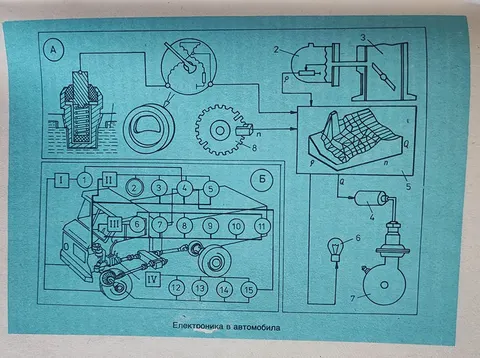
5. The radio amateurs Jobs and Wozniak
“Innovations in computing are often created not by those from whom they are expected. It is enough to recall, for example, the story of how the radio amateurs Steve Jobs and Steve Wozniak tinkered together, for their own amusement, a toy that later received the name personal computer…
So it is with our MARS computer, points out Doctor of Sciences Vadim Kotov, deputy director of the Computing Center of the Siberian Branch of the USSR Academy of Sciences. Dr. Kotov now heads an unusual organization of 120 engineers and programmers that has set itself the task of creating, within three years, a working prototype of a fifth-generation computer.
It is still too early to describe the future fifth-generation computer MARS in detail. In broad terms, it will be a 32-bit multiprocessor computer with a number of elementary processors ranging from several hundred to… the upper limit is unlimited and will be determined by the customer's needs. Each of the processors will also be usable on its own as a single computing unit for a high-speed personal computer running at 2 to 4 million operations per second.”
I wonder what Dr. Kotov is doing today. Because what happened to the radio amateurs, we know very well…
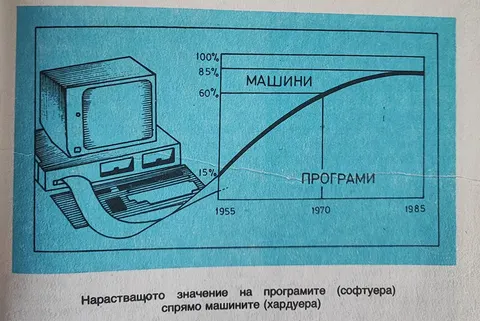
6. AI, the most controversial scientific problem of our time
“Although artificial intelligence is relatively unknown to a wide readership, for specialists it has been one of the most promising directions for the development of computer software and hardware over the past 20 years, and one connected with some contentious issues.
The word ‘intelligence’ is used as a synonym for reason, judgment or mind. It reflects an individual's ability to solve complex problems by acquiring, remembering and purposefully transforming knowledge, as well as the ability to adapt to objectively changing circumstances.
Artificial intelligence is the most controversial scientific problem of our time. Engineers and mathematicians, doctors and philosophers, specialists and popularizers never stop putting forward sound arguments in support of their theses, ‘for’ and ‘against’ artificial intelligence. And there is plenty to argue about. Especially when artificial intelligence is equated with an artificial mind.
In reality, an artificial mind will not be created even in the distant future. Why not? After all, in 10 to 15 years computers with 10 billion transistors each will be built, won't they? The human brain has roughly as many cells… And in 30 to 50 years the number of transistors will considerably exceed the number of cells in the human brain!…”
Now this text sounds as if it were written today. The same questions keep stirring us, the same possible answers are on the table. Will this artificial mind really come to be?
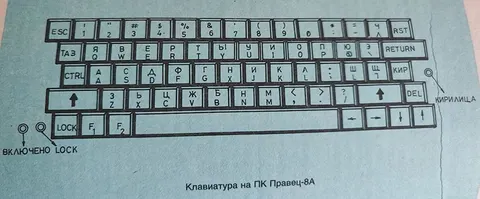
7. The cell is alive, the transistor is not
“Although they have reached and surpassed the human brain in quantitative terms, computers will never be able to match it in qualitative terms. The transistor is too simple an element, a semiconductor that can be in only two states: on or off. The cell, by contrast, is incredibly complex. There are quite well-founded hypotheses that compare it to a small computing machine. The cell is living matter, while the transistor is dead. The human brain is complex at the elementary level. At the elementary level, the computer is simple.
The computer's ability to present creative results is nothing other than the result of human knowledge and intelligence materialized in it. Moreover, a computer equipped with the software and hardware of artificial intelligence is nothing other than a small, albeit highly effective, means of passing knowledge on to people, much like a book. This means, in fact, imitates some of the functions of natural intelligence.”
Our friends here neatly sum up one point of view on what may be the biggest technological topic of our time. But if an algorithm cannot be told apart from a human, what do our definitions matter?
8. Third in the world!
“Incredible! After just over forty years, Bulgaria (such are the statistics) ranks… third in the world (after the USA and Japan) in total production of electronic equipment per capita. Today our computers work in the fraternal socialist countries, in India and in other developing countries. Today's Bulgaria has overtaken many developed capitalist countries in the most modern and dynamic industry of the century: electronics.
In a very short time, the first Bulgarian electronic computing machine, Vitosha, was developed and presented at the national exhibition ‘Bulgaria Builds Socialism’ in Moscow in 1963. This relatively small second-generation computer, with vacuum tubes and a magnetic drum for main memory, was our rightful pride and the first Bulgarian ‘electronic swallow.’”
The “electronic swallow” failed to carry on into a long flight and grow into eagles and falcons. What happened to the electronics industry in Bulgaria after 1989 is clear. And yet it seems everything could have taken off in an entirely different way…
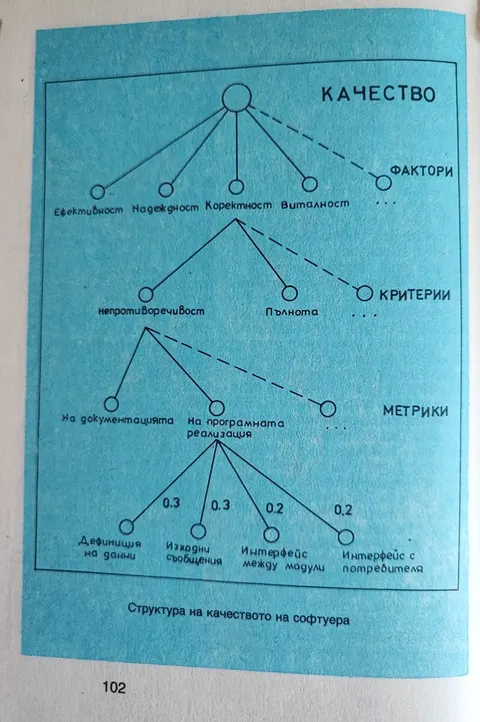
9. A4 computers
“It is estimated that the market for portable computers will grow to 12 billion dollars in 1990. Future portable computers will be A4 in size (210 x 297 mm) and will fold in two. The upper half will be the display and the lower half the keyboard. Their weight will be comparable to that of a book of the same dimensions. A person will truly be able to carry them everywhere. They will have unlimited autonomy, a color display and so on. It is very hard, however, to predict the size of their main memory.
The world market is beginning to be saturated with personal computers. The slump in PC sales that began at the end of 1984 has continued into the following years. The attention of the mass consumer has been diverted to home video recorders. It is believed that the market situation cannot change until new, original models appear. The home microcomputer needs new functional capabilities, for example a telephone connection to information banks or to large machines, etc.”
The sales slump was somehow overcome, it seems, the video recorders are long gone, and sheet-of-paper-sized computers turned out to be far from the smallest format. I wonder what the authors would have thought if someone had told them that less than a quarter of a century later we would have much, much more powerful machines in our pockets…
10. A water meter against the pirates
“The growing role and price of software products has given rise to a peculiar ‘software piracy’: illegal copying of software products. It causes huge losses to software companies. Today enormous sums are spent in the fight against the ‘pirates’ on developing protection systems built from hardware and software techniques. Some Japanese companies are working on a new method of distributing software products that secures ownership rights. The idea is to meter consumption the way water, electricity and telephone charges are collected.
The user must obtain a special smart card that activates the box. It is a kind of credit card, upon the purchase of which its owner becomes the holder of a so-called general credit. With this card, he can receive any desired software product ‘on account.’ By analogy with reading a water meter or an electricity meter, the card records the use of software products, so it is in fact a ‘programmer’ with a payment function.”
The water meter against pirates doesn't seem to have done much of a job. But if we let our imagination loose a little, perhaps the idea will remind us of today's software-as-a-service model, of the cloud technologies that turned out to be a better solution against piracy than heavy-handed policing.
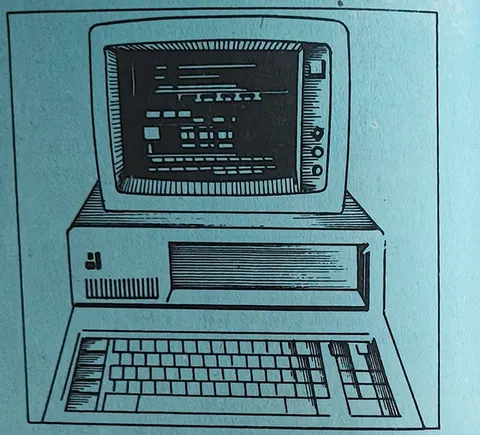
11. Good programmers = simple programs
“Programs, and especially application programs, are written for a specific computer and in a specific programming language. If certain rules are followed when creating programs, they will be both better and more readable. Readable programs are easier for the user to work with and can more easily be adapted to another computer. Many specialists, including the American programmer Newison, give valuable advice in this respect.
The first lines of a program must contain its introduction. It begins with the program's name, well chosen so that it is immediately clear what the program does. Then come the author's name, the date the program was created, the type of computer and/or the name of the operating system used.
The paradox is that to make programs more readable, more conservative programming techniques must be used. Contrary to popular opinion, according to Newison, good programmers do not use clever, tricky sequences of commands. They usually write simple, straightforward programs.”
Well, programs today don't look like that simply because they are much, much more complex than anyone could have imagined at the time. And still, the ideas laid out here largely cover some of the first lessons every programmer would do well to go through even today…
12. Computers like telephones
“It is more than obvious that if the electronics industry wants to sell its mass-produced computers, fundamentally new methods of developing software products will be needed. Here, as with telephony eighty years ago, automating the programming process becomes an urgent necessity.
Programming is still expensive labor. The cost of a finished program of average complexity is higher than the cost of some microprocessor models. Moreover, the pace of computer production still significantly outstrips the pace of program development. This means the negative trend in hardware and software prices will only deepen.”
That's certainly true! Only the programs that write themselves… and write themselves better, are still missing.
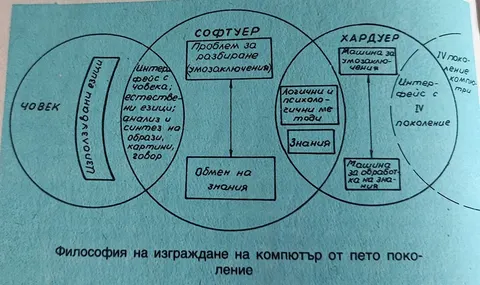
13. Robots with a sense of smell… then what is a computer?
“And yet, what is the future of computers? What will the future computer be like? For now, only this much is clear: computer performance has increased enormously. How far? To what extent? Perhaps a speed expressed in tens, hundreds or thousands of billions of operations or logical inferences per second is something quite real for the computer of the year 2000. And beyond that?… Beyond that we enter the realm of science fiction.
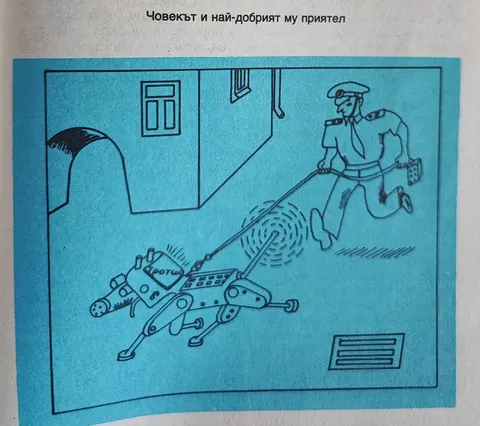
One may suppose that the computer of the future will be something extraordinary. Let us imagine robots with sensors for sight and hearing, for taste and smell, carrying out complex activities and experiments. The results of sensory perception are passed on to the processor. It searches for patterns that confirm or refute old assumptions, or forms new ones. Based on the analysis, the computer works out new instructions and passes them on to the robots.
And what if all this is in a laboratory, a workshop or a factory? The robots, controlled by the intelligent computer, will carry out the entire production. They will draw, write and perform every task. Even now they play chess, dominoes… Couldn't they learn to play soccer? Then what is a computer?”
Indeed, what is a computer? Today each of us could give a meaningful answer if we gave it a little thought, much like the authors of this book. Alas, we don't have the time to think about it…
14. What has become of our nature?
“Man dreamed of creating the telephone, the radio, the television… And he created them! He created them because he needed them. Man dreamed of creating the computer with which to process the enormous flow of information. And he created it! He dreams of creating a computer that thinks for him, and once again he is on the way to creating it.
The computer has entered almost every area of human activity. What could be better? After all, isn't the computer just one of the many tools created by man to ease his labor? Yes, it is! But there is a difference. It lies in the fact that the tools created so far increase man's physical abilities, while the computer increases his mental ones. The rapid improvement of the computer is tied to the very fast development of the relationship between it and man.
Man increasingly has to work with the computer. In practice, however, he knows it less and less. If a person can learn how a bicycle works in less than an hour, or how a lathe works in a few hours, understanding how a computer works requires a certain base of prior knowledge.
The relationship between man and computer has various aspects. The decisive ones are the psychological and the social: the first answers the question of whether every individual can become a computer specialist, and the second, to what extent the progress of science and technology will affect human nature?”
The humanistic view of technology is what, in my opinion, we lack most today, and that is precisely why Digital Stories exists.
To what extent will the progress of science and technology affect human nature?
15. Man or computer?
“If there is a danger of man being replaced by the computer, why not get rid of the computer?
The crown of nature, man, has always flattered himself with the thought that if he doesn't run the fastest, jump the highest or swim the best… at least he thinks better than any living thing in the world. Lately the idea has been creeping in that the computer is man's rival in thinking. And having a rival in most cases breeds unpleasant feelings.
It turns out that the rival computer is beginning to enter man's creative sphere. Consequently, in the nearer or more distant future, the computer may be seen as a competitor to man the creator and as his rival in the sphere of intellectual activity. But should we consider the computer an enemy? Isn't it better for man to seek in the intelligent computer a clever assistant and friend? The problem is very complex, and it takes the full power of reason to solve it correctly.
Man or computer?… Man, of course! Man, with an efficiently working human brain, will create and control the ultra-modern information weapon, the computer, in all its modifications and varieties. The computer cannot, must not and will not replace man in everything. Man has certain functions that a computer should not be used to replace.
There are purely human areas where the computer must be barred from entering. And not because this is technically unfeasible. To man must be given what is human, and to the computer what is machine. Evidently, this should be the sensible line of conduct when organizing joint activity between man and machines. This line is equally distant from the exalted computer worshippers and from the gloomy grumblers.”
And which are you: an exalted computer worshipper or a gloomy grumbler?
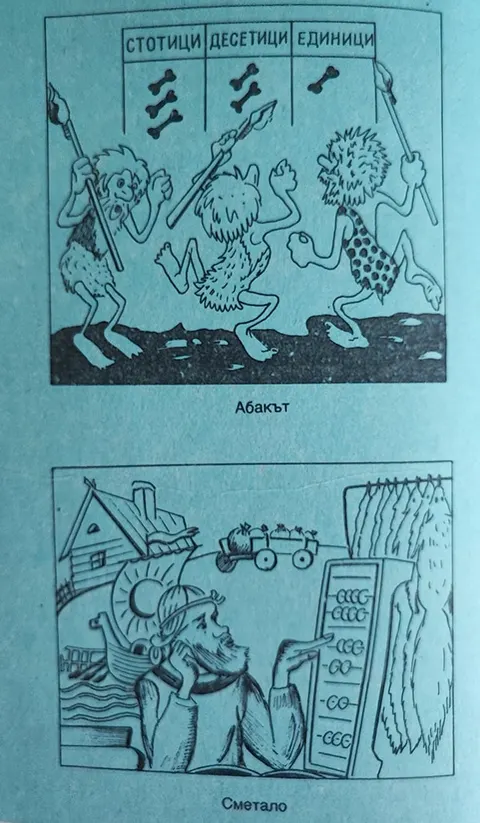
…And More Programs
So all that's left for the finale is to reveal who wrote the quote we started with. The words belong not to Steve Jobs or Elon Musk, but to Todor Zhivkov, Bulgaria's communist leader from 1954 to 1989, and the exact quote in The Key to the Future reads: “In modern Bulgaria, nothing can be done anymore without the large-scale use of electronics, without electronization… Programs, programs and more programs! This is what we must infect, above all, the young generation with.”
It's amusing how much some things in our digital lives have changed over the past 30 years… and how others sound exactly the same.